Snowshoe Hare in Maine
There's a unique thrill that comes with chasing snowshoe hare in Maine, a hunt that strips away a lot of the complexity of big-game pursuits and brings you back to the essence of woodland tracking. Many hunters, myself included, have felt the frustration of finding prime rabbitat only to come up empty-handed, or the sheer exhaustion of slogging through deep snow. This comprehensive guide is here to unravel the secrets of Maine's snowshoe hare, helping you understand their habits, find their hiding spots, and master the tactics needed to fill your game bag and experience the simple joy of a truly wild hunt.
Understanding Maine's Snowshoe Hare
Snowshoe hares, often affectionately called "rabbits" by locals, are an iconic symbol of Maine's winter wilderness. They're not just cute; they're incredibly resilient and provide a fantastic hunting opportunity when other seasons are closed or winding down. But truly understanding them goes beyond just knowing what they look like. It involves appreciating their adaptations, their preferred hangouts, and the rhythm of their lives throughout the year.
The Elusive Nature of Snowshoes
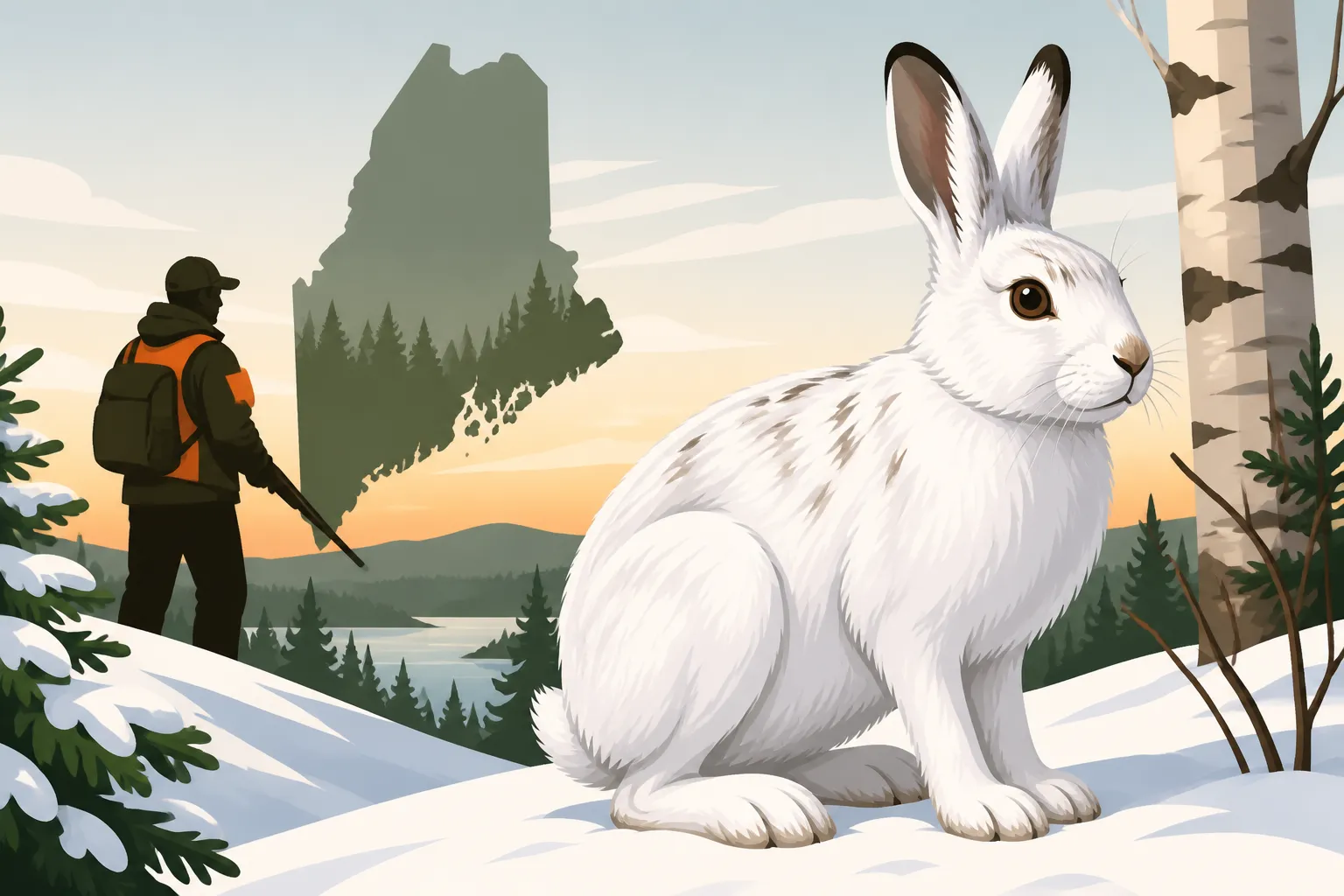
These creatures are masters of camouflage, famously shedding their brown summer coat for a stark white one as winter approaches, allowing them to melt seamlessly into the snowy landscape. This color change isn't instant; it's triggered by day length, meaning you might find them in a patchy transition phase during the early and late parts of the season, making them surprisingly visible against a light dusting of snow or bare ground. Their large, fur-covered hind feet, which give them their "snowshoe" name, distribute their weight, allowing them to traverse deep snow where other smaller game would struggle. This adaptation gives them a distinct advantage over predators, letting them bound away through the thickest cover. Many a hunter has watched in disbelief as a hare, seemingly appearing out of nowhere, vanishes into a labyrinth of spruce and fir, leaving only a puff of snow behind. It's this sudden appearance and disappearance that truly defines their elusive nature.
Beyond their physical adaptations, snowshoes are incredibly shy and nocturnal, often moving most actively at dawn, dusk, and throughout the night. During the day, especially when the sun is bright and predators are active, they'll hunker down in dense cover. This means hunters need to be stealthy, patient, and methodical, as a hare is more likely to sit tight and let you walk past than bolt prematurely. Their hearing is incredibly acute, and the slightest unnatural sound can send them scurrying, highlighting the importance of quiet movement and an understanding of the wind.
Prime Habitat: Where to Find Them
If you want to find snowshoe hare, you need to think "thick." They absolutely thrive in dense, young coniferous growth, often found in regenerating clear-cuts, thickets of spruce and fir, cedar swamps, and areas where logging has recently occurred, leaving behind a tangled mess of slash and saplings. These areas provide both abundant food – the tender shoots and bark of young trees – and crucial protection from predators like coyotes, bobcats, and raptors. Look for transition zones where these thick areas meet more open hardwood stands, as hares will often feed in the edges and retreat into the dense cover at the first sign of danger.
One of the most classic places to find them in Maine is in the alder runs that line streams and old logging roads, particularly if these areas are also interspersed with thick conifers. The combination of dense undergrowth and readily available food sources makes these spots irresistible to hares. As you scout, keep an eye out for their distinctive tracks in the snow – large, offset prints where the hind feet land ahead of the front feet. Fresh tracks are your best indicator of recent activity and a strong sign that hares are bedding or feeding nearby. You might also notice clipped twigs and small piles of pellet droppings, especially under dense cover.
Life Cycle and Seasonal Changes
Snowshoe hares are prolific breeders, with females capable of having multiple litters from spring through late summer, usually producing 2-4 young per litter. This high reproductive rate helps sustain their populations despite intense predator pressure. The young hares are born precocial, meaning they're relatively well-developed at birth, covered in fur, and able to move around shortly after. This quick development is critical for survival in a harsh environment.
As mentioned, their most dramatic seasonal change is their coat color. This molting process is fascinating; it’s not about temperature but about the duration of daylight. As days shorten in fall, their fur begins to turn white, usually completing the transformation by late November or early December. When days lengthen in spring, they start to revert to their brown summer coat. This can lead to some interesting hunting scenarios in early winter or late spring when a hare might be partially camouflaged or stand out starkly against unseasonable snow or bare ground. Their diet also shifts seasonally, from green vegetation and clover in summer to woody browse, bark, and buds in winter, emphasizing the importance of finding those dense, regenerating cuts that offer ample winter forage.
Maine's Snowshoe Hare Population and Management
Maine's snowshoe hare population is generally robust, offering ample hunting opportunities across the state. However, like any wild game species, their numbers can fluctuate due to various ecological factors. Understanding these dynamics is crucial for both conservation and successful hunting.
Current Population Status and Trends
Maine boasts a healthy and widespread snowshoe hare population, particularly in areas with extensive timberland and suitable young forest habitat. Unlike some species, snowshoes are not experiencing widespread decline here, though local populations can certainly ebb and flow. These fluctuations are often tied to habitat availability and the density of their primary predators. In many parts of central and northern Maine, where vast tracts of forest are regularly harvested and allowed to regenerate, hares continue to thrive. This cycle of logging often creates the ideal conditions they need: thick cover for protection and young browse for food.
While exact population figures are challenging to ascertain for small game like hares, harvest data and anecdotal observations from hunters, trappers, and biologists consistently indicate good numbers. The Maine Department of Inland Fisheries and Wildlife (MDIFW) monitors these trends through hunter surveys and habitat assessments to ensure sustainable management. This means that year after year, hunters can generally expect to find hares in suitable habitat, though effort might be required to locate those prime pockets.
The Impact of Predators and Habitat Loss
Despite their impressive camouflage and speed, snowshoe hares are a foundational prey species for many of Maine's predators. Coyotes, bobcats, foxes, fishers, and various raptors like great horned owls and goshawks rely heavily on hares as a food source, especially in winter when other prey is scarce. A strong predator population can certainly put pressure on local hare numbers. It’s a classic predator-prey relationship, where cyclical booms and busts in hare populations are often followed by similar, albeit delayed, cycles in predator numbers. This natural balancing act is a normal part of the ecosystem.
Habitat loss, or more accurately, habitat maturation, is another factor. As clear-cuts and young forests grow older and the canopy closes, the dense understory that hares depend on for food and cover eventually thins out. This natural succession means that hare populations will shift, following the availability of suitable young forest. While clear-cutting can be controversial, it's actually beneficial for hares when done responsibly, as it restarts the cycle of forest regeneration that provides their preferred environment. Therefore, understanding the logging landscape and seeking out areas that have been harvested in the last 5-15 years is key.
Maine's Hare Management Efforts
The MDIFW manages snowshoe hare populations primarily through season length and bag limits, alongside broader habitat management practices that benefit a variety of forest-dwelling species. Their approach is generally hands-off when it comes to direct hare intervention, focusing instead on regulating harvest and promoting healthy forest ecosystems. Because hares are so productive and adaptable, they rarely require intensive species-specific management, unlike some larger game animals.
The most significant management tool is promoting responsible timber harvesting practices that create and maintain early successional forest habitat. When landowners and timber companies engage in sustainable forestry, it inadvertently creates a mosaic of habitat types, including the dense, young growth that hares need. MDIFW also conducts research and surveys to monitor game populations, including small game, to ensure that hunting seasons are set at levels that allow populations to remain healthy and sustainable for future generations of hunters. This proactive monitoring ensures that the thrill of Snowshoe Hare Hunting Deep Snow Cover remains a viable pursuit for years to come.
Hunting Seasons and Regulations for Snowshoe Hare in Maine
Before you even think about hitting the woods, understanding the legal framework is paramount. Maine's regulations are designed to ensure fair chase, public safety, and the long-term health of wildlife populations. Missing a critical detail can turn an exciting hunt into a frustrating legal issue.
Essential Licenses and Permits
To legally hunt snowshoe hare in Maine, you'll need a valid Maine hunting license. For residents, this typically means a Resident Big Game Hunting License or a Small Game Hunting License. Nonresidents will require a Nonresident Big Game Hunting License or a Nonresident Small Game Hunting License. It's important to remember that if you're planning to hunt other species, like deer or bear, your big game license usually covers small game as well, but always double-check the specifics. You can find detailed information on costs and options, whether you're a resident or non-resident, by checking out Maine Hunting Licenses and What They Cost.
Before purchasing your license, you'll also need to meet Maine's hunter education requirements. If you've never held an adult hunting license in Maine or another state, you'll need to complete an approved hunter safety course. There are options for both traditional in-person courses and online components, followed by a field day. This is a crucial step not just for legal compliance, but for ensuring you have the fundamental safety knowledge to enjoy your time afield responsibly. Read more about Maine Hunter Education Requirements to make sure you're squared away.
Key Season Dates and Bag Limits
Maine's snowshoe hare season is quite generous, typically running for several months, often from late September or early October right through to the end of March. This extensive season provides ample opportunity, especially for those looking to extend their time in the field after deer season closes or before turkey season opens. It truly shines as a prime winter hunting pursuit. The exact dates can shift slightly year to year, so always consult the most current MDIFW hunting law book or their official website.
The daily bag limit for snowshoe hare is generally four hares per day, with a possession limit of eight. This means you can harvest up to four hares in a single day, and you can have up to eight hares in your possession at any given time (for example, four from today's hunt and four from yesterday's). These limits are designed to allow for a rewarding hunting experience while ensuring the sustainability of the population. It's important to keep track of your harvest and know these numbers by heart.
| Category | Requirement | Details |
|---|---|---|
| Resident License | Maine Resident Hunting License (Big Game or Small Game) | Required for all resident hunters. |
| Nonresident License | Maine Nonresident Hunting License (Big Game or Small Game) | Required for all nonresident hunters. |
| Hunter Education | Mandatory | Required for first-time adult hunters, unless previously licensed in another state with proof. |
| Season Dates | Typically late September/early October through March | Consult current MDIFW regulations for exact dates. |
| Daily Bag Limit | 4 Hares | Max. 4 hares can be harvested in one calendar day. |
| Possession Limit | 8 Hares | Max. 8 hares can be possessed at any given time (includes previous days' harvests). |
| Legal Weapons | Shotguns (.410 to 10 gauge), Rifles (up to .22 caliber rimfire), Handguns, Bows, Crossbows | Specific restrictions may apply; check regulations. |
| Blaze Orange | Not required for small game, but highly recommended during firearms deer season | Strongly advised for visibility and safety, especially when hunting with others. |
Legal Hunting Methods and Restrictions
Maine allows a variety of methods for hunting snowshoe hare, giving hunters flexibility based on their preferences and the terrain. Shotguns (from .410 to 10 gauge) are popular, especially when hunting with dogs, as they provide a wide pattern for fast-moving targets in thick cover. Small caliber rimfire rifles (.22 LR, .17 HMR, etc.) are also legal and effective, particularly for still-hunting or targeting stationary hares. Handguns chambered in rimfire calibers are also an option, as are bows and crossbows. However, crossbows do have specific eligibility rules; you can check out Maine Crossbow Season Eligibility for more details.
One significant consideration is the use of dogs. Snowshoe Hare Hunting With Beagles is a time-honored tradition in Maine, and it's perfectly legal. Beagles are particularly effective at flushing hares from thick cover and keeping them running in circles, allowing hunters to get a shot. There are no specific blaze orange requirements for small game hunting, but it is highly recommended, especially if you're hunting during an overlapping firearms deer season, or simply for general safety and visibility to other users of the woods. Always be aware of safe shooting lanes and know what's beyond your target.
Effective Hunting Tactics for Maine Snowshoe Hare
Hunting snowshoe hare is a game of strategy, patience, and often, a lot of legwork. It's a fantastic way to sharpen your woodsmanship skills and spend time in some truly beautiful, albeit dense, Maine landscapes. There are a few tried-and-true methods, each with its own rhythm and requirements.
Still-Hunting Through Thick Cover
Still-hunting for snowshoe hare means moving slowly and deliberately through their habitat, trying to spot them before they spot you. This method requires sharp eyes and an understanding of where hares are likely to be bedded down. Focus on those dense patches of young conifers, especially areas with blowdowns, brush piles, or tangled slash where they feel secure. The key is to take a few steps, then stop and carefully scan the cover ahead. Look for anything that seems out of place – an ear, an eye, the outline of a body. In their white winter coats, they can be incredibly hard to see, often blending perfectly with the snow. Sometimes, a subtle shadow or a glint of black eye is all you'll get.
When still-hunting, pay close attention to the wind direction. Hares rely heavily on their hearing and sense of smell, so moving into the wind can help mask your approach. Move at a snail's pace, pausing frequently, sometimes for several minutes, allowing your eyes to adjust and pick apart the cover. This also gives any hares that might have been alerted a chance to settle back down, or perhaps, to break cover and give you a shot. This method is particularly rewarding because it relies entirely on your hunting skills, offering a deep sense of connection to the environment. It also offers a chance to observe other winter wildlife, from deer sign to tracks of various predators that share the hare's domain.
The Power of Beagles and Hounds
For many, Snowshoe Hare Hunting With Beagles is the quintessential Maine hare hunting experience. There's nothing quite like the music of a pack of beagles on a hot trail, their barks and bawls echoing through the frosty woods. The dogs' job is to flush the hares out of their thick cover and then chase them. Hares, when pursued by dogs, often run in large circles within their familiar territory, eventually returning near their starting point. This behavior gives hunters a fantastic advantage.
To hunt effectively with dogs, hunters position themselves strategically along known hare runways or pinch points within the cover. You're listening for the dogs' barks to indicate the direction and speed of the chase. When the dogs get "on line" and are pushing a hare, the barks become more consistent and excited. It's an active waiting game, requiring patience and quick reflexes when a hare finally bursts into view. This method is social, often involving a group of hunters, and creates an incredible camaraderie. It's also far less reliant on snow, making it effective even during earlier parts of the season before significant snowfall.
Stalking Fresh Tracks in the Snow
When fresh snow blankets the Maine woods, it opens up a whole new world for the hare hunter: tracking. This method involves finding fresh hare tracks and following them to the hare's likely bedding area or feeding grounds. It requires keen observation and the ability to interpret the story the snow tells. Look for tracks that are well-defined, not wind-blown or melted, indicating recent activity. The size of the tracks can also give you a clue to the size of the hare you're pursuing.
As you follow the tracks, pay attention to the hare's behavior. If the tracks are meandering, browsing on twigs, the hare is likely feeding calmly. If they become more erratic, with longer bounds or sudden changes in direction, the hare might be alerted or moving to denser cover to bed down. As you get closer to a likely bedding area – a thick stand of evergreens, a brush pile – slow down even more. That hare is likely hunkered down, trusting its camouflage. This is where the still-hunting aspect kicks in, meticulously scanning the cover just ahead of where the tracks lead. Snowshoe Hare Hunting Deep Snow Cover becomes a true art form when you combine tracking with careful still-hunting in these conditions.
Using Snowmobiles or ATVs for Access
While you can't hunt directly from a motorized vehicle, snowmobiles and ATVs can be invaluable tools for accessing remote hare habitat in Maine, especially during the deep winter months. The vast network of logging roads and trails throughout the state, particularly in the North Maine Woods, can make foot travel arduous and time-consuming. Using a machine allows you to cover much more ground, reaching areas that might otherwise be inaccessible.
This means you can transport yourself and your gear – dogs included – deep into prime hare country, park your machine, and then proceed on foot to hunt. It greatly expands your hunting range and can save you hours of exhausting hiking. However, it's crucial to understand and adhere to all local regulations regarding ATV and snowmobile use on specific trails or private lands. Always be respectful of private landowners and other recreational users. Remember, the goal is access, not convenience for the shot. Once you've reached your chosen area, the hunt resumes on foot, embracing the challenge of the chase.
Gear and Equipment for Maine Hare Hunters
Hunting snowshoe hare in Maine, especially during the colder months, demands appropriate gear. Being properly equipped not only increases your chances of success but, more importantly, ensures your safety and comfort in potentially harsh conditions. Forget the fancy gadgets for a moment; we're talking about essentials that stand up to the rigors of the Maine woods.
Essential Clothing and Footwear
The weather in Maine can be notoriously fickle, particularly from late fall through early spring. Layering is your best friend when hunting hare. Start with a moisture-wicking base layer (wool or synthetic) to pull sweat away from your skin. Follow with an insulating mid-layer, like a fleece or down vest, and top it off with a waterproof and windproof outer shell. Even if it's not actively raining or snowing, pushing through wet brush can soak you quickly, and a sudden wind can cut right through inadequate clothing.
Footwear is arguably the most critical component. You'll be doing a lot of walking, often through deep snow, slush, or boggy terrain. Insulated, waterproof boots are non-negotiable. Look for boots with good ankle support and aggressive tread for traction on uneven ground. Brands like Muck Boots or Schnee's are popular among Maine hunters for their durability and warmth. Wool socks, layered if necessary, will provide warmth even when damp and help prevent blisters. Don't forget a warm hat and gloves – you lose a significant amount of body heat through your head and extremities.
Firearms and Ammunition Choices
When it comes to firearms for snowshoe hare, versatility is key. Many hunters opt for a 12 or 20 gauge shotgun, particularly if they're hunting with dogs. Smaller gauges like .410 can also be effective at close range. For shotguns, common shot sizes range from 6 to 7 ½, which deliver enough pattern density to bring down a fast-moving hare without over-damaging the meat.
If you prefer still-hunting or stalking, a .22 caliber rimfire rifle is an excellent choice. The quiet report and minimal recoil make it a pleasure to shoot, and a well-placed shot with a .22 LR is more than sufficient for hare. Some hunters even prefer the flatter trajectory and increased range of a .17 HMR, especially if shots might be a bit longer in more open areas, though those are rare in typical hare habitat. Carrying a small, lightweight rifle can be less fatiguing than a heavier shotgun over a long day in thick brush. Regardless of your choice, make sure you're proficient with your weapon and that it's sighted in accurately.
Navigation and Safety Gear
Getting turned around in Maine's dense woods is easier than you think, especially when you're focused on a trail or a running dog. A reliable navigation system is absolutely essential. While a compass and topographical map are classic tools, modern GPS devices or smartphone apps like GoHunt have revolutionized backcountry navigation. They allow you to pinpoint your exact location, track your path, and mark key areas like your vehicle, fresh sign, or good hare cover. The GoHunt app, for instance, offers detailed satellite imagery and property boundaries, which can be invaluable when trying to differentiate between public land and private parcels where you might need permission.
Beyond navigation, a few other safety items should always be in your pack. A basic first-aid kit for minor cuts, scrapes, or blisters is a must. Bring a whistle to signal other hunters or in case of emergency. A headlamp or flashlight is crucial, as the short winter days can turn to dark quickly. Pack extra batteries. A fire starter, like a lighter or waterproof matches, is good for emergencies. Lastly, tell someone where you're going and when you expect to return. This simple step can be a lifesaver if something goes wrong.
Finding Public and Private Land for Hare Hunting
One of the biggest hurdles for any hunter, especially new ones, is figuring out where to go. Maine offers a mix of public and private land, each with its own access rules. Understanding these options is crucial for planning your snowshoe hare hunt.
Exploring Maine's Public Lands
Maine has a significant amount of public land accessible to hunters, including Wildlife Management Areas (WMAs), Public Reserved Lands, and various state and federal properties. These areas are excellent starting points for hare hunters, as they are specifically managed for wildlife and public recreation. Many WMAs, for example, are actively managed to create diverse habitats, which often include the young, brushy cover that snowshoe hares love. You can find detailed maps and information on individual WMAs through the MDIFW website, which is a treasure trove of local knowledge.
While public lands don't require permission, they can sometimes experience higher hunting pressure, especially in more accessible areas. To find less-pressured spots, be willing to walk further from parking areas or explore less-traveled corners of the WMA. Utilize online mapping tools to look for dense, regenerating clear-cuts or cedar swamps within public parcels. These are the sweet spots. Exploring Maine's State and Federal Public Land details can give you a great overview of your options and help you plan out potential hunting spots.
Gaining Access to Private Timberland
The vast majority of Maine is privately owned, primarily by timber companies and private landowners. Thankfully, Maine has a rich tradition of implied permission, meaning that access to private land for hunting is generally allowed unless explicitly posted as "No Trespassing." This is a unique and cherished aspect of hunting in Maine, but it comes with a significant responsibility to be a respectful and ethical land user. Timber company lands, in particular, often offer exceptional hare habitat due to ongoing logging operations that create that crucial early successional growth.
However, "implied permission" is not a free pass to disregard landowner wishes. Always look for "No Trespassing" signs. If you see them, respect them. Even better, if you're interested in a particular parcel, make the effort to contact the landowner and ask for permission. A face-to-face conversation, a polite phone call, or even a well-written letter can often open doors, and building a relationship with a landowner can secure hunting access for years to come. Remember to leave gates as you found them, don't block access roads, and always pack out everything you pack in. If you're wondering about the specifics, check out Getting Landowner Permission in Maine for some essential tips.
Leveraging Technology for Scouting
In today's hunting world, technology is an indispensable tool for scouting and navigating, especially when it comes to finding hare habitat. Online mapping platforms and dedicated hunting apps can provide a wealth of information from the comfort of your home, saving you countless hours of unproductive walking. Services like GoHunt are fantastic for this, offering detailed satellite imagery that allows you to identify regenerating clear-cuts, dense spruce thickets, and even old logging roads that might provide access.
These apps often include property line overlays, which are invaluable for knowing whether you're on public land or a private parcel. They can also show you topographical features, helping you understand the lay of the land and identify natural funnels or pinch points where hares might travel. Use these tools to identify potential hotspots, then cross-reference with ground-level scouting if possible. Even just using Google Earth to look for the distinctive texture of young, dense forest can be a huge advantage. Don't underestimate the power of digital scouting to put you in the right areas.
Field Care and Preparing Your Harvest
The hunt doesn't truly end until the meat is processed and ready for the table. Proper field care is crucial for ensuring the quality of your snowshoe hare, and knowing how to prepare it makes the entire experience more rewarding.
Proper Field Dressing Techniques
Once you've harvested a snowshoe hare, prompt field dressing is essential, especially if temperatures are mild. The goal is to quickly cool the carcass and prevent bacterial growth. The good news is that hares are relatively easy to field dress. Most hunters start by making an incision along the belly, from the breastbone to the pelvis, carefully avoiding puncturing the intestines. You'll then reach inside and remove all internal organs. Some hunters prefer to cut around the anus and remove the lower intestine entirely.
After removing the guts, you can wipe out the body cavity with snow or a clean cloth, if available. Some hunters choose to skin the hare in the field, while others wait until they get home. If you plan to carry it any distance, leaving the skin on can help protect the meat, but it will also retain body heat, so consider the temperature. If you skin it in the field, it's often easiest to start by making cuts around the ankles and wrists, then slitting the skin up the inside of the legs to meet the belly cut. Then you can usually pull the skin off like pulling off a sweater, working from the hindquarters forward.
Handling Your Hare for the Table
Once field dressed (and potentially skinned), your hare needs to be transported and stored properly. If you're out for an extended hunt, a cooler with ice is ideal, especially if the weather isn't freezing. Keep the carcass clean and dry. Once home, if you haven't already, skin the hare. Many hunters find it easiest to grasp the hind legs, make a circular cut just above the hocks, and then use pliers or a strong grip to pull the skin down over the body like a glove. The fur on hares can be quite thick and hold onto things, so having a good, sharp knife and maybe some gloves for cleanliness is helpful.
After skinning, you'll want to butcher the hare. The most common approach is to cut off the hind legs, front legs, and then the saddle (the backstraps). The rib cage doesn't offer much meat but can be used for stock. Rinse the meat thoroughly under cold water to remove any remaining hair or debris. Pat it dry with paper towels. You can then bag the individual cuts for freezing or refrigerate them if you plan to cook them within a day or two. Proper handling ensures that the delicate flavor of the hare isn't compromised.
Culinary Delights: Cooking Snowshoe Hare
Snowshoe hare meat is lean, flavorful, and incredibly versatile, often compared to dark-meat chicken or even a mild venison. It's fantastic in stews, slow-cooked preparations, or even pan-fried. Because it's so lean, it benefits from slow cooking methods that help tenderize the meat and prevent it from drying out. A classic approach is to braise it with vegetables, wine, and herbs, creating a rich, savory dish perfect for a cold winter night.
For a simpler preparation, you can pan-fry the legs and saddle after soaking them in buttermilk overnight to further tenderize them. Dredge the pieces in seasoned flour and fry them until golden brown. This works well, but always remember that hare cooks quickly, so avoid overcooking. Don't be afraid to experiment with different recipes, from making a hearty hare and mushroom pie to grilling marinated cuts. Celebrating the harvest by preparing a delicious meal is the perfect way to cap off a successful hunt and share the bounty of Maine's woodlands.
Disclaimer
Please remember that hunting regulations, season dates, and license requirements can change. Always consult the most current Maine Department of Inland Fisheries and Wildlife (MDIFW) regulations before planning any hunting trip. This guide is for informational purposes only and does not constitute legal advice.