Hunting a Beaver Pond for Early Season Deer
The crisp air of a Maine autumn might still feel a little far off when the early archery season for deer rolls around, and many hunters scratch their heads, wondering where to even begin. With leaves still thick on the trees and food abundant everywhere, deer can seem like ghosts, scattered across the landscape without a discernible pattern. But I'm here to tell you there's a secret weapon for early season success that often gets overlooked: the humble, yet incredibly productive, beaver pond. This guide will walk you through exactly why these watery havens are deer magnets and how you can effectively hunt them when the leaves are still green and the temperatures are mild.
Why Beaver Ponds Are Early Season Goldmines
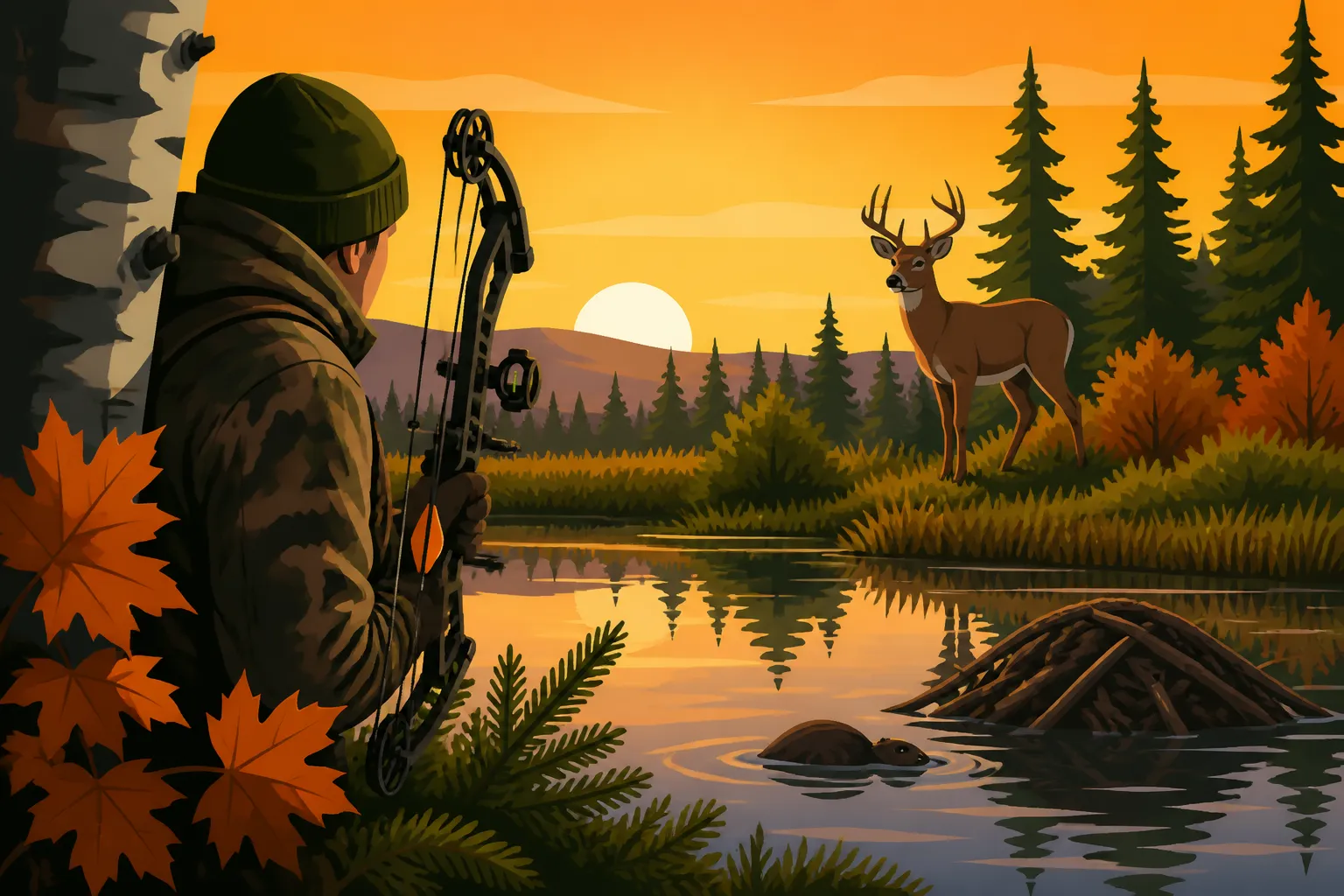
Beaver ponds aren't just pretty scenes in the Maine woods; they're ecological powerhouses that create fantastic deer habitat, especially when the season kicks off. They concentrate resources and funnel movement in ways few other landscape features do. When you're dealing with thick summer-like foliage and deer that haven't yet been pressured, finding a natural advantage is paramount.
Concentrated Resources: Water, Food, and Cover
Think about what a deer needs: food, water, and cover. A beaver pond provides all three in spades, often in a relatively small area, making it a natural hotspot. The creation of a pond by beavers floods low-lying areas, killing off mature timber but encouraging an explosion of new, succulent vegetation around the edges and in the shallow water. Young willow and alder shoots, tender grasses, and various aquatic plants become prime browse, especially attractive in the early season when they're still green and packed with nutrients. Deer will often wade into the shallows to feed on these offerings, particularly during drier spells when other water sources might be scarce.
Beyond the immediate pond edge, the surrounding uplands typically feature diverse forest types. You'll find mixed hardwoods, often with scattered apple trees or oak stands, offering early mast crops like acorns or apples that deer absolutely crave. Conifer thickets, often spared by the beavers, provide thermal cover and bedding areas just a stone's throw from the water and food. This unique blend means deer don't have to travel far to meet all their daily needs, making the beaver pond a central hub of activity.
Natural Funnels and Predictable Travel Routes
Perhaps one of the most compelling reasons to focus on beaver ponds for early season deer is their uncanny ability to create natural funnels. The water acts as a significant barrier, and deer, being creatures of efficiency, will almost always take the path of least resistance. This means they'll stick to the narrowest points of the dam, well-worn trails along the pond's edge, or specific crossings where the water is shallowest or the bank is firmest. These choke points become predictable travel routes, whether deer are moving from bedding to feeding, accessing water, or simply navigating their territory.
Identifying these funnels is crucial. You might see trails leading directly to the beaver dam itself, where deer cross from one side to the other. Or perhaps there's a narrow strip of high ground between the pond and a thick swamp that funnels all traffic through a specific pinch point. Even a small island within the pond, accessible via a shallow crossing, can serve as a secure bedding spot, forcing deer to use specific entry and exit routes. Hunters who utilize detailed mapping applications like onX Hunt can often spot these natural funnels and terrain features from an aerial perspective, giving them a significant scouting advantage before even setting foot in the woods. These insights are vital, especially when foliage makes ground-level visibility so challenging.
Decoding Deer Sign Around the Pond
Just because a beaver pond looks good on a map doesn't mean deer are actively using it right now. Effective early season hunting relies heavily on fresh sign. Learning to read the subtle clues deer leave behind will tell you if your chosen pond is a productive spot or just a nice view.
Fresh Tracks and Worn Trails
The most obvious and often abundant sign around a beaver pond will be tracks. Deer frequently use the soft, muddy edges of the pond or the moist soil of the dam itself, leaving clear imprints. Your goal is to find fresh tracks. Look for tracks with sharp edges, no dried mud in the indentations, and perhaps even some dampness within them if it hasn't rained recently. Focus on areas where deer are likely to enter or exit the water, cross the dam, or navigate through muddy sections of the bank.
Beyond individual tracks, look for worn trails. A well-used deer trail will be clearly depressed into the soil, with a lack of leaf litter or vegetation in the path. Pay close attention to trails that lead into thick cover, especially conifer stands, which are often bedding areas. Also, note trails that seem to connect different resource areas – from a bedding thicket to a known feeding area, or to a specific section of the pond edge. Deer are creatures of habit, and these established pathways are their highways. Checking these trails after a rain will give you the clearest picture of current activity, as fresh tracks will be perfectly defined. You can learn a lot by Reading Maine Mud for Fresh Deer Movement.
Browse Lines, Rubs, and Scrapes
While early season isn't typically associated with intense rut sign, deer are already establishing their presence, and you can find evidence of this. Look for browse lines on young saplings and shrubs around the pond's perimeter. Deer will nip off the tender ends of branches, and you'll often see the ragged edges where they've fed. Willows and alders that have sprouted in the disturbed soil of the beaver flowage are particularly attractive. If you find significant browsing, it's a strong indicator that deer are spending time feeding in the area.
As the season progresses towards the end of September and into October, you might start to see early rubs. These won't be the massive, shredded trees of the late rut, but rather smaller saplings where bucks have polished their antlers and deposited scent. Look for them along trails or near bedding areas. Similarly, early scrapes might appear. These are typically small patches of pawed-away ground, often under an overhanging branch, where a buck has urinated and left scent. While not as prevalent as later in the year, finding even a few early rubs or scrapes can confirm buck presence and indicate a valuable travel corridor. Pay particular attention to saplings just off the main trails or at the edges of thick cover.
Identifying Bedding Areas
Knowing where deer are bedding is almost as important as knowing where they're feeding. Around beaver ponds, bedding areas are usually found in thick, secure cover that offers good visibility or scent control, often close to a food source and water. Look for dense conifer thickets—spruce, fir, or cedar swamps—adjacent to the pond. These provide excellent thermal cover and security. Often, deer will bed on slightly elevated ground within these thickets, allowing them to survey their surroundings.
Another prime bedding location can be on small, dry humps or even islands within the beaver flowage itself. These spots offer natural protection from predators, as any approaching threat would have to cross water, creating noise and scent trails. Look for matted-down grass, impressions in the leaves, or even scattered deer hair. Observing the wind and sun patterns will also help you identify preferred bedding sites; deer often choose spots where they can get direct sunlight on cool mornings or shade on warmer afternoons, always with an eye (and nose) to the wind. Understanding these preferences can help you predict where deer will be spending their daylight hours.
Strategic Setup and Approach
Once you've identified a promising beaver pond and located fresh sign, the next critical step is planning your approach and setup. This is where many hunts are won or lost, especially in the early season when deer are less tolerant of human disturbance.
Mind the Wind and Plan Your Entry/Exit Routes
The wind is your absolute best friend or worst enemy when deer hunting, and around beaver ponds, it's doubly important due to the unique air currents. Thermals, which are air currents that rise as the sun heats the ground and fall as it cools, play a significant role. In the morning, cold air sinks into low-lying areas, carrying your scent downhill and into the pond basin. In the evening, as the air cools, it reverses, pulling your scent up. You must account for this, often combining wind direction with thermal movement, to ensure your scent cone is never blowing into a likely deer travel path or bedding area.
Before you even leave your truck, check the wind direction using a reliable source (many modern hunting apps, like onX Hunt, offer real-time wind conditions and even future forecasts, complete with colored wind direction arrows layered over your map). Then, meticulously plan your entry and exit routes. You want to walk away from where you expect deer to be, approaching your stand or blind from an indirect path that keeps you downwind. This might mean taking a much longer route, but it's infinitely better than blowing out your spot before you even settle in. A quiet, stealthy entry is paramount. For more on this, consider reading up on Wind and Thermals in Maine Hill Country.
Stand Placement Versus Ground Blind
Choosing between a treestand and a ground blind depends on the specific beaver pond, the surrounding cover, and your hunting style.
Treestands offer a significant advantage by getting you up off the ground, elevating your scent and providing a better vantage point over thick early season foliage. Look for a sturdy tree on a pinch point, a well-used trail, or overlooking a feeding area along the pond's edge. A good spot would be 15-20 yards from where you expect deer to pass, allowing for a comfortable shot. Ensure you have clear shooting lanes, but also enough cover to break up your silhouette. Ladder stands or hang-on stands can be effective, but remember to always use a safety harness. A treestand overlooking a natural funnel where deer cross a dam, or a narrow strip of land between the pond and a thick bedding area, can be deadly.
Ground blinds, on the other hand, are excellent for areas with limited suitable trees or if you prefer to be at eye level with your quarry. They offer superior concealment, especially when brushed in naturally. A pop-up blind can be set up in minutes, or you can construct a natural blind from deadfalls and branches. Focus on placing your blind where it blends into the background, providing shooting lanes to key areas like crossings or heavy browse. Ground blinds can be particularly effective in thick underbrush around the pond or along a timbered fenceline leading to the water. Keep in mind that Using a Ground Blind on Posted-Free Land is a great option for minimizing your footprint and staying hidden.
| Feature | Treestand Advantages | Ground Blind Advantages |
|---|---|---|
| Visibility | Elevated view over brush, better long-range scouting | Concealed at ground level, excellent close-range cover |
| Scent Control | Elevated scent cone disperses higher | Requires strict wind adherence, scent rises less |
| Concealment | Silhouette broken by tree, less movement detected | Total concealment, allows for more movement |
| Mobility | Can be moved, but takes time; often requires specific trees | Pop-ups highly mobile, natural blinds can be built anywhere |
| Safety | Fall risk, requires harness | No fall risk |
| Accessibility | Challenging for those with mobility issues, steep climbs | Accessible for all mobility levels |
| Shot Angle | Downward angle for clean pass-through | Eye-level shot, can be harder to clear brush |
Patience and Quiet Movement
Early season deer are generally more relaxed but also less forgiving of mistakes. They haven't been harassed for months, so any sudden movement, loud noise, or whiff of human scent will send them packing. Once you're in your stand or blind, commit to staying put and being absolutely still. Check your phone for messages discreetly (use a hunting app like GoHunt for intel or scouting, but keep notifications off!).
Moving quietly to and from your stand is equally important. Avoid stepping on dry leaves or snapping twigs. When approaching a beaver pond, the ground can be wet and soft, which can be an advantage for quiet walking, but also means splashing sounds can carry far. Slow down, take deliberate steps, and use the natural terrain and vegetation to mask your movements. Often, the early season foliage, while a hindrance to visibility, can also provide excellent cover for a stealthy approach.
Tactics for Maximizing Success
Hunting a beaver pond isn't just about finding the right spot; it's about employing the right tactics to capitalize on the deer activity you've identified.
Still-Hunting the Edges and Transitions
For those who prefer a more active approach or don't have a permanent stand, still-hunting the edges of a beaver pond can be incredibly effective in the early season. With the dense foliage, you can often move slowly and deliberately, using the cover to your advantage. Focus on walking into the wind, taking three to five slow steps, then pausing for several minutes to glass, listen, and scan for movement. The goal is to move so slowly that you become part of the environment.
Key areas to still-hunt include the upland transitions where hardwoods meet the wet pond margins, finger points of land that extend into the water, and any dense thickets adjacent to the pond that might serve as bedding. Pay close attention to subtle movements – a flick of an ear, a dark patch that doesn't quite look like a tree stump, or the horizontal line of a deer's back in the vertical woods. The early season allows for this type of hunting because deer are often less jumpy than later in the year, and the abundant cover can help conceal your movements, making it easier to slip into bow range. This method is particularly rewarding as it connects you deeply with the woods.
Utilizing Digital Scouting Tools
In today's hunting world, leveraging technology can give you a substantial edge. Before you ever lace up your boots, use digital scouting tools to identify potential beaver ponds in your hunting area. Applications like onX Hunt are invaluable for this. You can overlay satellite imagery with topo maps to pinpoint ponds, identify natural funnels created by the water, and even trace potential entry and exit routes that keep you concealed and downwind. The property line layers are also crucial for ensuring you're hunting legally on either private land (with permission) or public tracts. Scouting With the Maine Hunting App is a great way to familiarize yourself with these powerful tools.
Furthermore, use these apps to mark deer sign you find on the ground: tracks, rubs, beds, and feeding areas. This creates a virtual map of deer movement over time, helping you refine your strategy. You can even use the app's wind function to simulate wind direction at various times of day, helping you decide when and how to approach your chosen spot. Tools for strategic planning and intel gathering, like those offered by GoHunt, can further inform your approach by providing general insights into deer behavior and successful hunting tactics in similar environments, even if their primary data isn't always Maine-specific. These resources, combined with your own boots-on-the-ground scouting, form a powerful combination for early season success.
Patience is a Virtue
Early season deer hunting can test your patience. Unlike the rut, when bucks are actively chasing and moving throughout the day, early season deer often follow more predictable, but sometimes very limited, patterns. They may only move during the low light hours of dawn and dusk, or even primarily at night, especially if temperatures are still warm. Don't get discouraged if you don't see deer constantly.
Commit to long sits, especially during prime feeding times in the morning and evening. Bring snacks, water, and enough layers for potential temperature swings. The deer are there; it's often a matter of being in the right place at the right time and remaining undetected until they make a mistake. By understanding the unique appeal of beaver ponds and diligently applying these scouting and hunting strategies, you significantly increase your odds of tagging a Maine whitetail when the season first opens. Remember that securing your Maine Hunting Licenses and What They Cost is the first step to enjoying this incredible outdoor pursuit.
Disclaimer
This article is for general informational purposes only and does not constitute professional advice. Laws, prices and regulations vary by location and change over time. Consult a qualified professional for guidance on your specific situation.