Decoying Eiders Off the Maine Coast
There's nothing quite like the raw, invigorating challenge of chasing sea ducks along Maine's rugged coastline, and among them, the common eider stands out as a true prize. Many hunters dream of those dramatic flights of big, dark birds cupping their wings over a perfect spread, but getting them to commit can be downright frustrating. This guide will walk you through everything you need to know about successfully decoying eiders off the Maine coast, helping you turn those dreams into reality.
Understanding Maine's Common Eider
Before you can effectively decoy these magnificent birds, you need to understand them. Eiders aren't like your typical puddle ducks or even most divers; they're built for the harsh, unforgiving marine environment of the North Atlantic, and their behavior reflects that. Knowing their habits, what they eat, and how they interact with their environment is foundational to setting a successful spread.
Eider Biology and Behavior on the Maine Coast
Common eiders (Somateria mollissima) are Maine's largest sea ducks, and they thrive in the cold, turbulent waters that define our coast. These birds are true marine specialists, rarely venturing far from saltwater. They're incredibly hardy, capable of diving to impressive depths to forage, and their dense plumage provides excellent insulation against the brutal winter winds and icy waves.
Their diet is primarily made up of mussels, clams, and various crustaceans like crabs. This is a critical piece of information for hunters because it tells you exactly where to look for them: rocky ledges, mussel beds, and areas with strong currents that expose these food sources. You'll often see large rafts of eiders feeding in these areas, particularly on a falling tide as more of the bottom becomes accessible. They are highly social birds, often forming massive flocks, which is why your decoy spread needs to be substantial to grab their attention. Watching how these birds interact, how they land, and how they raft up can give you invaluable clues for your own setup. They tend to land into the wind and into the current, and they often approach a spread from downwind, circling to get a good look before committing. This observation alone can dictate where you position your boat or blind.
Identifying Eider Sex and Age for Bag Limits
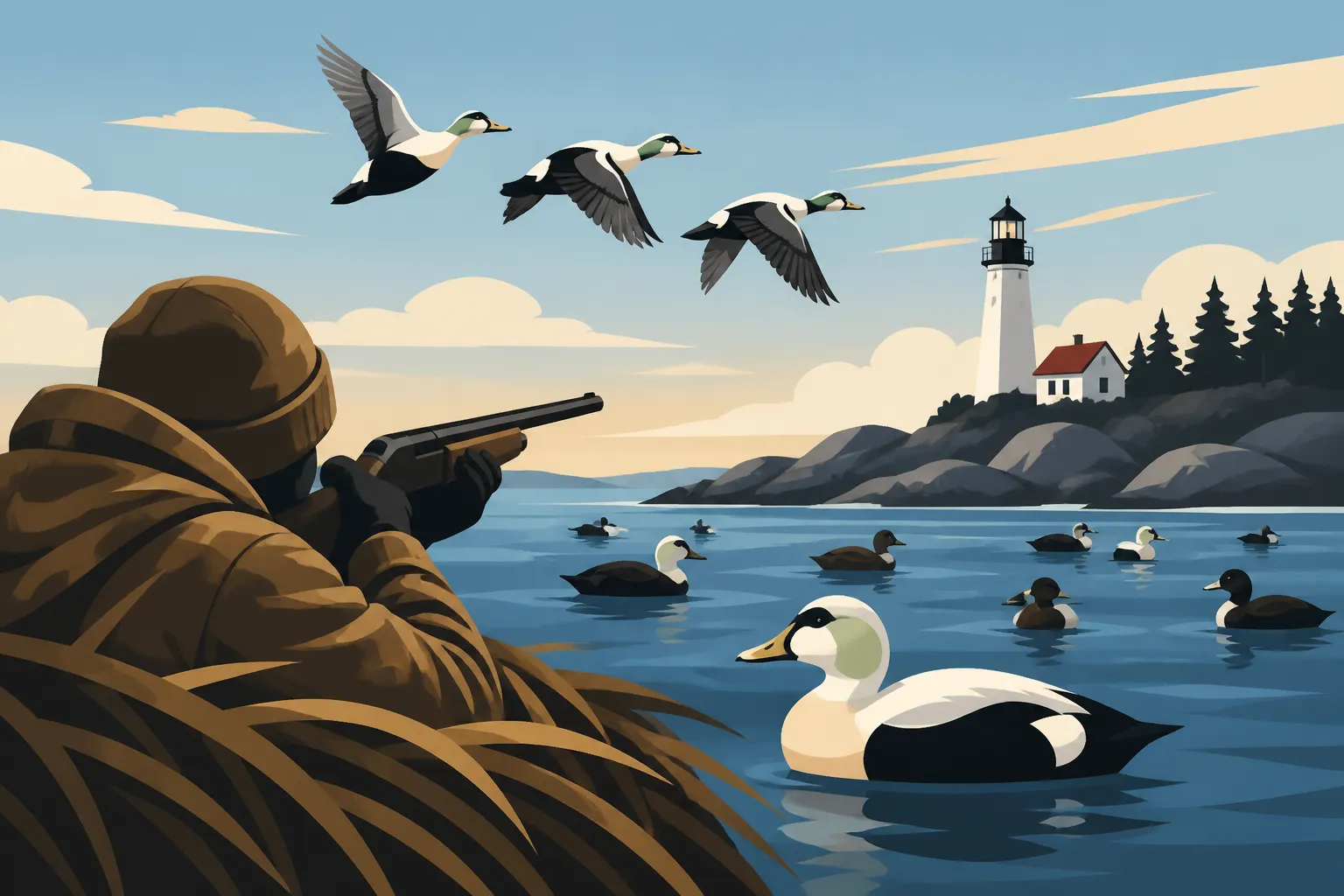
Proper identification of eiders is crucial, not just for confirming your target but also for adhering to Maine's specific bag limits. Common eiders exhibit distinct sexual dimorphism, meaning males (drakes) and females (hens) look quite different. The drakes are truly striking, with their clean black and white bodies, a pale green nape on the back of the neck, and a distinctive orange-yellow bill. Hens, on the other hand, are mottled brown with fine barring, providing excellent camouflage against rocky shorelines and open water. Their bills are typically duller.
Distinguishing between young and adult birds can be a bit trickier, but generally, juvenile drakes will have more brown streaking mixed in with their developing black and white plumage, while juvenile hens might appear less boldly barred than their adult counterparts. Why does this matter? Maine's hunting regulations often have specific daily bag limits and possession limits for sea ducks, including eiders. Currently, the daily bag limit for common eiders is often quite generous, but it's always critical to double-check the most recent regulations before heading out. Being able to quickly and accurately identify a drake from a hen in flight or on the water ensures you stay within legal limits and helps with ethical shot selection. Remember, if you're ever in doubt about the species or sex, it's always best to pass on the shot.
Essential Decoying Strategies for Eiders
Decoying eiders successfully isn't just about throwing out some blocks; it's an art and a science that combines scouting, strategic placement, and a bit of a hunter's intuition. You're trying to replicate a scene so convincing that these wary birds feel safe enough to drop in.
Location, Location, Location: Finding Eider Hotspots
When it comes to eider hunting, selecting the right location is paramount. You can have the best decoys and the most elaborate spread, but if you're not where the birds want to be, you might as well stay home. Eiders are creatures of habit, frequenting areas rich in their preferred food sources: mussels, periwinkles, and other marine invertebrates. This means focusing your scouting efforts on rocky ledges, mussel beds, and areas with strong tidal currents that expose or churn up these delectable meals.
A critical tool in your arsenal should be a good pair of binoculars and detailed marine charts, perhaps even using a robust mapping app like those from GoHunt. Spend time before the season, or even the day before a hunt, observing these coastal areas. Look for rafts of eiders feeding, flying established routes, or roosting on exposed ledges. Pay close attention to how they interact with different tides. Often, a Decoying Eiders on a Falling Tide can be incredibly productive, as the receding water exposes prime feeding grounds. Identify natural funnels created by islands, points, or currents that concentrate bird movement. Understanding the Reading a Ledge for a Morning Sea Duck Flight will give you a huge advantage, as these birds often use specific ledges for feeding, resting, or staging before moving to other areas. Never underestimate the power of scouting; it's the biggest difference-maker in consistent sea duck success.
Decoy Spreads and Numbers: Creating the Illusion
Eiders are flocking birds, often traveling and feeding in large groups. To convince them your spread is a safe and inviting place to land, you need to create a visual impact that mimics these large congregations. This means going big with your decoy numbers. While you might get away with a dozen or two puddle duck decoys, you'll want at least 2-4 dozen eider decoys, and often more, to truly draw them in. Some serious sea duck hunters run spreads of 50-100+ blocks!
The arrangement of your decoys is also crucial. You're not just creating a random blob; you're trying to replicate natural eider behavior. Common strategies include:
- J-hook or U-shape: This creates an inviting "landing zone" in the open part of the J or U, giving incoming birds a clear spot to commit to, typically upwind or upcurrent of your blind.
- Loose Blob: Sometimes, a more natural, clumped look, especially around an exposed ledge, can be effective. This works well if you're hunting an area where birds naturally raft up.
- Decoy strings/gang rigs: These are incredibly efficient for deploying and retrieving large numbers of decoys, mimicking a long string of birds resting or swimming.
- Spacing: Avoid placing decoys too close together. Give them some breathing room, but not so much that they look scattered and unnatural.
Always consider the wind and current. Birds will generally land into the wind, so position your open "landing zone" accordingly. The current will also influence how your decoys sit in the water, so ensure they look natural and are facing a realistic direction. Using a mix of drakes and hens will add to the realism, though a higher proportion of drakes can sometimes be more visible from a distance.
Decoy Selection: The Right Tools for the Job
Not all decoys are created equal, especially when battling the elements on the Maine coast. Eider decoys need to be durable, realistic, and designed to perform in rough water. Investing in quality decoys is paramount; cheap, flimsy blocks will often look unnatural, sink, or quickly deteriorate.
Look for decoys that are:
- Heavy and stable: They need to ride the waves naturally without capsizing or bobbing excessively. Solid-bodied decoys or those filled with foam are excellent choices.
- Realistic: Detailed paint schemes, lifelike body postures, and accurate sizing are important. Eiders have a very distinct profile, so avoid generic sea duck decoys. Brands like Avian-X, Fowl Life, and GHG (Greenhead Gear) are popular among serious sea duck hunters for their realism and durability.
- Visible: While realism is key up close, from a distance, contrast and size are vital. Drakes, with their bold black and white, naturally stand out, so ensuring your decoys have good contrasting paint will help pull birds in from afar.
For rigging, forget the standard string and clip. You'll need heavy-duty setups that can withstand strong currents and keep your expensive decoys in place.
- Texas Rigs: Popular for their ease of deployment and retrieval, featuring a heavy lead weight, stout monofilament line, and a large loop for carrying. These work well for individual decoys.
- Gang Rigs: Long lines (often 50-100 feet) with multiple decoys spaced along them, weighted at each end. These are incredibly efficient for large spreads and mimicking strings of birds. You'll need substantial anchors (5-10 lbs or more) on each end to hold them in place.
- Decoy Weights: Think heavy. Much heavier than you'd use for inland ducks. 8-12 oz weights are common for individual decoys, and your gang rig anchors will be even heavier.
The unforgiving nature of the Maine coast demands robust gear. Skimping on decoys or rigging will lead to lost blocks and, more importantly, lost opportunities when birds flare from an unrealistic spread.
Mastering the Hunt: Setup, Concealment, and Calling
Once you've got your location and decoys dialed in, the next phase is executing the hunt. This involves how you set up your boat or blind, making sure you're hidden effectively, and knowing when (and if) to use a call.
Boat Setup and Layout Blind Options
Hunting eiders often means hunting from a boat, as these birds typically frequent open, exposed water. The type of boat you use is critical for safety and effectiveness.
- Sea Duck Boats: Specialized "devil's boats" or "tank boats" are common, designed for stability in rough water. They typically have a low profile, large cockpits, and often built-in blinds. They're heavy, stout, and can take a beating from the waves.
- Layout Boats: For the ultimate low profile, a layout boat is hard to beat. These small, low-lying craft virtually disappear into the waves, putting you at water level with your decoys. They are often towed to the hunting grounds by a larger "mother boat" which then acts as a safety vessel and a place to warm up. Layout Boat Hunting the Maine Coast offers an incredibly immersive experience, but it's not for the faint of heart and requires calm conditions or a very experienced crew.
Regardless of the boat type, anchoring is paramount. You'll often be anchored in strong currents and exposed to significant wave action. Use multiple heavy anchors (Danforth or grapple style are good) to secure your boat, especially if you're using a boat blind. Make sure your anchor lines are long enough to account for tide swings and rough water; a general rule is a 7:1 scope (7 feet of line for every 1 foot of depth at high tide). If you're hunting an exposed shoreline or ledge, setting up a shore blind can also be effective, provided you can safely access the location and blend in. Always prioritize safety over getting a perfect shot; the Maine coast is no place to take chances with rapidly changing weather and tides. Remember, the Maine Sea Duck Coastal Zone Line defines specific areas, and understanding these boundaries is key to legal and safe operations.
Camouflage and Concealment for Sea Duck Hunting
Eiders have incredibly keen eyesight. They spend their lives scanning the vast, open ocean, so anything out of place will stick out like a sore thumb. Effective concealment is non-negotiable. Whether you're in a boat blind, a layout boat, or tucked into a rock outcropping, you need to disappear.
- Boat Blinds: If hunting from a larger sea duck boat, your blind needs to be brushed in meticulously. Use natural vegetation from the area (beach grass, spruce boughs, driftwood) to break up the boat's outline. The goal is to make it look like just another piece of the coastal landscape. A camouflage netting over the top can help, especially for overhead passes.
- Layout Boats: These are designed for concealment, but you still need to be mindful of your head and shoulders. Many layout boats have a built-in cover or pop-up blind to help you disappear until it's time to shoot.
- Shore Blinds: If hunting from land, build your blind into existing cover like a large boulder, dense spruce thicket, or pile of driftwood. Again, use local materials to make it blend seamlessly.
Beyond the blind itself, your personal camouflage is crucial. Wear full head-to-toe camouflage that matches the coastal environment – grays, browns, and dark greens are typically effective. Avoid bright colors, even on your equipment. Pay special attention to your face and hands; a full face mask and gloves are essential to prevent glare from skin or exposed hands from flaring birds. The ocean environment offers little forgiveness for poor concealment, so every detail matters.
Eider Calls: When and How to Use Them
Unlike mallards or even geese, eiders are not known for their vocalizations, and calling plays a much less significant role in decoying them. Your decoy spread and location are 95% of the battle. However, a call can sometimes be the subtle finishing touch that convinces a wary bird to commit.
Eider calls typically mimic the "growl" or low "moan" sounds drakes make. These are deep, guttural sounds, not loud quacks or honks.
- When to use: Use a call sparingly. It's most effective when birds are circling your spread, just out of range, appearing hesitant. A few soft growls might pique their interest and encourage them to drop those last few yards. It's generally not used to bring birds in from a great distance.
- How to use: Keep it natural and subtle. Avoid over-calling, as it can sound unnatural and scare birds away. A few short, deep growls, mimicking the sounds of contented eiders on the water, are usually all you need. Focus on drawing their attention and reassuring them your spread is real. Many seasoned eider hunters don't even carry a call, relying entirely on their extensive decoy spreads and impeccable concealment. It’s more of an advanced technique for very specific situations rather than a primary tool.
Timing Your Hunt: Tides, Weather, and Seasons
The rugged Maine coast is a dynamic environment, and successful eider hunting is heavily influenced by natural factors. Understanding the rhythm of the tides, the impact of weather, and the nuances of the season can make or break your hunt.
The Critical Role of Tides
Tides are arguably the single most important factor in locating and decoying eiders on the Maine coast. These birds feed primarily on bottom-dwelling organisms like mussels and crabs, and the availability of these food sources is directly tied to tidal fluctuations.
- Falling Tide: Many hunters find a Decoying Eiders on a Falling Tide to be the most productive. As the water recedes, mussel beds on ledges and rocky bottoms become more exposed and accessible. Eiders will often concentrate in these areas, actively diving and feeding. Setting up your decoys and blind to intercept birds moving to these newly exposed feeding grounds can be incredibly effective.
- Low Tide: At dead low tide, some areas might be too exposed, causing birds to move to deeper water or out to sea. However, certain deeper channels or isolated mussel beds might still be productive.
- Rising Tide: As the tide comes in, it covers the prime feeding grounds. Eiders might move to deeper water, use other feeding strategies, or raft up in resting areas. Some hunters find success on a rising tide by setting up on the edges of channels or over submerged ledges where birds might stage.
- High Tide: High tide often means eiders are resting or loafing on exposed ledges that remain above water, or simply out in large rafts in deeper, calmer water. While you might find them, actively decoying feeding birds can be harder.
Always consult local tide charts for your specific hunting area. Tides vary along the coast, so what works in one cove might not be effective just a few miles away. Knowing when the tide will turn and how much it will drop or rise is essential for planning your set and timing your arrival.
Weather Conditions for Prime Eider Action
Eiders are tough birds, and often, the rougher the weather, the better the hunting. They thrive in conditions that send other waterfowl scrambling for shelter.
- Wind: A good strong wind, especially out of the north or northeast, can create ideal conditions. Wind helps to break up the water's surface, making your decoys look more natural and helping to conceal your boat or blind. More importantly, it can push birds closer to shore and establish clear flight paths into the wind, which is how eiders typically approach a decoy spread. However, winds that are too strong can make for incredibly dangerous hunting conditions, so always prioritize safety.
- Waves: Choppy water is generally a good thing for eiders. It helps animate your decoys, making them bob and weave like live birds. Eiders are built for big water, and they often become more active and less wary in rougher seas. Calm, flat-calm days can be challenging, as the birds become exceptionally wary and can spot inconsistencies in your spread or concealment from a long distance.
- Cold Temperatures: Eiders are arctic birds, perfectly adapted to frigid conditions. Cold snaps in late fall and winter often push more birds down the coast, increasing concentrations in Maine. These are often the times when sea duck hunting is at its best.
That said, while eiders love rough weather, you need to stay safe. Never venture out in conditions beyond your boat's capabilities or your own experience. The Maine coast can be unforgiving, with rapidly changing weather patterns. Always check the marine forecast before heading out, and have a backup plan if conditions deteriorate.
Understanding Maine's Sea Duck Season
Maine offers a fantastic opportunity for sea duck hunting, with specific seasons designed to align with migratory patterns and bird concentrations. The Maine Sea Duck Season and Zones typically runs from early October through late January, often with a "split season" to maximize hunting opportunities. A split season means there are specific open periods, then a short closure, followed by another open period. You'll need to pay close attention to the exact dates, which are set annually by the Maine Department of Inland Fisheries and Wildlife (MDIFW) and comply with federal migratory bird regulations.
- Early Season (October/November): While eiders are present, populations tend to build as more birds migrate down from the north. These early hunts can be good, but numbers might not be at their peak.
- Late Season (December/January): This is often when Maine sees the highest concentrations of common eiders. Large rafts of birds will be staging and feeding along the coast, having completed their migration. The colder weather can also make birds more active as they seek out food to maintain their energy reserves.
Always consult the current year's Maine hunting law book or the MDIFW website for the precise Hunting the Split Sea Duck Season dates, bag limits, and any zone-specific regulations. These details can change year to year, and staying informed is your responsibility as a hunter.
Gear, Safety, and Regulations for a Successful Trip
Sea duck hunting on the Maine coast is an incredible experience, but it demands proper preparation. Beyond your decoys and firearms, a host of essential gear, an unwavering commitment to safety, and a thorough understanding of regulations are non-negotiable for a successful and legal hunt.
Essential Gear Beyond Decoys
While your decoys are central to attracting eiders, many other pieces of gear are absolutely critical for a safe, comfortable, and productive hunt in the demanding coastal environment.
- Warm, Waterproof Clothing: This is perhaps the most important category. You'll be exposed to cold wind, sea spray, and possibly rain or snow. Layering is key: start with moisture-wicking base layers, add insulating mid-layers (fleece, down), and top it off with a heavy-duty, waterproof and windproof outer shell. Many sea duck hunters opt for a dry suit or a high-quality set of foul-weather gear (bibs and jacket) to stay dry. Remember to include warm waterproof gloves or mitts, and a warm hat that covers your ears. Hypothermia is a serious risk on the Maine coast.
- Footwear: Insulated, waterproof boots are a must. Many hunters also wear chest waders for wading out to set decoys or retrieve birds.
- Thermos with Hot Beverages: A thermos full of coffee, tea, or soup can be a lifesaver on a frigid morning, helping to keep your core temperature up.
- Navigation and Communication: A reliable GPS (many hunters use dedicated marine GPS units or a rugged handheld unit like those used by GoHunt users) and a VHF marine radio are essential. Cell service can be spotty along the coast, so don't rely on it. A compass and paper chart are excellent backups.
- Safety Equipment: Beyond PFDs (Personal Flotation Devices), which are legally required, consider a first-aid kit, signaling devices (flares, whistle), a spare anchor and line, and basic boat repair tools.
- Bird Retrieval Tools: A long-handled net or a grappling hook can be invaluable for recovering downed birds in rough water or strong currents, keeping you safely in the boat.
Prioritizing Safety on the Maine Coast
The Maine coast is beautiful but unforgiving. Safety must always be your absolute top priority when sea duck hunting. The dynamic combination of cold water, strong currents, rough seas, and unpredictable weather demands respect and meticulous planning.
- PFDs (Life Jackets): Always, always wear a properly fitted PFD when on the water. It's not just a legal requirement; it's a potential lifesaver if you unexpectedly end up in the frigid Atlantic.
- Boat and Crew: Ensure your boat is seaworthy and properly maintained for the conditions you'll face. Never overload it. Have at least one other experienced person with you who knows how to operate the boat and understands emergency procedures.
- Float Plan: Inform someone reliable on shore of your hunting location, your intended return time, and who is with you. Stick to that plan. If you're delayed, they'll know to call for help.
- Weather Monitoring: Check the marine forecast religiously before and during your hunt. Be prepared to cancel or cut short your trip if conditions are predicted to worsen. A small craft advisory or gale warning is a clear sign to stay ashore.
- Hypothermia Awareness: Understand the symptoms of hypothermia and how to prevent it. Staying dry and warm is critical. If someone starts shivering uncontrollably, becomes disoriented, or loses coordination, get them to warmth and dry clothes immediately.
- Shooting Safety: Be mindful of your shooting lanes, especially with multiple hunters in a boat. Always know where your partners are and ensure a clear shot with a safe background before pulling the trigger. The ocean seems vast, but stray shot can travel.
Hunting Scoters From a Sea Duck Boat or any other sea duck involves inherent risks. A safe hunter is a successful hunter who gets to come home and tell the tale.
Navigating Maine's Sea Duck Regulations
Before you even think about setting out your first decoy, you need to be intimately familiar with Maine's hunting regulations for migratory waterfowl. These regulations are a combination of federal and state laws, and ignorance is no excuse.
- Federal Duck Stamp: Anyone 16 years of age or older must purchase a Federal Migratory Bird Hunting and Conservation Stamp (Federal Duck Stamp) annually. This stamp is vital for waterfowl conservation.
- Maine Migratory Bird Certification: In addition to your regular Maine hunting license, you'll need to obtain a Maine Migratory Waterfowl Permit or Certification, which is usually a small additional fee.
- HIP (Harvest Information Program) Certification: All migratory bird hunters (including sea duck hunters) must also complete a Harvest Information Program (HIP) survey each year. This is a federal requirement to collect harvest data.
- Firearms and Ammunition: You must use a shotgun that is plugged to hold no more than three shells (one in the chamber, two in the magazine). Only non-toxic shot (steel, bismuth, tungsten-alloy, etc.) is allowed for hunting waterfowl; lead shot is strictly prohibited.
- Bag and Possession Limits: Be aware of the daily bag limits (how many birds you can harvest in one day) and possession limits (how many birds you can legally possess at any one time, which is usually three times the daily bag limit). These limits are species-specific, so know the Maine Eider Daily Limit and be able to identify your birds correctly.
- Tagging and Transportation: While generally not required for individual birds in Maine, you must keep one fully feathered wing attached to any migratory bird until it reaches your home or a meat processing facility. This aids in species identification during law enforcement checks.
- Checking Requirements: Unlike deer or moose, sea ducks generally do not require a formal check-in, but accurate record-keeping for HIP is important.
Always carry your valid Maine hunting license, Federal Duck Stamp, Maine Migratory Waterfowl Permit, and proof of HIP certification with you while hunting. The MDIFW website and the annual Maine hunting law book are your go-to resources for the most up-to-date regulations.
| Decoy Spread Consideration | Description | Why it Matters for Eiders |
|---|---|---|
| Number of Decoys | Aim for large numbers, typically 2-4 dozen minimum, often 50+ blocks. | Eiders are highly social flocking birds; a large spread mimics a safe, thriving group. |
| Decoy Type | Use realistic, heavy-bodied eider decoys (drakes and hens). | Specific profile is key; heavy decoys ride waves naturally, unlike generic blocks. |
| Rigging Method | Heavy-duty Texas rigs for singles, sturdy gang rigs for multiple birds. | Strong currents demand secure rigging; prevents lost decoys and ensures natural placement. |
| Spread Shape | J-hook, U-shape, or loose blob. Create an open "landing zone" upwind/upcurrent. | Provides a clear, inviting area for incoming birds to commit to, mimicking natural behavior. |
| Spacing | Give birds enough room to look natural, avoid overly dense clusters. | Mimics natural loafing/feeding; too tight can look suspicious. |
| Visibility/Contrast | Ensure good contrast, especially with drakes, for visibility from a distance. | Eiders scan vast distances; a high-contrast spread grabs attention. |
| Current/Wind Alignment | Position decoys to face naturally into the current and wind. | Birds will land into the wind/current; natural orientation prevents flaring. |
Troubleshooting Common Eider Decoying Challenges
Even with the best planning and gear, sea duck hunting on the Maine coast throws curveballs. Eiders can be incredibly smart and the environment relentlessly challenging. Knowing how to adapt to these common problems is what separates a good hunt from a great one.
Wary Birds and Decoy Shyness
One of the most frustrating things is watching a flock of eiders work your spread beautifully, only to flare off at the last second. Wary birds are a common challenge, especially in areas that see consistent hunting pressure.
- Assess Concealment: First, honestly evaluate your concealment. Did a hunter move? Is glare coming off a face, phone, or gun barrel? Even a slight glint can send birds packing. Re-brush your blind, use more face paint, or ensure you're completely still as birds approach.
- Adjust Spread Configuration: Sometimes a small tweak to your decoy spread can make a difference. If birds are flaring from a J-hook, try a more scattered, natural blob, or vice-versa. Experiment with spacing – sometimes birds want more room, sometimes less. Consider adding a few sleeper decoys to indicate a sense of security.
- Add Motion: Static spreads can sometimes appear lifeless. While motorized decoys might not be as common for sea ducks as for puddle ducks, simple jerk cords or a motion decoy that subtly bobs in the water can add a crucial element of realism. This is particularly helpful on calm days when decoys sit lifelessly.
- Move Your Position: If birds are consistently flaring at a certain point or from a certain direction, it might mean they're seeing something they don't like at that specific spot. A slight shift in your boat's position, or even your blind's angle, can sometimes change their approach enough to get them to commit.
- Scout Smarter: Use tools like GoHunt, which often incorporates land ownership and topographical data, to help identify potential low-pressure areas. If a spot is constantly pressured, birds will quickly learn to avoid it. Sometimes, finding a less obvious location that still holds food and shelter can yield much better results.
Dealing with Strong Currents and Winds
The Maine coast is synonymous with powerful tides and brisk winds, and these forces can quickly turn a calm morning into a challenging battle against the elements.
- Heavier Weights and Longer Lines: If your decoys are dragging or bunching up, your weights are too light, or your anchor lines are too short. Increase the weight of your individual decoy anchors (8-12 oz is a good start) and use substantial anchors for your gang rigs (10-20 lbs, or even small mushroom anchors). Ensure your lines are long enough to provide ample scope – at least 7:1 for depth, and even more in extreme currents.
- Strategic Deployment: Deploy your decoys in a way that allows the current to work with them, not against them. Instead of fighting the current, let it position your gang rigs naturally. If the current is ripping too hard, consider deploying your spread further out of the main flow, or in a more sheltered cove or eddy where birds might seek refuge.
- Boat Position: Your boat needs to be solidly anchored and positioned to minimize exposure to the strongest winds and waves while still giving you good shooting lanes. If the wind is creating dangerous chop, it might be time to pull up and seek a more protected area, or even call it a day. No duck is worth risking your life.
- Practice and Experience: There's no substitute for experience when it comes to reading the water and anticipating how wind and current will affect your setup. Spend time on the water in various conditions, and you'll quickly learn what works and what doesn't.
Recovering Decoys and Harvested Birds
The hunt isn't over until all your gear is retrieved and all downed birds are safely in the boat. This can be surprisingly difficult in rough water and strong currents.
- Plan for Retrieval: Before you even set the first decoy, think about how you'll get them back. If using gang rigs, ensure they're easily accessible. If individual decoys, having a clear path to pull them back to the boat is key.
- Retrieve Downed Birds Immediately: Eiders are incredibly tough birds. A "dead" bird can sometimes dive and swim a surprising distance. Always keep an eye on downed birds, and try to retrieve them as quickly as possible, especially if the current is strong. A cripple can easily be lost in the waves. A quick follow-up shot is ethical to ensure a clean harvest.
- Use the Right Tools: A long-handled net is invaluable for scooping up birds or even individual decoys that drift too close to the boat. A grappling hook can be a lifesaver for snagging a lost decoy line or even a stubbornly drifting bird.
- Safety First During Retrieval: Don't take unnecessary risks by leaning too far out of the boat or going into dangerously rough water to retrieve a single decoy or bird. If you're in a layout boat, coordinate with your mother boat for safe retrieval. Recovering a Deer From a Cedar Swamp might be challenging on land, but recovering a sea duck from frigid, choppy water presents its own unique dangers that require even more caution. Be patient and methodical.
Disclaimer
Please note: Hunting regulations, season dates, and license requirements can change frequently. It is the responsibility of every hunter to consult the most current Maine Department of Inland Fisheries and Wildlife (MDIFW) regulations and federal migratory bird laws before engaging in any hunting activity. This guide is for informational purposes only and does not supersede official regulations. Always prioritize safety, ethical hunting practices, and respect for wildlife and the environment.