Decoy Placement for Pressured Maine Birds
Hunting birds in Maine can be incredibly rewarding, but anyone who's spent a few seasons out there knows that by mid-season, those birds get smart. They've seen every decoy spread, heard every call, and learned to give anything that looks "off" a wide berth. If you're tired of watching ducks flare far out or gobblers hang up just out of range, this guide is for you. We're going to dive deep into how to adapt your decoy placement to consistently fool even the most pressured waterfowl and turkeys across Maine's diverse landscapes.
Understanding What Makes Maine Birds "Pressured"
It's easy to get frustrated when birds refuse to commit to your spread, but it's important to remember they're not doing it to spite you. They're doing it because they've learned. Each time a hunter sets up, calls, and perhaps shoots, those birds file away information about what’s safe and what’s not. This cumulative experience turns naive birds into seasoned veterans who demand a much higher level of realism from your setup.
The Cumulative Effect of Hunter Presence
Imagine being a flock of mallards on a popular beaver flowage in central Maine. Opening weekend, everyone's out there. Hunters are tucked into every patch of alders, their spreads gleaming under the morning sun. Calls echo across the water, and shots ring out. After a few weeks of this, those ducks aren't flying low over the same points anymore. They've been peppered at. They've watched their buddies drop. They've seen the same shiny decoys day after day.
This consistent pressure changes their behavior dramatically. Their flight patterns shift, often favoring higher altitudes or entirely new routes. They might start using previously overlooked, harder-to-reach pockets of water, or they might become nocturnal feeders in certain areas. They associate the sight of too many decoys, repetitive calling, or even the glint of a blind with danger. This is why a setup that worked wonders on opening day might be completely ignored or actively avoided two weeks later. It's not just about one bad experience; it's about hundreds of subtle cues adding up over time, turning cautious into downright paranoid.
Reading the Signs of Wary Birds
How do you know if the birds you're targeting are truly pressured? They'll tell you, if you're paying attention. The most common sign is flaring—birds banking hard and climbing rapidly well outside of shooting range, sometimes even before they fully commit to a circle. They might make one wide pass and then just disappear, or they'll land hundreds of yards away, choosing a "safe" spot that isn't near your spread.
For turkeys, pressured gobblers are notorious for "hanging up." They'll respond to your calls, sometimes even intensely, but they refuse to close the distance. They might strut and drum just across a field or behind a thick stand of pines, waiting for the hen (your decoy) to come to them. Or they'll appear silently, give your setup a quick, suspicious once-over, and then vanish without a trace. These behaviors are stark indicators that the birds have seen it all before. Before you even think about setting a decoy, spend time observing. Watch their typical flight paths, their approach vectors, and how they react to different stimuli in the area. Tools like GoHunt can be invaluable here, letting you scout aerial maps for overlooked areas or potential hidden landing zones that might be less pressured.
Fundamental Principles of Decoy Placement for Wary Birds
When dealing with pressured birds, your default "go-to" spread probably won't cut it. You need to shift your mindset from merely attracting birds to reassuring them. This means focusing on naturalism, subtlety, and making it as easy as possible for them to commit without suspicion.
Less Is Often More
It's a common trap: you buy a dozen new decoys, and your first instinct is to put them all out. While a large spread can be great for attracting distant birds, for those wary Maine birds who've seen every trick in the book, a massive, perfectly symmetrical spread can be a glaring red flag. Think about it: how often do you see a perfectly spaced raft of 30 ducks in a small beaver pond, especially when they're feeding?
Instead, consider scaling back. For ducks, a handful of high-quality, realistic decoys – say, six to ten – can be far more effective than three dozen cheap ones. Focus on a mix of drakes and hens, with varied postures: some feeders, some resting, a couple alert. Position them naturally, as if they're casually going about their business. This suggests safety and contentment. For spring turkeys, a single hen decoy, perhaps in a feeding posture, often works wonders for a hung-up tom. It’s less intimidating than a jake and hen combo, and far more convincing than a full flock. Remember, the goal isn't to draw the biggest crowd; it's to convince a wary bird that this small group is genuine and safe.
Positioning for Realistic Approach and Shots
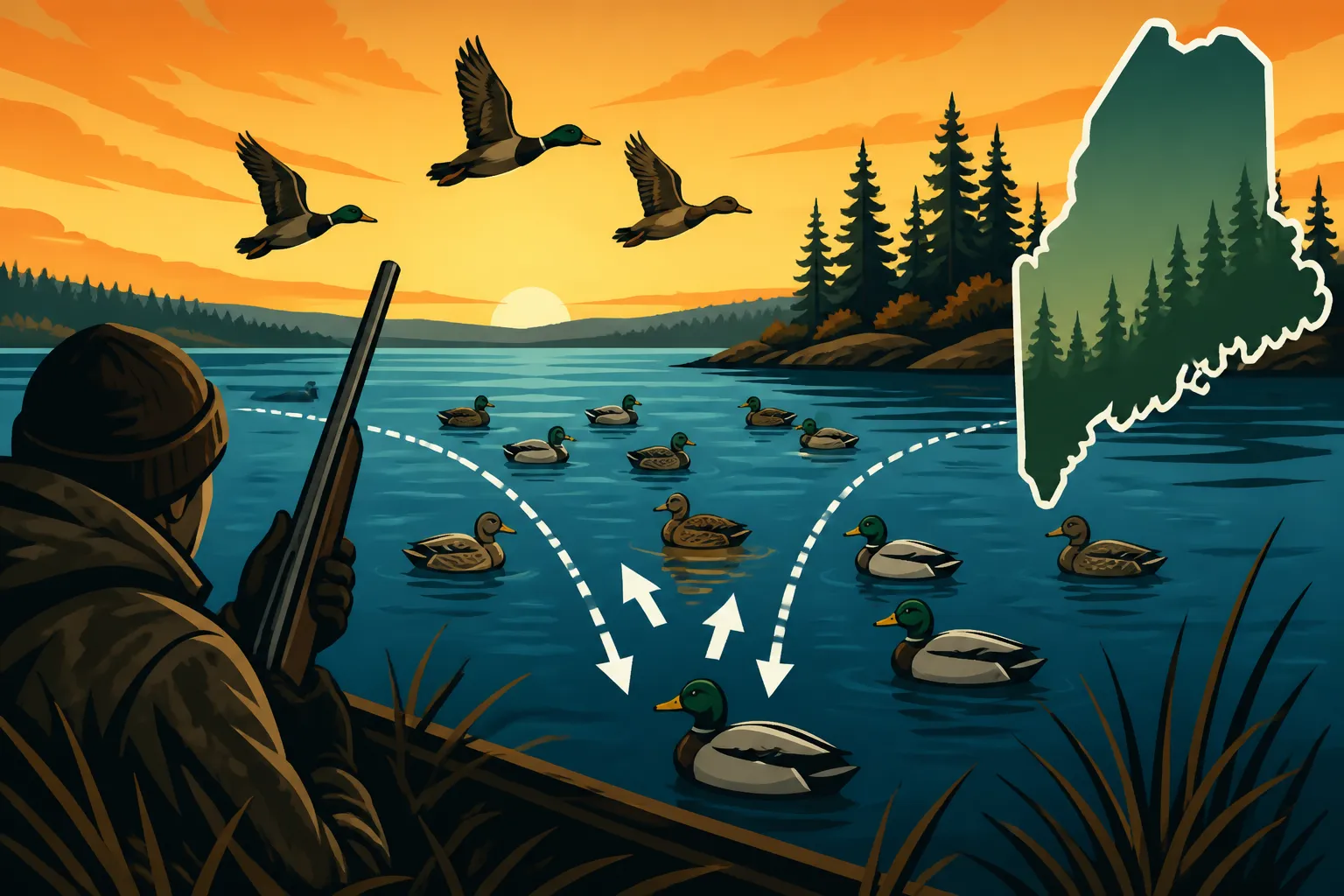
This is where understanding bird behavior and local conditions truly shines. Birds almost universally land into the wind. Your decoy spread needs to take advantage of this, creating a natural-looking "landing strip" or "kill hole" that funnels them directly into your shooting zone. For waterfowl, this means positioning your main cluster of decoys so that there's an open water pocket directly downwind from them, where ducks or geese would naturally set their wings and land. Your blind should be positioned to cover this landing zone effectively.
Sun position is another critical, often overlooked factor. If the sun is at your back, it will illuminate your decoys beautifully, but it will also put a harsh glare in the approaching birds' eyes, potentially making it harder for them to spot your blind. Conversely, if the sun is in your face, it makes it harder for you to see, and it can create distracting shadows around your spread. Aim for a setup where the sun is somewhat to your side, ideally slightly behind the birds as they approach, or where natural cover helps mitigate harsh shadows. When Hunting a Beaver Flowage Edge at Dusk, this becomes even more critical, as low light changes visibility rapidly. The ultimate goal is to make their approach feel safe, natural, and unhindered.
Blending with the Environment
Your decoys aren't just props; they're meant to be an extension of the natural world. This means more than just throwing out a few plastic birds. It means selecting decoys that match the species prevalent in your hunting area and mimicking their natural feeding or resting patterns. For instance, if you're targeting puddle ducks in a marsh, using primarily mallard and black duck decoys makes sense. If you're Decoying Eiders Off the Maine Coast, you'll want large, dark eider decoys. A mixed spread of unfamiliar birds can raise suspicion among wary residents.
Furthermore, avoid perfectly symmetrical or geometric patterns. Nature isn't neat. Scatter your decoys in loose groups, mimicking small family units or feeding clusters. Utilize natural features in the landscape. For example, place a few decoys near a downed log or a clump of cattails, just as real birds would seek shelter or feed. This also extends to your blind. When Using a Ground Blind on Posted-Free Land, ensure it's brushed in thoroughly with local vegetation so it disappears into the background, becoming part of the natural tableau. The more your entire setup looks like an undisturbed part of the environment, the more comfortable pressured birds will feel.
Species-Specific Decoy Strategies for Maine Hunters
Maine's diverse landscape offers hunting opportunities for a variety of bird species, each with its own quirks when it comes to decoy response, especially under pressure. Adapting your strategy to the specific species and their environment is paramount.
Waterfowl: Coastal Sea Ducks and Inland Puddle Ducks
Maine is a waterfowl hunter's paradise, but the birds here, especially those that winter along our coast or migrate through frequently hunted corridors, get educated quickly.
Sea Ducks: Eiders, Scoters, and Long-Tailed Ducks
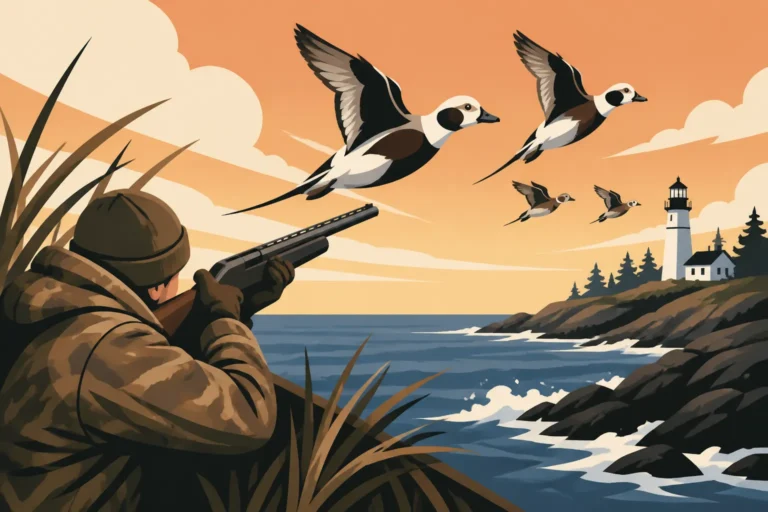
Hunting sea ducks like Common Eiders, Scoters, and Long-tailed Ducks along the Maine coast is a unique experience. These birds are often less wary of human presence than inland ducks, but they can still be decoy-shy, especially if they’ve been shot at over specific ledge systems or islands. For Decoying Eiders Off the Maine Coast, you'll often need a larger spread than for puddle ducks. Eiders typically raft in large groups, so a spread of 2-3 dozen decoys isn't uncommon. Focus on realism with high-quality, sturdy decoys that can handle the ocean's chop. Place them in loose, natural rafts, leaving a large open "landing zone" directly upwind. Sometimes, using a few "sleeper" decoys, mimicking birds resting their heads on their backs, can add a sense of calm and safety to the spread, particularly on glassy calm days when every movement is magnified.
For Scoters and Long-tailed Ducks, which often feed in shallower waters or closer to shore, your spread might be slightly smaller. When Hunting Scoters in Maine's Open Water, a few dozen "black blob" decoys, mimicking their dark bodies, are effective. Long-tailed ducks tend to be a bit more scattered. Always ensure your decoys are well-anchored and stable; nothing spooks birds faster than a decoy flipping upside down in a rogue wave. On bluebird days, these coastal birds can see for miles, so movement is key. A few motion decoys that mimic a diving or dabbling sea duck can make a world of difference.
Puddle Ducks: Mallards, Black Ducks, and Wood Ducks
Inland, puddle ducks on beaver flowages, small marshes, and river systems in places like Aroostook County or the western mountains face intense pressure. For these birds, a smaller, more natural-looking spread is often the key. I often find that 6-12 high-quality decoys are plenty. Focus on species-specific decoys—mostly mallards and black ducks, perhaps a few wood ducks if they're common in your area.
Vary the postures of your decoys: some feeders with their heads down, some drakes and hens in an alert, head-up position, and a couple of resting birds. Arrange them in a loose "J" or "U" shape, with the open end facing into the wind, creating that inviting landing zone directly in front of your blind. This pattern makes it easy for birds to commit to landing. Adding some subtle motion, like a jerk string that makes a few decoys bob and weave, can greatly enhance realism. Remember to always hide your blind effectively, as pressured puddle ducks have keen eyesight. When Hunting a Beaver Flowage Edge at Dusk, the light gets tricky, so ensure your decoys are visible but your blind isn't silhouetted.
Wild Turkeys: Spring and Fall Considerations
Turkeys are incredibly intelligent and wary birds, and pressure only amplifies their suspicion. Decoy strategy needs to be precise and often minimalist.
Spring Gobblers: The Art of Subtlety
Spring turkey hunting in Maine, especially in popular WMDs, means dealing with gobblers that have seen every setup imaginable. For pressured birds, a single hen decoy is often your best bet. A solo hen in a feeding or breeding posture suggests contentment and readiness without the intimidation of a jake or strutting tom. Place her 15-20 yards from your blind, angled slightly to provide a good shot presentation as the gobbler approaches. For truly wary birds, facing the decoy slightly away from the expected approach can make it look more natural, as if she's preoccupied and unaware.
The crucial element is placement relative to your position and the gobbler's likely approach. If the gobbler is across a field, place the decoy where he can see her clearly as he steps into the open. If he's coming through thick timber, place her just inside the edge of the woods. Never place her directly in front of your blind, as a gobbler focusing intently on the decoy will likely spot your movement. Having her off to the side allows you to get your gun up undetected. Sometimes, for a particularly hung-up bird, no decoy at all and relying solely on expert calling is even better.
Fall Flocks: Mimicking the Missing
Hunting Maine's Generous Fall Turkey Season often involves different tactics than spring. Fall turkeys are typically in flocks, and the primary goal is often to "break up" a flock and then call them back together. Once you've scattered a flock, three or four scattered hen decoys can mimic a small, re-forming group, appealing to lonely birds looking to rejoin. Place these decoys 20-30 yards out, mimicking birds that are casually feeding.
A common tactic is Calling a Fall Turkey Flock Apart and then setting up quickly. The decoys act as a visual magnet for birds that might be hesitant to come to calls alone. Again, realism is key—no tight clusters, but rather natural spacing. In the fall, using a jake or even a submissive tom decoy can sometimes work, as it can challenge a returning adult gobbler, but for truly pressured birds, the "less is more" rule with hens often prevails. They are constantly looking for danger, and an unnatural-looking gathering can send them packing.
Decoy Setup Comparison Table
| Species Group | Quantity (Pressured Birds) | Decoy Type/Posture Focus | Typical Pattern/Location | Key Considerations |
|---|---|---|---|---|
| Puddle Ducks | 6-12 (mallards, blacks, woodies) | Feeders, sleepers, a few alert | "J" or "U" shape, open end upwind; near natural cover on small waters | Subtle motion (jerk string), realism, hide well, small kill hole. |
| Sea Ducks | 12-30 (eiders, scoters, long-tails) | Large, dark, sturdy; some sleepers | Loose rafts, large open landing zone upwind; stable in waves. | Durability, visible from distance, match local species, motion. |
| Spring Turkey | 1 (hen) | Feeding or breeding hen | 15-20 yds from blind, slightly off-angle; visible from gobbler's approach. | Subtlety, don't place directly in front of blind, less is more. |
| Fall Turkey | 3-4 (hens) | Feeding, scattered | Loose groups 20-30 yds out, mimicking re-forming flock. | Natural spacing, visual for scattered birds, less critical than calling. |
Advanced Tactics and Overcoming Wary Bird Behavior
Beyond the basics, there are always ways to refine your approach and adapt to the ever-increasing wariness of Maine's game birds. It's about thinking like the bird and continually adjusting.
Dynamism and Movement in Your Spread
A static decoy spread, while sometimes effective for naive birds, often looks completely lifeless to pressured birds. Real ducks and geese are constantly moving, dabbling, preening, and shifting. Integrating subtle, natural movement can be a game-changer. Jerk strings, which allow you to manually create ripples and make a few decoys bob, are incredibly effective and low-tech. They break up the monotony and suggest active, content birds. Battery-operated motion decoys, like spinning-wing ducks or swimmers, can also work, but use them sparingly and strategically for pressured birds. Sometimes, a single spinning-wing decoy can attract attention, but too many can look artificial, especially if the weather conditions don't justify such frantic activity.
For sea ducks, even the natural motion of the water helps, but adding a diver decoy that disappears and reappears can simulate feeding. For turkeys, a decoy with a slight head bob or tail fan movement can be the subtle cue that convinces a hung-up gobbler to take those last few steps. The key here is natural movement. You're not trying to create a carnival; you're trying to replicate the subtle, ongoing activity of live birds. GoHunt's mapping features can also help you identify areas with consistent current or wind patterns where natural movement might be more pronounced, informing your decoy and motion placement.
Scouting and Adaptability
The single most important factor in overcoming wary bird behavior isn't your expensive decoys; it's your knowledge of the birds you're pursuing. Consistent and thorough Scouting Maine Private Land Before Season (or public land, for that matter) is non-negotiable. You need to know where the birds are feeding, where they're roosting, their flight lines, and how they react to different stimuli. Are they avoiding a certain field edge? Are they landing short of a particular point? Pay attention to the details. Reading Maine Mud for Fresh Deer Movement is a common deer hunting tactic, but the same principle applies to birds—look for signs of recent activity, droppings, tracks, and disturbed vegetation.
Once you're in the field, be adaptable. If the birds are flaring consistently at 60 yards, your spread or hide isn't working. Don't be afraid to pull up your decoys and move, or drastically change your pattern. Sometimes, it's about moving your hide 10 yards to better blend with a darker shadow line. Other times, it's reducing your decoy count even further. The weather also plays a huge role. On a calm, bluebird day, birds have excellent visibility, so realism and hiding are paramount. On a blustery, overcast day, they might be more forgiving, and motion becomes more effective. The best hunters are those who treat every hunt as an experiment and are willing to learn and adjust on the fly.
Minimalist and Silhouette Approaches
There are times when even a small spread of full-body decoys feels like "too much" for hyper-pressured birds. This is where a minimalist or even a silhouette approach can be surprisingly effective. For waterfowl, especially geese in large, open fields, a handful of high-quality full-body decoys combined with 10-20 silhouette decoys can effectively mimic a larger flock without the bulk or expense. The silhouettes suggest numbers from a distance, and the full-bodies provide realism up close. This is particularly useful in wide-open spaces where birds are highly alert.
For turkeys, especially in the late spring season when gobblers have been called and shot at extensively, sometimes simply sitting perfectly still against a large tree with excellent camouflage, relying solely on subtle calling, is the most effective "decoy" strategy. The absence of a visual cue might make a wary tom more comfortable committing. If using a decoy, choose one that is dull, non-reflective, and blends seamlessly. The less "man-made" your setup appears, the better your chances with truly pressured birds in Maine's varied terrain, from Hunting Downeast Coastal Cover to the thick spruce of the North Woods.
Successfully decoying pressured birds in Maine isn't about having the fanciest gear, it's about understanding bird behavior, being adaptable, and presenting a setup that whispers "safe and natural" rather than screaming "hunter!" By focusing on realism, thoughtful placement, and being willing to change your approach, you'll be well on your way to bringing more birds into range.
Disclaimer
Please ensure you are familiar with and adhere to all current Maine hunting laws and regulations regarding decoy use, species limits, and seasons before heading into the field. Regulations can change, and it is the hunter's responsibility to stay informed. This guide is for informational purposes only.