Coyote Calling Maine Farm Country
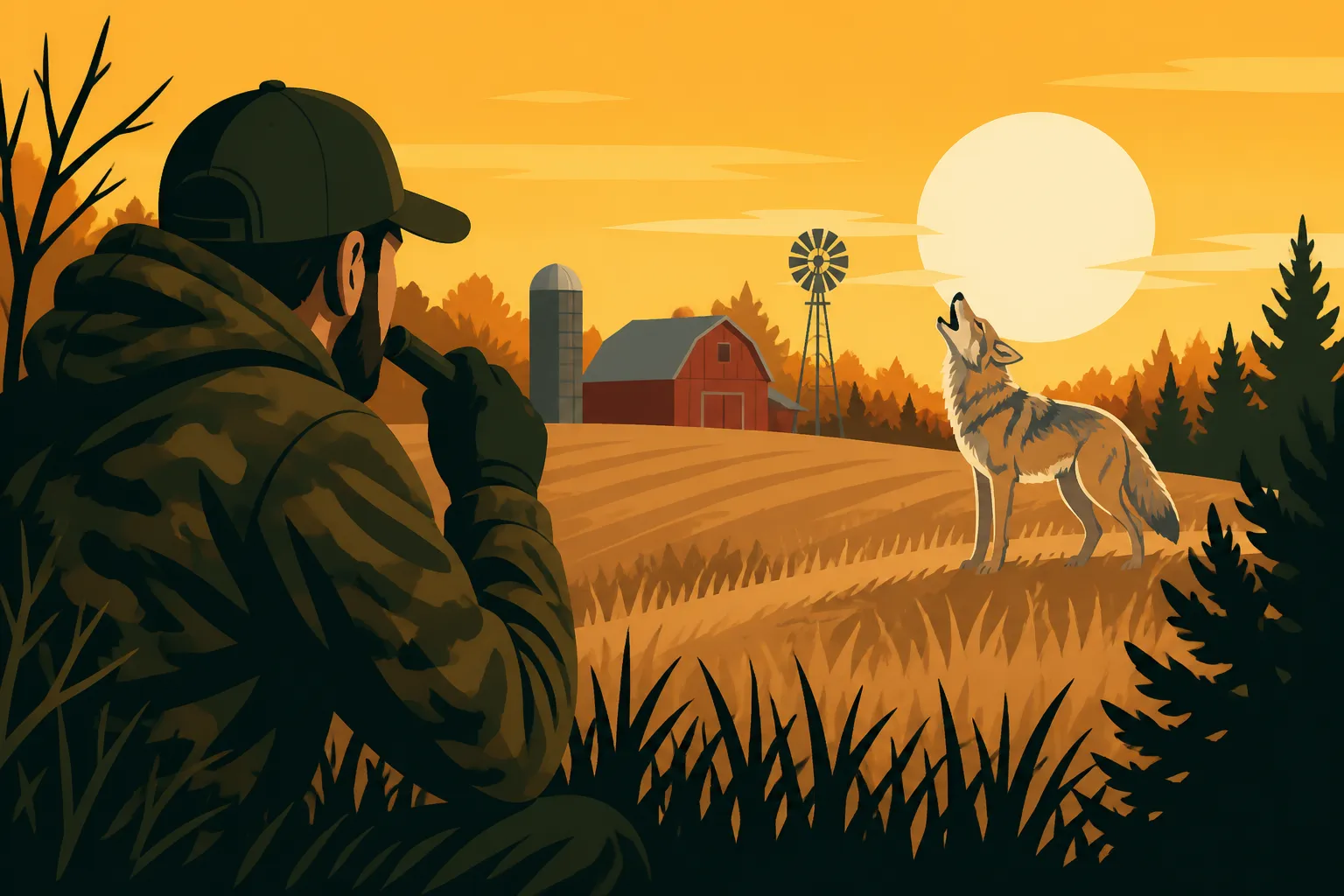
There’s a unique frustration that comes with seeing coyote tracks crisscrossing your back forty, or hearing their distant howls just a little too close to the barn. These intelligent, adaptable predators are increasingly common in Maine’s agricultural landscapes, posing a real challenge for farmers and hunters alike. If you've been wondering how to effectively address this growing presence, this guide is for you, diving deep into the art and science of coyote calling in Maine farm country.
Understanding Maine Farm Country Coyotes and Their Behavior
Coyotes are incredibly intelligent and opportunistic, and Maine's farm country provides them with a veritable buffet of resources. Unlike their deep-woods counterparts, coyotes living near agricultural lands often exhibit slightly different behaviors and preferences, making a tailored approach crucial for success. You can't just hunt them like a deer in the big woods; their world is shaped by fields, woodlots, and the occasional chicken coop.
The Farm Country Advantage: Why Coyotes Thrive Here
Farm country, with its patchwork of open fields, hedgerows, woodlots, and proximity to human habitation, offers an ideal environment for coyotes. Think about it: fields provide easy travel lanes and clear sightlines, while wood edges offer excellent cover for stalking and denning. These areas also concentrate potential prey species like mice, voles, rabbits, and even deer fawns. Farm animals, unfortunately, can also become targets, which is often the primary motivation for farmers to seek control. The landscape itself acts as a funnel, directing coyote movement along specific corridors, like power lines, old stone walls, or the edges of dense alder thickets that separate fields. This access to diverse habitats within a relatively small footprint makes these coyotes particularly resilient and challenging to hunt, as they can quickly disappear into cover after a threat is perceived.
Typical Diet and Prey Preferences
Maine coyotes are generalists when it comes to their diet, but in farm country, certain prey become more prominent. Small rodents are always on the menu, a constant food source found in abundance around fields and barns. Rabbits, especially snowshoe hare, are another favorite, often found lurking in brush piles and thickets along field edges. Depending on the time of year, deer fawns can be a significant food source in spring and early summer. As the seasons change, their diet shifts; in fall and winter, scavenging on deer carcasses left by hunters can sustain them, while in summer, they might raid gardens for fruits and vegetables or prey on ground-nesting birds. Understanding these dietary shifts is key because it dictates which distress calls might be most effective. For instance, a rabbit distress call is almost universally appealing, but a fawn distress call might be particularly potent during the fawning season. Knowing the local prey base helps you choose the right "sound bait." You can learn more about a coyote's diet by studying their scat or local wildlife reports.
Daily and Seasonal Movement Patterns
Coyotes in Maine farm country generally follow crepuscular and nocturnal patterns, meaning they are most active during dawn, dusk, and throughout the night. However, it's not uncommon to see them moving during daylight hours, especially in areas with less hunting pressure or during the colder months when they need more food. Their daily movements often involve traveling along field edges, through wooded corridors, and checking out scent posts like fence lines or prominent rocks. Seasonally, their patterns shift with breeding (late winter), denning (spring), and raising pups (summer). During pup-rearing season, both adults are actively hunting, often venturing further during the day. As fall approaches, pups start dispersing, and territoriality can increase. Understanding these cycles helps you predict where they might be and what type of calls they might respond to, whether it's an aggressive howl from a dominant male or the whimpering of a lost pup. These behaviors influence how you approach, set up, and call.
Selecting and Mastering Your Coyote Calls
The right call at the right time can be the difference between a successful hunt and a lonely sit. There's an overwhelming array of options out there, but breaking them down by type and intended use makes it much simpler. It's not just about having the call; it's about knowing how to use it, and perhaps more importantly, when to use it.
Electronic Versus Mouth Calls: Pros and Cons
Both electronic and mouth calls have their place in a coyote hunter's arsenal. Electronic calls, like those from Foxpro or ICOtec, offer a vast library of realistic sounds, from various distress calls to howls and pup vocalizations. Their biggest advantage is versatility and the ability to project sound over long distances without moving, allowing you to stay perfectly still while the call does the work. They're excellent for beginners due to their ease of use and consistency. The downside? They require batteries, can be expensive, and sometimes lack the raw, emotional nuance that an experienced mouth caller can produce. On the other hand, mouth calls are incredibly portable, affordable, and battery-free. They allow for instant adjustments in tone and volume, which can be critical for mimicking a dying rabbit or a frantic bird. The challenge is mastering them; it takes practice to achieve realistic and consistent sounds. Many seasoned hunters carry both: an e-caller for broad coverage and a mouth call for subtle, close-range finishes.
| Call Type | Pros | Cons | Best Use Cases |
|---|---|---|---|
| Electronic | Versatile sounds, high volume, remote control | Costly, battery-dependent, less "feel" | Long-range calling, diverse sound library, hands-free |
| Open Reed | Versatile, emotional, compact, affordable | Steep learning curve, requires practice | Close-in calling, varied tones, compact |
| Closed Reed | Easy to learn, consistent, durable | Less versatile, limited sounds | Beginner friendly, consistent distress calls |
| Howler | Mimics coyote vocalizations, challenges territory | Can spook coyotes if overused or poorly executed | Locating coyotes, challenging dominant animals |
Essential Sounds: Distress, Howls, and Pup Calls
To be truly effective, you need to understand the basic language of coyotes. Distress calls are your bread and butter. Think of a wounded rabbit, a squawking bird, or a squealing fawn. These sounds tap into a coyote's instinct to investigate an easy meal, drawing them in from surprisingly far distances. Rabbit distress is almost universally effective, but don't hesitate to use woodpecker or mouse squeaks, especially when targeting less pressured coyotes. Howls, both lone and challenge howls, serve a different purpose. They're great for locating coyotes, particularly at dawn or dusk, or for asserting dominance and challenging a resident male. A lone howl can also signal a lost coyote, often drawing in others looking to socialize or investigate. Pup calls, like whines or distress calls, mimic young coyotes in trouble. These can be incredibly effective, especially during the denning and pup-rearing seasons, as they exploit the protective instincts of adult coyotes. The key is knowing which emotional trigger to pull and when.
Developing Effective Calling Sequences
Simply blasting a distress call isn't always enough. Coyotes are smart, and they've heard it all. A well-crafted calling sequence tells a story and engages their curiosity or territoriality. A common strategy starts with a short burst of distress, then goes silent for a minute or two, observing. If nothing shows, increase the volume or try a different distress sound. A good rule of thumb is to vary your intensity. Start soft, as if the prey is far away or just beginning to struggle, then increase the urgency and volume to simulate a more intense struggle. Another sequence might involve an initial lone howl to locate a coyote, followed by a period of silence, and then a distress call once you've pinpointed their general direction. For more aggressive coyotes, especially during breeding season, a challenge howl followed by a few distress sounds can work wonders. Remember to pause frequently, sometimes for several minutes, allowing cautious coyotes time to commit. Persistence and variation are key when calling these clever predators.
Strategic Setup: Location, Wind, and Concealment
Calling coyotes is only half the battle; your setup is arguably even more critical. You could have the most realistic calls in the world, but if your setup is poor, you'll be busted every time. Farm country offers unique challenges and opportunities for strategic positioning that hunters in dense woods might not encounter.
Reading the Landscape: Identifying Key Areas
Maine farm country is a mosaic of open fields, woodlots, brushy ditches, and old logging roads. When scouting, look for natural funnels where coyotes are likely to travel. This could be a narrow strip of woods between two large fields, a deep ravine, or a fenceline with heavy brush. Identifying pinch points and travel corridors is paramount. Pay attention to elevated positions that offer good visibility, but also ensure you have a solid backdrop to break up your silhouette. Areas where a small woodlot meets a vast hayfield are prime locations, as coyotes can quickly slip out, investigate the call, and retreat to cover if they feel threatened. Think about the coyote's perspective: where would they approach from, and where would they feel safe while investigating? You can use mapping tools like GoHunt to analyze topography, identify cover, and pinpoint potential travel routes before you even step foot on the property. Learning how to identify these areas will significantly increase your odds.
Playing the Wind: A Non-Negotiable Factor
If there's one golden rule in coyote hunting, it's "hunt the wind." Coyotes have an incredible sense of smell, and they will almost always circle downwind to confirm what they're hearing with their nose. If your scent cone blows over the area you expect the coyote to approach from, your hunt is over before it begins. Always set up so the prevailing wind blows your scent away from where you anticipate the coyote will appear. This usually means setting up on the downwind side of your calling location, allowing coyotes to approach from crosswind or upwind. If you're calling from a field edge, try to position yourself so the wind is blowing from the field towards the woods behind you. This forces the coyote to either approach from directly into the wind (which they prefer) or from a crosswind direction, giving you a shot before they get directly downwind and bust you. Remember, even a slight shift in wind can ruin a setup, so always be vigilant.
Mastering Concealment and Decoy Use
Once you've chosen your spot and accounted for the wind, concealment is paramount. Coyotes have incredible eyesight, especially when they're on high alert. Wear full camouflage, including a face mask and gloves, and ensure you break up your outline against a natural background. Don't sit in the open; use dense brush, a cluster of pines, or the base of a large tree for cover. A good ground blind can be incredibly effective, especially when hunting in open agricultural fields where natural cover is sparse. Think about your backdrop; you want to blend in, not stand out. Decoys, particularly motion decoys like a spinning rabbit ear or a flapping bird, can be game-changers. They provide a visual focal point, drawing the coyote's attention away from your position and often convincing a hesitant animal to commit the last few yards. When placing a decoy, position it 20-40 yards in front of you, slightly to the side of where you expect the coyote to approach. This gives the coyote something to focus on, allowing you to move subtly for your shot. Read up on Using a Ground Blind on Posted-Free Land for more insights on maximizing concealment.
Firearms, Optics, and Gear for Coyote Hunting
Successful coyote hunting in Maine farm country requires more than just a call and a good setup. Having the right tools for the job—from your firearm to your optics and other essential gear—can make a significant difference in your effectiveness and overall experience.
Choosing the Right Caliber and Ammunition
When it comes to firearms for coyotes, accuracy and minimal pelt damage are often key considerations. Many hunters opt for flat-shooting, fast cartridges that offer precision at range. The .223 Remington is perhaps the most popular choice, offering a great balance of accuracy, low recoil, and a wide variety of ammunition types. Other excellent options include the .22-250 Remington, .204 Ruger, and .243 Winchester, all known for their high velocities and ability to anchor coyotes quickly. For hunters who prioritize pelt preservation, specialized "varmint" bullets designed for rapid fragmentation, like Hornady V-Max or Nosler Ballistic Tip, are often preferred. Shotguns can also be highly effective, especially in dense cover or when coyotes come in close. A 12-gauge with high-density loads like #4 buckshot or specialized coyote loads can be devastating at shorter ranges. Whatever you choose, practice is essential to ensure you're proficient with your weapon, especially under pressure.
Daytime and Nighttime Optics Considerations
Your choice of optics will largely depend on when and where you plan to hunt. For daytime calling in open farm fields, a good quality variable power scope (e.g., 3-9×40 or 4-12×40) will serve you well. Look for clear glass, reliable turrets, and a reticle that you're comfortable with for quick target acquisition. Binoculars (8×42 or 10×42) are indispensable for scouting and spotting incoming coyotes before they spot you. They allow you to constantly scan the landscape, looking for movement without having to swing your rifle around. If you plan to hunt at night, the game changes dramatically. Maine does have specific Night Hunting Rules for Maine Coyotes, so be sure to familiarize yourself with them. Night hunting often involves thermal or night vision optics. Thermal scopes detect heat signatures, making it incredibly easy to spot coyotes in the dark, even in thick brush. Night vision, while different, amplifies ambient light. Both are significant investments, but for serious nighttime calling, they are invaluable. Remember that legal restrictions apply to certain types of night hunting equipment, so always check the latest Maine hunting regulations.
Beyond the Basics: Scent Control and Comfort
Beyond your firearm and optics, several other pieces of gear can greatly improve your chances and comfort. Scent control is vital, given a coyote's acute sense of smell. Wash your hunting clothes in scent-eliminating detergent, spray down with scent-killer, and store your clothes in an airtight container until you're ready to hunt. Even minor human odors can alert a cautious coyote. Comfortable, warm clothing is also crucial, especially when sitting still for extended periods in Maine's varied weather. Layers are your friend. A comfortable seat or cushion will make those long waits much more bearable. A shooting stick or bipod provides a stable rest for accurate shots, which can be critical when a coyote hangs up at a distance. Finally, a good headlamp with a red or green light option is useful for navigating in the dark without spooking animals, and it’s a must for tracking or field dressing after a successful hunt. Don't forget your hunting license; you can find details on Maine Hunting Licenses and What They Cost to ensure you're legal.
Optimal Timing for Coyote Hunts
Timing is everything in coyote calling. Knowing when to be in the field can be as important as knowing what to call with. Maine's seasons and weather patterns create specific windows of opportunity that savvy hunters can exploit.
Prime Time: Best Hours and Seasons for Calling
Coyotes, as discussed, are primarily crepuscular and nocturnal, making dawn and dusk often the most productive times to call. The hour before sunrise and the hour after sunset are particularly magical, as coyotes are actively moving, hunting, and vocalizing. However, during colder winter months, or in areas with very little hunting pressure, daylight calling can be surprisingly effective. The winter months, especially from December through March, are generally considered the prime season for coyote hunting in Maine. The coyotes are often hungrier, their fur is at its prime, and the barren landscape of leafless trees and often snow-covered fields makes them easier to spot. The breeding season (late January to early March) can also be highly productive, as coyotes are more responsive to howls and challenge calls due to increased territoriality. Understanding these peak times allows you to maximize your efforts when the odds are in your favor.
Adapting to Weather and Environmental Factors
Weather plays a huge role in coyote activity. Calm, overcast days are often ideal. The lack of wind allows your calls to carry further and makes it easier for coyotes to pinpoint the sound. Overcast skies can also make coyotes feel more comfortable moving in the open during daylight. Light snow or fresh snow can be a gift, not only making coyotes easier to track but also muffling human sounds, allowing for quieter approaches. However, extremely windy or rainy days can be challenging. Heavy wind makes it difficult for coyotes to hear your calls and for you to hear them approaching. Rain can dampen their activity and make tracking difficult. After a heavy snowstorm, however, once the weather breaks, coyotes are often very active, eager to find food. Consider learning about Hunting Deer After a Cold Front – many of the same principles regarding post-weather animal movement apply to coyotes. Always check the forecast and adapt your strategy accordingly.
Landowner Relations and Responsible Hunting Practices
Hunting coyotes in Maine farm country often means hunting on private land. This makes landowner relations absolutely critical. Always, always, always ask for permission before you hunt. A simple knock on the door, a polite conversation, and leaving your contact information can go a long way. Many farmers are dealing with coyote depredation on livestock and are often welcoming to responsible hunters. When you do get permission, respect the land. Close gates, don't drive on wet fields, pack out all your trash, and avoid hunting too close to homes or barns. Consider offering to share some of the harvested meat if the landowner is interested, or simply a thank you. Building a positive relationship ensures future access for you and other hunters. Adhere to all Maine hunting regulations, including those concerning Maine Firearms Discharge Setback Distance and Maine Blaze Orange Requirements when applicable. Ethical hunting means taking responsible shots, retrieving your game promptly, and respecting both the animal and the land you're hunting on. Responsible hunting is about being a good steward, and that includes fostering trust with landowners.
Disclaimer
Please remember that hunting regulations, seasons, and requirements can change. Always consult the latest Maine Department of Inland Fisheries and Wildlife (MDIFW) regulations before planning any hunting trip. This guide is for informational purposes only and should not be considered legal advice.