Hunting Deer After a Cold Front
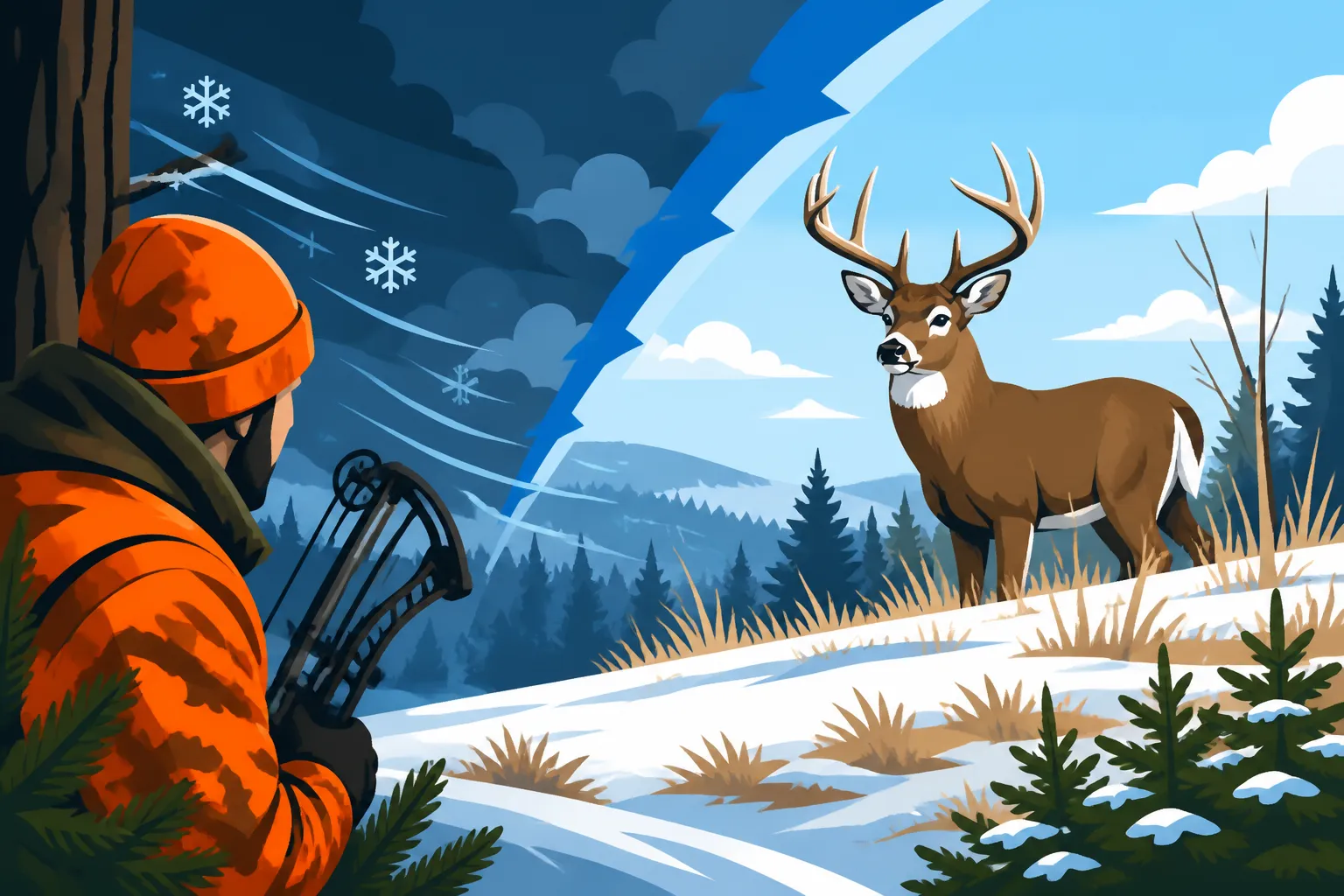
There’s nothing quite like that feeling when you check the long-range forecast and see a sharp cold front barreling towards Maine, bringing with it a dramatic drop in temperature, often preceded by a burst of wind or even some precipitation. It can be a real gut-punch for deer hunters, especially if you had big plans for active deer movement. This guide is all about helping you understand how these dramatic weather shifts impact Maine's whitetails and, more importantly, how you can adapt your hunting strategy to stay successful when the mercury plummets.
Understanding Deer Behavior Before and After a Cold Front
Cold fronts don't just happen; they're a significant atmospheric event that can flip deer behavior on its head. Imagine preparing for a balmy autumn day, only to wake up to biting winds and freezing rain. Deer feel these changes keenly, and their survival instincts kick into overdrive.
The Pre-Front Feeding Frenzy
Before a cold front truly hits, especially 12-24 hours prior, you'll often notice deer activity levels spike dramatically. This isn't just a coincidence; it's a primal response to impending harsh weather. Whitetails are incredibly efficient at anticipating these changes. They know that once the front arrives, movement will be difficult, energetically expensive, and potentially exposed.
This pre-front period is often characterized by a noticeable increase in feeding activity. Deer will gorge themselves, trying to pack on as many calories as possible to fuel their internal furnaces during the cold spell. You might find them spending extended periods in open fields, orchards, or feeding on mast crops like acorns in hardwood ridges. This can be an excellent time to capitalize on their urgency, setting up on known food sources or along major travel corridors leading to them. They'll be moving earlier in the morning and later in the afternoon, sometimes even throughout the day, driven by that biological imperative to stock up. It’s a classic example of their drive to survive, pushing them to expose themselves more than usual.
Immediate Post-Front Lockjaw
Once the cold front actually passes and the temperatures plummet, it's like a switch is flipped. The immediate aftermath, typically the first 24-48 hours, often sees a significant decrease in deer movement. It's not that they vanish; they simply hunker down. Imagine yourself in a sudden blizzard – your first instinct isn't to go for a stroll, right? Deer are much the same.
During this "lockjaw" phase, deer will prioritize staying warm and conserving energy. They'll seek out the thickest, most sheltered cover they can find. This means dense conifer stands, especially cedar swamps, stands of thick spruce, or even deep clearcuts with substantial regrowth. These areas offer thermal protection from biting winds and provide insulation against the cold. They'll minimize movement, staying bedded for long stretches, only getting up for quick, necessary trips to nearby food or water if absolutely desperate. This period can be frustrating for hunters, as the woods often feel eerily quiet. It’s a time when many hunters give up, but understanding this behavior is the first step to overcoming it.
Delayed Movement and Seeking Shelter
As the initial shock of the cold front wears off, and the bitterest temperatures stabilize a bit, deer will eventually start to move again. This movement, however, is often delayed and dictated by the need for shelter and efficient feeding. Instead of widespread cruising, you'll see more calculated, purposeful movements.
Their primary goal shifts from gorging to finding warmth and then sustaining themselves with easily accessible, high-energy food sources. This means they'll likely move during the warmest parts of the day – often mid-morning to mid-afternoon, when the sun is highest and providing a bit of warmth. They'll stick closer to thick cover, preferring travel routes that keep them out of direct wind and in the sun whenever possible. This is where detailed scouting and understanding the terrain becomes paramount. Using a mapping app like GoHunt can really help you identify these pockets of prime post-front habitat, such as south-facing slopes with dense cover or sheltered creek bottoms. Knowing Where Maine Bucks Bed in Big Timber after a cold front can drastically improve your chances.
Adjusting Your Strategy for Post-Front Deer
Hunting after a cold front requires a mental reset and a willingness to adjust your traditional tactics. What works on a mild October day simply won't cut it when the temperature drops 20 degrees overnight.
Focus on Secure Bedding Areas
When deer are prioritizing warmth and safety, their bedding areas become central to their existence. After a cold front, deer aren't just bedding; they're hunkering. This means they'll seek out the densest, most sheltered cover available. Think thick conifer stands, especially cedar swamps, stands of spruce and fir that hold snow and block wind, or even dense, regenerated clearcuts that provide a canopy and tangled undergrowth. These locations are their thermal sanctuaries.
Your strategy needs to shift from intercepting deer along broad travel routes to painstakingly still-hunting the edges of these bedding areas, or even slipping into them with extreme caution. This isn't about busting deer out of their beds, but about catching them as they move within or just outside these safe zones, perhaps to grab a quick bite or stretch their legs. Look for areas with good solar exposure, like south-facing slopes, combined with dense cover. These are the spots where deer will try to soak up what little warmth the sun offers. Patience is key here; a slow, methodical approach is far more effective than trying to cover a lot of ground quickly.
Target Prime Mid-Day Feeding Opportunities
Forget the traditional dawn and dusk hunts as your only productive times. After a significant cold front, deer often become more active during the mid-day hours. Why? Because this is typically when temperatures are at their highest, and the sun provides its most direct warmth. It's the most energy-efficient time for them to move and feed without expending too much precious caloric energy trying to stay warm.
Focus on food sources that are close to heavy cover and offer high caloric value. This could be a standing cornfield, a forgotten apple orchard, or even browse in a sheltered clearcut. Deer won't travel far from their beds in the initial days following a front, so scouting areas where food is easily accessible from secure cover is crucial. Using an app like GoHunt to pinpoint agricultural fields or known mast-producing trees adjacent to dense timber can give you a serious edge. Remember, these feeding forays might be shorter and less intense than pre-front activity, but they are often predictable. Combining a patient Cold-Weather Sitting Strategy in Maine with an understanding of these mid-day movements can be incredibly effective.
Utilizing Thermal Hubs and Funnels
Deer are constantly seeking efficient ways to move, feed, and stay warm. After a cold front, this behavior becomes even more pronounced. Thermal hubs are locations that naturally offer more warmth or protection from the elements. This could be a thick, south-facing conifer stand that catches the sun, a deep ravine protected from the wind, or a dense cedar swamp that acts as a natural insulator.
Funnels, on the other hand, are natural pinch points in the landscape that concentrate deer movement. When deer are trying to conserve energy and stick to cover, they will naturally use the path of least resistance or the most sheltered route. This could be a narrow strip of timber connecting two larger woodlots, a saddle on a ridge, or the edge of a frozen swamp. Consider how deer might move between a thick bedding area and a nearby food source, seeking the most protected route. These funnels become even more critical after a cold front, as deer avoid exposed areas. Setting up on a funnel that also offers thermal advantage, such as a sunny, sheltered bench on a ridgeline, can be a deadly tactic. This is especially true when hunting deer that are more reluctant to move, and they will invariably take the path of least resistance and greatest comfort. Learning to recognize Hunting a Funnel Between Two Woodlots is a key skill here.
Key Considerations for Hunting After a Cold Front
Success after a cold front isn't just about where you hunt, but also how you prepare and execute your hunt. These elements can make or break your trip.
Wind, Thermals, and Scent Control
In cold weather, wind can be your biggest enemy, both for you and for the deer. Deer will instinctively avoid direct wind exposure, especially when temperatures are low. They'll bed on the leeward side of ridges, hills, or dense timber. Understanding Wind and Thermals in Maine Hill Country is critical, as cold air sinks and warm air rises, creating predictable air currents, especially around dawn and dusk.
Your scent control becomes even more important. Cold, dense air tends to hold scent closer to the ground, and wind can carry it further. Play the wind religiously. Position yourself so your scent is blowing away from suspected deer travel routes and bedding areas. A strong cold wind can carry your scent a surprising distance, so be extra vigilant. Using quality scent-eliminating sprays on your clothes, washing with scent-free detergents, and even wearing rubber boots to minimize ground scent are all good practices. In these conditions, one mistake with the wind can ruin your entire hunt.
Layering Up for Maine's Cold
Maine's cold fronts are no joke. Temperatures can drop well below freezing, and combined with wind, the real feel can be brutal. Proper layering isn't just about comfort; it's about safety and effectiveness. Hypothermia can set in quickly, and shivering deer hunters are neither quiet nor focused.
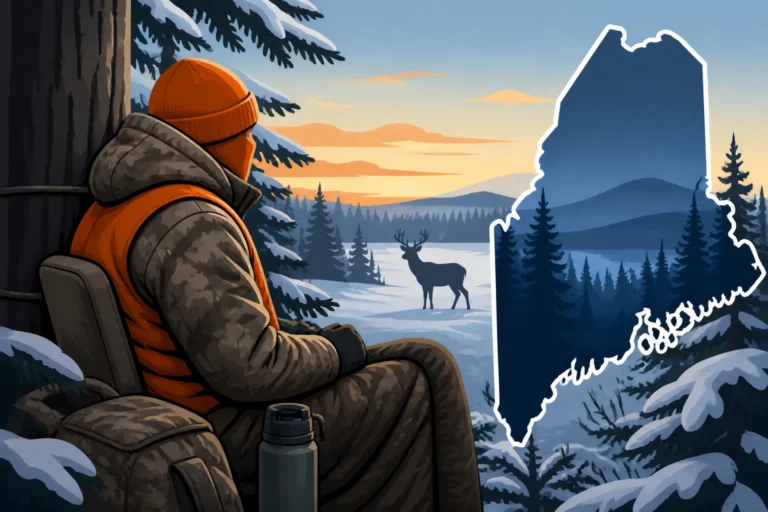
Start with a moisture-wicking base layer against your skin to pull sweat away. Next, add insulating layers like fleece or down to trap warmth. Finally, an outer layer that is windproof and waterproof is essential to protect against the elements. Don't forget extremities: a warm hat (most body heat is lost through the head), insulated gloves or mittens, and good, waterproof boots with thick socks are non-negotiable. Chemical hand warmers and foot warmers can be a lifesaver for long sits. Remember, you can always shed layers if you get too warm while hiking, but you can't add what you didn't bring. A dedicated Cold-Weather Sitting Strategy in Maine will emphasize the importance of warmth.
The Importance of Patience and Observation
Hunting after a cold front often boils down to a test of patience and keen observation. Deer simply won't be moving with the same frequency or across the same widespread areas they might during milder weather. You might spend hours seeing nothing, only for a deer to materialize silently from dense cover.
This means extended sits, especially during those mid-day windows, can be far more productive than constantly still-hunting and potentially bumping deer. When you are moving, do so incredibly slowly, pausing frequently to glass and listen. Look for subtle signs: a flick of an ear, a patch of brown hair against the snow, or steam rising from a deer's breath. Pay attention to the subtle cues the environment gives you, like fresh tracks in light snow, or small patches of disturbed leaves near a food source. These small details can indicate recent activity and guide your next move. Using tools like GoHunt to mark specific observations on your map can help build a pattern over time.
Adapting to Food Source Changes
After a cold front, deer will be focused on high-energy, easily accessible food. The type of food they target can shift dramatically. While acorns might be king in early fall, if snow covers them, deer will switch to other options.
Common Post-Front Food Sources in Maine:
| Food Source Type | Description | Location Example |
|---|---|---|
| Browse (Twigs/Buds) | The tender shoots and buds of woody plants like maple, aspen, and cedar. Essential when other foods are scarce. | Clear-cuts, regenerating forests, edges of cedar swamps (e.g., Reading a North Woods Deer Yard) |
| Standing Crops | Leftover agricultural crops like corn or brassicas (if available). Provides concentrated energy. | Aroostook County potato country, fields in central/southern Maine (e.g., Setting Up on an Aroostook Farmland Edge) |
| Apples | Fallen apples in old orchards. Fermented apples can be a late-season attractant. | Abandoned orchards, old homesteads (e.g., Hunting a Standing Apple Orchard) |
| Forbs/Residual Greens | Any green vegetation that remains unfrozen or accessible under light snow, though less common after a hard freeze. | South-facing slopes, sheltered creek bottoms. |
Understanding Late-Season Food Sources for Maine Whitetails is crucial. Deer need calories to stay warm, so they'll seek out the most calorie-dense foods that require the least energy to obtain. This means they might favor browse in a regenerating clearcut that's only a short walk from their thick bedding, rather than crossing an open field to reach a distant oak ridge if it's too exposed. Scout these areas for fresh sign: chewed twigs, tracks, and droppings will tell the tale.
The Maine Landscape and Its Influence
Maine's diverse landscape plays a huge role in how deer respond to cold fronts. The dense conifer forests of the North Woods offer different challenges and opportunities compared to the mixed agricultural and timberlands of central and southern Maine.
In the vast North Woods, deer yards, typically dense cedar swamps or thick stands of spruce, become critical. These areas offer both thermal cover and a food source (cedar browse). After a heavy cold front and especially with snow, deer will move into and largely stay within these yards. Your hunt might shift to finding the edges of these yards, or the travel corridors leading into them.
In more agricultural areas, deer might congregate in standing corn, unharvested brassica fields, or old apple orchards, especially those buffered by thick woodlots. These are high-calorie havens where deer can quickly refuel. Using a ground blind, perhaps Using a Ground Blind on Posted-Free Land or Brushing In a Blind on a Field Edge, can be incredibly effective when deer are concentrated on these food sources, allowing you to stay warm and hidden. The key is to adapt your tactics to the specific environment you're hunting in. The Maine Deer Herd Size isn't uniform across the state, and neither is their response to cold snaps.
Disclaimer
Hunting is an inherently dangerous activity. Always prioritize safety, adhere to all local, state, and federal hunting regulations, and be aware of your surroundings. The information provided in this guide is for informational purposes only and should not be considered a substitute for professional guidance or formal hunter education. Always obtain necessary licenses and permissions before hunting.