Maine Sea Duck Season and Zones
Few hunting experiences in Maine challenge and reward quite like sea duck hunting. The raw beauty of our rugged coast combined with the unpredictable nature of the ocean and its winged inhabitants can leave even seasoned waterfowlers feeling overwhelmed. This guide is designed to cut through the confusion, offering a comprehensive look at Maine's specific sea duck season dates, the intricate zone boundaries you need to understand, and the regulations that ensure a safe and legal hunt.
Understanding Maine's Sea Duck Hunting Landscape
When you picture hunting in Maine, your mind might immediately go to big woods deer or the elusive moose. But for a certain breed of hunter, the real thrill lies out on the open ocean, chasing the hardy sea ducks that call our coast home for much of the year. It’s a completely different world, requiring specialized knowledge, equipment, and a healthy respect for Mother Nature.
The Allure of Coastal Waterfowling
There's something uniquely captivating about sea duck hunting. It's not the comfortable marsh blind setup or the quiet timber hole of inland duck hunting. This is a game played against the backdrop of crashing waves, frigid winds, and the endless expanse of the Atlantic. Many hunters find the challenge irresistible – the meticulous scouting of rocky ledges, the precise timing of tides, and the sheer effort involved in battling the elements. It’s a hunt that builds character, testing your grit and your gear in ways few others can. The camaraderie among a crew braving a chilly sunrise on a choppy bay, and the stunning beauty of a drake eider in hand, make all the discomfort worthwhile. It's a true test of one's dedication to the sport, pushing you to learn about marine weather, navigation, and the unique behaviors of these ocean-dwelling birds.
Identifying Maine's Primary Sea Duck Species
Before you even think about setting decoys, you need to know what you're hunting. Maine is primarily known for three species of sea ducks, each with its own quirks and beauty: Common Eiders, Scoters (Black, Surf, and White-winged), and Long-tailed Ducks. Eiders are the largest and most prized, known for their distinctive black and white plumage on drakes and their incredible hardiness. Scoters, often seen in large rafts, are sleek, dark birds with varying white patches depending on the species. Long-tailed Ducks, formerly known as Oldsquaws, are perhaps the most vocal and acrobatic, easily identified by their long tail feathers and constantly changing calls. Learning to identify these birds in flight, especially in varying light conditions and at a distance, is a critical skill for legal and ethical hunting. You don't want to accidentally shoot a protected species or exceed your bag limit on a particular type of bird. This is where experience and sometimes a good pair of binoculars really come into play. Understanding their flight patterns and vocalizations can also aid in proper identification before taking a shot, ensuring you're targeting legal game. For more on the specific characteristics of these birds, check out our guide on Eiders on the Maine Coast, Scoters on the Maine Coast, and Long-Tailed Ducks Wintering Off Maine.
Navigating Maine's Sea Duck Zones
Unlike inland duck hunting, which often follows broader migratory bird regulations, sea duck hunting in Maine has very specific zone delineations. These zones aren't just lines on a map; they dictate what birds you can hunt, when you can hunt them, and sometimes even how. Misunderstanding these boundaries can quickly turn a successful hunt into a legal headache, so pay close attention.
The Coastal Zone Boundaries Defined
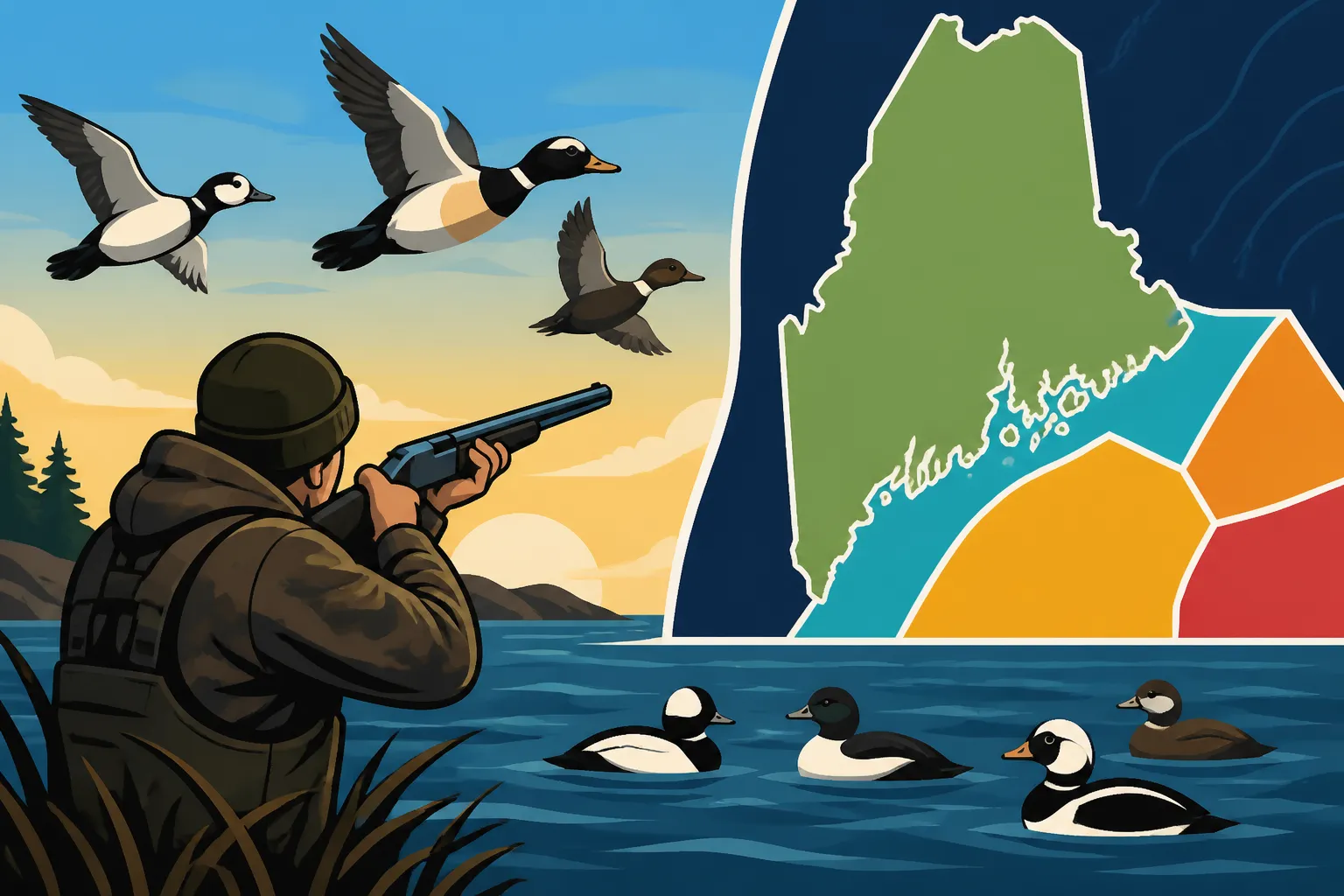
Maine's sea duck hunting largely takes place within the designated "Coastal Zone." This zone is defined by the Maine Department of Inland Fisheries and Wildlife (MDIFW) as all waters of the Atlantic Ocean and all tidal waters up to the first upstream bridge or other barrier impassable to migratory waterfowl. Essentially, if the water is salty and moves with the tide, you're likely in the Coastal Zone. This includes our vast bays, estuaries, and the open ocean. It's crucial to understand where this line falls, especially when hunting tidal rivers or coves that might transition from tidal to freshwater. For instance, the tidal reach of a river like the Kennebec or Penobscot extends quite a ways inland, and while you might be miles from the open ocean, you could still technically be within the sea duck zone for regulatory purposes. This distinction is vital because the season dates and bag limits for sea ducks are different from those for general ducks like mallards or black ducks, which fall under the "Inland Zone" or "Coastal General Waterfowl Zone" rules. Being aware of the precise Maine Sea Duck Coastal Zone Line can prevent inadvertent violations. Using detailed nautical charts or even hunting apps like GoHunt that overlay boundary lines can be incredibly helpful for confirming your location.
Inland Waters and Their Restrictions
While the focus for sea ducks is the Coastal Zone, it's important to remember that general duck hunting often occurs in what's considered the "Inland Zone." This typically refers to freshwater lakes, ponds, rivers, and non-tidal portions of streams. Even though you might occasionally see a lone scoter or eider on a large inland lake, they are predominantly saltwater birds, and their specific seasons and bag limits do not apply to these inland areas. Trying to apply sea duck rules to inland waters would be a mistake. Conversely, general duck species can be found in both zones, but their regulations change depending on whether you're in the Inland Zone or the Coastal General Waterfowl Zone, which has a separate set of dates and bag limits for puddle and diving ducks. It gets a bit complex, but the key takeaway is: know your target species, know your location, and verify the specific regulations for that species and zone before you ever head out. Ignorance of the law is no excuse, especially when state and federal waterfowl regulations are involved. This dual system exists to manage different populations and hunting pressures appropriately.
Deciphering the Maine Sea Duck Season Dates
Maine's sea duck season isn't just one long stretch of open hunting. It's broken into specific periods, often with a split, designed to coincide with migratory patterns and to manage harvest pressure. Missing these dates can mean missing your window, or worse, hunting illegally.
Early Season Opportunities and Migratory Patterns
Typically, Maine's sea duck season kicks off earlier than the general waterfowl season, often in October. This early window can be fantastic, as it often coincides with the first push of migrating birds down the Atlantic Flyway. The weather might be a bit milder, and the birds haven't been as pressured. You're catching them as they settle into their wintering grounds along the coast. During this time, you might encounter groups of scoters moving through, still somewhat wary but not yet having faced weeks of hunting pressure. Eiders might also be arriving, establishing their feeding grounds near rocky ledges and mussel beds. This early season requires careful attention to weather forecasts, as the ocean can change quickly, but the rewards can be plentiful. Hunters often find success by Reading a Ledge for a Morning Sea Duck Flight as the birds move from roosting to feeding areas.
The Main Season Split and Its Strategic Implications
One of the defining features of Maine's sea duck season, like many migratory bird seasons, is the "split" – a period where the season closes temporarily before reopening. This split is typically observed in late November or early December, aligning with the general firearms deer season in Maine. It's a strategic closure that serves a couple of purposes: first, it reduces hunting pressure during a peak period for other popular game species, and second, it allows a fresh wave of birds to move in or for existing birds to settle without constant disturbance.
For sea duck hunters, this split means planning. You might have a fantastic early season, only to have to put your decoys away for a week or two. When the season reopens, often in mid-December, conditions can be dramatically different. The waters are colder, ice might be forming in protected coves, and weather fronts become more intense and frequent. However, the birds that remain are often more settled and predictable, having established their winter routines. This mid-to-late season can offer some of the most consistent hunting, albeit in harsher conditions. Understanding the specific Maine Duck Season Split Dates is critical for successful trip planning. Utilizing detailed hunting calendars or apps like GoHunt can help you keep track of these dynamic dates, ensuring you're on the water when the season is open and legally allowed to hunt.
Late Season Hunting Through the Winter
Once the season reopens after the split, it often runs continuously, extending well into January. This late season is for the truly dedicated. The days are short, the temperatures are often below freezing, and the ocean can be particularly unforgiving. However, the rewards can be substantial. By this point, the vast majority of migrating sea ducks have arrived and are settled into their wintering patterns. Massive rafts of eiders, scoters, and long-tailed ducks can be observed, moving between feeding grounds and roosting areas.
Successful late-season hunting often involves robust boats, specialized gear to combat the cold, and an intimate knowledge of the local tides and currents. Ice formation can become a major factor, limiting access to certain areas. However, these challenges also mean fewer hunters on the water, offering a more solitary and pristine hunting experience. The birds, while wary, are often moving with greater urgency in search of food, providing excellent decoying opportunities. This late period also tends to produce the most prime plumage on harvested birds, making for beautiful mounts. It's a testament to the hardiness of both the birds and the hunters who pursue them during the coldest months.
Here’s a simplified breakdown of typical Maine Sea Duck Season dates, though always check the current MDIFW regulations as they can change annually:
| Zone/Species | Season Segment | Typical Start Date | Typical End Date | Notes |
|---|---|---|---|---|
| Coastal Zone (Sea Ducks) | Early Season | Early Oct. | Mid-Nov. | First migration push, milder weather. |
| Coastal Zone (Sea Ducks) | Closed Period | Mid-Nov. | Early Dec. | Typically overlaps with firearms deer season. |
| Coastal Zone (Sea Ducks) | Late Season | Early Dec. | Late Jan. | Main wintering period, colder weather. |
| Inland/Coastal General (Other Ducks) | Early Season | Late Sept. | Late Oct. | Varies by zone, includes puddle and diving ducks. |
| Inland/Coastal General (Other Ducks) | Late Season | Late Nov. | Early Jan. | Varies by zone, generally after deer season. |
Disclaimer: This table provides typical dates for illustrative purposes. Always consult the official Maine Department of Inland Fisheries and Wildlife (MDIFW) regulations for current and precise season dates before hunting.
Daily Bag Limits and Species-Specific Regulations
Understanding the bag limits for sea ducks in Maine is paramount. These aren't blanket limits for all "ducks." Each primary species – eiders, scoters, and long-tailed ducks – has its own specific daily bag and possession limits, which are often considerably more restrictive than those for dabbling ducks. Knowing these limits, and being able to correctly identify the birds before you shoot, is not just good practice, it's the law.
Eider Limits and Identification Challenges
Common Eiders are arguably the most iconic sea duck in Maine, and their impressive size and striking plumage make them a highly sought-after trophy. However, their daily bag limits are quite specific. Generally, you're allowed to harvest a limited number of eiders per day, with further restrictions on how many of those can be hen eiders. This hen restriction is put in place to protect the breeding population, as hens are critical for future recruitment.
Identifying eiders in flight can be tricky, especially in low light or rough seas. Drakes (males) are relatively easy to spot with their prominent white backs, black bellies, and green patches on the head. Hens (females) are a mottled brown, which helps them camouflage on nests, but makes them harder to distinguish from other large dark ducks at a distance. Hunters must be absolutely confident in their identification before pulling the trigger. Mistaking a hen eider for another species, or accidentally taking too many hens, can result in significant fines and penalties. It pays to spend time watching these birds through binoculars, learning their flight patterns, and understanding their distinct silhouettes. For detailed information on specific limits, refer to Maine Eider Daily Limit guidelines in the official regulations.
Scoter Regulations and Habitat Preferences
Maine is home to three species of scoters: the Black Scoter, Surf Scoter, and White-winged Scoter. While they are often lumped together under a single "scoter" bag limit, each has its unique appearance. Black Scoters are entirely black drakes with a noticeable orange knob on their bill. Surf Scoters have striking white patches on the nape and forehead, with a large, colorful bill. White-winged Scoters, as their name suggests, have a prominent white speculum (wing patch) visible in flight.
The collective bag limit for scoters is generally more generous than for eiders, but it's still a specific number per day. Scoters tend to feed on mollusks and crustaceans in shallower coastal waters, often forming large rafts. They can be found working shorelines, mudflats, and ledges. Understanding their preferred habitats can help you anticipate where to set up your decoys. Like eiders, proper identification is key, especially if you're trying to differentiate between the three scoter species for personal interest or to ensure you're not mistakenly shooting a different duck. Their flight is often fast and direct, so quick and accurate identification is essential. The GoHunt app often provides species-specific information and images that can be a great reference in the field.
Long-Tailed Duck Rules and Distinctive Features
Long-tailed Ducks, with their striking black and white plumage (which changes seasonally), long tail feathers on the drakes, and incessant, musical calls, are truly unique. They are incredibly acrobatic in flight and masters of diving, often disappearing for extended periods to forage on shellfish in deep water. Their distinctive calls are often heard long before they are seen, adding a special element to the hunt.
The bag limit for Long-tailed Ducks is also specific and typically lower than that for scoters. These birds are renowned for being extremely hardy, able to withstand the coldest ocean temperatures, and are often encountered furthest offshore. Their preference for deeper waters means you might be hunting in more exposed areas, which adds to the adventure. Due to their constantly shifting plumage throughout the year, identifying them requires an understanding of their overall silhouette, flight pattern, and vocalizations. The drakes, with their namesake long tail feathers, are usually unmistakable once close enough. Understanding the current Maine Long-Tailed Duck Daily Limit is as important as for other species, ensuring your harvest is within legal parameters.
Essential Gear and Boat Requirements for Sea Duck Hunting
Sea duck hunting in Maine isn't a casual affair. The coastal environment demands specialized gear that can withstand harsh conditions, keep you safe, and effectively attract your quarry. Skimping on quality here isn't just uncomfortable; it can be dangerous.
Decoy Spreads and Their Importance in Tidal Waters
Unlike inland ponds where a dozen mallard decoys might suffice, sea duck hunting often calls for large, robust decoy spreads. These birds are used to seeing huge rafts of their kind on the open ocean, so a small spread can often be ignored. Hunters commonly deploy spreads of 50, 100, or even more decoys, often a mix of eiders, scoters, and long-tailed ducks, depending on the target species. The decoys themselves need to be heavy-duty, able to ride out waves and strong currents without flipping or dragging. Many hunters opt for specialized sea duck decoys that are larger and more durable than standard duck decoys.
Placement is critical, especially in strong tidal currents. You want your decoys to look natural, riding the swells and facing into the current. Spreads are often set up to simulate feeding or resting birds, with a "kill hole" or landing zone left open for incoming ducks. Anchoring needs to be robust, using heavy weights and strong lines to prevent your expensive spread from drifting away. The goal is to create a believable, inviting scene that draws in wary birds from a distance. Learning to read the water and position your spread effectively is a skill honed over many seasons. Detailed guides, such as one on Decoying Eiders on a Falling Tide, can offer valuable insights into optimal decoy placement and spread configuration.
Choosing the Right Boat for Maine's Coastal Conditions
Your boat isn't just transportation; it's your lifeline in the unpredictable Maine coastal environment. This isn't a place for flimsy Jon boats or small aluminum skiffs. You need a sturdy, seaworthy vessel capable of handling chop, swells, and potentially long runs in cold, open water. Many experienced sea duck hunters favor larger, well-built aluminum boats, fiberglass skiffs, or even small center consoles, typically ranging from 18 to 24 feet, often with a cuddy cabin or at least a significant bow for breaking waves.
Key features to look for include a high freeboard to keep water out, a self-bailing deck, reliable outboard motors (often with a kicker motor as a backup), and robust navigation electronics like a GPS, radar (for fog), and a good depth sounder. Flotation is also paramount. Remember, you'll be loading this boat with heavy decoys, gear, and potentially harvested birds, all while navigating rough seas. Prioritizing safety and reliability over speed or cost is crucial. It is important to ensure your vessel meets all state and federal boating regulations, particularly for safety equipment. Hunters interested in specialized techniques might even consider Layout Boat Hunting the Maine Coast, which involves hunting from a low-profile boat designed to blend in with the water.
Safety Equipment and Navigational Tools
Given the inherent risks of hunting on the open ocean, safety equipment is non-negotiable. At a minimum, every person on board must have a Coast Guard-approved Personal Flotation Device (PFD). Beyond that, a marine VHF radio is essential for communication, especially in areas with spotty cell service. A GPS unit or chart plotter, ideally integrated with local charts, is critical for navigation, especially in fog or low light, and for marking productive spots. A compass, even if you have GPS, is a vital backup.
Other essential safety items include flares, a horn or whistle, a first-aid kit, an anchor with sufficient rode, a bailing device, and spare warm clothing in a waterproof bag. Consider an EPIRB (Emergency Position-Indicating Radio Beacon) or PLB (Personal Locator Beacon) for ultimate peace of mind, especially on solo trips or remote ventures. The water in Maine's Coastal Zone is cold, even in early fall, and hypothermia is a constant threat if you end up in the water. Never take shortcuts on safety when hunting Maine's sea duck grounds. Before heading out, always inform someone of your float plan – where you're going, when you expect to return, and who is with you.
Licensing, Permits, and Legal Compliance
Just like any other form of hunting, sea duck hunting in Maine requires proper licensing and strict adherence to state and federal regulations. Failing to secure the correct permits or neglecting to understand the legal framework can lead to hefty fines, loss of hunting privileges, and confiscation of equipment. It's not just about what's in season; it's about what's legal for you to do.
Maine Hunting License and Federal Duck Stamp Requirements
First and foremost, to hunt any migratory waterfowl in Maine, including sea ducks, you must possess a valid Maine hunting license. This license is your fundamental permission slip to hunt in the state. For non-residents, there are specific Maine Nonresident License Options available, which typically cost more than resident licenses. Alongside your state hunting license, you are required by federal law to purchase and carry a valid Federal Migratory Bird Hunting and Conservation Stamp, commonly known as the "Federal Duck Stamp." This stamp, signed across its face, is a vital source of funding for wetland conservation efforts across the nation.
The process for obtaining these licenses and stamps is straightforward. You can typically purchase your Maine hunting license online through the MDIFW website, at most sporting goods stores, or from authorized agents throughout the state. The Federal Duck Stamp can be purchased at U.S. Post Offices, many sporting goods retailers, or online. It's imperative that you have both your state hunting license and your Federal Duck Stamp (signed!) on your person while hunting migratory birds. Failure to do so is a common violation that wardens take seriously. Ensure you understand the Maine Federal Duck Stamp Requirement as it applies to all migratory bird hunters.
HIP Certification and Migratory Bird Regulations
Beyond your state hunting license and the Federal Duck Stamp, anyone hunting migratory game birds in Maine (which includes all sea ducks) must also complete the Harvest Information Program (HIP) certification. This isn't a separate physical stamp or card, but rather a short survey you complete when you purchase your state hunting license. It collects basic information about the species you plan to hunt and your harvest success from the previous season. This data is crucial for wildlife agencies to manage migratory bird populations effectively.
The HIP certification ensures that your name and address are added to a national database, allowing the U.S. Fish and Wildlife Service to conduct annual surveys of migratory bird hunters. This information helps monitor harvest levels and adjust regulations as needed. Without a current HIP certification, you are not legally permitted to hunt migratory game birds. It's a quick, free, but absolutely mandatory step. Make sure you understand Maine HIP Certification for Bird Hunters and comply. Additionally, all migratory bird hunting is governed by federal regulations, which include restrictions on hunting methods (e.g., no baiting, no electronic calls), shooting hours, and transportation of birds. Always consult the federal regulations alongside Maine's state rules.
Understanding Local Ordinances and Setback Distances
While state and federal laws cover the broad strokes of sea duck hunting, you also need to be aware of any local ordinances or specific setback distances that might apply to the area you're hunting. These can vary significantly from town to town, especially in more populated coastal regions. For instance, many municipalities have ordinances regarding the discharge of firearms within certain distances of dwellings, businesses, or public areas. While you might be legally hunting in the Coastal Zone, you could inadvertently violate a local noise ordinance or a safety zone regulation if you're too close to shore.
This is particularly relevant when hunting near residential areas, harbors, or popular public beaches. Always check with the local town office or the Maine Warden Service if you're unsure about specific restrictions in a given area. You might find that what's legal on a remote stretch of coast isn't permissible in a busy harbor. Being a responsible hunter means respecting not only wildlife laws but also the peace and safety of other citizens. Knowing the Maine Firearms Discharge Setback Distance is a critical piece of information to ensure you are always hunting safely and legally. Apps like GoHunt can often show property lines and exclusion zones, which are helpful for avoiding potential conflicts.
Strategic Considerations for Successful Maine Sea Duck Hunts
Successful sea duck hunting in Maine is less about luck and more about preparation, knowledge, and strategic execution. The dynamic coastal environment demands a hunter who can adapt, read the conditions, and make informed decisions.
Reading Tides, Weather, and Ocean Swells
The ocean is a living, breathing entity, and understanding its rhythms is paramount for sea duck hunting. Tides dictate access, feeding patterns, and where birds will be at any given time. A falling tide might expose feeding grounds, while a rising tide could push birds closer to shore or into protected coves. Knowing your local tide charts, not just for high and low, but also for current strength, is non-negotiable.
Weather is equally critical. Wind direction and speed profoundly affect wave height, bird flight paths, and how your boat will handle. A strong onshore wind might push birds closer to shore, while an offshore wind could make for calmer seas but keep birds further out. Fog can roll in quickly off the coast, turning a clear morning into a perilous whiteout. Always check multiple weather forecasts, including marine forecasts, before heading out. Ocean swells can make even a relatively calm day feel rough, impacting shooting and boat stability. Learn to recognize safe operating conditions for your vessel and your crew. Understanding Wind and Thermals in Maine Hill Country might apply more to land, but the same principles of understanding air movement are vital on the coast.
Scouting Productive Hunting Locations
You can't just drop decoys anywhere and expect success. Scouting is essential, and for sea ducks, that means a combination of digital reconnaissance and on-the-water observation. Use nautical charts to identify likely feeding areas like mussel beds, rocky ledges, and shallow flats. Look for protected coves or islands that might serve as roosting sites during rough weather. Satellite imagery can reveal patterns of underwater structure and potential travel corridors.
Once you have potential spots, the real scouting begins. Spend time observing from shore with binoculars, noting where birds are feeding, resting, and flying. Watch their flight paths between different areas. Are they flying close to a particular point, or favoring a channel? Pay attention to where other successful hunters are setting up, or where birds are consistently seen. Remember, these birds are mobile, so a spot that was hot last week might be barren today. Good scouting helps you find not just where the birds are, but where they will be when you go to hunt. The GoHunt app's mapping features, including aerial imagery and public/private land overlays, can be invaluable for pinpointing these crucial areas and planning access points.
Ethical Hunting Practices and Conservation
As hunters, we are also conservationists. Practicing ethical hunting not only ensures the future of the sport but also shows respect for the game we pursue. This means knowing your effective shooting range and only taking shots at birds within that range to minimize crippling. It means making every effort to retrieve downed birds, even in challenging conditions. A lost bird is a wasted bird. Using trained retrieving dogs, when feasible, can be a huge asset.
It also means adhering strictly to bag limits and identifying birds correctly. Beyond the legal requirements, it's about being a good steward of the resource. Respecting private property when accessing the coast, leaving no trace behind, and being courteous to other boaters and coastal users are all part of being an ethical hunter. Participating in programs like the Federal Duck Stamp purchase directly contributes to wetland conservation, highlighting the integral role hunters play in preserving habitat for all migratory birds. For broader conservation context, understanding Maine's CWD-Free Status Explained reminds us of the importance of vigilance in wildlife health.
Disclaimer
This guide is intended for informational purposes only and does not constitute legal advice. Hunting regulations, season dates, and zone boundaries are subject to change. Always consult the official Maine Department of Inland Fisheries and Wildlife (MDIFW) regulations, federal migratory bird hunting regulations, and any applicable local ordinances before engaging in hunting activities. It is the hunter's responsibility to know and obey all current laws and regulations.