Legal Weapons During Maine Firearms Season
Hunting in Maine is a tradition steeped in history, but keeping up with the legalities of what firearms you can actually use during the popular four-week deer season can feel like trying to hit a moving target sometimes. Between caliber debates, magazine restrictions, and the ever-present need to stay safe and ethical, it's easy to get a little confused. This comprehensive guide is here to clear the fog, ensuring you understand exactly what's permitted when you head into the Maine woods with your chosen firearm.
Understanding Maine's General Firearms Season Regulations
Maine's firearms season is a cherished time for many hunters, offering a chance to pursue whitetails with a variety of legal weapons. But before you even consider what rifle to grab, it’s crucial to understand the foundational rules that govern all firearms use during this period. The Maine Department of Inland Fisheries and Wildlife (MDIFW) sets these regulations with safety, fair chase, and conservation in mind.
The Basics of Legal Firearms for Deer
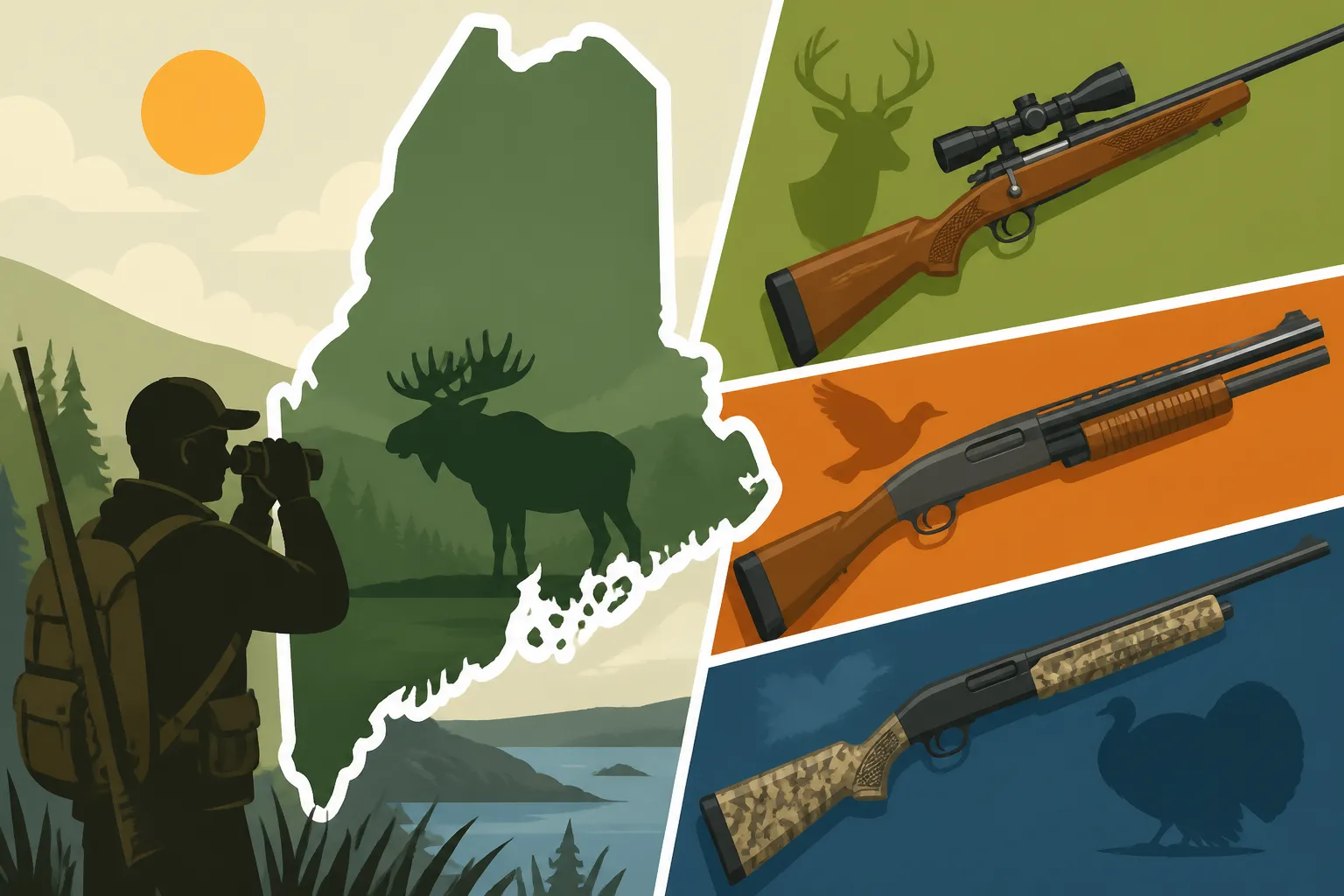
When we talk about legal firearms for deer in Maine, we're generally discussing modern rifles chambered in centerfire cartridges, shotguns loaded with slugs, and muzzleloading firearms. The core principle behind these regulations is to ensure that hunters are using equipment capable of delivering a humane and ethical kill. This means powerful enough to dispatch a deer quickly and efficiently, minimizing suffering and ensuring that game isn't merely wounded. Maine doesn't explicitly list all legal calibers, but rather defines what is prohibited or restricted, which gives hunters a wide latitude. For instance, you won't find .22LR on the approved list because it lacks the kinetic energy needed for a deer, but virtually any common centerfire rifle caliber designed for medium to large game is perfectly acceptable.
It's about making sure your chosen firearm and ammunition combination is up to the task. Most hunters gravitate towards tried-and-true calibers that have proven themselves in the field over decades. Always remember that the responsibility lies with the hunter to understand their equipment's capabilities and limitations.
Specific Prohibitions and Restrictions
While Maine is generally quite permissive with firearm types, there are specific prohibitions you absolutely need to be aware of. First and foremost, fully automatic weapons are strictly illegal for hunting any game in Maine. This isn't just a hunting regulation; it's a broader firearms law. Similarly, any ammunition that is tracer or incendiary is prohibited. These types of rounds pose significant fire hazards and are deemed unsafe for general hunting.
When it comes to semi-automatic rifles, there's a critical restriction regarding magazine capacity for hunting deer and other big game. You are limited to a total capacity of six rounds, which typically means five rounds in the magazine and one in the chamber. This regulation is designed to prevent excessive firepower in the field and promote fair chase. This is where researching your specific firearm model and its magazine options becomes vital. You might need to purchase a specific hunting-compliant magazine or use a plug to reduce capacity.
Another important point to clarify is that while shotguns are legal, they must be loaded with single projectile slugs when hunting deer. You cannot use birdshot or buckshot for deer, even if it might be legal for other species in different contexts. The power and precision of a slug are necessary for an ethical deer harvest. Always double-check the latest regulations, as minor changes can occur from year to year. Keeping up-to-date with official MDIFW publications is your best bet for staying compliant.
Rifles: Calibers, Actions, and Ammunition
Rifles are, by far, the most popular choice for deer hunting during Maine's firearms season, and for good reason. They offer precision, range, and knockdown power suited for the varied terrain and cover conditions we encounter across the state.
Common Legal Rifle Calibers for Deer
Maine's deer woods are full of diverse habitats, from dense softwood thickets to more open hardwoods and farmland edges. Because of this, hunters rely on a wide array of rifle calibers, all of which are legal as long as they meet the ethical standards for big game. You'll find a lot of folks carrying classics like the .30-06 Springfield, .308 Winchester, and .270 Winchester. These cartridges have been staples for generations, known for their versatility and effectiveness on deer-sized game. They offer a great balance of trajectory and energy, capable of taking deer cleanly at common hunting distances.
More modern cartridges like the 6.5 Creedmoor have also gained immense popularity, offering excellent accuracy and reduced recoil, making them a fantastic choice for many hunters. Don't forget the venerable .45-70 Government, a powerful thumper that excels in dense cover where shots are typically closer, delivering massive energy on impact. When selecting ammunition, focus on high-quality, expanding bullet designs like soft points, bonded bullets, or controlled expansion projectiles. These are designed to mushroom upon impact, creating a larger wound channel and facilitating a quick, humane kill. Solid, non-expanding bullets are generally not recommended for deer hunting as they don't transfer energy as effectively. Knowing your chosen caliber's capabilities and limitations, especially in relation to effective range, is paramount to ethical hunting.
Permitted Rifle Actions and Magazine Rules
Maine permits a wide variety of rifle actions for deer hunting. You'll see everything from the ubiquitous bolt-action rifles, known for their accuracy and reliability, to classic lever-action rifles favored by many for their quick follow-up shots and compact design. Pump-action rifles are also legal and provide a fast-cycling option. Even semi-automatic rifles are allowed, provided they comply with the aforementioned magazine capacity restriction. This means a maximum of five rounds in the detachable or fixed magazine and one in the chamber for a total of six. This rule applies to all big game hunting in Maine.
For those running AR-style platforms, this often means acquiring a compliant 5-round magazine. It's a critical detail that often catches new hunters or those from other states off guard. Always confirm your rifle's capacity before heading into the field. Tools like GoHunt can be invaluable for cross-referencing state regulations with specific equipment requirements, helping you avoid an unnecessary citation. Make sure your firearm is properly maintained and sighted in. A responsible hunter ensures their equipment is in top working order to prevent misfires or inaccurate shots.
Shotguns and Muzzleloaders: Close-Range Powerhouses
While rifles dominate the scene, shotguns and muzzleloaders hold their own, offering distinct advantages in certain scenarios or simply catering to personal preference. They are certainly effective tools for harvesting deer in Maine.
Shotguns for Deer Hunting in Maine
Shotguns equipped with slugs are incredibly effective for deer, especially in areas with denser cover or shorter shooting lanes. The power delivered by a 12-gauge or 20-gauge slug is substantial, making it a reliable deer stopper. While shotguns might not offer the same long-range precision as a rifle, they are more than capable within their effective range, typically up to 100-150 yards for modern slug guns.
For deer hunting, you must use single projectile slugs, not buckshot or birdshot. These slugs come in various forms: traditional rifled slugs designed for smoothbore barrels, and saboted slugs that perform best in dedicated rifled shotgun barrels. A rifled barrel on a shotgun, often paired with an optic, can dramatically improve accuracy and extend effective range, turning a shotgun into a potent deer hunting machine. Many hunters in more suburban WMDs or heavily wooded regions find shotguns to be an excellent choice, as the slug often dissipates energy more rapidly than a rifle bullet, reducing the risk of over-penetration in developed areas. However, it's worth noting that Maine's general firearms season does not restrict rifle use to specific WMDs like some other states do; rifles are broadly legal statewide during the firearms season.
Muzzleloaders During the Firearms Season
Muzzleloaders, typically associated with their own dedicated Muzzleloader Deer Hunting in Maine season, are also perfectly legal to use during the general firearms season. This offers another layer of versatility for hunters who enjoy the challenge and tradition of these firearms. Both traditional caplock or flintlock muzzleloaders and modern in-line muzzleloaders are permitted.
When using a muzzleloader, understanding your powder and projectile combination is key. Black powder and its substitutes like Pyrodex or Triple Seven are commonly used propellants. For projectiles, hunters often choose between patched round balls, which are traditional and effective at closer ranges, or modern sabots, which encapsulate a smaller bullet, offering better ballistic coefficients and accuracy, similar to a rifle. Just as with any other firearm, ensure your muzzleloader is sighted in and you are proficient with it before heading afield. The process of loading and firing a muzzleloader is different from a modern cartridge firearm, requiring specific practice to ensure safe and accurate shooting. Don't forget that if you also participate in the special muzzleloader season, you'll want to be familiar with any specific rules for that time, such as those that apply to which WMDs Get Extended Muzzleloader Season.
Archery Equipment and Crossbows During Firearms Season
While the firearms season is, well, for firearms, it's important to clarify that archery equipment and crossbows aren't suddenly illegal. They just fall under different regulatory umbrellas that still allow their use during the broader firearms season, albeit with some specific considerations.
Bows and Crossbows: Legalities and Limitations
If you possess a valid archery hunting license in addition to your big game hunting license, you are generally allowed to use a traditional bow, compound bow, or crossbow during the general firearms season. This provides flexibility for hunters who might prefer the challenge of archery or who have adapted their hunting style to include both methods.
For traditional and compound bows, Maine typically sets minimum draw weight requirements (usually 35 pounds for deer). For crossbows, there are minimum peak draw weight and minimum length requirements. All arrows or bolts used for deer must be fitted with broadheads that have at least two sharpened cutting edges and a minimum cutting diameter. It's crucial to check the most current MDIFW regulations for the exact specifications, as these can be updated. For instance, understanding Maine Crossbow Season Eligibility can illuminate specific requirements and benefits of these tools.
While you can use archery equipment during the firearms season, you cannot simultaneously carry both a firearm and archery equipment in the field with the intent to hunt big game. It's generally one method at a time. This rule prevents confusion and ensures fair chase.
Combining Methods and Permit Requirements
The idea of combining hunting methods, like carrying a rifle and a bow, might seem appealing for maximizing your chances, but Maine law is clear: you can typically only hunt big game with one method at a time in the field. This means if you are carrying a rifle, you should not also be carrying a strung bow or loaded crossbow with the intent to hunt deer.
However, the flexibility comes in choosing your method for a given hunt. If you have the appropriate licenses – a general big game hunting license and an archery permit – you could decide to hunt with your bow one day during the firearms season and switch to your rifle the next. It’s all about what you are actively carrying and intend to use at any given moment. Remember to always carry proof of all your valid licenses, whether it's your Maine Resident License Options or a non-resident equivalent. Being prepared with the correct permits and understanding the limitations of each hunting method is part of being a responsible hunter.
Navigating WMD-Specific Regulations and Hunter Responsibility
While Maine offers considerable consistency in firearms regulations statewide, there are nuances, especially concerning hunter responsibility and ethical conduct, that demand attention.
Regional Variations and Special Zones
Fortunately, for the general firearms deer season, Maine doesn't typically have the complex patchwork of "shotgun-only" zones or highly restrictive WMD-specific firearm rules that some other states implement. Most WMDs (Wildlife Management Districts) across the state allow the use of legal rifles, shotguns with slugs, and muzzleloaders during the firearms season. This simplifies planning for many hunters.
However, it's absolutely vital to remember that other seasons, such as the Hunting Maine's Expanded Archery Zones, do have specific weapon and permit requirements that differ significantly. For the general firearms season, the consistency is a blessing, but it never hurts to check the latest MDIFW rulebook or use a platform like GoHunt to look up any specific WMD advisories for the current year. This is particularly true if you're venturing into areas that border towns or populated areas, where local ordinances might have their own restrictions on firearm discharge, even if state law permits hunting. Always be aware of your surroundings and any local rules that might impact your hunting plans.
Staying Legal and Ethical: Beyond the Hardware
Legal weapons are only one part of the equation; responsible and ethical hunting goes far beyond the type of firearm you carry. Knowing the rules about firearm discharge setbacks is paramount. In Maine, you generally cannot discharge a firearm within 100 yards of a building or residential dwelling without permission from the owner. Violating this rule is not only illegal but also incredibly dangerous and gives all hunters a bad name. This is an important consideration when Maine Firearms Discharge Setback Distance.
Furthermore, understanding your blaze orange requirements is crucial. During the firearms season, you are required to wear specific amounts of blaze orange clothing to ensure you are highly visible to other hunters. This is a non-negotiable safety measure. Beyond the letter of the law, every hunter has a responsibility to practice good sportsmanship, respect landowners, and always prioritize safety. This includes taking Maine Hunter Education Requirements, handling firearms safely, identifying your target positively, and having a plan for Field Dressing a Deer in Cold Weather and Maine Deer Registration Requirements after a successful harvest. Our collective commitment to these ethical principles ensures the longevity and positive perception of hunting in Maine.
Maine Deer Hunting Weapon Comparison
Let's break down the general characteristics of the primary legal weapon types for deer hunting in Maine's firearms season. This table can help you consider the pros and cons of each, though individual firearm models and hunter proficiency will always play a huge role.
| Weapon Type | Common Calibers/Gauges | Pros | Cons | Best Use Case | Maine Legal Requirements (General) |
|---|---|---|---|---|---|
| Rifles | .30-06, .308, .270, 6.5 Creedmoor, .45-70 | Excellent range & accuracy, high kinetic energy | Can be overkill for close range, louder | Open woods, fields, longer shots | Centerfire cartridges, 6-round total capacity (5+1) for semi-autos, expanding bullets. |
| Shotguns (Slugs) | 12-gauge, 20-gauge | Powerful at close-medium range, good in thick cover | Limited range compared to rifles, heavier ammo | Dense woods, suburban fringes, closer encounters | Single projectile slugs ONLY, no buckshot/birdshot for deer. |
| Muzzleloaders | .50 caliber, .54 caliber | Traditional challenge, powerful at close range | Slower reloading, limited shots, weather sensitive | Traditional hunting, thick cover, shorter shots | Minimum .45 caliber, uses black powder/substitutes, expanding projectiles. |
| Crossbows | N/A (bolts with broadheads) | Quieter, less recoil, good accuracy, extended season (if applicable) | Shorter range than firearms, slower follow-up shot | Still-hunting, stand hunting, closer ranges | Specific draw weight/length, broadheads with 2+ cutting edges. Requires archery permit. |
| Bows (Compound/Recurve) | N/A (arrows with broadheads) | Ultimate challenge, quiet, extended season (if applicable) | Shorter range, high skill required, weather sensitive | Stand hunting, stalking, close encounters | Minimum draw weight (e.g., 35 lbs), broadheads with 2+ cutting edges. Requires archery permit. |
Disclaimer
Please remember that hunting regulations can change. While this guide provides comprehensive information based on current understanding, it is always your responsibility to consult the most recent official regulations published by the Maine Department of Inland Fisheries and Wildlife (MDIFW) before heading afield. Local ordinances may also apply. Stay safe, be ethical, and enjoy your time in the Maine woods!