Reporting a Poacher in Maine
It’s a gut-wrenching feeling when you’re out enjoying Maine’s incredible wilderness, immersed in the tradition of ethical hunting, only to stumble upon someone clearly breaking the law. Whether it’s an illegal deer kill, blatant trespassing, or fishing out of season, encountering a poacher can leave you feeling frustrated, angry, and unsure of what to do. This guide is here to empower you with the knowledge and actionable steps needed to safely and effectively report a poacher in Maine, ensuring our precious wildlife resources are protected for generations to come.
Understanding Poaching and Its Impact on Maine Hunting
Poaching isn't just about someone taking an extra deer or a few more fish than allowed; it's a serious crime that undermines conservation efforts, depletes wildlife populations, and casts a shadow over the countless ethical hunters who follow the rules. It's a theft from all of us who value Maine's natural heritage.
The Ethical Hunter's Dilemma
For those of us who spend countless hours scouting, learning the land, and meticulously adhering to every regulation, witnessing poaching feels like a personal affront. There’s a natural instinct to intervene, to stop the illegal act right then and there. However, safety must always come first. Confronting individuals engaged in illegal activity can be dangerous and is almost never the right course of action. Your primary goal is to be a good witness and provide the Maine Warden Service with the information they need to do their job safely and effectively. It’s about being a steward of the land and its wildlife, not a vigilante.
We understand the frustration when you've invested time and money in a Maine Resident License Options or a Maine Nonresident License Options, gone through your Maine Hunter Education Requirements, and patiently waited for the legal season, only to see someone disregard all of that. It’s important to channel that frustration into constructive action. Reporting these incidents is the most impactful way we can all contribute to upholding the integrity of hunting in our state and ensuring a healthy future for Maine's deer, moose, bear, and other game species.
Common Forms of Poaching in Maine
Poaching takes many forms, and knowing what to look for can help you identify and report incidents more accurately. It's not always as obvious as someone carrying a deer out of season; sometimes it's more subtle.
One common issue involves individuals exceeding bag limits or hunting outside of legal seasons. While you might be meticulously planning your hunt during Maine's Four-Week Firearms Deer Season or making sure you're in a specific WMD for Maine's WMD-Based Turkey Bag Limits, a poacher might take multiple deer or turkeys without regard for quotas. This could mean seeing a hunter with an extra tag that doesn't belong to them, or observing a fresh kill during a closed season. Another prevalent problem is the use of illegal methods, such as spotlighting deer at night, which is strictly prohibited. This often involves driving slowly through fields or along roads after dark, using a powerful light to mesmerize deer before shooting them from a vehicle. Similarly, shooting from a paved road or across a public way is illegal and often encountered in poaching incidents.
Beyond these, we also see issues with hunters venturing onto private land that is clearly posted without permission, violating Maine Trespass and Permission Law. You might observe vehicles parked in suspicious locations near posted property, or see individuals walking with firearms where they clearly shouldn't be. Using prohibited firearms or archery equipment during specific seasons, for instance, a rifle during Maine Archery Season Dates outside of expanded archery zones, also constitutes poaching. Any activity that gives an individual an unfair or illegal advantage over wildlife, or violates established seasons and methods, falls under the umbrella of poaching and should be reported to protect Maine’s cherished wildlife populations.
How to Safely and Effectively Report a Poacher
Reporting a poacher is a crucial act of conservation, but it must always be done with your safety as the top priority. Your objective is to gather information and pass it along, not to confront or engage.
Prioritizing Your Safety
This cannot be stressed enough: Do not confront a suspected poacher. Individuals engaged in illegal activities are often unpredictable, and putting yourself in harm's way helps no one. Your safety, and the safety of anyone with you, is paramount. If you encounter suspicious activity, your best course of action is to observe from a safe distance, ideally from a hidden position where you cannot be seen. Make sure you have an escape route if the situation escalates or if you are discovered.
Avoid making eye contact or drawing attention to yourself. If you are alone, consider leaving the area entirely before making a call, especially if you feel threatened or outnumbered. Remember, the goal is to provide reliable information to the authorities, not to play hero. The Maine Warden Service is trained and equipped to handle these situations, and they are the professionals who should engage with suspected lawbreakers. Your role is simply to be their eyes and ears on the ground, gathering as many critical details as possible without taking unnecessary risks.
What Information to Collect
The more specific and detailed information you can provide, the better equipped the Maine Warden Service will be to investigate and potentially apprehend the individuals involved. Think of yourself as a detective, focusing on the five W's: Who, What, When, Where, and Why (though "why" is often speculative, focus on the others).
Key details to collect include:
- Date and Time: Be as precise as possible, including morning, afternoon, or night.
- Exact Location: This is incredibly important. Use GPS coordinates from your phone (many smartphones have built-in GPS that shows coordinates even without cell service), road names, mile markers, nearest town, specific landmarks (e.g., "junction of Route 11 and Mud Pond Road, 2 miles north on logging trail"), or even prominent geographical features like a specific beaver flowage. An app like GoHunt can be invaluable here, allowing you to pinpoint your exact location on a map, mark waypoints, and even share those precise coordinates directly with authorities. Knowing if it's on public land or posted private land is also helpful, especially in areas like Hunting the Allagash Wilderness Waterway Corridor or near a North Maine Woods Checkpoint Tract.
- Description of Individuals: How many people were involved? What were they wearing (hat color, jacket type, distinguishing features like tattoos or scars if visible)? What was their approximate height, build, and hair color? Did they have any unique mannerisms or equipment?
- Vehicle Description: This is often the most critical piece of evidence. Get the make, model, color, and, most importantly, the license plate number. Note any distinguishing features like bumper stickers, dents, specific tires, racks, or modifications.
- Species and Number of Animals: What animal was poached (deer, moose, turkey, fish)? How many? Was it a buck or a doe? Did they retrieve the animal, or leave it?
- Method Used: Was a firearm involved? Archery equipment? Did they use a spotlight? A snare? Were they driving off-road where prohibited?
- Direction of Travel: Which way did they go when they left the scene? Was it by vehicle, ATV, or on foot?
Try to write down notes or even dictate them into your phone's voice recorder immediately after witnessing the event, as details can fade quickly. Remember, the more precise you are, especially with location data using tools like GoHunt, the better chance law enforcement has of following up effectively.
Contacting Law Enforcement
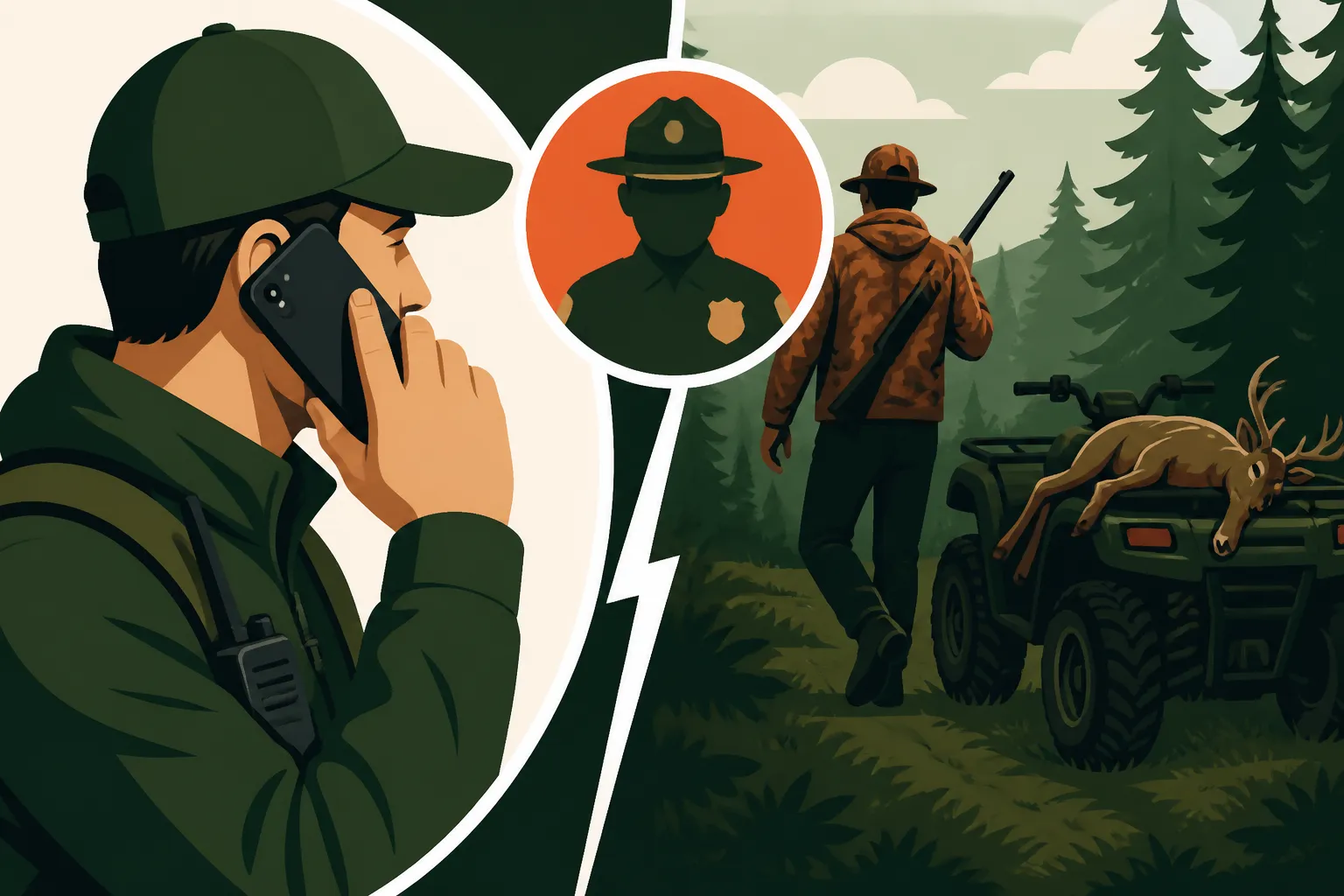
Once you have gathered as much information as possible, and you are in a safe location, it’s time to contact the Maine Warden Service. They are the primary enforcement agency for hunting, fishing, and boating laws in Maine.
The most direct and effective way to report poaching in Maine is through Operation Game Thief. This program provides a toll-free hotline and an online reporting system designed specifically for wildlife crime.
- Operation Game Thief Hotline: Dial 1-800-ALERT-US (1-800-253-7887). This hotline is monitored 24/7. When you call, you can remain completely anonymous if you choose. Clearly state that you are reporting a poaching incident and provide all the details you’ve collected.
- Online Reporting: You can also submit a report through the Maine Department of Inland Fisheries & Wildlife (MDIFW) website. Look for the "Report a Violation" or "Operation Game Thief" section. This is a good option if the incident isn't immediately unfolding and you prefer to type out a detailed account, perhaps including screenshots from your GoHunt app showing the exact location.
When to call 911: If the situation involves immediate danger to people, an active threat, or other serious crimes where public safety is at risk (e.g., armed individuals acting aggressively, direct threats, or a vehicle accident resulting from illegal activity), do not hesitate to call 911. They will dispatch the appropriate emergency services, including the Maine Warden Service if needed. For all other poaching incidents that are not an immediate threat, Operation Game Thief is the appropriate channel. Be ready to provide your name and contact information if you are willing, as this can sometimes help wardens if they need further clarification, though it is not required for Operation Game Thief reports.
After the Report: What Happens Next and How You Can Help
You’ve made the report, breathed a sigh of relief, and perhaps felt a sense of contributing positively. But what happens after you hang up the phone or click submit? Understanding the process can provide reassurance and further demonstrate the importance of your actions.
The Role of the Maine Warden Service
The Maine Warden Service is made up of dedicated men and women who are passionate about protecting our state's natural resources. When you make a report, especially through Operation Game Thief, it is taken seriously. Wardens often receive many leads, and your detailed information helps them prioritize and direct their resources effectively. They have the authority to investigate violations, make arrests, and pursue legal action against poachers, with potential outcomes ranging from fines to loss of hunting privileges, and even jail time depending on the severity of the Maine Wildlife Violation Penalties.
They use a variety of methods to investigate, from discreet surveillance to following up on vehicle descriptions and interviewing witnesses. Remember that an investigation can sometimes take time, and a single report might be one piece of a larger puzzle they are working to solve. Your information, combined with other tips or evidence they may already have, can be crucial in building a case. For instance, a report about illegal hunting near Aroostook County Farmland might tie into other suspicious activities they've been monitoring in that area.
Witness Protection and Follow-Up
One of the primary benefits of Operation Game Thief is the anonymity it offers. You can make a report without providing your name, ensuring your identity is protected. This encourages more people to report without fear of retribution. If you do choose to provide your contact information, the Maine Warden Service may reach out for clarification or additional details as their investigation proceeds. However, it's important to understand that due to the sensitive nature of ongoing investigations, they may not be able to provide you with regular updates or inform you of the outcome of the case.
Even if you don't hear back, your report matters immensely. Every piece of information contributes to their intelligence gathering and helps them target enforcement efforts. Sometimes, a report might not lead to an immediate arrest but could inform future patrols or stakeouts in a particular area, such as near a critical Maine Deer Wintering Yards Explained or a popular Late-Season Food Sources for Maine Whitetails. If you witness further activity related to an incident you've already reported, don't hesitate to call Operation Game Thief again to provide updated information. Your continued vigilance and willingness to report are vital in ensuring that Maine's wildlife is protected and that ethical hunting traditions endure.
Reporting Poaching in Maine: Quick Reference Guide
Below is a quick reference for reporting suspected poaching and the types of information to collect:
| Information Type | Key Details to Collect | Importance |
|---|---|---|
| Who | Number of individuals, physical descriptions, clothing | Helps identify suspects |
| What | Species poached, number of animals, methods used, weapons | Confirms nature of violation, helps in evidence collection |
| When | Date, exact time of incident | Establishes timeline, crucial for warden response |
| Where | Precise location (GPS, road names, landmarks, WMD, land type) | Directs wardens to the exact scene, critical for follow-up |
| Vehicles/Equipment | Make, model, color, license plate, distinguishing marks | Often the most effective way to track down suspects |
| Direction | Suspects' direction of travel (on foot, vehicle, ATV) | Helps wardens intercept or track |
Contact Methods:
- Operation Game Thief Hotline: 1-800-ALERT-US (1-800-253-7887) – Best for direct poaching reports, anonymity guaranteed.
- Online Report: Maine Department of Inland Fisheries & Wildlife (MDIFW) website – Look for "Report a Violation."
- Emergency (Active Threat): Call 911 – If there's immediate danger to people or other serious crimes involved.
Remember to utilize mapping tools like GoHunt to capture precise location details, enhancing the effectiveness of your report.
Disclaimer
Please note that this guide provides general information and recommendations. Hunting regulations and laws can change, and it is always the hunter's responsibility to verify the most current rules and regulations with the Maine Department of Inland Fisheries & Wildlife (MDIFW) directly. This content is for informational purposes only and does not constitute legal advice.