Maine Spring Turkey Season Closing Date
The Maine spring turkey season is one of those precious times of year that seems to fly by, and before you know it, you're wondering if you've still got a few days left to fill that tag. It's incredibly frustrating to realize you might have missed your last chance because you weren't clear on the exact closing date. This guide is here to cut through all the confusion and pinpoint precisely when Maine's spring turkey season wraps up, ensuring you can plan your final hunts effectively and avoid any heartbreaking surprises.
Understanding Maine's Spring Turkey Season Structure
Maine's spring turkey season is a highly anticipated event, offering hunters a fantastic opportunity to chase gobblers across a diverse landscape. However, keeping tabs on all the regulations, especially the exact closing date, can sometimes feel like trying to hit a moving target. Let's break down the structure to make sure you're always on the right side of the rules.
General Season Dates and Statewide Regulations
For most hunters across the state, the spring wild turkey season in Maine generally kicks off on May 1st and runs until the first Saturday in June. For example, in 2024, that meant the season officially closed on June 1st. This month-long window gives hunters a good stretch of time, but it certainly feels shorter when you're out there, chasing wary gobblers.
During this period, legal shooting hours typically run from one-half hour before sunrise until one-half hour after sunset. It's crucial to remember this, as shooting hours for other game, like deer, can be different, and you don't want to make a mistake. Of course, before you even step foot in the woods, you need to ensure you have all your ducks in a row – or in this case, your turkeys. This means having your valid Maine hunting license and the specific Maine Spring Turkey Permit Rules.
When it comes to weapons, Maine allows shotguns from 10-gauge to 20-gauge, as well as bows and crossbows. These rules are fairly consistent statewide. The daily bag limit is generally one bearded bird per day. However, the season bag limit can vary depending on where you're hunting. While many areas are restricted to one bearded bird for the entire season, some specific Wildlife Management Districts (WMDs) do allow for a two-bird limit. If you're using a planning tool like GoHunt, you can quickly reference these regulations for your specific hunting area, which is a real time-saver.
Regional Differences and WMD-Specific Closures
This is where some of the confusion often creeps in. While the opening dates for spring turkey can have some minor variations (like a youth-only day preceding the general opener), and bag limits definitely differ by WMD, the closing date for the general spring turkey season is almost always a statewide, unified date: the first Saturday in June.
So, while you might hear people talking about Maine's WMDs With Two-Bird Spring Limits versus Maine's WMDs With One-Bird Spring Limits, understand that this distinction primarily impacts how many birds you can harvest in total, not when the season ends. For instance, in areas like WMD 23 or 24, you might be able to tag two gobblers over the course of the season, provided you have the appropriate permits and follow all other rules. In most other WMDs, you're limited to just one bearded bird for the spring.
It’s easy to get frustrated by the differing rules for various game and regions, making it feel like you need a law degree just to go hunting. That's why it's always, always best practice to check the official Maine Department of Inland Fisheries and Wildlife (MDIFW) website or a trusted hunting app like GoHunt every single year. Regulations can, and sometimes do, change, and being informed is your best defense against unintended violations.
Here’s a quick overview of the key aspects for the Maine Spring Turkey Season:
| Season Aspect | Details |
|---|---|
| General Opening Date | May 1st (typically, after any youth-only days) |
| General Closing Date | First Saturday in June (e.g., June 1st, 2024) |
| Legal Shooting Hours | 1/2 hour before sunrise to 1/2 hour after sunset |
| Daily Bag Limit | 1 bearded bird per day |
| Season Bag Limit | 1 or 2 bearded birds, depending on specific WMD (check MDIFW) |
| Legal Weapons | Shotguns (10-20 gauge), Archery (bow/crossbow) |
| Permit Required | Maine Spring Wild Turkey Permit (in addition to hunting license) |
Why Those Closing Dates Matter More Than You Think
Knowing that exact closing date isn't just about curiosity; it's about respecting the law, maximizing your opportunities, and protecting your privilege to hunt. It's a hard deadline, and ignoring it comes with serious consequences.
Avoiding Legal Headaches and Penalties
Let's be blunt: hunting after the season closes is a big deal, and not in a good way. Game wardens are out there, especially around the edges of the seasons, and they're not shy about enforcing the rules. If you're caught hunting out of season, even if it's just by a few hours or on what you thought was the last day, you're looking at some pretty steep penalties.
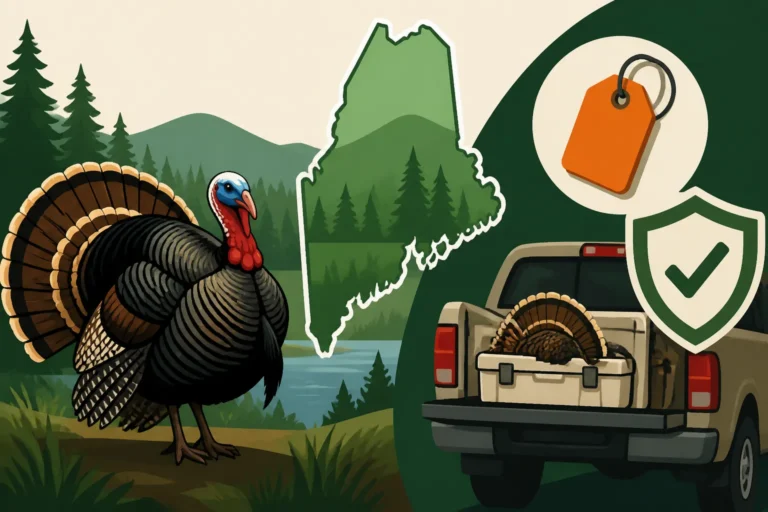
These consequences can range from hefty fines that can easily run into hundreds or even thousands of dollars, to the confiscation of your hunting equipment (yes, that brand-new shotgun or expensive bow), and potentially the loss of your hunting license for an extended period. In severe or repeat cases, you could even face jail time. Nobody wants to be in that situation. The argument of "I didn't know" doesn't hold water in the eyes of the law; personal responsibility is paramount. It’s always on you, the hunter, to be fully aware of the regulations. This also extends to the requirement for Maine Turkey Checking Requirements after you've successfully harvested a bird. Failing to register your turkey in time can also lead to issues, so always double-check those deadlines too.
Maximizing Your Late-Season Hunting Opportunities
Beyond the legal implications, truly knowing the closing date allows you to approach the final days of the season with a clear strategy. There’s nothing quite as deflating as realizing after the season has closed that you had another weekend, another Saturday, to be out there chasing gobblers. That "what if" feeling, knowing you left potential opportunities on the table, stings.
By having that firm closing date in mind, you can truly embrace the "last stand" mentality. This means scheduling those final few hunts, maybe even taking a day off work, to give yourself the best possible chance. Often, the late season offers unique advantages that earlier hunts don't. Pressure might be lower as many hunters have either tagged out or given up. The remaining birds, while wiser, often settle into more predictable patterns as breeding winds down and they focus more on feeding. Plus, the thicker foliage of late spring offers fantastic concealment opportunities.
Knowing your window is closing can also motivate you to scout harder, push a little further, and try those spots you've been meaning to check out all season. Don't let that last day pass you by without giving it your all! Tools like GoHunt can be invaluable here, helping you identify specific public land tracts or even potential private land parcels (with permission, of course) that might still hold birds for those final, crucial hunts.
Strategies for Making the Most of the Closing Weeks
The final weeks of Maine's spring turkey season can be some of the most challenging, but also some of the most rewarding. Gobblers have been pressured, hens are often bred and nesting, and the woods have completely greened up. It takes a shift in strategy, a bit more patience, and a keen eye for detail to punch your tag during this period.
Locating Late-Season Gobblers
As the season progresses, turkey behavior often changes dramatically. Those boisterous, gobbling birds of early May can become much quieter and more dispersed. Relying solely on roost-gobbling will likely lead to disappointment. Instead, focus on these key areas:
- Food Sources: Newly sprouted greens, clover fields, hayfields, and areas rich in insects become major draws. Turkeys are always looking for an easy meal, and as the woods green up, they'll seek out tender, fresh growth. Consider areas that have been recently mowed or harvested, as these often expose insects and new vegetation.
- Water Sources: If it's been a dry spring, water sources like small ponds, creek bottoms, or even puddles can concentrate birds. Pay attention to tracks in muddy areas.
- Strutter Zones: While breeding activity may be winding down, there will still be some hens coming into lay, and toms will still be looking for them. Identify open areas, field edges, or logging roads where gobblers might frequent to display.
- Subtle Scouting: Instead of just listening for loud gobbling, listen for softer clucks, purrs, and yelps. Sometimes, a silent tom will give away his presence with a subtle sound. Scouting With the Maine Hunting App can help identify these potential hot spots. If you're hunting private land, Trail Camera Rules on Maine Private Land allow you to use trail cameras to monitor travel routes and feeding areas, giving you invaluable intel without spooking birds.
Adapting Calling Tactics
Late-season gobblers are often "call-shy" or "call-educated." They've heard it all, and aggressive calling might send them packing. This means you need to dial back the volume and increase your patience.
- Less is More: Ditch the loud, commanding yelps. Instead, opt for soft clucks, contented purrs, and subtle tree yelps. Mimic a quiet hen going about her business. A good strategy can be to call just enough to let a tom know you're there, then go silent. Make him come look for you.
- Patience is Paramount: These birds won't charge in like they might on opening day. Set up in a comfortable spot, possibly Using a Ground Blind on Posted-Free Land or a natural blind, and be prepared to sit for extended periods. Gobblers might circle widely, approach silently, or take a long time to commit. Don't give up too quickly.
- Decoy Usage: Decoys can still be effective, but consider smaller, more realistic setups. A single hen or jake decoy can be less intimidating than a full strut display. Be mindful of Decoy Placement for Pressured Maine Birds, especially in late season; subtle realism is key.
- Listen, Then Call: Spend more time listening for actual turkey sounds before you initiate calling. Let the bird's natural vocalizations guide your response. Are they soft clucking? Respond in kind. Are they silent? Try a light series of yelps and wait. The frustration of silence is real, but persistence with smart calling can pay off. If you've been working a bird and it goes quiet, consider a different approach like Run-and-Gun Turkey Tactics on Private Land to cover more ground.
Gear Considerations for Late Spring
As the season progresses into late May and early June, Maine's weather can shift dramatically. Be prepared for anything, and adjust your gear accordingly.
- Lightweight, Breathable Camouflage: The days are longer and warmer. You'll want camo that breathes well to avoid overheating while still providing excellent concealment. Consider a bug suit or light layers that can be shed easily.
- Insect Repellent: This cannot be stressed enough. Late spring in Maine means black flies and mosquitoes are out in full force. A Thermacell is a lifesaver, as are head nets and strong insect repellents. Don't let bugs drive you out of your prime hunting spot.
- Good Quality Binoculars: With the woods fully leafed out, spotting subtle movement can be tough. A good pair of binoculars will help you pick apart dense cover and spot a wary gobbler's head or fan before he spots you.
- Comfortable Seat: Since patience is key, you'll be sitting for longer durations. A comfortable seat cushion, a small stool, or even a compact ground blind chair will make those long waits much more bearable.
- Hydration: Bring plenty of water. Even if it feels cool in the morning, those late spring days can heat up quickly, especially if you're doing a lot of walking or Calling an Early May Gobbler Off the Roost and need to move fast to set up.
- Navigation Tools: A reliable GPS unit or a smartphone with a robust mapping app (like GoHunt, which can show property boundaries and topo maps) is essential. It's easy to get turned around when you're focusing on a bird, especially in new territory. Remember, your ultimate goal is to Setting Up Against a Big White Pine or whatever perfect tree offers the best concealment and backdrop for a shot.
By keeping these strategies in mind, understanding the statewide closing date, and adapting to the changing turkey behavior, you'll be well-prepared to make the most of those final, exciting days of Maine's spring turkey season. Good luck out there!
Disclaimer
Please remember that hunting regulations can change. While this guide provides general information, always consult the official Maine Department of Inland Fisheries and Wildlife (MDIFW) website or their most current hunting lawbook for the definitive and most up-to-date regulations before heading afield. Your personal diligence is key to a safe and legal hunt.