Maine Puffin Colonies on Coastal Islands
Many folks, even those focused on hunting, are curious about Maine's unique wildlife, and the thought of seeing something as distinctive as a puffin often sparks excitement. It's a different kind of thrill than spotting a big buck or calling in a gobbler, but it's a thrill nonetheless – a chance to connect with a wildness that feels ancient and resilient. But where do you even begin to look for these charismatic "sea parrots" that nest on our rocky coastlines, and how can you do so without disturbing them? This guide will take you through everything you need to know about Maine's puffin colonies, from where they are found to the incredible conservation story behind their return, ensuring you can appreciate these wonders responsibly.
The Allure of Maine's Puffins: Why Hunters Appreciate Non-Game Species
As hunters, we often spend our time focused on game species, understanding their habits, their habitats, and the intricate dance of seasons and regulations that govern our pursuits. But a true appreciation for the outdoors, for the wild places and the creatures that inhabit them, extends far beyond what we carry a tag for. Maine is a state rich in biodiversity, home to everything from the mighty moose to the elusive black bear, and yes, even the charming Atlantic puffin. While you won't be drawing a permit for a puffin, the opportunity to observe these unique seabirds speaks to a broader connection with nature that many hunters share deeply.
There's a quiet satisfaction in understanding the ecosystem, in witnessing how different species contribute to the overall health of the environment. The return of the puffin to Maine's coast is a testament to dedicated conservation efforts, and it's a story that resonates with anyone who values wildlife and wild spaces. It reminds us that our role as outdoors enthusiasts isn't just about the harvest, but about being stewards of the land and its creatures, ensuring that all forms of wildlife thrive for generations to come. It’s about recognizing that the same healthy ocean ecosystems that support sea ducks and fish also provide for these incredible, brightly-beaked birds.
A Symbol of Maine's Wild Coast
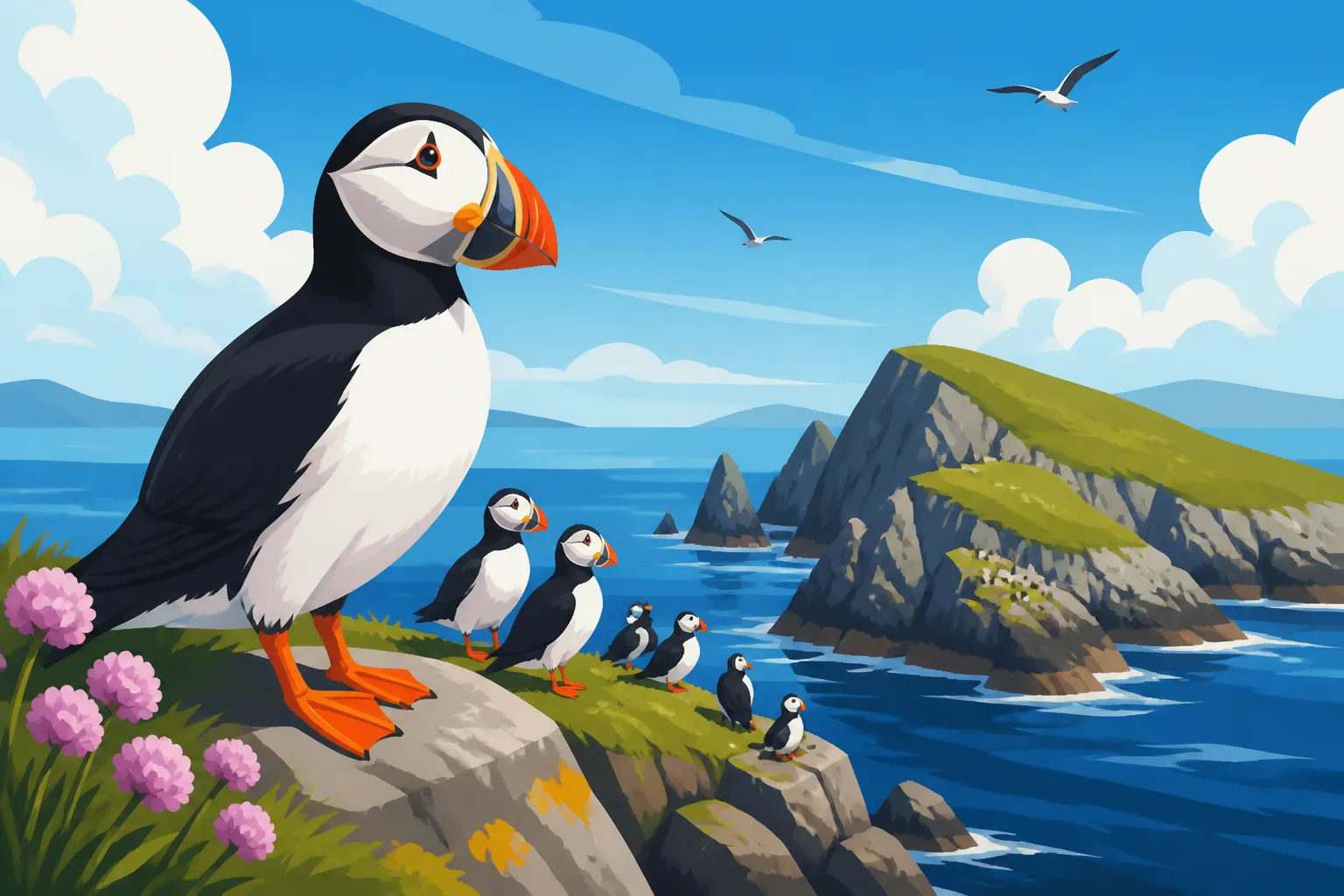
The Atlantic puffin is, without a doubt, an iconic symbol of Maine's rugged, windswept coast. With their distinctive colorful beaks, bright orange feet, and comical waddling gait on land, they've earned the affectionate nickname "sea parrots." Yet, beneath that charming exterior lies a remarkably adapted seabird perfectly at home in the chilly waters of the North Atlantic. They spend most of their lives at sea, only coming ashore to breed on isolated, rocky islands, making a brief appearance that feels truly special for those fortunate enough to witness it.
For many, the sight of a puffin colony, alive with the comings and goings of these industrious birds, is a bucket-list experience. It's a glimpse into a world that feels untamed and truly wild, a stark contrast to our often-busy daily lives. These remote islands, buffeted by ocean waves and home to a symphony of seabird calls, offer a profound sense of connection to nature's raw power and delicate balance. Their presence speaks to the health of our coastal waters and the success of long-term conservation projects that have brought them back from the brink in our state.
The Hunter's Role in Conservation
It might seem counterintuitive to discuss puffins on a hunting blog, but the truth is, hunters have always been and continue to be some of the most dedicated conservationists. We're often the first to notice changes in habitat, the first to advocate for healthy ecosystems, and the first to contribute financially to wildlife management through license fees and excise taxes on sporting goods. The very principles that lead to healthy deer herds or robust turkey populations are the same ones that benefit non-game species, including those that call our coastal islands home.
When we talk about maintaining Maine's CWD-Free Cervid Herd or ensuring thriving populations of Maine Common Loon Population, it's all part of the larger picture of wildlife health. Hunters understand that diverse habitats and responsible management are crucial for all species. The efforts to restore puffin colonies in Maine reflect this ethos – a recognition that every part of the natural world has value and deserves our protection and admiration. We see the puffins as another incredible success story, showing what happens when dedicated individuals and organizations work to preserve wild Maine.
Where to Find Maine's Puffin Colonies: Key Islands and Viewing Opportunities
Finding puffins in Maine isn't like spotting a deer in a clear-cut or a grouse along an alder run; it requires a different kind of scouting and often involves venturing out onto the Atlantic. Puffins are incredibly vulnerable to predation and human disturbance on land, so they choose remote, predator-free islands to nest. These specific locations are critical for their survival and reproduction. Fortunately, several organizations and boat tour operators have made it possible for enthusiasts to observe these fascinating birds without impacting their delicate nesting sites.
The breeding season, typically from late May through August, is when you'll have the best chance of seeing puffins. They arrive in spring to lay their single egg in burrows, and then spend the summer raising their chicks before heading back out to sea for the colder months. Planning your trip during this window is absolutely essential for a successful puffin-watching experience. The sheer density of birds on these islands during the summer is truly a sight to behold, a vibrant, noisy spectacle of nature.
The Iconic Islands: Machias Seal Island, Eastern Egg Rock, and Beyond
Maine is home to several active puffin colonies, each with its own story of restoration and thriving populations. The most well-known and significant include:
- Eastern Egg Rock: Located off the coast of Pemaquid, this small island was the site of the first successful puffin reintroduction project in the world, spearheaded by Project Puffin (more on them later!). It's a truly inspiring success story. While landings aren't permitted to protect the nesting birds, boat tours circle the island, offering excellent views.
- Machias Seal Island: This remote island, situated further Downeast off Cutler, is unique because it's the only puffin colony in the United States where you can actually land and observe puffins from blinds. Access is strictly controlled, managed by the U.S. Fish and Wildlife Service, and requires booking well in advance with one of the few permitted boat operators out of Cutler or Jonesport. This truly offers an immersive, once-in-a-lifetime experience.
- Petit Manan Island: Part of the Maine Coastal Islands National Wildlife Refuge, this island near Milbridge hosts another important puffin colony. Like Eastern Egg Rock, direct landings are prohibited, but boat tours often visit the area, offering distant views of the nesting birds and other seabirds.
- Seal Island National Wildlife Refuge: This larger island, southwest of Vinalhaven, also hosts a significant puffin colony. It's another success story of restoration, and boat tours operate out of places like Port Clyde to provide viewing opportunities.
Each of these islands provides a vital sanctuary for puffins and a range of other nesting seabirds, from terns to guillemots. They are testament to the power of targeted, science-based conservation.
| Puffin Colony Island | Primary Viewing Method | Landing Permitted? | Best Time to Visit | Notes |
|---|---|---|---|---|
| Eastern Egg Rock | Boat tours (Pemaquid/New Harbor) | No | Late May – Mid-August | First successful reintroduction site |
| Machias Seal Island | Boat tours + Blinds (Cutler/Jonesport) | Yes (limited, by permit) | Mid-June – Mid-August | Only US site for blind viewing |
| Petit Manan Island | Boat tours (Milbridge/Steuben) | No | June – July | Part of Maine Coastal Islands NWR |
| Seal Island NWR | Boat tours (Port Clyde) | No | June – Mid-August | Largest colony in Maine |
Planning Your Puffin-Watching Excursion
If you're ready to embark on a puffin adventure, a bit of planning goes a long way. First and foremost, you need to consider the timing. As mentioned, the breeding season from late May through August is your window. July is often considered peak time, with both adult birds and growing chicks present. Beyond timing, selecting a reputable boat tour operator is crucial. They are knowledgeable about the puffins, follow all regulations to minimize disturbance, and often have naturalists on board to provide educational commentary.
Many boat tours depart from coastal towns like New Harbor, Port Clyde, Jonesport, and Cutler. A quick search for "Maine puffin tours" will yield several options, such as those offered by the Audubon Society's Project Puffin Visitor Center in Rockland, which works with local charter companies. When booking, always ask about the duration of the trip, what wildlife you can expect to see beyond puffins, and what their policies are regarding weather cancellations. The Maine coast can be unpredictable, and trips may be postponed or canceled due to fog or rough seas. Remember to dress in layers, bring binoculars, and prepare for cooler temperatures and sea spray, even on a sunny summer day. Exploring the Maine Coastal Island Refuge Land is a truly enriching experience.
Understanding Puffin Biology and Conservation Efforts in Maine
To truly appreciate Maine's puffins, it helps to understand a little about their remarkable lives and the incredible journey they've made back to our shores. These aren't just pretty birds; they are marvels of evolution and a testament to what dedicated conservation can achieve. Their story is intertwined with human history, demonstrating both our capacity for impact and our ability to rectify past mistakes.
Just like understanding the habitat preferences for Upland Bird and Small Game Hunting in Maine helps you locate grouse, knowing a bit about puffin biology will enhance your viewing experience. You’ll better understand their movements, why they choose specific nesting sites, and why certain conservation strategies have been so effective. It’s all part of building a holistic understanding of our natural world, a shared trait among true outdoor enthusiasts.
The Life Cycle of the Atlantic Puffin
Atlantic puffins (Fratercula arctica) are true pelagic birds, meaning they spend the vast majority of their lives out on the open ocean. They can dive to impressive depths, using their wings to "fly" underwater in pursuit of small fish like herring, hake, and sand eels – their primary diet. When they return to their nesting islands in spring, usually the same island where they were hatched, they often reunite with the same mate year after year. They dig burrows, sometimes using old rabbit burrows, into the soil or find crevices among the rocks, creating a safe nursery for their single egg.
Once the chick, or "puffling," hatches, both parents take turns foraging, often returning with multiple fish carried crosswise in their specialized beaks – a sight that never fails to delight observers. The puffling grows rapidly on this rich diet, typically fledging after about 40-50 days. Once the young bird takes its maiden flight, it heads straight for the ocean, not returning to land for several years until it's ready to breed itself. This cycle, repeated by thousands of birds on Maine's islands, is a fragile dance dependent on healthy ocean ecosystems and undisturbed nesting sites.
Project Puffin: Restoring a Seabird Icon
The story of the puffin in Maine is a powerful tale of conservation success. By the late 1800s, Atlantic puffins had been largely extirpated from Maine's coastal islands due to overhunting for their meat, eggs, and feathers. Their numbers plummeted dramatically, and by the early 20th century, only one pair was thought to remain in Maine on Matinicus Rock. It was a bleak outlook for these charismatic birds.
Enter Project Puffin, an initiative of the National Audubon Society, founded in 1973 by Dr. Stephen Kress. The ambitious goal was to restore puffins to former nesting islands by translocating young puffins (chicks) from Newfoundland, Canada (where populations were still healthy), to Eastern Egg Rock and other suitable Maine islands. The chicks were hand-reared in artificial burrows, then released to fledge. To encourage them to return, decoys of adult puffins were placed on the islands, and mirrors were used to make the small colonies appear larger and more attractive to prospecting young birds. This technique, called "social attraction," proved incredibly effective.
Over decades, this painstaking work paid off. The young puffins, imprinted on their release islands, began to return as adults to breed, slowly re-establishing colonies. Today, thanks to Project Puffin's relentless efforts and the ongoing protection of their nesting grounds, Maine's puffin population is thriving once again, a true conservation triumph. It's a prime example of how dedicated, long-term scientific intervention can bring a species back from the brink, much like the inspiring recovery of the Maine Bald Eagle Recovery.
Responsible Puffin Viewing: Ethics and Best Practices
As outdoor enthusiasts, we understand the importance of respecting wildlife and minimizing our impact. This is especially true when observing sensitive nesting colonies like those of the Atlantic puffin. These birds are incredibly vulnerable when they are ashore, and any disturbance can have serious consequences for their breeding success. Therefore, responsible viewing isn't just a suggestion; it's a critical component of ensuring their continued recovery and presence on Maine's coast.
Just as we preach proper etiquette for Asking a Maine Landowner for Permission or adhering to legal limits for game species, we must also embrace ethical practices when appreciating non-game wildlife. Our actions, even seemingly small ones, can have a cumulative effect on these precious populations. The goal is to observe, appreciate, and leave no trace, allowing the puffins to carry on their essential work of raising the next generation in peace.
Minimizing Disturbance to Nesting Birds
When you're out on a puffin tour, remember that you are a guest in their critical breeding habitat. Here are some key ethical guidelines to follow:
- Stay on Designated Paths/Blinds: If you're fortunate enough to visit Machias Seal Island and land in a blind, adhere strictly to the guides' instructions. Do not leave the blinds or wander from the designated paths, as disturbing nesting burrows or flushing birds can be detrimental.
- Maintain Distance: From a boat, your tour operator will know the appropriate distances to maintain. Avoid shouting, loud noises, or sudden movements that could startle the birds, whether they are on the water or the island. Use binoculars and telephoto lenses for close-up views.
- No Feeding: Never attempt to feed any wild birds, including puffins. It can alter their natural behaviors, make them dependent on humans, and expose them to inappropriate foods or diseases.
- Pack Out What You Pack In: Ensure all trash, no matter how small, is kept securely and removed from the boat. Marine debris is a serious threat to seabirds and other marine life.
- Observe Quietly: Enjoy the natural sounds of the ocean and the seabirds. Keep conversations to a respectful volume to enhance your experience and avoid disturbing the wildlife or other observers.
Adhering to these practices ensures that your visit is truly one of appreciation and not one that adds stress to the puffins during their most vulnerable time. It's an extension of the same respect we show to all forms of wildlife, whether we're tracking a deer or simply Reading Maine Mud for Fresh Deer Movement.
Supporting Puffin Conservation Through Education
Beyond respectful viewing, one of the most powerful ways to support puffin conservation is through education and advocacy. Learning more about these birds, understanding the challenges they still face (like climate change impacts on their food sources), and sharing their story with others can create a ripple effect of awareness and support. Many of the organizations involved in puffin restoration also work on broader issues of ocean health and seabird protection.
Consider supporting organizations like the National Audubon Society's Project Puffin, which continues its vital work monitoring puffin populations, researching their habits, and educating the public. Visiting their visitor centers, reading their publications, or even making a small donation can contribute directly to these efforts. Remember, a healthy ecosystem benefits all creatures. The detailed scientific understanding gained from projects like Project Puffin can even inform our approaches to Maine Wildlife Disease Monitoring Program for game species, showing how interconnected all our efforts truly are. By becoming an informed advocate, you help ensure that these "sea parrots" remain a vibrant part of Maine's wild coastline for generations of outdoor enthusiasts to cherish.
Disclaimer
This article is for general informational purposes only and does not constitute professional advice. Laws, prices and regulations vary by location and change over time. Consult a qualified professional for guidance on your specific situation.