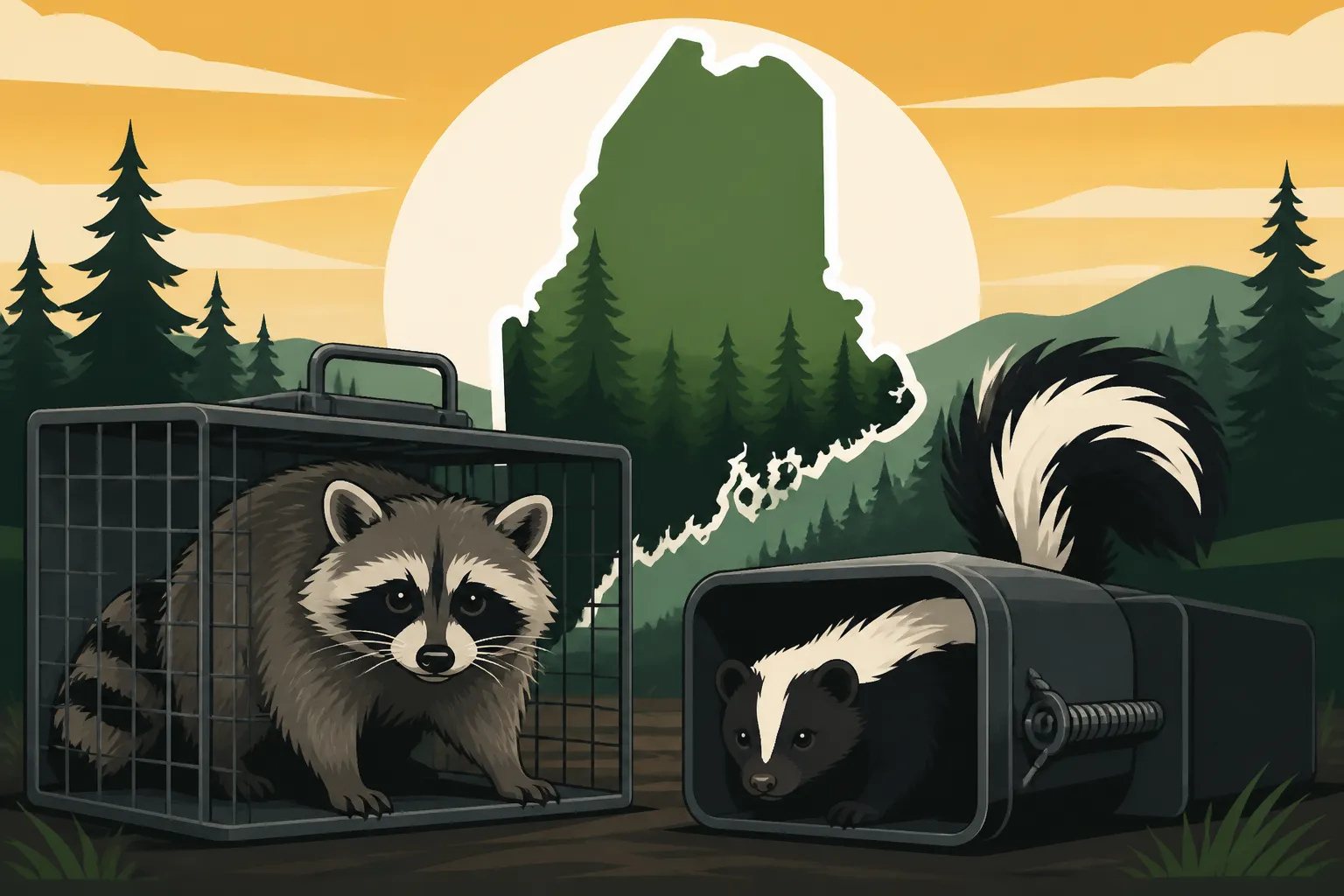
Maine Raccoon and Skunk Trapping
Oh, the perennial battle against the backyard bandits and the stinky surprises! If you live anywhere in Maine, especially on the fringes of town or out in the more rural areas, you've likely faced the frustration of raccoons raiding your trash cans, tearing up your lawn, or even worse, skunks deciding to take up residence under your porch or shed. It's not just about the mess or the smell; these critters can carry diseases and cause real damage to your property. This comprehensive guide is here to walk you through the ins and outs of ethically and legally trapping raccoons and skunks in Maine, helping you reclaim your space and manage these common nuisances effectively.
Understanding Maine's Trapping Regulations for Raccoons and Skunks
Before you even think about setting a trap, it's absolutely crucial to understand the rules of the game in Maine. Trapping isn't just about setting a device; it's a regulated activity designed to ensure humane practices and responsible wildlife management. Ignoring these rules can lead to fines, confiscation of equipment, and even legal trouble, which is certainly not what any of us want when we're just trying to protect our property.
Licensing Requirements for Trapping in Maine
First things first: you can't just go out and start trapping without the proper license. In Maine, anyone trapping furbearers – and yes, that includes raccoons and skunks – needs to possess a valid Maine trapping license. This isn't just a formality; it demonstrates that you've familiarized yourself with the state's trapping laws and regulations. You'll want to check the Maine Department of Inland Fisheries and Wildlife (MDIFW) website or a local licensing agent for the specific requirements and costs, which can vary.
There are different license options, typically for residents and non-residents, and sometimes even specific permits for certain activities or species. Don't assume your general hunting or fishing license covers trapping, because it most certainly does not. Always double-check that you have the correct documentation in hand before you even buy your first trap. It’s also important to remember that regulations can change, so always refer to the most current MDIFW rulebook each season, perhaps after checking out a reputable resource like GoHunt for general information.
Legal Trapping Seasons and Hours
Even with a license, you can't trap raccoons and skunks year-round in Maine. There are specific open seasons for furbearers, and these dates are set to align with biological cycles, population management goals, and fair chase principles. Trapping outside of these seasons is strictly prohibited and can be seen as poaching. For both raccoons and skunks, these seasons generally fall in the colder months, often starting in late fall and extending through winter.
The exact dates for Maine Fox and Bobcat Trapping Season or raccoon and skunk trapping can fluctuate slightly year to year, and sometimes even by specific Wildlife Management District (WMD), though for raccoons and skunks it's usually statewide. Beyond just the season dates, there might also be regulations regarding the hours you can check your traps. For instance, many states require traps to be checked daily, sometimes within a specific timeframe after sunrise, to minimize animal stress and potential injury. Always consult the current rulebook for these crucial details.
Permitted Trap Types and Setbacks
Maine has very specific rules about the types of traps you can use, and for good reason. The goal is to ensure humane dispatch or capture for release, and to prevent undue suffering. For raccoons and skunks, you'll generally be looking at cage traps (live traps), foothold traps (which have strict size and jaw spread limits), and sometimes body-gripping traps, but these often come with severe restrictions on where and how they can be set, particularly near human dwellings or public trails.
There are also important setback distances. For example, setting a body-gripping trap within a certain distance of a public way or a dwelling might be illegal without specific conditions. You might also find rules about tagging your traps with your name and license number, or requirements for how far your traps must be from a water source or a property line. These regulations are designed to protect both wildlife and public safety, so understanding them thoroughly is non-negotiable.
Effective Trapping Methods and Tactics for Raccoons and Skunks
Once you're squared away with the legalities, it's time to dive into the practical side of trapping. There's a real art and science to successfully and humanely capturing these animals. It's not about brute force, but about understanding their behaviors, choosing the right equipment, and placing it strategically.
Choosing the Right Trap for the Job
When it comes to raccoons and skunks, you essentially have a few main options, each with its own benefits and considerations.
- Live Cage Traps: These are often the preferred choice for nuisance animals in residential areas, especially for skunks. They allow you to capture the animal unharmed, offering the option for relocation (if legal and practical) or humane dispatch. For raccoons, you'll need a sturdy, large cage trap, typically 12x12x32 inches or similar. For skunks, a slightly smaller, more enclosed cage trap can work well, as the "enclosed" nature often makes them less likely to spray when initially captured. A good resource like GoHunt might offer reviews on various cage trap brands, helping you choose durable, effective models.
- Foothold Traps: These are more commonly used by furbearer trappers targeting multiple species, including raccoons. They are designed to hold the animal by the foot without breaking bones or causing severe injury, allowing for release of non-target animals. Maine has strict regulations on jaw spread limits and requires padded or offset jaws for certain traps. These require more skill and experience to set effectively and safely, and careful attention to the specific regulations to ensure legality.
- Body-Gripping Traps (Conibears): While highly effective for a quick, humane dispatch, these traps are generally not recommended for beginners or for use in areas where non-target animals (like domestic pets) might be present. They require very specific placement and often have strict restrictions, such as being fully submerged in water or placed inside a cubby box, to prevent accidental captures. Given the typical nuisance scenarios for raccoons and skunks, cage traps or carefully managed foothold traps are usually the more appropriate starting points.
Strategic Trap Placement and Baiting
This is where your understanding of the animal and its habits really comes into play. You can have the best trap in the world, but if it's in the wrong spot or has the wrong bait, you'll catch nothing but leaves.
- Raccoons: Raccoons are incredibly curious and opportunistic omnivores. Look for signs of their activity: overturned trash cans, disturbed garden beds, tracks in mud near water sources, or entry points into sheds or attics. Place traps along their travel routes, near water, at the base of trees they might climb, or directly where they're causing damage (e.g., next to a chicken coop they've been raiding). For bait, think smelly and appealing: fish, cat food, marshmallows, sweet corn, or even a piece of fried chicken. A scent lure, like a commercial call lure designed for raccoons, can also be highly effective when paired with a visual attractant.
- Skunks: Skunks are less adventurous than raccoons but just as persistent when they find a good food source or den site. They prefer to stick to cover, often along fence lines, brush piles, or under structures. Identify where they're feeding or denning. Common signs include small, dug-up holes in your lawn (grub hunting), musky odor, and tracks. For bait, skunks are attracted to meat scraps, cat food, peanut butter, or even leftover donuts. Placing the bait deep within a cage trap can help ensure the entire animal enters before the trap trips, minimizing the chance of a "spray-and-escape" situation. For either species, using a trail camera can be invaluable for understanding their movements and confirming your target species before setting your traps. GoHunt, for example, often features articles on effective trail camera strategies.
Handling a Trapped Animal Safely
This is perhaps the most critical part, especially with skunks. You need a plan for what to do once an animal is in your trap.
- For Raccoons: Once a raccoon is in a cage trap, approach cautiously. They can be aggressive and will try to bite or scratch. Wear heavy gloves and long sleeves. If relocation is your goal (after verifying local laws and appropriate release sites), transport the trap carefully. If humane dispatch is necessary, do so quickly and respectfully, away from public view.
- For Skunks: The goal with a trapped skunk is usually to avoid getting sprayed. The key is slow, calm movements. Draping a thick blanket or tarp over the trap before approaching can help calm the skunk, as they often spray when they feel threatened or can't see an escape route. Move the covered trap to a suitable relocation site (again, verify legality) or prepare for humane dispatch. If you plan to relocate, choose a distant, unpopulated area with suitable habitat. If dispatch is the chosen route, often the most humane method for a skunk is to submerge the covered trap in water, which can be done without triggering a spray response if done calmly and smoothly. Always have a plan for dispatch or relocation before you set your first trap.
Identifying Raccoon and Skunk Behavior and Habitat
To successfully trap raccoons and skunks, you really need to get into their heads a little bit. Understanding their daily routines, preferred hangouts, and dietary habits will greatly increase your chances of success. It's about thinking like them, observing their world, and knowing where they're most likely to be.
Raccoon Habits and Preferred Habitat
Raccoons are incredibly adaptable creatures, which is why they thrive in such diverse environments across Maine, from the deep woods to suburban backyards. They are primarily nocturnal, meaning they're most active from dusk till dawn, though it's not uncommon to see them out during the day, especially if food is scarce or they have young.
Their natural habitat includes wooded areas, particularly those near water sources like rivers, streams, and ponds. These areas provide them with ample food (fish, frogs, crayfish, berries, nuts) and denning sites in hollow trees, rock crevices, or abandoned burrows. However, their adaptability means they've also become incredibly adept at living in human-dominated landscapes. They'll readily den under sheds, in attics, in abandoned buildings, and even in storm drains. They are curious and intelligent, always on the lookout for an easy meal, which often means rummaging through garbage cans, raiding compost piles, or feasting on pet food left outdoors. Learning to read Scrape Lines Along a Logging Road or other signs of their travel is a great way to identify high-traffic areas.
Skunk Habits and Preferred Habitat
Skunks, while also nocturnal, are generally less adventurous than raccoons. They tend to stick closer to their den sites, which are often burrows they've dug themselves, or more frequently, existing spaces under porches, sheds, woodpiles, or even crawl spaces. They are not known for climbing and prefer to stay on the ground.
Like raccoons, skunks are omnivores, but their diet leans heavily towards insects, grubs, and larvae, which is why you often see those tell-tale cone-shaped holes dug in lawns. They'll also eat berries, fruits, small rodents, and bird eggs. Their range is typically smaller than a raccoon's, and they're less likely to travel long distances unless forced by food scarcity. The most obvious sign of a skunk's presence, of course, is their potent musk. If you smell that unmistakable odor frequently near your home, chances are you have a resident skunk. Observing their movements at dawn or dusk can help pinpoint their den entrance, which is a prime location for trap placement.
Identifying Animal Sign and Travel Corridors
Becoming a good trapper means becoming a good detective. You need to be able to read the landscape for clues.
- Tracks: Raccoon tracks look like tiny human hands, with five long, slender toes and distinct finger-like impressions. Skunk tracks are smaller, with five toes and claw marks that are usually visible. Look for them in soft mud, sand, or snow near potential food sources or travel paths.
- Droppings: Raccoon scat is often tubular, containing undigested food like seeds, berries, or insect parts. Skunk droppings are smaller and more varied, often containing insect exoskeletons.
- Damage: Overturned trash cans, pilfered bird feeders, gnaw marks on garden produce, or disturbed compost piles are classic raccoon signs. Small, shallow, conical holes dug in the lawn, or a persistent musky odor, point directly to skunks.
- Travel Corridors: Both animals will often use natural funnels or cover for travel. Raccoons might follow stream banks, old logging roads, or the edges of woodlots. Skunks prefer dense cover, fence lines, or the shadowy edges of buildings. Placing a trail camera, as mentioned, can confirm these pathways and show you exactly what's moving through and when. This information, combined with the detailed maps found on resources like GoHunt, can dramatically improve your trapping success.
Ethical and Safe Trapping Practices
Trapping, even for nuisance animals, comes with a significant responsibility. Ethical considerations and safety for yourself, other people, and non-target animals are paramount. Maine takes these aspects seriously, and so should you.
Humane Trap Set and Dispatch
The primary goal of ethical trapping is to minimize suffering for any animal caught. This starts with how you set your traps.
- Securely Anchoring Traps: Ensure your traps are securely anchored to prevent the animal from dragging the trap away, potentially injuring itself further or escaping. For cage traps, this might mean staking them down. For foothold traps, heavy stakes or drags are essential.
- Proper Trap Adjustment: For foothold and body-gripping traps, proper adjustment is key. The pan tension should be set correctly to ensure it triggers for your target species and not lighter animals, and the trap should fire smoothly.
- Regular Trap Checks: Maine regulations mandate trap checks within certain timeframes (usually every 24 hours, often in the morning). This isn't just a rule; it's a moral obligation. Checking traps frequently reduces the time an animal spends stressed, hungry, or exposed to predators and weather.
- Humane Dispatch: If dispatch is necessary, it must be quick and humane. A single, well-placed shot from a small-caliber firearm (where legal and safe to do so) or a sharp blow to the head with an appropriate tool are common methods. Always ensure you are proficient and confident in your chosen method before attempting it. This responsibility is a core part of trapping.
Avoiding Non-Target Animals and Pets
One of the biggest concerns for backyard trappers is catching an animal you didn't intend to. This is especially true in areas where domestic cats, dogs, or other non-furbearer wildlife are present.
- Elevated Sets: For raccoons, consider elevated sets if permissible. Placing a trap on a log over a stream or on a platform can sometimes reduce the likelihood of catching ground-dwelling non-targets, though this takes specific skill and understanding of regulations.
- Cubby Sets: For body-gripping traps (if you're using them and they are legal for your situation), setting them inside a cubby box or pipe is often required. This enclosure makes it less likely for a non-target animal to inadvertently stick its head into the trap.
- Bait Selection: While raccoons and skunks are fairly indiscriminate eaters, certain baits might be less attractive to domestic pets. For example, some commercial paste baits are formulated to be less appealing to dogs than, say, a piece of chicken. However, no bait is truly pet-proof.
- Location, Location, Location: This is your best defense. Avoid setting traps near known pet routes, walking trails, or areas where children play. If you live in a suburban area, a cage trap might be your only responsible option, and even then, warn neighbors. Regularly checking your traps helps ensure that if a non-target animal is caught, it can be released unharmed as quickly as possible. For guidance on scouting private land to understand animal movements and avoid conflicts, check out Scouting Maine Private Land Before Season.
Personal Safety and Disease Prevention
Working with wild animals, particularly those known to carry diseases or defend themselves aggressively, demands a focus on personal safety.
- Wear Protective Gear: Always wear heavy-duty gloves when handling traps or trapped animals. Long sleeves and sturdy footwear are also advisable. Raccoons have sharp claws and teeth, and skunks, well, they have their own formidable defense!
- Disease Awareness: Raccoons are known carriers of rabies, distemper, and raccoon roundworm. Skunks can also carry rabies. Never handle a wild animal with bare hands. Observe trapped animals for signs of illness (e.g., erratic behavior, drooling, uncoordinated movements). If an animal appears sick, do not attempt to handle or release it; contact MDIFW or animal control immediately.
- Washing Up: After checking traps or handling any equipment that has been in contact with wildlife, thoroughly wash your hands with soap and water. Clean and disinfect your traps regularly, especially if you've caught a sick animal. Taking these precautions can help prevent the spread of zoonotic diseases to yourself, your family, and your pets.
Trapping raccoons and skunks in Maine can be a very effective way to manage nuisance issues, but it requires knowledge, responsibility, and a deep respect for wildlife. By adhering to regulations, employing humane methods, and prioritizing safety, you can address your wildlife concerns effectively and ethically.
Disclaimer
This article is for general informational purposes only and does not constitute professional advice. Laws, prices and regulations vary by location and change over time. Consult a qualified professional for guidance on your specific situation.