Maine Squirrel Nest Counts and Mast Crops
Finding healthy squirrel populations in Maine can sometimes feel like a game of hide-and-seek, especially when you're trying to figure out where they'll be abundant year after year. Hunters and wildlife enthusiasts alike often wonder what drives those boom and bust cycles, and much of it comes down to understanding squirrel nest counts and, even more critically, the success of the annual mast crop. This guide will dive deep into how these factors interrelate and what they mean for the keen observer or hunter in the Maine woods.
Understanding Maine's Squirrel Populations and Mast Crops
Maine's diverse forests are home to several squirrel species, most notably the Eastern Gray Squirrel and the American Red Squirrel. While red squirrels are a bit more territorial and rely on conifer seeds, the gray squirrel's population dynamics are intimately tied to the abundance of hard mast, making them a fantastic indicator species for overall forest health and food availability. Many hunters focus on gray squirrels for their size and table fare, and understanding their cycles is key to consistent success. Without a good food source, squirrel numbers can dwindle, and finding them can become a real challenge.
The Role of Hard Mast in Squirrel Survival
Hard mast refers to the nuts and seeds produced by deciduous trees like oaks, hickories, beeches, and walnuts. These nutrient-dense foods are vital for many wildlife species, but especially for squirrels, who rely on them to build up fat reserves for the long, cold Maine winter and to fuel reproduction. A bumper crop of acorns or beechnuts in the fall can mean the difference between a thriving squirrel population and one that struggles to survive the lean months. When you're out in the woods, paying attention to what's underfoot, or more accurately, what isn't, can tell you a lot about the upcoming season.
When mast crops fail, the ripple effect is immediate and noticeable. Squirrels might have smaller litters, or even skip breeding altogether. Those that do survive may be forced to travel farther and expend more energy searching for alternative food sources, making them more vulnerable to predators and environmental stresses. It's not just about finding food; it's about finding enough food to sustain a healthy population through the toughest times. This is why a keen eye on the mast crop development throughout the summer is a crucial part of scouting for any small game hunter.
Why Squirrels are an Indicator Species
Squirrels are often considered an excellent indicator species because their populations respond so quickly and dramatically to changes in their food supply. Unlike larger game that might have more varied diets or longer gestation periods, squirrels are heavily reliant on mast crops, particularly gray squirrels. A robust squirrel population usually signifies a healthy forest ecosystem with ample food resources. Conversely, a noticeable decline in squirrel numbers can be a red flag, pointing to a poor mast year, increased predation, or even habitat degradation.
For hunters, observing squirrel behavior and numbers can offer early insights into the overall health of a specific woodlot or region. If you're seeing fewer squirrels than usual, it might not just mean a tough day for squirrel hunting; it could indicate that other mast-dependent species, like deer, might also be struggling to find abundant natural food. This kind of early assessment can help you adjust your hunting strategy, perhaps by focusing more on alternative food sources or different areas of the woods. White-Tailed Deer Across Maine also rely heavily on mast crops, so a poor squirrel year might signal a challenging deer season as well.
Interpreting Squirrel Nest Counts
Beyond simply observing individual squirrels, professional wildlife managers and even dedicated hobbyists can gain valuable insights by tracking squirrel nest counts. While it might sound tedious, understanding what these nests are, where to find them, and what their numbers signify is an important piece of the puzzle in assessing squirrel populations and, by extension, the overall health of a specific forest block.
What are Squirrel Nests?
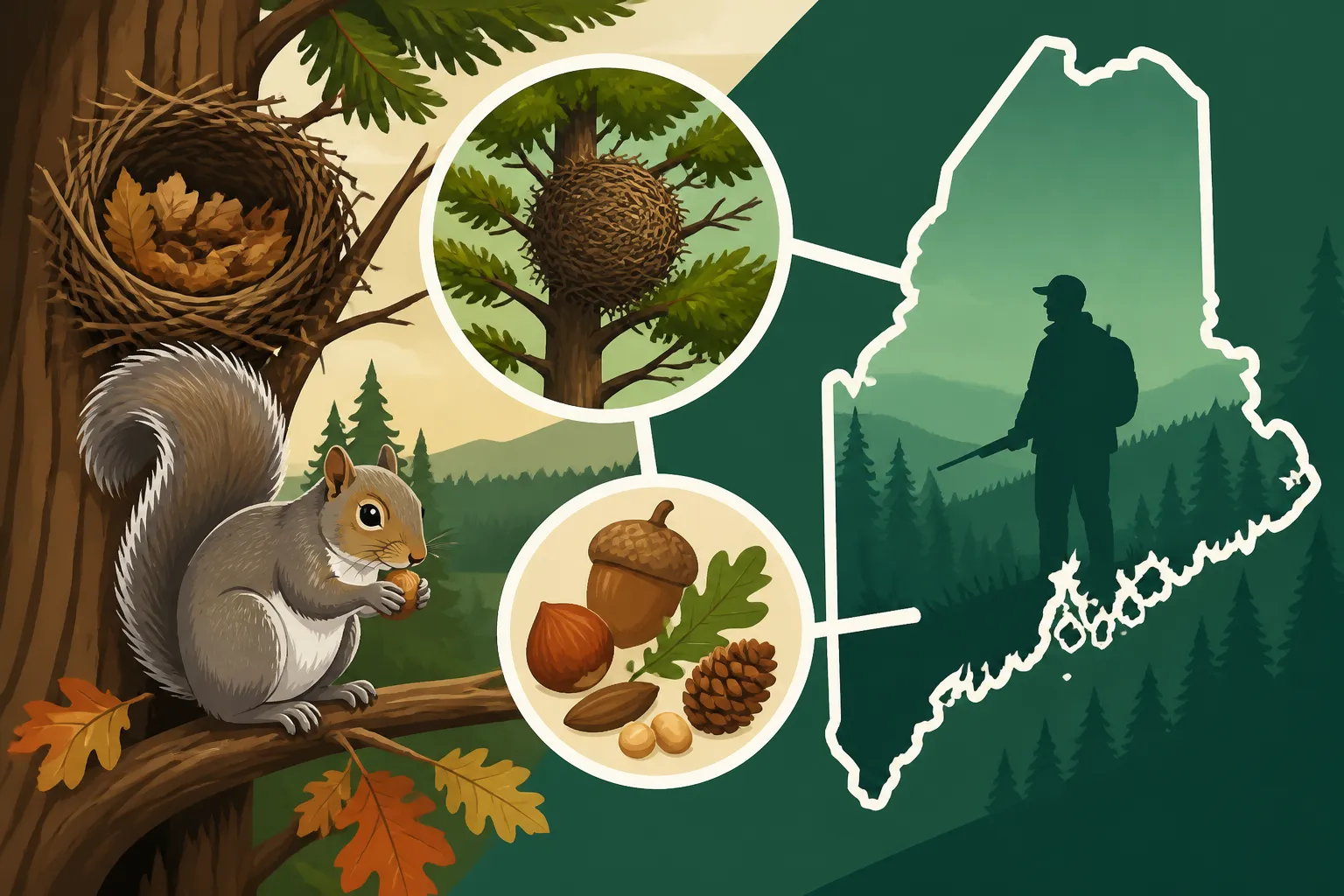
Squirrels, particularly gray squirrels, build two primary types of nests: cavity nests and dreys. Cavity nests are typically found in hollow trees or old woodpecker holes and offer excellent insulation and protection from predators. These are often used for overwintering and raising young. Dreys, on the other hand, are external nests constructed from leaves, twigs, bark, and other debris, usually high in the branches of deciduous trees. They look like a messy ball of leaves, often quite visible once the leaves fall in autumn.
Dreys are especially useful for population counts because they are numerous and visible. While cavity nests might be preferred, drey construction requires less effort and is often an indicator of how successful squirrels have been at finding resources. A high density of dreys suggests a thriving population with enough energy to build these supplementary or seasonal homes. Knowing how to spot these can give you a significant advantage in identifying areas where squirrels are actively living and foraging.
How Nest Counts Inform Population Estimates
Wildlife biologists conduct nest counts, especially drey counts, to estimate squirrel populations. These counts are typically done in late fall or early winter after the leaves have dropped, making the dreys much easier to spot. By systematically surveying specific areas or transects and counting the number of visible dreys, biologists can get an index of the squirrel density. While not a precise "squirrel per acre" number, a consistent increase or decrease in drey counts over several years can provide strong evidence of population trends.
For the average hunter, you don't need a scientific survey to benefit from this knowledge. Simply walking through a woodlot and noting the abundance of dreys can give you a rough idea of how many squirrels are calling that area home. If you're seeing a lot of dreys, it’s a good sign that the habitat is supporting a healthy number of squirrels. If you're using a mapping tool like GoHunt, you can even mark down areas where you consistently find high drey concentrations year after year, building your own database of prime squirrel habitat. This can be especially helpful when scouting new ground.
Factors Affecting Nest Visibility and Accuracy
Several factors can influence the accuracy of drey counts. Tree species can impact visibility; dreys in open hardwoods are much easier to spot than those nestled in dense spruce or fir stands. Weather conditions, especially heavy snow or strong winds, can damage or dislodge dreys, making counts less reliable. Time of year is also critical; counts must be done after leaf fall but before too many dreys degrade over winter.
Despite these challenges, drey counts remain a valuable tool. For a hunter, consistency is key. If you scout the same woodlot at the same time each fall, observing the changes in drey numbers can provide meaningful insights into that specific area's squirrel population. Combining this visual information with actual observations of squirrels on the ground, and your understanding of the local mast crop, creates a powerful scouting strategy. This is a skill that takes time to develop, but it pays dividends when trying to locate game.
Key Mast Crops in Maine and Their Impact
Maine's forests are a patchwork of different tree species, and not all mast is created equal. Understanding which trees produce the most important mast for squirrels, when they produce it, and how to identify a good crop year versus a poor one is fundamental to successful squirrel hunting and general wildlife observation.
Major Hard Mast Producers
In Maine, the primary hard mast producers for squirrels are various oak species, American beech, and to a lesser extent, hickories.
- Oak (Red and White): Oaks are arguably the most critical mast trees for squirrels and deer in many parts of Maine. Red oak acorns mature over two years and are generally available later into the fall and early winter. White oak acorns mature in one season, are less bitter, and are often consumed immediately upon falling. Both are highly prized.
- American Beech: Beechnuts are incredibly nutritious and sought after by many wildlife species, including squirrels, bears, and deer. Beech trees have cyclical production, with bumper crops occurring every few years. The small, triangular nuts are encased in a spiny husk.
- Hickory: While less common or widespread in Maine compared to oaks and beech, where present, hickory nuts are a high-energy food source. Their tough shells require effort to crack, but the reward is worth it for a determined squirrel.
Understanding the distribution of these trees in your hunting area is paramount. A mapping application like GoHunt can help you identify different timber types, allowing you to focus your scouting efforts on areas with a high concentration of mast-producing trees. You can mark specific groves or individual trees that historically produce well.
Identifying a Good Mast Year
Knowing if it's a "good mast year" is probably the single most important factor for anticipating squirrel numbers and movements. Here's how you can tell:
- Observe Bloom in Spring: Look for abundant flowering on oak and beech trees in the spring. While not a guarantee, heavy flowering is the first indicator of potential fruit set.
- Check Developing Nuts in Summer: In late summer, before leaf fall, visually inspect branches for developing acorns and beechnuts. A healthy crop will be visible even from the ground. Use binoculars for a better view high in the canopy.
- Ground Litter in Early Fall: The most obvious sign of a good mast year is the sheer volume of fallen nuts on the forest floor in early fall. When you walk, you should hear and feel acorns or beechnuts underfoot.
- Squirrel Activity: If squirrels are abundant and busy caching nuts, that's a strong indicator of a good crop. They won't work that hard if food is scarce.
Conversely, a poor mast year will show few to no nuts on the trees or the ground, even in areas that typically produce well. This immediately tells you that squirrels will be more scattered, possibly focusing on alternative foods like conifer seeds, berries, or even agricultural crops if available nearby. Hunting After a Poor Acorn Year becomes a completely different ballgame, where traditional squirrel spots might be barren.
Soft Mast and Other Food Sources
While hard mast is king for long-term squirrel survival, don't overlook soft mast and other food sources. These include:
- Berries and Fruits: Wild cherries, blueberries, raspberries, and even apples from old orchards provide seasonal food. Squirrels will readily consume these when available.
- Conifer Seeds: Red squirrels, in particular, are heavily reliant on the seeds from pine, spruce, and hemlock cones. Gray squirrels will also utilize these, especially in poor hard mast years.
- Fungi: Mushrooms, both above-ground and underground, can be a supplemental food source.
- Agricultural Crops: Corn, soybeans, and other crops near wooded areas can become significant food sources, drawing squirrels out of the timber and into field edges. Entry Routes Through a Cut Cornfield can be excellent places to find squirrels and other game when natural mast is scarce.
A poor hard mast year will often see squirrels relying more heavily on these alternative foods. Hunters should diversify their scouting, looking for these less obvious food sources, especially in late season.
Here's a quick overview of some key mast crops:
| Mast Crop Type | Primary Squirrel Species | Timing of Availability | Preferred Habitat | Notes |
|---|---|---|---|---|
| White Oak | Eastern Gray Squirrel | Early Fall | Upland hardwoods, well-drained | Less bitter, quickly consumed. Good for early season. |
| Red Oak | Eastern Gray Squirrel | Mid to Late Fall | Varied hardwoods, more tolerant | More bitter, often cached. Important for winter survival. |
| American Beech | Eastern Gray Squirrel | Late Fall | Moist, rich soils, often in stands | Highly nutritious, cyclical production. |
| Hickory | Eastern Gray Squirrel | Late Fall | Southern Maine, mixed hardwoods | Hard shell, high energy, less widespread. |
| Conifer Seeds | American Red Squirrel | Year-round | Conifer forests, mixed woods | Primary food for red squirrels; supplemental for gray. |
| Wild Cherry | Eastern Gray Squirrel | Summer | Forest edges, disturbed areas | Soft mast, seasonal importance. |
Using Nest Counts and Mast Crops for Hunting Strategy
For the serious small game hunter, or even just someone who loves observing wildlife, understanding the interplay between squirrel nest counts and mast crops isn't just academic; it's intensely practical. This knowledge can directly influence where, when, and how you hunt, increasing your odds of success and deepening your connection to the Maine woods.
Scouting for Squirrels: Beyond Just Looking Up
When you head out to scout, it’s not enough to just walk around and hope to see a squirrel. You need to be actively looking for signs that indicate a healthy, stable population, and the food sources they depend on.
- Identify Mast Trees First: Before the season, or even during an off-season hike, locate stands of oak and beech trees. Mark these on your GoHunt app or a physical map. Pay attention to the age of the trees; mature trees are generally the best mast producers.
- Assess the Mast Crop: As summer progresses into fall, make scouting trips specifically to check the mast. Are there abundant acorns under the white oaks? Are beechnuts littering the ground? Is the canopy heavy with developing red oak acorns? A good mast crop often means squirrels will be concentrated in those areas, especially early in the season when the nuts are fresh.
- Look for Dreys: Once leaves start to fall, walk through your identified mast areas and count dreys. A high concentration of dreys in a particular section of woods, especially one with a good mast crop, is a strong indicator of a localized squirrel population. This is where you want to focus your hunting efforts. Reading Aerial Photos for North Woods Deer can also help identify canopy types that suggest mast, even for squirrel hunting.
Don't forget to look for other signs like chewed nut husks, particularly around logs or stumps where squirrels might sit to eat. These are often easy to spot and confirm activity.
Adjusting Tactics to Mast Abundance
Your hunting strategy should absolutely shift based on the mast crop.
- Good Mast Year: In a year with abundant hard mast, squirrels will be spread out, but concentrated in the specific areas where the nuts are falling. Focus your efforts on these mast-rich woodlots. You might find them less pressured, as they have ample food. Consider still-hunting through oak or beech stands, or setting up quietly near a busy feeding area at dawn. Still-Hunting Aroostook County Farmland might involve checking the woodlots bordering those fields for mast.
- Poor Mast Year: When hard mast is scarce, squirrels will be much more mobile, searching for alternative food. This is when you should focus on:
- Conifer stands: Red squirrels will be more active, and gray squirrels might be forced to utilize conifer seeds.
- Field edges: If cornfields or other agricultural crops are nearby, squirrels will travel to them. Look for tracks and sign where the woods meet the fields. Working a Fencerow for Late-Season Deer is a good example of looking for those transition zones that attract a variety of game.
- Old orchards or berry patches: While less reliable later in the season, these can be hotspots early on.
- Creek bottoms and moist areas: These can sometimes hold different mast species or offer more diverse food options.
In poor mast years, squirrels may also be more receptive to calling, as competition for food is higher and they might be more curious about potential food sources or other squirrels.
Timing Your Hunt
Squirrel activity is generally highest during the early morning and late afternoon, mirroring many other game species. However, mast crop availability can refine this further. Early in the season, when fresh nuts are falling, squirrels might be active throughout the day, diligently burying their winter stores. As the season progresses and the easy pickings dwindle, their activity may become more concentrated during those peak feeding windows.
Remember, Maine Small Game Season Rules generally allow for a longer season for squirrels, giving you plenty of opportunity to observe and adapt. Using the knowledge of nest counts and mast cycles throughout this period will make you a much more effective and successful squirrel hunter. It's a fantastic way to sharpen your woodcraft and spend time in the beautiful Maine outdoors, observing the intricate connections within nature.
Disclaimer
This article is for general informational purposes only and does not constitute professional advice. Laws, prices and regulations vary by location and change over time. Consult a qualified professional for guidance on your specific situation.