Grouse Hunting Maine Alder Runs
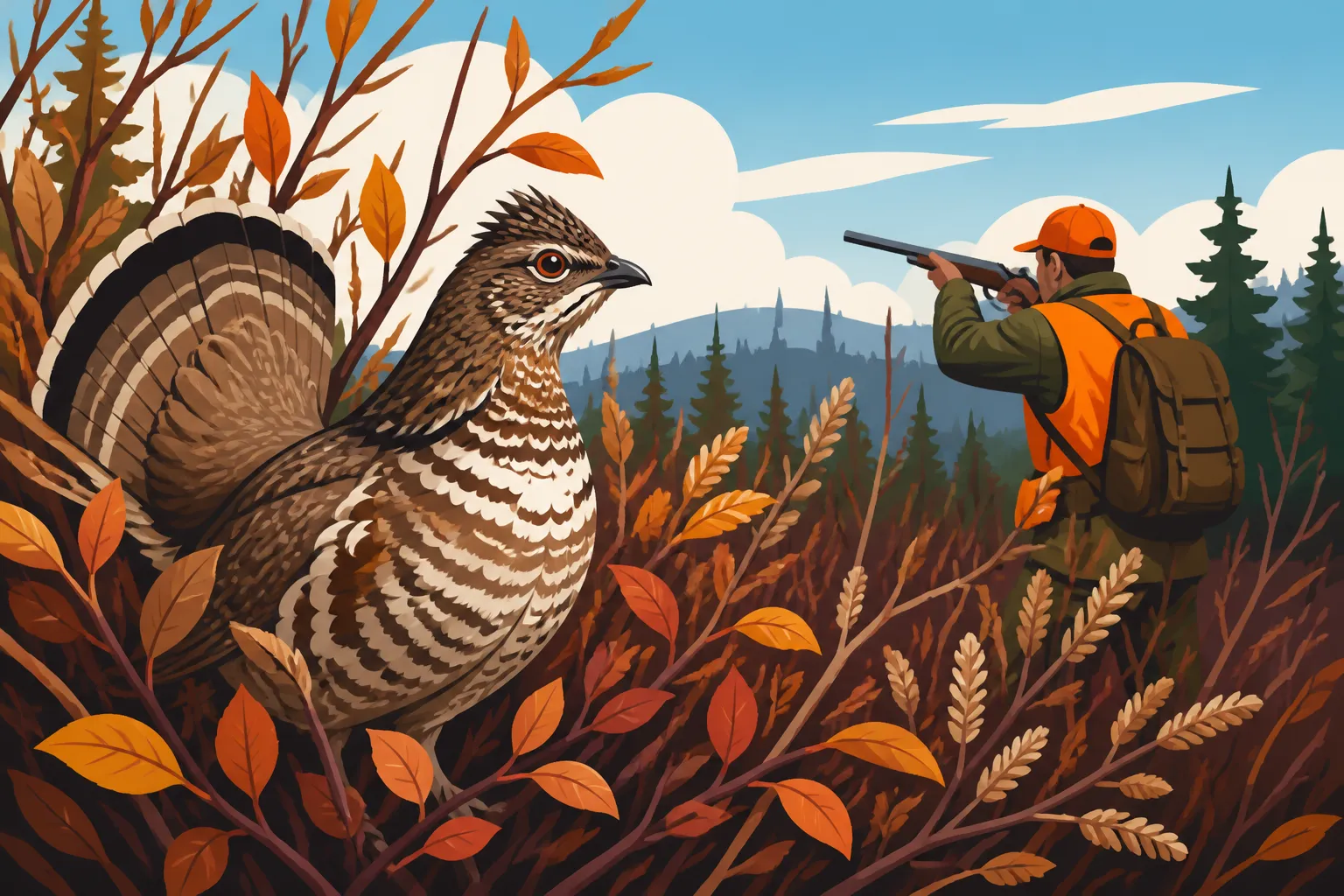
There’s nothing quite like the heart-stopping thunder of a ruffed grouse exploding from a dense Maine alder run. One moment, you’re slowly picking your way through thick cover, eyes peeled, dog working, and the next, a brown blur erupts, twisting and dodging through the branches, leaving you with a racing pulse and often, an empty gun. It’s a frustratingly beautiful dance, but understanding why grouse choose these tangled thickets and how to approach them can dramatically increase your chances of connecting with the King of Game Birds. This guide will delve deep into the art of grouse hunting in Maine's challenging yet incredibly rewarding alder habitat.
Understanding Maine's Ruffed Grouse and Their Habitat
For many of us who chase upland birds in Maine, the ruffed grouse holds a special place. They’re elusive, challenging, and demand a particular kind of grit from the hunter. Before we even talk about tactics, let’s get a feel for what makes these birds tick and why those dense alder runs are so vital to their survival.
The Allure of the Ruffed Grouse
The ruffed grouse, often affectionately called "partridge" here in Maine, embodies the wild spirit of our woods. It’s not just their beautiful plumage or their surprisingly good table fare that draws us in; it's the sheer unpredictability and the visceral thrill of their flush. One second, the woods are quiet, save for the crunch of leaves underfoot or the distant jingle of a dog bell, and the next, your world is filled with an explosive drumming of wings that sends adrenaline coursing through your veins.
This explosive flush, often happening mere feet away, is what truly separates grouse hunting from many other forms of bird hunting. It forces quick decisions, instinctual gun mounts, and a swing through dense cover that tests even the most seasoned wingshooter. Many a hunter has walked out of the woods at the end of the day, shell pouches lighter and heart a little heavier, without a bird, but with a trove of stories about "the one that got away." It's this challenge that keeps us coming back, season after season, to the quiet corners of Maine’s woodlands.
Beyond the thrill, there’s a deep satisfaction in outsmarting such a wary bird. A successful grouse hunt isn't just about the shot; it's about reading the cover, anticipating the flush, and making that split-second decision under pressure. It's a game of chess played in three dimensions, where the grouse is always several moves ahead, and you're constantly trying to catch up.
Why Alder Runs are Grouse Magnets
So, why do grouse love alder runs so much? It's simple: survival. Alder thickets provide an unparalleled combination of food, thermal cover, and escape routes from predators, making them prime real estate for these resourceful birds. Imagine a labyrinth of intertwined, multi-stemmed bushes, often growing in damp, low-lying areas—that's a grouse's fortress.
These dense patches offer incredible protection from aerial predators like hawks and owls, whose stoops are hampered by the sheer thickness of the branches. On the ground, predators like foxes and coyotes find it difficult to move swiftly or see their prey, giving a flushing grouse a critical head start. Furthermore, alder swamps and streamsides often create microclimates that provide crucial thermal cover, shielding birds from bitter Maine winter winds and heavy snowfalls, or offering cool refuge during warmer early-season days.
Beyond protection, alder is a significant food source. Grouse forage on the buds and catkins of alders, especially in late fall and winter when other food sources are scarce or buried under snow. These fibrous, nutritious bits sustain them through the lean months. Additionally, the damp soil often associated with alder runs attracts insects and provides succulent greens that grouse utilize throughout the year, especially for growing chicks. Many of these runs are often near areas where you might find grouse along a Grouse Hunting a Logging Road Edge, further increasing their value.
Identifying Productive Alder Stands
Not all alder runs are created equal, and discerning the difference between a sparse, unproductive patch and a genuine grouse haven is a crucial skill honed over years in the field. The key lies in understanding the specific micro-habitat conditions that grouse prefer. You're not just looking for "alders"; you're looking for good alders.
The most productive alder stands are typically thick, dense, and often found in low, wet areas—think stream bottoms, beaver flows, or the edges of swamps. Grouse prefer alder that's multi-stemmed and interwoven, forming a canopy that's difficult for predators to penetrate. Look for areas where the alder is mixed with other young, regenerating hardwood growth like aspen or birch, as this creates even more diversity in food and cover. Often, a healthy alder run will be nestled between mature softwood stands, which provide additional escape cover and drumming logs for displaying males.
When scouting, pay attention to the age and structure of the alder. Older, gnarled alder that's started to thin out might not hold as many birds as a younger, more vigorous stand. The ideal age is when the growth is thick enough to create a true canopy, but not so old that it's become too open. Many experienced hunters use mapping tools like GoHunt to scout these areas from home, looking for tell-tale dark green fingers along waterways or in low depressions, before ever setting foot in the woods. These digital tools can highlight transitional areas where alder meets other timber, often key for holding birds.
Essential Gear and Dog Work for Alder Hunting
Success in the alder runs isn't just about knowing where to go; it's also about having the right tools and, for many, the right companion. The dense cover dictates specific choices in firearms, clothing, and canine partners, all designed to maximize your chances in this challenging environment.
Shotguns and Ammunition Choices
When you’re hunting grouse in alder runs, the shots come fast, close, and through a mess of branches. This isn't the place for a long, heavy waterfowl gun. Instead, you need something quick-handling, light, and ideally, with an open choke. The vast majority of shots will be within 20-30 yards, often much closer, and you'll only have a split second to react.
Many grouse hunters favor lighter gauges like a 20-gauge or even a 28-gauge. These guns are typically lighter and quicker to shoulder, which is paramount when a bird flushes unexpectedly. While a 12-gauge certainly does the job, its added weight and recoil can be a hindrance during a long day of walking thick cover. The critical element is an open choke, such as Skeet, Improved Cylinder, or even Cylinder bore. These allow the shot pattern to spread quickly, increasing your chances of hitting a fast-moving bird in a tight window. Trying to shoot a full or modified choke in heavy alders is like trying to swat a fly with a baseball bat – it’s just too tight for the conditions.
For ammunition, lighter loads with smaller shot sizes are generally preferred. A 7.5 or 8 shot size in a 7/8 oz or 1 oz load is usually perfect. The smaller pellets create a denser pattern, which is exactly what you need for those close-range shots through brush. You're not looking for knockdown power at long ranges; you're looking for a broad pattern to catch a fleeting bird. Heavy loads can also damage the meat, which is something you certainly want to avoid with such a prized game bird.
| Shotgun Gauge | Typical Weight (lbs) | Recommended Choke | Shot Size | Pros for Alder Grouse | Cons for Alder Grouse |
|---|---|---|---|---|---|
| 12 Gauge | 6.5 – 8 | IC, Skeet | 7.5, 8 | Versatile, common | Heavier, more recoil |
| 20 Gauge | 5.5 – 7 | IC, Skeet | 7.5, 8 | Lighter, quick | Slightly less payload |
| 28 Gauge | 4.5 – 6 | Skeet, Cylinder | 8, 9 | Very light, fast | Limited range, less common |
| .410 Bore | 4 – 5.5 | Cylinder, Skeet | 9 | Ultra-light, sporting | Very challenging, small pattern |
Clothing and Personal Gear
Hunting in Maine's alder runs means you're going to get snagged, scratched, and potentially wet. Dressing appropriately isn't just about comfort; it's about safety and endurance. Your clothing needs to be durable, provide protection, and ensure visibility.
Briar-proof pants or chaps are an absolute must. The dense, thorny undergrowth in alder thickets can shred regular pants in a single outing, not to mention your skin. Look for tough materials like waxed cotton or Cordura that can stand up to constant abuse from branches, thorns, and briars. Layering is also key, as you'll be exerting a lot of energy walking through heavy cover, but temperatures can drop quickly, especially in the fall. A wicking base layer, an insulating mid-layer, and a durable, water-resistant outer layer are ideal. Don't forget your How Much Blaze Orange Maine Requires requirements for safety, especially with other hunters potentially in the area. A vest or jacket with plenty of blaze orange will ensure you're visible to others.
Footwear should be waterproof, comfortable, and provide excellent ankle support. You’ll be traversing uneven, often wet, and muddy terrain. Rubber boots or waterproof leather boots with aggressive tread are ideal. Beyond clothing, always carry a few essentials: a compass or GPS device (and know how to use it!), water, snacks, a small first-aid kit, and a whistle. Maine's woods can be disorienting, and it's easy to lose your bearings in thick cover, so a fully charged cell phone with downloaded maps from GoHunt can also be a lifesaver, though service is spotty in remote areas.
The Role of a Good Bird Dog
For many grouse hunters, the experience isn't complete without a dog. A good bird dog, whether a flusher or a pointer, can dramatically increase your success and enjoyment in the alder runs. They cover ground, locate birds you might have walked past, and are invaluable for finding downed game in thick cover.
There's a friendly debate among grouse hunters about whether a flushing dog (like a Springer Spaniel or Labrador Retriever) or a pointing dog (like a German Shorthaired Pointer or English Setter) is better for alders. Flushing dogs, by their nature, will crash through the cover and push birds into the air, giving you a chance for a shot. The trick here is to keep them working close so the birds aren't flushed out of range. Pointers, on the other hand, will lock up on a bird, allowing you to walk in, flush the bird yourself, and be ready for the shot. In extremely dense alder, a pointing dog might be difficult to see on point, which is where a GPS tracking collar becomes indispensable. Many of the same skills and tactics for training a dog for grouse can be applied when Running Pointing Dogs on Maine Woodcock, as both birds often inhabit similar dense, brushy areas.
Regardless of breed, training for close work is essential. A dog that ranges too wide in dense alder will flush birds far out of shotgun range. A bell or a GPS collar with an audible tone is crucial for keeping track of your dog in cover where visibility is often only a few feet. Beyond flushing or pointing, a dog's most vital role is often recovery. Finding a downed grouse in a dense alder thicket can be nearly impossible for a human, but a good retriever can make quick work of it, ensuring no bird is wasted.
Strategic Approaches to Hunting Alder Runs
Now that you're geared up and potentially have your canine companion by your side, it's time to talk strategy. Hunting alder runs isn't just about walking; it's about thoughtful movement, keen observation, and anticipating the unexpected.
Walking the Cover – Pacing and Patterns
The biggest mistake a hunter can make in an alder run is to rush through it. Grouse are masters of holding tight, often letting you walk right past them before flushing. A slow, methodical pace is crucial. Think of it as stalking, not strolling. Each step should be deliberate, with your senses on high alert. Stop frequently, for 10-20 seconds at a time. This "stop-and-go" technique often makes nervous grouse flush, as they perceive the sudden silence as a predator pausing to listen or search.
When moving through an alder run, try to walk in patterns that maximize coverage and exploit natural features. A zigzag pattern helps you cover more ground thoroughly. Pay close attention to the edges of the alder run, especially where it transitions into mature timber, logging roads, or clearings. Grouse often feed on the edges and then retreat into the densest cover. Look for bottlenecks—narrow sections of the alder run—or natural funnels that might concentrate birds. If you're hunting with a partner, spread out enough to cover a wider swath, but stay close enough for safety and to communicate. Work your way into the wind if possible, as this helps your dog pick up scent and sometimes causes flushing birds to fly into the wind, which can slow them down a touch.
Anticipating flush points is an art. As you move, constantly scan the cover ahead. Are there small openings? A slightly thicker clump of alder? A fallen log? These are all potential hiding spots. Always be ready to shoulder your gun, as a flush can come from anywhere, at any time. The more you hunt alder, the more you'll start to recognize these "grousey" spots instinctively.
Working with the Wind and Sun
The elements are not just nuisances; they can be powerful allies or hindrances in the alder. Understanding how to use the wind and sun to your advantage can significantly impact your success.
When hunting with a dog, working into the wind is almost always preferred. This allows your dog to pick up the grouse's scent more effectively, leading to better points or flushes. If the wind is at your back, your scent is carried ahead, potentially alerting birds to your presence before your dog can get on them. If you're still-hunting without a dog, working into a light breeze can also help muffle your sounds and prevent grouse from smelling you. However, a strong wind can make it difficult to hear a flush and can make grouse more skittish.
The sun's position can affect your visibility and the birds' behavior. Hunting with the sun at your back can illuminate the cover ahead, making it easier to spot subtle movements or flushing birds. Conversely, walking directly into the sun, especially late in the day, can create glare that blinds you to a flush. Consider the time of day and angle of the sun when planning your route. In some areas, especially in western Maine, understanding Wind and Thermals in Maine Hill Country can be critical. As warm air rises and cool air settles, thermals can push scent or change a bird's flight path, particularly in draws or on hillsides adjacent to alder runs.
Interpreting Grouse Sign and Habitat Clues
While a good dog is a phenomenal tool, learning to read the landscape for grouse sign can give you an edge, even if you’re hunting solo. Grouse leave subtle clues, and recognizing them means you're in the right place.
The most common sign is droppings, or "cigar droppings." These small, dark, cylindrical pellets are distinctive and indicate that grouse are using the area. Look for them on drumming logs, under roost trees (often evergreens adjacent to alder), or in feeding areas. The freshness of the droppings tells you how recently a bird was there. Soft, moist droppings mean a bird was around very recently, while dry, crumbly ones are older.
Another sign to look for are dusting bowls. These are small, shallow depressions in dry soil or rotten wood where grouse have taken dust baths to preen their feathers and remove parasites. You'll often find feathers around these spots. In feeding areas, especially in late fall and winter, you might notice nipped buds or catkins on alder branches, indicating recent foraging activity. A good mapping application like GoHunt can help you mark these signs, allowing you to build a database of productive spots over time. Seeing fresh sign confirms that your chosen alder run is indeed holding birds, giving you confidence as you push through the cover.
Shot Placement and Recovery in Dense Cover
The moment a grouse flushes is chaotic and exhilarating. Making a clean shot and successfully recovering your bird in thick alder is the ultimate challenge and reward. It requires quick reflexes, sound judgment, and often, diligent follow-up.
The Moment of Truth – Quick Shots in Tight Windows
When a grouse flushes in an alder run, you often have only a second or two, maybe even less, to make your move. The bird will erupt with surprising speed, twisting and darting through the maze of branches. This is where your fast-handling shotgun and open choke truly shine. There’s no time for aiming; it’s all about instinctive, fluid shooting.
The key is to mount your gun smoothly and quickly, keeping both eyes open if possible, and swinging through the bird. Don't stop your swing! Many missed shots are due to hunters stopping their swing as they pull the trigger. Instead, focus on the bird's flight path, get your lead, and keep that barrel moving. Often, you'll be shooting through small openings in the cover, aiming for where the bird will be, not where it is now. Because of the incredibly close quarters and the density of the cover, safety is paramount. Always be aware of your surroundings, know where your hunting partners are, and never shoot if you can't clearly see your target and what's beyond it. A quick, decisive shot is better than a slow, hesitant one that puts others at risk.
Following Up on the Flush and Shot
Even with a perfect shot, recovering a grouse in thick alder can be a daunting task. The moment you pull the trigger, mentally mark the spot where the bird was when you shot and, more importantly, the direction it was heading if it didn't drop immediately. Keep your eyes on that spot until you physically reach it.
If the bird drops, walk directly to the fall location. Don't rush; take your time to pinpoint the exact spot. If you have a dog, send them into the area with a command like "fetch" or "find dead." A well-trained retriever is worth its weight in gold here. They can pick up the scent and work through the tangled brush with far greater efficiency than a human. If you don't have a dog, or if the dog is having trouble, start a systematic grid search of the area where you believe the bird fell. Expand your search outward in concentric circles. Look for disturbed leaves, dropped feathers, or any sign of a downed bird. Patience and thoroughness are absolutely critical; it's heartbreaking to lose a bird you've worked so hard for. While this guide is focused on grouse, these same diligent recovery techniques are vital for other game, just as one might need them when Recovering a Deer From a Cedar Swamp—the principle of systematic searching in dense cover remains the same.
Best Times and Locations for Maine Alder Grouse
Maine offers a diverse landscape, and knowing when and where to focus your efforts can make a huge difference in your grouse hunting success. From early season tactics to prime geographical locations, timing and location are key.
Prime Season Windows
Maine's grouse season is generous, stretching from late September through December. Each phase of the season offers different challenges and opportunities in the alder runs.
- Early Season (Late September – Mid-October): This is often characterized by dense foliage. The leaves are still on the trees, making visibility extremely difficult. Birds are typically more scattered, not yet concentrated in prime winter cover. Hunters often rely heavily on dogs and the distinctive sound of a flush to locate birds. Shots come in extremely tight windows, demanding fast reflexes. This period offers beautiful fall colors, but can be frustrating for visibility.
- Mid-Season (Mid-October – Mid-November): As the leaves begin to fall, visibility improves dramatically. Grouse start to move into more traditional cover, including thicker alder, as food sources in open woods diminish. This is often considered a prime time to hunt, as the birds are still active, and the cover is more manageable. The cool, crisp air is invigorating, and the hunting pressure tends to increase during this period, especially around the Maine Grouse Season Dates around peak foliage.
- Late Season (Mid-November – December): Once snow starts to fall and the temperatures plummet, grouse begin to concentrate heavily in the densest thermal cover, which includes those thick alder swamps and conifer stands. While the snow makes tracking easier and visibility is excellent, the birds are often much tighter to cover and more reluctant to flush. They'll hold extremely tight, sometimes only flushing when you're almost on top of them. This can be a very productive time for patient hunters, and the challenge of a late-season grouse in the snow is uniquely rewarding.
Top Maine Regions for Alder Grouse
Maine is a big state, and while you can find grouse almost anywhere there's suitable habitat, some regions consistently offer better opportunities, especially for prime alder runs.
- Western Maine (Franklin, Oxford Counties): This region, particularly around areas like Farmington, Rangeley, and the western foothills, is renowned for its diverse habitat. Here, you'll find a mix of mature timber, regenerating clear-cuts, and countless stream bottoms and wetland areas that host excellent alder runs. The rolling terrain and mix of land ownership (both private and large tracts of public reserved land) provide ample access. The sheer amount of suitable habitat means strong grouse populations.
- Central Maine (Kennebec, Somerset Counties): While perhaps not as wild as the north, central Maine still offers fantastic grouse hunting, often closer to population centers. Look for alder runs along major rivers like the Kennebec, and in the numerous small woodlots and agricultural edges. These areas can be surprisingly productive, often holding birds that are slightly more pressured but still abundant. Mapping tools like GoHunt are invaluable here for identifying public access points or unposted private land.
- Northern Maine (Aroostook, Penobscot Counties): The vast timberlands of the North Maine Woods and down into parts of Penobscot and Washington counties offer endless opportunities. While often more remote, these areas have extensive logging road networks that provide access to huge expanses of regenerating forest and, of course, countless alder runs along brooks and in low-lying depressions. The bird numbers here can be truly impressive, though the cover is often vast and requires significant walking. If you’re looking for high-density grouse, these are often considered the Best Maine Counties for Grouse.
Accessing Public and Private Alder Runs
One of the great traditions of Maine hunting is the implied permission rule on private land. Unless land is posted with specific signs indicating "No Trespassing" or "Hunting By Permission Only," it is generally open to public recreation, including hunting. This is a tremendous asset for grouse hunters, as it opens up vast amounts of private timberland and smaller woodlots that might otherwise be inaccessible.
However, "implied permission" doesn't mean "no responsibility." Always be respectful of landowners, close gates, don't block access roads, and avoid disturbing property. If you see "No Trespassing" signs, respect them without question. For prime alder runs on private property near homes or farms, it's always a good idea to knock on the door and ask for permission, even if not explicitly required. A friendly chat can build good will and open up future opportunities. Learning about Maine's Private Land Access Tradition is essential for any hunter in the state.
Beyond private land, Maine has significant public land available for hunting. These include Wildlife Management Areas (WMAs) managed by the Maine Department of Inland Fisheries and Wildlife (MDIFW), Public Reserved Lands, and federal lands. WMAs, in particular, are often managed with habitat for game birds in mind and can contain excellent alder habitat. Utilizing digital maps from platforms like GoHunt is incredibly helpful here. You can layer public land boundaries and satellite imagery to identify promising alder runs within accessible public areas before you even leave your home. This allows for efficient scouting and maximizes your time in the field.
Beyond the Hunt – Conservation and Enjoyment
Successfully hunting grouse in Maine's alder runs is about more than just pulling the trigger. It's about respecting the land, the wildlife, and embracing the entire experience—from the challenge of the chase to the reward of the table.
Ethical Hunting and Conservation Efforts
As hunters, we are stewards of the land and its wildlife. Ethical hunting practices are paramount, ensuring a sustainable future for ruffed grouse and their habitats. This means understanding and adhering to bag limits, season dates, and all hunting regulations. It also means making every effort to recover every bird you shoot and only taking shots that you believe will be clean and humane. Waste not, want not, is a core tenet of responsible hunting.
The health of grouse populations is intrinsically linked to habitat quality. Regenerating forests, often created by sustainable timber harvesting, provide the dense, young cover that grouse thrive in. Organizations like the Ruffed Grouse Society (RGS) play a crucial role in advocating for forest management practices that benefit grouse and other early successional wildlife. Every hunting license and Federal Duck Stamp (even for upland birds, if you pursue migratory species) contributes to wildlife conservation efforts. Your passion for grouse hunting directly supports the preservation of the very habitats these birds need to survive.
Enjoying the Harvest and the Experience
While the thrill of the flush and the challenge of the shot are undeniably exciting, the journey culminates in the opportunity to enjoy the fruits of your labor. Properly caring for your grouse immediately after harvest is essential for delicious table fare. Field dress the bird promptly to cool the meat, and then get it on ice or refrigerated as soon as possible. Plucking is certainly an option for a full presentation, but many hunters simply breast out grouse, which is quick and easy.
Grouse meat is lean, delicate, and has a wonderfully mild, slightly gamey flavor. It cooks quickly and pairs well with simple preparations. Pan-seared grouse breasts with butter and herbs, wrapped in bacon and grilled, or even added to a rich stew are all fantastic ways to savor this wild delicacy. It's truly among the Best-Eating Game in Maine.
But beyond the delicious meal, remember the experience. The quiet moments in the woods, the camaraderie with a hunting partner or a loyal dog, the crisp autumn air, the vibrant fall foliage, and the unforgettable thundering flush—these are the real trophies. Grouse hunting in Maine’s alder runs is a rich tradition, connecting us to the land and to the rhythms of the wild. Cherish every memory, every challenge, and every successful hunt, for they are what truly make us grouse hunters.
Disclaimer
Please remember that hunting regulations, license requirements, and season dates can change. Always consult the official Maine Department of Inland Fisheries and Wildlife (MDIFW) website or their current hunting and trapping law book before heading into the field. Safety is your responsibility.