Trapping Maine Furbearers
Many aspiring trappers in Maine find themselves staring at a bewildering array of regulations, wondering what license they actually need, or feeling lost trying to decipher the subtle signs of a beaver run or a bobcat's travel corridor. The world of furbearer trapping can seem impenetrable for newcomers and even seasoned outdoorsmen, leading to frustration and missed opportunities. This comprehensive guide aims to cut through the confusion, offering clear, in-depth insights into Maine's furbearer trapping seasons, methods, and ethical practices, empowering you to confidently and successfully run your trapline.
Understanding Maine's Trapping Regulations and Licensing
Navigating the legal landscape of trapping in Maine is the absolute first step before you even think about setting a trap. It's a system designed to manage wildlife populations responsibly and ensure ethical practices, but it can certainly feel like a labyrinth at times. Understanding what's required will save you a lot of headaches and ensure your efforts are legal and productive.
Essential Licenses and Permits
Before you head into the woods or onto the waterways, you'll need the proper paperwork. For most general furbearer trapping, a Maine Trapping License is your core requirement. This isn't just a simple purchase; there are residency requirements and potentially age restrictions to consider. If you're a Maine resident, the cost is typically less than for nonresidents, which is pretty standard across most hunting and fishing licenses here. You'll want to verify the current costs and eligibility criteria directly with the Maine Department of Inland Fisheries and Wildlife (MDIFW).
Beyond the basic trapping license, consider if you'll be selling your furs. If so, a Fur Buyer's License might be necessary, even if you're only selling to a local fur dealer. This isn't usually required for just a few pelts sold casually, but if you're serious about the business side, it's something to look into. Additionally, if your trapping involves any migratory waterfowl (uncommon but possible in certain muskrat or beaver sets), you might need to ensure you're compliant with migratory bird certifications, though this usually falls more into the realm of waterfowling. Make sure you understand Maine Trapping License Requirements fully before heading out.
Season Dates and Bag Limits by Species
This is where things can get a bit intricate. Maine's trapping seasons are meticulously designed, varying not just by species but often by Wildlife Management District (WMD) or even by specific dates within a general season. For instance, the season for beaver might open earlier or later in certain WMDs to address population control needs, or close at different times to protect breeding animals.
You'll find that common furbearers like muskrat and beaver often have specific open and close dates, sometimes with specific bag limits or restrictions on trap types during certain periods. Coyotes, on the other hand, often have a much longer, sometimes year-round, trapping season in many areas due to their population dynamics. Species like bobcat, fisher, and marten will have more restricted seasons, sometimes with a statewide season but often with specific WMD closures or restrictions. It's crucial to consult the most current MDIFW trapping rulebook every single year. Don't rely on last year's knowledge, as dates and regulations can shift. For instance, you'll want to be absolutely clear on the specific dates for Maine Fox and Bobcat Trapping Season.
Trap Types, Placement, and Setback Rules
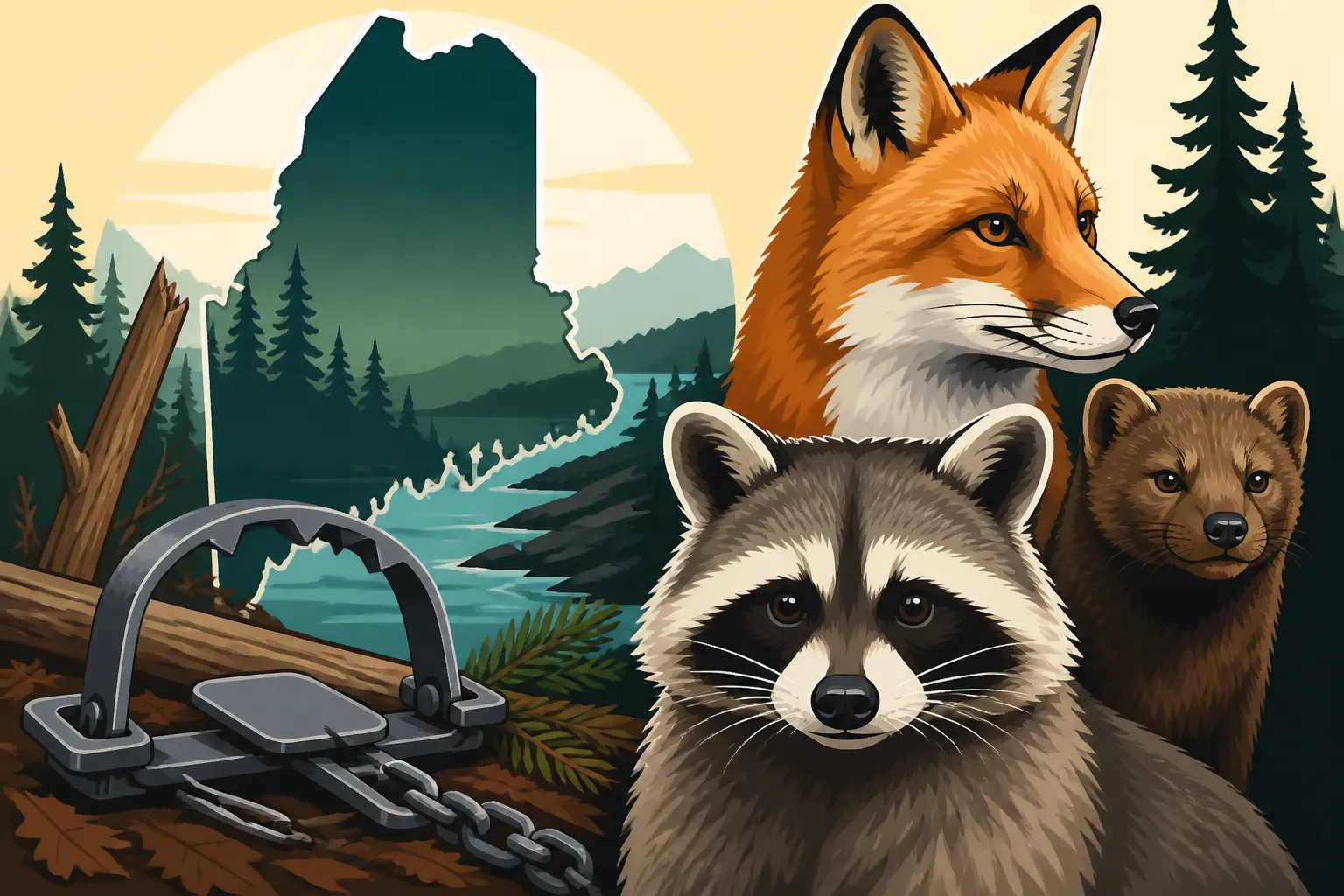
Maine has specific regulations regarding the types of traps you can legally use and, just as importantly, where and how you can place them. Generally, foothold traps, conibear traps, and snares are permitted, but each comes with its own set of rules. For example, specific sizes of conibears might be restricted to certain water sets or to avoid non-target catches, and snares often have strict cable size and breakaway device requirements to ensure animal welfare.
Beyond the type of trap, placement is paramount. Maine law dictates setback distances from occupied dwellings, public ways (like roads), and often from water bodies where certain trap types are prohibited close to shore. These rules are designed for public safety and to minimize conflicts with landowners. Every trap you set must also have a legible trap tag affixed to it, bearing your name and address or your MDIFW license number. This is non-negotiable and helps enforce accountability. Furthermore, you're required to visit your traps at least once every 24 hours, ensuring any caught animal is dispatched humanely and promptly, or released if it's a non-target species. Neglecting these rules isn't just unethical; it can lead to serious fines and license revocation.
Key Maine Furbearer Species and Their Habits
Maine is a haven for a diverse array of furbearers, each with its unique behaviors, preferred habitats, and challenges for the trapper. Understanding these species is fundamental to successful and ethical trapping. Knowing their habits helps you anticipate their movements, identify their sign, and select the most effective sets.
Water-Based Furbearers: Beaver and Muskrat
Beaver are perhaps Maine's most iconic aquatic furbearer, renowned for their incredible engineering skills. They thrive in ponds, slow-moving streams, and flowages, where they construct elaborate dams and lodges. Look for fresh cuttings of aspen, birch, or willow, mud slides where they enter and exit the water, and of course, their characteristic lodges and dams. Their diet primarily consists of bark, leaves, and aquatic vegetation. Trapping beaver often involves identifying active channels within their flowages, den entrances, or travel routes along shorelines. Effective sets often involve drowning mechanisms to ensure a quick and humane dispatch. Understanding Maine Beaver Population and Damage can help you target areas where populations are robust or where they might be causing damage, increasing your chances of success.
Muskrats, while much smaller than beaver, share a similar aquatic lifestyle. They prefer marshes, slow-moving streams, and the edges of ponds, often burrowing into banks or building small "push-ups" of vegetation in shallow water. Their diet consists almost entirely of aquatic plants. You'll find their runs, often visible as clear paths through reeds, or small piles of chewed vegetation near the water's edge. Muskrats are generally easier to trap than beaver and are often caught in smaller conibears (like 110s) or even simple cage traps placed strategically in their travel ways. Both beaver and muskrat pelts are valuable, and trapping them plays a crucial role in managing aquatic ecosystems, preventing overpopulation that can lead to habitat degradation.
Terrestrial Predators: Fox and Coyote
Maine is home to both red and gray foxes. Red foxes are more common across much of the state, preferring mixed woodlands, agricultural edges, and suburban fringes. They are opportunistic hunters, preying on small mammals, birds, and insects, and are known for their cunning. Gray foxes, while less common, prefer denser cover and can even climb trees. Identifying their tracks (smaller and daintier than a coyote's), scat, and den locations (often old woodchuck burrows or rock crevices) is key to success. Trapping them usually involves dirt hole sets, flat sets, or post sets, often utilizing scent lures and baits designed to appeal to their inquisitive nature.
Coyotes are ubiquitous across Maine, displaying remarkable adaptability to various habitats, from deep woods to farmland and even urban outskirts. Their population density varies, with some areas like Aroostook County farmland experiencing higher numbers. They are intelligent and wary, making them a challenging but rewarding species to trap. Their tracks are larger than a fox's, typically more oval with close-set pads. Scat often contains fur and bone fragments. Successful coyote trapping demands meticulous attention to detail, including scent control, careful set construction, and an understanding of their travel patterns, often along logging roads, field edges, or ridges. While coyote calling is a popular hunting method, knowing Coyote Calling Maine Farm Country can help trappers understand their movements in specific areas. You can also explore Maine Coyote Range and Density to pinpoint areas with higher concentrations.
Forest Dwellers: Bobcat, Fisher, and Marten
Bobcats are elusive residents of Maine's dense forests, thickets, and swampy areas. They are primarily nocturnal and solitary, making them a significant challenge for trappers. Look for their distinct tracks (no claw marks typically visible), scat, and scratch posts near den sites or travel routes. Bobcats prey on rabbits, hares, birds, and small deer, so focusing on areas with abundant prey populations is critical. Cubby sets or leaning pole sets using a strong visual attractant and a good lure are often effective for these secretive predators. It's exciting to see Where Maine Bobcats Are Rebounding in certain regions, offering more opportunities.
Fishers are true forest athletes, known for their aggressive predatory nature, especially towards porcupines. They inhabit dense coniferous and mixed forests throughout Maine. Their tracks are distinctive, showing five toes with visible claws, and they often leave a bounding pattern in snow. Fishers travel extensively, often using log piles, brush, and hollow logs as temporary dens. Trapping them typically involves cubby sets, leaning pole sets, or elevated sets, usually baited with meat and a strong, musky lure. Their pelts are highly prized, and it's encouraging to see positive Maine Fisher Trapping Trends after past population declines.
Marten (often called pine marten) are smaller, agile members of the weasel family, almost exclusively found in Maine's mature spruce-fir and mixed conifer forests, particularly in the northern and western parts of the state. They are arboreal, spending a lot of time in trees, and prey on small mammals and birds. Their tracks are tiny, and they often leave sign around downed logs and dense undergrowth. Trapping marten requires smaller traps and carefully constructed cubby sets, often elevated off the ground to target their climbing habits and avoid deeper snow. Identifying their specialized habitat is key to finding productive marten grounds.
| Furbearer Species | Primary Habitat | Common Sign | Preferred Trap Types |
|---|---|---|---|
| Beaver | Ponds, streams, flowages | Dams, lodges, fresh cuttings, slides | 330 Conibears, #4-5 Footholds |
| Muskrat | Marshes, slow streams, pond edges | Runs, push-ups, chewed vegetation | 110 Conibears, #1-1.5 Footholds |
| Red Fox | Mixed woods, farm edges, suburban | Small tracks, scat, den burrows | #1.5-2 Footholds |
| Coyote | All habitats, especially mixed woods, farmland | Large tracks, scat, travel ways | #3-4 Footholds, Snares |
| Bobcat | Dense forests, thickets, swamps | No claw tracks, scratch posts, scat | 220 Conibears, #3 Footholds |
| Fisher | Coniferous/mixed forests | Bounding tracks, scat, log piles | 160/220 Conibears, #2-3 Footholds |
| Marten | Mature spruce-fir forests | Tiny tracks, arboreal travel | 110/120 Conibears, #1 Footholds |
Essential Trapping Equipment and Setup Strategies
Stepping into the world of furbearer trapping requires more than just knowing the rules and species; it demands the right tools and a solid understanding of how to use them. The equipment you choose and the way you set your traps are paramount to both success and ethical practice.
Traps and Snaring Gear
The foundation of any trapline is, naturally, the traps themselves. For water-based furbearers like beaver and muskrat, conibear traps are highly effective. These body-gripping traps are designed for quick, humane kills. A 110-size conibear is perfect for muskrat, while the larger 220 and 330 sizes are standard for beaver. It's vital to learn how to properly set and disarm these powerful traps safely. Foothold traps, ranging from a #1.5 for smaller critters like fox up to a #3 or #4 for coyote or beaver, are another common tool. These traps are designed to hold an animal by the foot until the trapper arrives, and proper trap adjustment and pan tension are critical for targeting specific animals and minimizing non-target catches.
Snares are also a legal and effective method, particularly for coyotes and sometimes bobcats. Maine regulations specify cable size, snare length, and require a break-away device to prevent non-target animals from being held. They are often used in travel corridors or choke points, placed so the animal's head passes through the loop. Regardless of the trap type, ensure they are in good working order, free of rust, and dyed/waxed to reduce scent and prevent corrosion. Each trap needs to be tagged with your identification, a legal requirement that cannot be overlooked.
Tools and Supplies for the Line
A successful trapper carries an array of tools on the line. Beyond the traps, you'll need setters (especially for larger conibears), pliers, wire for securing traps, rebar stakes for anchoring, and a sifting pan for preparing dirt hole sets. A trowel or small shovel is essential for digging, and a hammer can be useful for driving stakes. Don't forget plenty of trap tags! Lures and baits are crucial attractants. Gland lures, curiosity lures, and food baits (like beaver meat for canines or apple for raccoons) should be chosen based on the target species and time of year.
For navigating and planning, digital mapping tools are invaluable. Services like GoHunt, or even the MDIFW mapping resources, allow you to scout remotely, identify potential pinch points, terrain features, and even landowner boundaries before you ever step foot in the woods. This can save you countless hours of unproductive scouting. Always carry a first-aid kit, a headlamp, and consider a personal locator beacon (PLB) if you're venturing into remote areas of the North Maine Woods, where cell service is non-existent. Safety, both yours and the animals', should always be top of mind.
Building Effective Sets for Different Species
The art of trapping truly shines in the construction of effective sets. For water-based furbearers, water sets are key. Drowning sets, using a heavy weight or slide wire to quickly submerge a caught animal, are standard for beaver and otter. Castor mound sets, where a foothold is placed near a small mound of mud and castor lure, are highly attractive to beaver. For muskrat, coni-boxes or blind sets placed in their runs are simple yet effective.
For terrestrial furbearers like fox and coyote, dirt hole sets are king. These mimic a rodent's den or a caching spot, using a dug hole, bait, and lure, with a carefully concealed foothold trap placed in the approach. Flat sets, using a lure on a nearby object without a hole, or post sets, appealing to a canine's urge to mark territory, are also highly effective. For bobcat, fisher, and marten, cubby sets, often made with natural materials or a small box, are common. These protect bait and lure from weather and draw the animal into a confined space where a conibear or foothold can be strategically placed. Leaning pole sets, particularly for fisher and marten, leverage their climbing habits, with a conibear mounted on an angled pole leading to a bait source.
Responsible Trapping Practices and Ethics
Trapping is an age-old tradition in Maine, and maintaining its future hinges on responsible and ethical practices. Beyond just legal compliance, a commitment to animal welfare and minimizing environmental impact is crucial for every trapper.
Minimizing Non-Target Catches
One of the biggest concerns for both trappers and the public is the accidental capture of non-target animals, including domestic pets or protected species. Minimizing these occurrences is a hallmark of a skilled and ethical trapper. This starts with careful set location. Avoid placing traps near homes, popular hiking trails, or known pet walking areas. For instance, a beaver set needs to be clearly in a beaver's world, not where a dog might wander.
Choosing the right lure and bait for your target species is also critical. A fish-based lure might attract raccoons or skunks, while a canine-specific gland lure is more selective for fox or coyote. Trap size plays a role too; using a trap too large for your intended furbearer increases the risk of catching something else, or causing undue injury if a smaller animal is caught. Some trappers also employ "sifting" techniques for dirt hole sets, placing larger debris over the pan to avoid catching lighter, non-target species. Understanding the specific behavioral patterns of your target animals, such as their typical travel paths and foraging habits, allows you to set your traps in a way that specifically appeals to them, reducing the chances of an unwanted catch.
Humane Dispatch and Animal Care
The ethical responsibility of a trapper extends directly to the care of any animal caught. Maine law requires trappers to check their traps at least once every 24 hours. This rule is in place to minimize an animal's time in a trap, reducing stress, exposure to elements, and the risk of injury or depredation. When an animal is caught, a humane and swift dispatch is paramount. Trappers are trained in appropriate methods to ensure a quick and painless end for the furbearer.
For non-target catches, especially domestic animals, knowing how to safely release them without harm to yourself or the animal is a vital skill. This might involve carrying specific release tools or having knowledge of how to manipulate trap mechanisms without direct contact with the animal. Maine's trapping community prides itself on professionalism and adherence to these humane practices, which are often taught in mandatory trapper education courses. Always prioritize the welfare of the animal, whether it's your target species or an accidental catch.
Skinning, Pelting, and Fur Care
Once a furbearer is harvested, the work isn't over. Proper field dressing, skinning, and pelting are essential steps to honor the animal and maximize the value of its fur. Different species require different skinning techniques – some are "case skinned" (peeled off like a sock, leaving the hide tubular), while others are "open skinned." For example, most canines (fox, coyote) are case skinned, while beaver are typically open skinned.
After skinning, the pelt needs to be fleshed to remove any fat and muscle tissue adhering to the hide. This prevents spoilage and allows for proper drying. Fleshing is a skill that takes practice, often done on a fleshing beam with a specialized knife. Once fleshed, the pelt is stretched on a board or wire stretcher, shaped to industry standards, and allowed to dry in a cool, well-ventilated area. Proper drying is crucial to prevent hair slip and ensure the fur remains in prime condition. Understanding these steps and following best practices for fur care ensures that the hard work of trapping culminates in a high-quality product, ready for sale to a fur buyer or for personal use.
Scouting and Locating Productive Trapping Grounds
Successful trapping isn't just about setting traps; it's about knowing where to set them. This requires keen observation, a deep understanding of furbearer behavior, and effective scouting strategies to pinpoint productive locations.
Reading the Landscape for Sign
Before you even think about placing a trap, you need to become a detective of the woods. Start by looking for direct evidence of furbearer activity. This includes tracks in mud or snow – the distinct pattern of a fox, the larger print of a coyote, or the webbed tracks of an otter. Scat can also tell you a lot about a furbearer's diet and presence. Beavers leave unmistakable sign with chewed trees (often aspens or willows), their lodges, and mud slides where they enter and exit waterways. Otters will create slides down riverbanks and leave droppings often filled with fish scales.
Beyond direct sign, you need to read the landscape for travel corridors. Look for natural pinch points like narrow strips of timber between open fields, creek bottoms, old logging roads, or saddles between ridges. These are routes animals naturally take. GoHunt, a valuable mapping tool, allows you to overlay aerial photos and topographic maps, revealing these subtle terrain features from the comfort of your home. You can identify potential water crossings, beaver flowages, or dense cover areas that might harbor bobcats or fishers. Learning to interpret Finding Sign in Big North Woods Timber or along any Maine landscape will dramatically improve your chances of success.
Public vs. Private Land Access
Maine has a long-standing tradition of implied permission for recreational activities on unposted private land, including hunting and fishing. This tradition often extends to trapping, but it's crucial to understand its nuances. If land is clearly marked with "No Trespassing" signs or purple paint, you must obtain explicit written permission from the landowner. When in doubt, always seek permission. A friendly conversation with a landowner can often open up prime trapping opportunities. Scouting Maine Private Land Before Season is a great resource for general advice on gaining access.
For public land access, Maine offers extensive opportunities. State-owned lands include numerous Maine Wildlife Management Areas (WMAs) and Public Reserved Lands, managed by the MDIFW or Bureau of Parks and Lands. These areas are generally open to trapping, but always check for any specific WMA regulations or closures. Many large tracts of Maine, particularly in the northern part of the state, are owned by timber companies. While often open to public access, many operate under the North Maine Woods management system, which includes gate fees and specific rules. Understanding North Maine Woods Day-Use Fees and any specific company regulations is essential before venturing into these vast timberlands.
Understanding Seasonal Furbearer Movements
Furbearer behavior is heavily influenced by the seasons, and a good trapper adapts their strategy accordingly. In the early fall, before heavy snow, furbearers are often dispersing, establishing territories, and actively foraging. Beaver are busy fortifying their lodges and caching food. This is a prime time for water sets. As winter approaches and temperatures drop, furbearers often consolidate their movements to areas with reliable food sources and denser cover, making their travel routes more predictable.
During deep winter, furbearers might use sheltered areas like cedar swamps for cover or focus on specific late-season food sources. Coyotes, for example, will be highly active around winter kill sites or farm country where livestock might be present. Pre-season scouting in late summer and early fall can reveal active dens, travel paths, and food sources that will remain relevant once trapping season opens. Adapting your sets to changing weather conditions, such as deeper snow or extreme cold, is also paramount to maintaining effective and humane trapline.
Disclaimer
The information provided in this guide is for general informational purposes only and does not constitute legal advice. Trapping regulations in Maine are subject to change. It is the responsibility of every individual trapper to consult the most current Maine Department of Inland Fisheries and Wildlife (MDIFW) regulations, laws, and proclamations before engaging in any trapping activities. Always prioritize safety, ethical practices, and respect for wildlife and landowners.