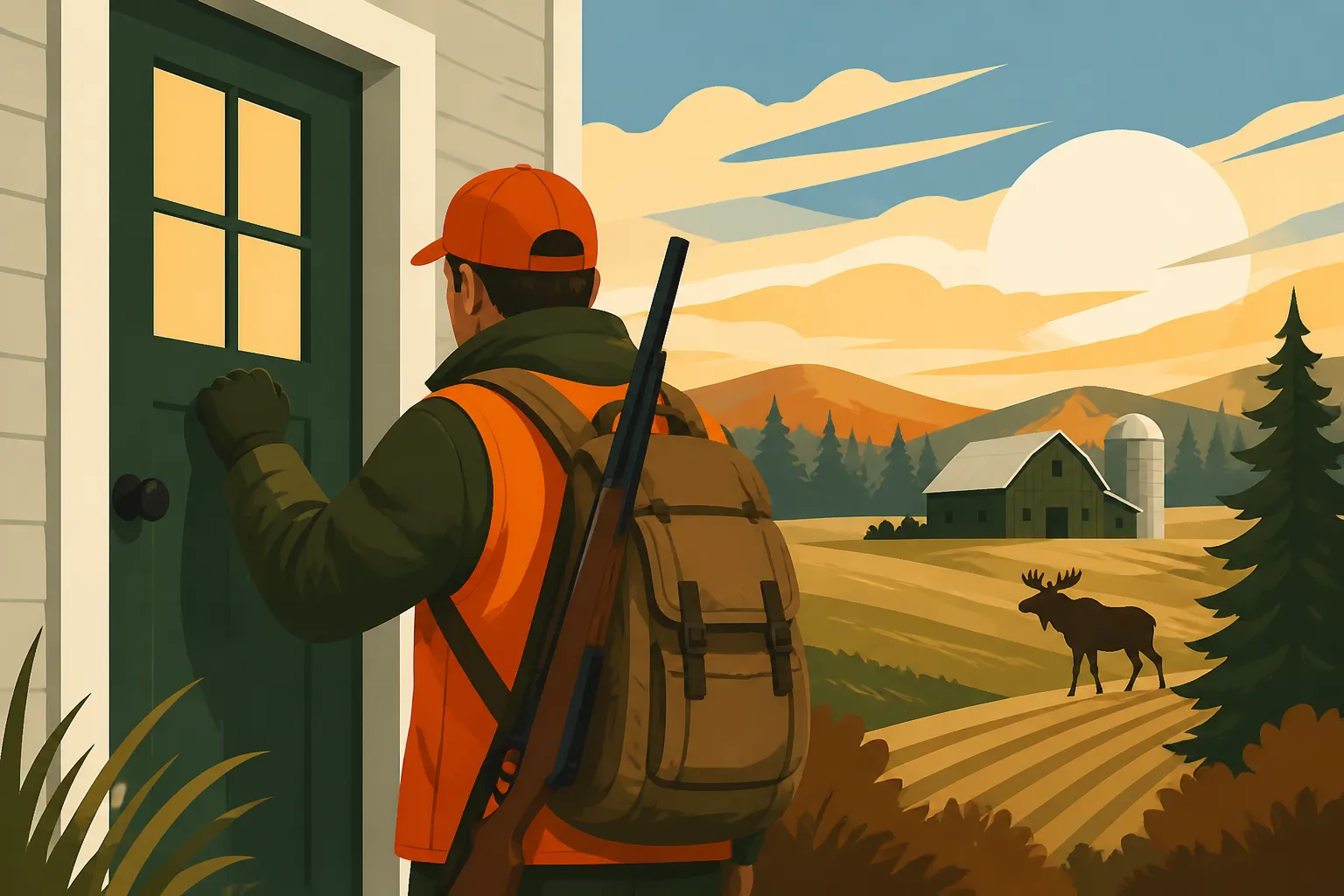
Knocking on Doors in Aroostook Farm Country
Finding a prime hunting spot in Maine, especially for whitetails, can feel like navigating a maze, and when you’re eyeing those promising fields in Aroostook County, the challenge often boils down to one thing: access. Many hunters get frustrated staring at prime habitat bordered by "Posted" signs, wondering how anyone ever gets to hunt those big bucks. This guide is all about demystifying the art of asking for permission, focusing specifically on how to respectfully and effectively knock on doors in Aroostook's rich farm country.
The Unique Landscape of Aroostook Farm Country
Aroostook County, "The County" as locals affectionately call it, is a land of contrasts. Vast stretches of potato and broccoli fields give way to dense timber, making it a truly exceptional place for whitetail deer. But this also means that much of the prime deer habitat is on private land.
Understanding the Appeal for Whitetails
Deer absolutely thrive in Aroostook's agricultural mosaic. It's a land of plenty, offering an abundance of food, cover, and water, all within close proximity. Think about it: during the summer and fall, those sprawling fields of potatoes, corn, and brassicas are essentially giant grocery stores for deer. They can gorge themselves on high-energy carbs and nutrient-rich greens, piling on the fat reserves they'll need to survive the harsh Maine winter.
Beyond the immediate food source, the edges of these fields provide excellent cover. Deer will bed down in the thick timber or overgrown fencerows right next to a ready meal, making movements at dawn and dusk incredibly predictable. When a farmer harvests, the waste grains and tubers left behind become an even more accessible buffet, drawing deer out of the woods like magnets. This is why you often see deer browsing right at the edge of the woods line, especially when Hunting a Potato Field Edge in Aroostook.
Navigating the "Posted" Reality
It's a common sight in Aroostook: beautiful fields, thick woodlots, and everywhere you look, "Posted" signs. This can be incredibly disheartening for hunters, especially those new to the area or from out of state. While Maine has a strong tradition of Maine's Private Land Access Tradition, which implies permission for unposted land, the reality is that many landowners in farm country have very legitimate reasons for posting their property.
Often, it's due to negative experiences with past hunters – things like trash being left behind, property damage, gates being left open, or even safety concerns with firearms too close to homes or livestock. Farmers are running businesses, and careless hunters can directly impact their livelihood. These signs aren't necessarily a personal rejection; they're often a plea for respect and responsibility, a clear signal that the landowner wants to control who is on their land and for what purpose. They want to avoid problems, and unfortunately, a few bad apples spoil the bunch. This makes What Posted Land Means in Maine a critical understanding before you even think about approaching someone.
The Local Mindset: Community and Conservation
Aroostook County has a strong sense of community, and that extends to land stewardship. Farmers often have deep roots in the area, and their land is more than just property; it's a legacy, a source of sustenance, and a part of their identity. They’re invested in the health of the land and the wildlife that calls it home. This connection means they’re often more inclined to grant permission to someone who demonstrates respect, understands local traditions, and shows an interest in being a responsible visitor rather than just a taker.
Many landowners are also hunters themselves, or they have family members who hunt, which can sometimes work in your favor, or sometimes against it if they've had their own bad experiences or want to preserve the hunting for their own family. Understanding this local, often multi-generational connection to the land is key. It's not just about getting to hunt; it's about becoming a trusted face in the community, even if just for a day or a season.
Preparing for the Knock: More Than Just a Handshake
You can't just walk up to a farmhouse door cold and expect to get results. Think of it like a job interview – preparation is everything. The more thought and effort you put into your approach, the higher your chances of success.
Researching the Property and Landowner
Before you even think about setting foot on a farmer's property or knocking on their door, do your homework. This isn't about being creepy; it's about being informed and showing genuine interest. Start by utilizing mapping applications like GoHunt or OnX Hunt. These tools are invaluable for Scouting Maine Private Land Before Season. They can show you property boundaries, landowner names, and even different types of terrain. You can identify potential access points, note areas where deer might cross, and understand the lay of the land without trespassing.
For instance, you might notice on a GoHunt map that a particular woodlot borders a large potato field, or that a small creek runs through a section of timber. Knowing these details not only helps you formulate a more specific request ("I was hoping to set up on the north end of your woodlot, near where it meets the old logging road, to catch deer moving into the cornfield.") but also demonstrates that you've put in the effort. If possible, a quick check of county tax records can confirm ownership, which is crucial if the name on the map app is outdated.
What to Bring: Presentation Matters
Just like a job interview, your presentation, both personal and material, can make a huge difference. You want to convey professionalism, respect, and trustworthiness.
Firstly, dress neatly. You don't need a suit, but clean, casual clothes are far better than mud-stained hunting gear. A clean appearance signals respect for the landowner and their property. Secondly, bring a clear, printed map of their property, perhaps marked with the specific area you're interested in hunting. A map from GoHunt with their property lines highlighted can be a great visual aid. This shows you're serious and organized.
Consider bringing a simple, written "hunter's resume" or contact card. This might include your name, contact information, the dates you'd like to hunt, your vehicle description (make, model, license plate), and proof of hunter's education and insurance. While Do You Need Written Permission in Maine? technically implies oral permission is sufficient for unposted land, having something in writing protects both parties and shows your commitment. Always have your current Maine Resident License Options (or nonresident equivalent) readily available, along with your valid Maine hunting license and any necessary permits. This instantly establishes you as a legal and prepared hunter.
Timing Your Visit for Best Results
Timing is crucial. Showing up unannounced during dinner, while they're working in the fields, or during the chaotic opening day of deer season is a surefire way to get a "no." Farmers work long hours, often from before dawn until after dusk, and their schedules can be unpredictable.
The best times to knock on doors are typically in the late spring, summer, or early fall, well before hunting season truly ramps up. During these months, farmers might have a bit more downtime, and you're not competing with the pressure of the season. Aim for mid-morning or late afternoon, avoiding traditional meal times (lunch around noon, dinner around 5-6 PM). Weekends can sometimes work, but again, be mindful of family time. Never approach a landowner on Sunday, as hunting itself is generally prohibited on Sundays in Maine, and it can be seen as disrespectful to their day of rest. Think about when you would want someone showing up at your door with a request, and try to apply that same consideration.
The Conversation: Building Trust and Securing Access
This is where your preparation meets reality. The actual conversation with the landowner is your chance to build a rapport, address their concerns, and hopefully, secure that coveted permission.
The Initial Approach and First Impressions
When you arrive, park your vehicle in a respectful manner, not blocking any driveways or access roads. Walk confidently but not aggressively to the door. If there’s a bell, ring it once. If no one answers immediately, wait a reasonable amount of time before trying again. If you see them working in a nearby field, don't interrupt their work unless they signal you over. It's better to wait for a more opportune moment.
When they answer, make eye contact, offer a polite greeting, and clearly state your name and the purpose of your visit. Something simple like, "Good morning, my name is [Your Name], and I'm a hunter from [Your Town]. I noticed your property has some fantastic habitat, and I was hoping to speak with you about the possibility of hunting deer here this season." Be direct but deferential. Remember, you are asking for a favor, not demanding a right.
What to Say and What Not to Say
This conversation is a delicate dance. You want to convey your responsibility without sounding rehearsed or condescending.
Do:
- Be Specific: Instead of asking to hunt "anywhere," point to your map and ask for permission to hunt a specific woodlot, a section of timber adjacent to a particular field, or even just Hanging a Stand on a Private Land Field Edge. This shows you've thought about it and aren't planning to roam aimlessly.
- Address Concerns: Anticipate their worries. "I understand you might be concerned about liability, but I carry my own insurance, and I'm happy to sign any waiver you have." Or, "I promise to stay well clear of your buildings and livestock, and I only use a bow for deer."
- Offer Help: This is a big one. "I'd be happy to keep an eye on your property for any suspicious activity while I'm here, or even help with a small chore if you need a hand." This turns your request into a potential benefit for them.
- Be Respectful of Their Property: "I will treat your land with the utmost respect, pack out everything I pack in, and close any gates I open." This is fundamental.
- Be Prepared for "No": If they say no, accept it gracefully. "I completely understand. Thank you for your time anyway, and I hope you have a good season." Burning a bridge will ensure you never get access, nor will any future hunters who might try.
Don't:
- Complain About Other Hunters: Don't start with stories about how you hate public land or how rude other hunters are. This reflects poorly on you.
- Lie or Exaggerate: Don't say you've hunted there before if you haven't, or make promises you can't keep.
- Be Demanding or Entitled: This is their land, and they owe you nothing. An entitled attitude is the fastest way to get shown the door.
- Ask for Exclusive Rights Immediately: Start small. Ask for permission for yourself, maybe one other trusted individual. Don't expect to bring a whole hunting party on the first ask.
- Disrespect Their Time: Keep the conversation concise. They're busy people.
Key Do's and Don'ts of Door-Knocking
| Do | Don't |
|---|---|
| Dress neatly and be polite | Show up in dirty gear or with an aggressive demeanor |
| Introduce yourself and clearly state your intent | Assume they know why you're there or act entitled |
| Bring a map and be specific about where you want to hunt | Ask to hunt "anywhere" or be vague |
| Offer to help with chores or watch the property | Demand access or complain about posted land |
| Explain your safety precautions (bow vs. rifle) | Assume they trust your judgment regarding safety |
| Be prepared to accept "no" gracefully | Argue, get defensive, or badmouth other hunters/landowners |
| Carry your license, hunter ed card, and insurance info | Expect them to just take your word that you're a responsible hunter |
| Inquire about their concerns (liability, crops, livestock) | Ignore potential problems or act like they're not valid |
Offering Value: Beyond Just Hunting
The best way to secure and maintain hunting access is to make it a two-way street. How can you be an asset to the landowner, rather than just someone asking for something?
Think about what farmers deal with: property maintenance, trespassers, and nuisance animals. You could offer to help with small tasks: "If you ever need a hand stacking wood or fixing a fence, please let me know." Offer to keep an eye out for issues on their property, like illegal dumping or suspicious activity. If you're successful, sharing some venison from your harvest is a classic gesture of gratitude that goes a long way.
For landowners who struggle with deer damage to their crops, you might even offer to focus your efforts on areas where deer are causing the most trouble, potentially even pursuing an antlerless deer if you've drawn a Maine Antlerless Permit Districts tag for that WMD. This shows you're not just interested in a trophy but in helping them manage their land. Always remember, the goal is to build a relationship, not just secure a one-time hunt.
Maintaining the Relationship: Long-Term Access is Key
Getting permission once is fantastic, but the real goal is to build a relationship that allows for continued access year after year. This requires ongoing effort and commitment.
Following Through on Your Promises
The most critical step in maintaining access is to absolutely, unequivocally follow through on every single promise you made during that initial conversation. If you said you'd close a gate, close it. If you said you'd park in a specific spot, park there. If you committed to only hunting a certain area, stick to those boundaries like glue. This isn't just about hunting; it's about your character and integrity.
Leaving trash, driving off-road where you shouldn't, or disregarding their rules will instantly erase any trust you built and likely lead to a permanent revocation of your permission. Remember that Maine Trespass and Permission Law can be enforced strictly, and you want to be on the right side of it. Always leave the property in better condition than you found it. If you find trash that isn't yours, pick it up. Your actions reflect not only on you but on all hunters.
Communication During and After the Season
Don't just disappear after you get permission and reappear when hunting season rolls around. Maintain open lines of communication. If you see significant deer movement, you might call or text them (if they've indicated that's acceptable) to share the observation. If you harvest a deer, let them know right away and offer to show them or share some of the meat. This keeps them engaged and reinforces the positive aspects of having you on their land.
After the season is over, a simple thank-you note or a small gift (a gift certificate to a local store, a homemade pie, or some maple syrup) goes a long way. This is also the perfect time to subtly inquire about the possibility of hunting again next year. "Thank you again for allowing me to hunt your property this season. I had a wonderful time and truly appreciate your generosity. I hope to be able to ask for permission again next year." This polite continuation sets the stage for future access.
Beyond the Immediate Hunt: Being a Good Neighbor
Truly successful long-term access often goes beyond just the hunting season. It's about becoming a trusted presence, a good neighbor. If you're in the area in the off-season, perhaps Reading Aerial Photos for North Woods Deer or Scouting With the Maine Hunting App, and you see the landowner working, stop by and offer to help for an hour. Even just a quick wave and a friendly chat can strengthen the bond.
Being a good neighbor could mean reporting downed trees on their property, alerting them to a broken fence, or simply being a visible, responsible presence that deters negative activity. The more a landowner sees you as a helpful, respectful individual who cares about their property, the more likely they are to continue granting access and even become an advocate for you. In a small community like many parts of Aroostook, reputation spreads quickly. A good reputation can open many doors, literally and figuratively.
Disclaimer
Please remember that hunting regulations and private land access rules can change. Always consult the most current Maine Department of Inland Fisheries & Wildlife (MDIFW) regulations before planning any hunt. This guide is for informational purposes only and does not constitute legal advice. Adhering to all laws and ethical practices is the hunter's sole responsibility.