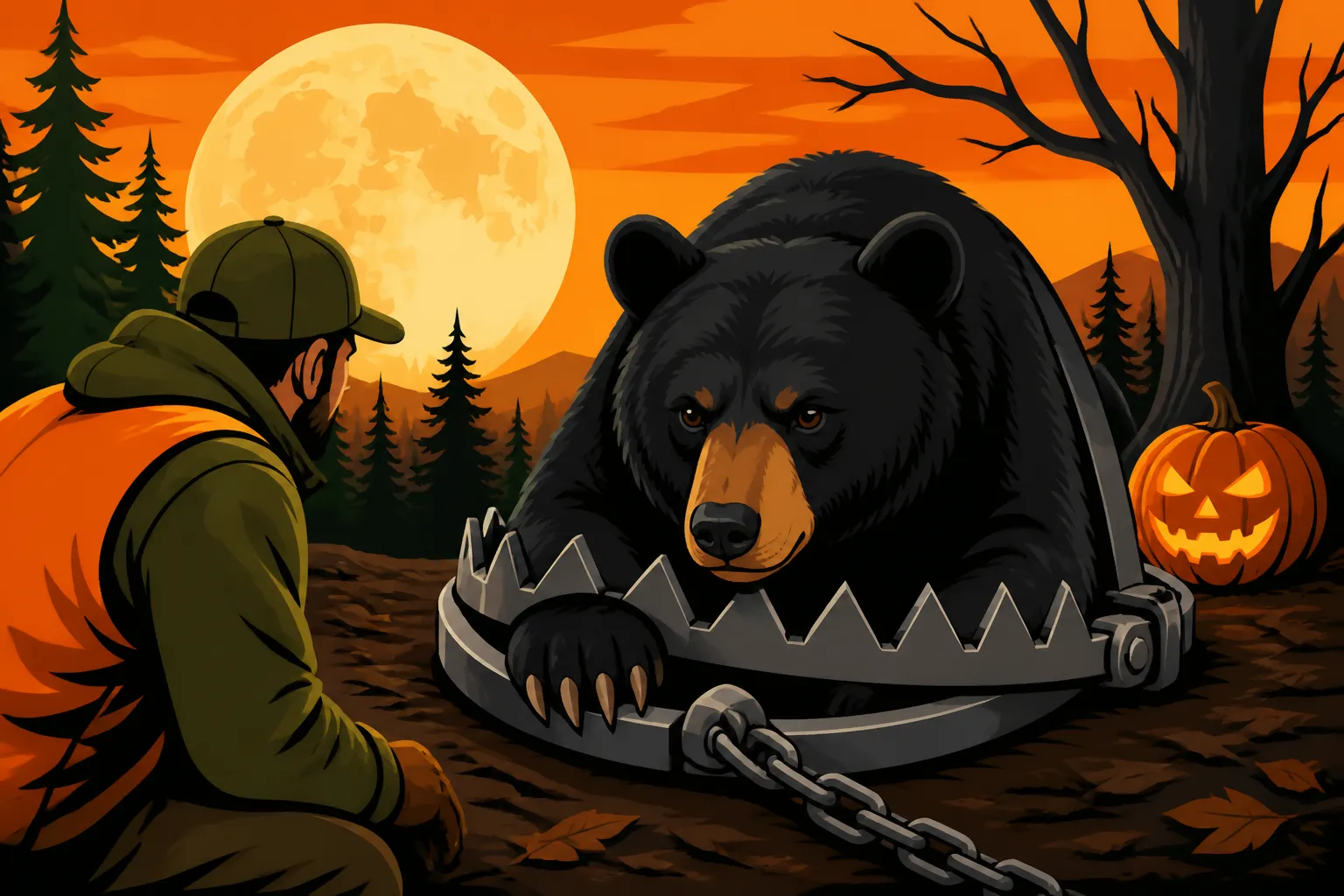
Trapping a Bear Before Halloween
For many dedicated bear hunters in Maine, the close of the baiting season can feel like a sudden halt, leaving a narrow window for success. But for those who are willing to embrace a different kind of challenge, bear trapping offers a unique and incredibly effective opportunity to pursue a bruin well into the late fall, often right up until Halloween. This guide will walk you through the essential steps, regulations, and proven strategies for legally and successfully trapping a black bear in Maine before the season draws to a close at the end of October.
Understanding Maine's Bear Trapping Season
Bear trapping in Maine is a specialized pursuit, requiring not just skill and patience, but a deep understanding of the state's specific regulations. It's not a casual undertaking, and being well-informed is your first and most crucial step towards a successful hunt.
Key Dates and Regulatory Framework
Unlike the September baiting season or the slightly longer hound season, bear trapping in Maine offers a distinct window of opportunity that extends into late October. Historically, the bear trapping season typically opens around September 1st and often continues through October 31st in many Wildlife Management Districts (WMDs). This timing is critical, as it allows trappers to operate when bears are still actively feeding and before many enter their dens for the winter, yet after the intense pressure of the earlier baiting season has subsided.
It's absolutely paramount to consult the most current Maine Department of Inland Fisheries and Wildlife (MDIFW) hunting and trapping regulations booklet each year. These dates and rules can be subject to change, and what was true last year might have been adjusted. Pay close attention to any WMD-specific nuances, as certain areas might have slightly different opening or closing dates, or even specific restrictions. The "before Halloween" timeframe is particularly valuable because it means you can capitalize on the last few weeks of active bear movement as they scramble for calories, without the crowds of the early September rush. While you are researching the specific dates, it's also a good idea to refresh your knowledge on the broader Maine's Three-Method Bear Season to understand how trapping fits into the overall management strategy.
Permit Requirements and Costs
To legally trap a bear in Maine, you'll need more than just a general hunting license. You must possess a valid Maine hunting license, as well as a specific bear trapping permit. For residents, this permit generally costs less than for non-residents, but both are essential. Additionally, you'll need a trapping license, which involves its own set of requirements, including completing a mandatory trapper education course unless you meet specific exemption criteria (such as having held a trapping license previously).
The costs associated can add up, so it's wise to budget accordingly. Beyond the permit and license fees, consider the investment in traps, bait, and fuel for scouting and checking your sets. You can find detailed information on the fees by checking the Maine Bear License Cost. Remember, obtaining all necessary permits and understanding their stipulations is not just a legal requirement; it's a demonstration of responsible and ethical trapping. There are no shortcuts here, and wardens rigorously enforce these regulations to ensure fair chase and proper management of Maine's robust bear population.
Choosing the Right WMD for Trapping
Maine's vast landscape is divided into numerous Wildlife Management Districts (WMDs), and not all are created equal when it comes to bear populations and trapping success. For late-season trapping, you'll generally want to focus on WMDs known for healthy bear densities and suitable habitat. These often include the expansive forests of northern, western, and eastern Maine, where human population density is low and prime bear habitat (dense timber, wetlands, and areas with diverse food sources) is abundant.
Before picking a WMD, do your homework. Look at historical harvest data, available through MDIFW, to see which districts consistently produce good bear numbers. While baiting and hounding success can offer clues, trapping success can sometimes occur in different micro-habitats. Utilizing mapping tools like GoHunt can be incredibly beneficial here. You can layer public land boundaries, timber cuts, wetland areas, and elevation changes to identify promising areas. Look for places where natural food sources like acorns, beechnuts, or late-season berries might still be available, or where bears are known to travel between feeding and bedding areas. It's worth remembering that Maine Bear Population Estimate is substantial, but densities vary significantly across the state, making WMD selection crucial.
Essential Gear and Preparation for Bear Trapping
Successful bear trapping hinges as much on meticulous preparation and the right equipment as it does on finding the perfect spot. Cutting corners here can lead to frustration, missed opportunities, or even unsafe situations.
Selecting Legal Traps and Components
Maine has strict regulations regarding the types, sizes, and modifications of traps permitted for bear. Generally, cage traps, foot-hold traps (often laminated or padded jaw types), and snaring devices (with specific relaxer mechanisms) are legal, but each comes with precise dimensional and operational requirements. For instance, foot-hold traps must meet minimum and maximum jaw spread measurements, and snaring devices require break-away or relaxer features to prevent accidental capture of non-target species or ensure humane retention.
When purchasing traps, always verify they meet Maine's current regulations. High-quality, robust traps are an investment, but they're critical for both effectiveness and humane treatment of the animal. Don't skimp on materials; a strong trap can withstand the immense power of a black bear. Beyond the trap itself, you'll need sturdy anchoring systems—cable, chains, and heavy-duty stakes or drags that can secure a trap against a determined bear. Many trappers opt for established brands known for their durability and compliance, like those found at dedicated trapping supply stores. A quick summary of trap requirements is available below:
| Trap Type | Legal Requirements (General) | Key Considerations |
|---|---|---|
| Cage Trap | Minimum dimensions, escape-proof design | Bulky, requires vehicle for transport |
| Foot-Hold Trap | Specific jaw spread (min/max), padded jaws | Lighter, requires strong anchors |
| Snare (Cable) | Breakaway device, specific cable size, entanglement prevention | Requires careful setup, highly regulated |
Baiting Strategies for Late Season
Just because the "baiting season" for hunting has closed doesn't mean bait isn't used in trapping. In fact, bait is the cornerstone of bear trapping. However, your late-season baiting strategy needs to adapt to the bears' changing diet and increasing urgency to pack on calories before denning. High-calorie, high-fat foods are incredibly attractive. Pastries, donuts, leftover cooking grease, dog food, molasses, and even meat scraps (where legal and appropriate for trapping) can be highly effective. The goal is to create an irresistible scent trail and a rewarding food source.
Consistency is key. Once you start baiting a site, try to refresh it regularly. Bears have incredible memories and will return to reliable food sources. Also, consider "long-distance" attractants—strong-smelling liquids or sprays that can carry on the wind for miles, drawing bears from further afield. Anise oil, sweet scents, and even fermented concoctions can be potent. While you're focusing on trapping, it's beneficial to understand how your baiting methods align with Baiting Black Bears Legally in Maine for general hunting, as some principles may overlap for attractant use. Remember that while baiting is often legal for trapping, it's still crucial to confirm specific bait types and methods with MDIFW regulations.
Pre-Season Scouting with GoHunt and Trail Cameras
Effective scouting is paramount, especially for late-season bear trapping. Bears in late October might be moving through different areas than they were in September, influenced by dwindling natural food sources and impending denning. Before you even think about placing a trap, you need to understand the local bear movement.
Start with detailed map reconnaissance. Tools like GoHunt can help you identify potential travel corridors, natural funnels between bedding and feeding areas, water sources, and areas with hard mast (acorns, beechnuts) that might still be producing. Look for dense cover, cedar swamps, or thick spruce stands that could serve as bedding or denning sites. Once you've narrowed down some areas, physical scouting is critical. Look for fresh bear sign: tracks in mud or snow, scat, rubbed trees, and overturned rocks or logs. Pay attention to how the wind and thermals typically behave in these areas, as scent dispersal is vital for attracting bears to your sets. Placing trail cameras in promising locations, even without bait initially, can confirm bear presence and patterns. This is where you can confirm Finding Sign in Big North Woods Timber is present, or locate potential denning areas. Remember, trail camera use also has specific regulations in Maine, so familiarize yourself with those before deploying.
Setting Up a Successful Bear Trap Site
Once you've done your reconnaissance and gathered your gear, the actual setup of your trap site needs to be executed with precision and a deep understanding of bear behavior.
Site Selection and Accessibility
Choosing the right micro-location for your trap within a promising WMD is paramount. You want a site that offers good natural cover, so the trap isn't immediately obvious to approaching bears or human onlookers. Think about areas along game trails, near dense cover where bears feel secure, or at pinch points where bear movement is funneled. Consider a spot just off a logging road or ATV trail that allows for easier access for you, but is still secluded enough that the trap won't be easily discovered by others.
Accessibility isn't just about getting in; it's also about getting a bear out. If you successfully trap a bear, you'll need to be able to access the site safely and, potentially, remove a very large animal. Avoid setting traps in overly dense, swampy, or steep terrain if possible. Look for a relatively flat, stable area where you can securely anchor your trap and work safely. Using a mapping app like GoHunt to mark your chosen sites and plan clear, repeatable access routes is highly recommended. You'll also want to consider the proximity to your vehicle or a passable road, especially if you're targeting a large bruin with the potential for a Average Weight of a Maine Black Bear that could make extraction challenging.
Trap Placement and Securing Methods
Proper trap placement and anchoring are critical for both effectiveness and safety. For cage traps, position them so the entrance is facing a natural travel path, or subtly disguised within brush. For foot-hold traps, place them directly in a prepared bait station or along a well-used trail that leads to the bait. The goal is for the bear to step into the trap naturally while investigating the bait.
Anchoring is non-negotiable. Bears are incredibly powerful, and a poorly secured trap will result in a lost bear and potentially a lost trap. Use heavy-duty cable, chains, and multiple stakes or sturdy drag devices (such as a large, heavy log or concrete block). The anchoring system should be robust enough to withstand the bear's initial powerful struggles. For snares, ensure the support system is strong and that the snare is positioned at the correct height to target a bear's neck or body, not its leg. Remember, secure traps are not just about preventing escape; they are about preventing injury to the bear and ensuring a swift, ethical harvest.
Scent Control and Camouflage
Bears have an incredible sense of smell, and while bait is used to attract them, human scent can be a deterrent. Practice good scent control when setting and checking your traps. Wear clean clothes, rubber boots, and handle traps and bait as little as possible with bare hands. Some trappers will even 'pre-scent' their traps by leaving them out in the woods for a few weeks to pick up natural smells before deployment.
Camouflage is also important, particularly for cage traps or visible foot-hold sets. Use natural materials from the surrounding environment—branches, leaves, and dirt—to break up the outline of the trap and make it blend in. The idea isn't to perfectly hide the trap, but to make it appear as a natural part of the environment, reducing suspicion in a cautious bear. This subtle approach can be the difference between a trap that gets investigated and one that's cautiously avoided.
Monitoring, Handling, and Registering Your Bear
Your responsibilities as a bear trapper don't end once the trap is set. Diligent monitoring, ethical handling, and strict adherence to registration rules are vital aspects of a successful and responsible trapping endeavor.
Daily Check Requirements and Safety
Maine law mandates how frequently you must check your traps. Typically, all traps must be checked at least once every 24 hours. This is a non-negotiable rule, designed to ensure humane treatment of captured animals and minimize stress. You need to plan your trap line with this daily check in mind, considering travel time, weather, and accessibility.
Approaching a set trap, especially one that may contain a bear, requires extreme caution. Bears, even those in a trap, are wild animals and can be dangerous. Always approach with extreme awareness, and never alone if possible. Have a clear plan for what you will do if a bear is captured. Safety should be your absolute top priority for yourself, any companions, and for the trapped animal. If you're new to bear trapping, consider accompanying an experienced trapper or Hiring a Registered Maine Guide who specializes in trapping to learn proper and safe handling techniques. This experience can be invaluable for safely and ethically managing a trapped bear.
Ethical Harvest and Dispatch
If you have successfully trapped a bear, the next step is a swift, humane, and ethical harvest. This is not a moment for hesitation or unpreparedness. Most trappers use a firearm, typically a handgun or shotgun, for dispatch. You must be proficient and confident in your chosen method. The shot should be precise and aimed to ensure an immediate kill, minimizing any suffering for the animal. Again, if you're unsure or lack experience, seeking guidance from a professional or an experienced trapper is highly recommended.
Following a successful harvest, ensure you properly tag the bear immediately, as required by law. This involves attaching your bear tag to the animal in a specific manner, usually through the ear or hind leg, before any further movement or transport. This step is crucial for legal compliance and demonstrates responsible trapping.
Transport, Tagging, and Registration
Once the bear is harvested and tagged, you need to legally transport it and then register it with the state. Transporting a bear can be a significant undertaking, especially if you've caught a large one. Have a plan for how you will get the bear out of the woods and to a registration station. This might involve a cart, an ATV, or a truck with a winch, depending on the terrain and the size of the animal.
All legally harvested bears in Maine must be registered within 18 hours of being killed. This can be done at an official registration station, typically sporting goods stores or general stores in rural areas, or potentially through the MDIFW online portal or app, if available for bear registration. The registration process collects vital data for wildlife management, including the date, WMD, and weight of the bear. The warden or registration agent will often collect a tooth for aging and other biological samples. You can learn more about this crucial final step by reading Handling a Bear Harvest Check-In. This data is invaluable for monitoring Maine Bear Harvest Numbers by Method and maintaining healthy bear populations for future generations of trappers and hunters.
Disclaimer
Please note: The information provided in this guide is for informational purposes only and is not a substitute for official regulations. All hunters and trappers are responsible for knowing and adhering to the current Maine Department of Inland Fisheries and Wildlife laws and regulations. Always prioritize safety and ethical practices.