Bowfishing Maine Rivers in the Off-Season
When the crisp fall air turns to barren winter and then slowly melts into the budding greens of spring, many of us Maine hunters feel that familiar ache for outdoor action. Traditional seasons are closed, and while there's always scouting or shed hunting, sometimes you just crave the thrill of the chase, the pull of the line, and the satisfaction of a harvest. That's where bowfishing in Maine's rivers during the off-season truly shines, offering an exhilarating, year-round pursuit that often targets non-game species, helping local ecosystems while providing incredible sport. This guide will walk you through everything you need to know to get started, from understanding regulations to gearing up and finding the best spots.
Understanding Maine's Bowfishing Regulations and Seasons
Before you even think about stringing an arrow or launching a boat, it's absolutely crucial to grasp the specific regulations surrounding bowfishing in Maine. Unlike traditional rod-and-reel angling, which has very clear species-specific and season-specific rules for game fish, bowfishing often falls under a different set of guidelines, primarily focused on rough or invasive species. The Maine Department of Inland Fisheries and Wildlife (MDIFW) is your go-to source for the most up-to-date and authoritative information, and it's your responsibility as a hunter-angler to know these rules inside and out.
Legal Species for Bowfishing in Maine
One of the most important distinctions in bowfishing is knowing what you can legally shoot. In Maine, the focus is almost exclusively on what are commonly referred to as "rough fish" or "invasive species." You absolutely cannot bowfish for game fish like trout, salmon, bass, or perch. These are highly managed species with strict bag limits and seasons for traditional angling methods, and taking them with a bow is prohibited.
Instead, bowfishing in Maine targets species such as common carp, various types of suckers (like white suckers or longnose suckers), and often fallfish. Occasionally, certain areas might have specific allowances for northern pike or other non-native species that pose a threat to native ecosystems, but these are rare and would be explicitly stated in the regulations for those specific water bodies. Common carp, in particular, are a popular target. They're non-native to Maine and can have a significant negative impact on water quality and native fish habitats by rooting up vegetation and disturbing sediment. By targeting carp, you're not just having a blast; you're also often contributing to the health of the river system. These fish are powerful and offer a fantastic challenge on the end of an arrow, making them an ideal quarry for the bowfishing enthusiast. Remember, always double-check the MDIFW regulations for any updates or regional specifics before heading out.
When and Where You Can Bowfish
The beauty of bowfishing, especially for many species in Maine, is that it truly offers an "off-season" opportunity when other hunting and fishing pursuits might be closed. Generally, bowfishing seasons for rough fish run during the warmer months, typically from late spring, through summer, and into early fall. This timeframe usually coincides with when these target species are most active in shallower waters, making them accessible to bowfishermen.
While specific dates can vary slightly year to year, and some local ordinances might have their own rules, the window usually opens around May or June and extends into September or October. This aligns perfectly with the time when deer seasons are a distant memory and migratory bird seasons haven't yet begun in earnest. For specific river locations, you'll want to look for areas with slower currents, shallower depths, and often some vegetation or muddy bottoms where carp and suckers like to feed and spawn. Larger river systems in central and southern Maine, such as sections of the Kennebec River or the Androscoggin River, are often prime locations. The Sebasticook River, for example, is known for its carp populations. These rivers offer the expanse and habitat that these fish thrive in. Always consult the MDIFW website or specific regional guides for definitive season dates and any water body restrictions. When scouting for potential spots, consider using a good mapping application or even a service like GoHunt to identify suitable river stretches, public access points, and areas with shallow embayments or backwaters where fish might congregate.
Essential Gear for Maine Bowfishing
Bowfishing isn't your typical archery or fishing setup; it's a unique blend of both, requiring specialized equipment designed to handle the challenges of shooting fish in water. Having the right gear not only makes your trip more successful but also significantly enhances safety and enjoyment. Don't try to jury-rig your deer hunting bow for this; dedicated bowfishing equipment is well worth the investment.
Bows and Arrows for Bowfishing
When it comes to the bow itself, many bowfishermen use an older compound bow, a recurve, or even a specialized bowfishing-specific bow. The key characteristics are durability and simplicity. You're going to be around water, mud, and potentially banging your bow around in a boat, so a pristine hunting rig isn't ideal. Compounds used for bowfishing typically have lower draw weights than hunting bows, often in the 30-50 pound range, which is more than enough to propel an arrow through water and into a fish. Recurves are also popular due to their robust nature and ease of shooting quickly.
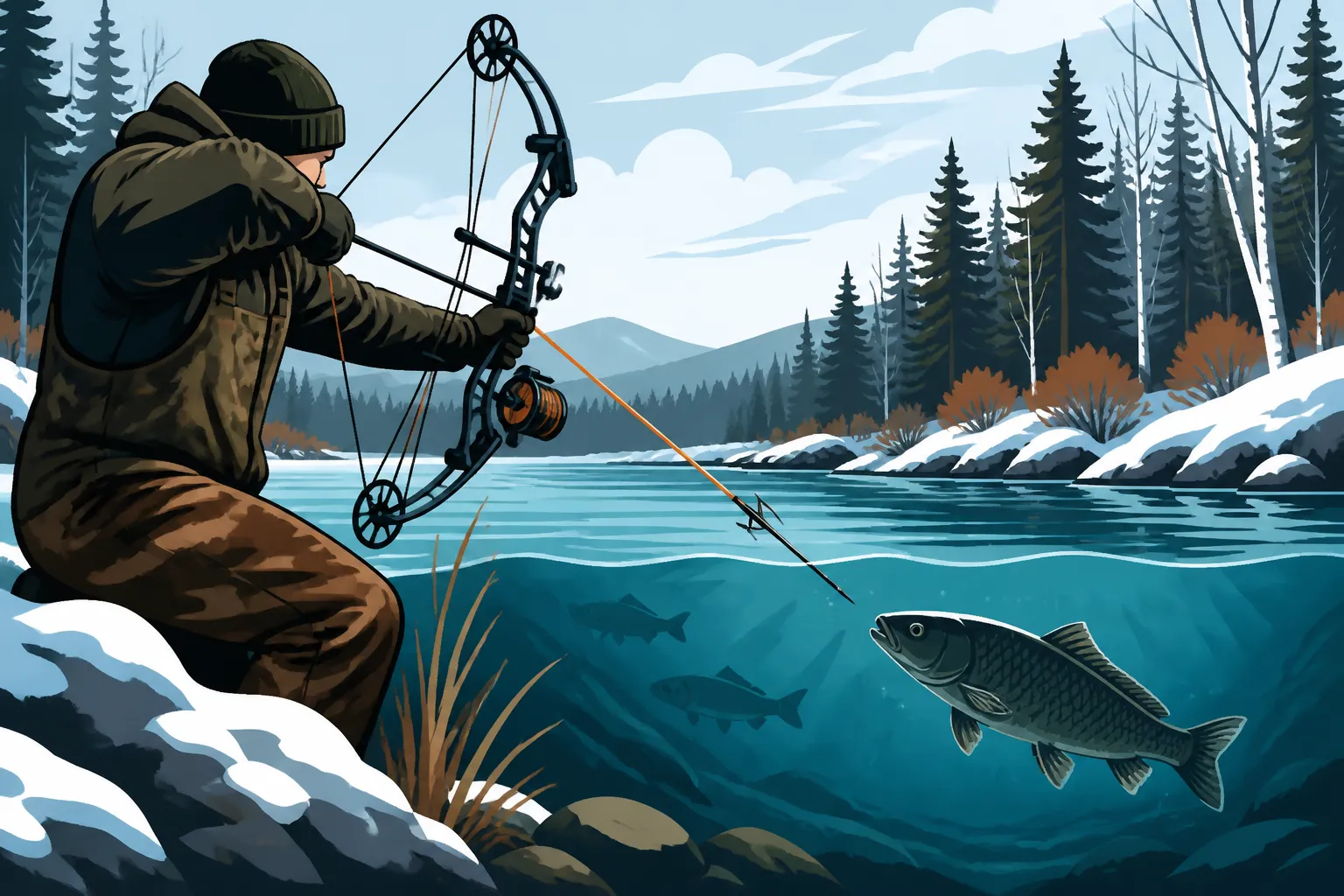
Bowfishing arrows are distinctly different from hunting arrows. Forget carbon or aluminum shafts and fletchings. Bowfishing arrows are typically solid fiberglass, making them heavy, durable, and less prone to deflecting in water. They don't have fletchings, as these would create drag and instability in water; instead, they might have a small plastic slide that helps guide the line. The business end of the arrow features a specialized barbed tip, designed to penetrate the fish and then expand or reverse to prevent the fish from slipping off. These tips are crucial for retaining your catch. Never, ever use a broadhead designed for big game on a bowfishing arrow; it's dangerous, unnecessary, and illegal for this purpose. Always ensure your arrow is designed for bowfishing.
Reel Systems and Retrieval
Once you've shot a fish, you need a way to get it in, and that's where bowfishing reels come into play. There are generally two main types you'll encounter, each with its own benefits.
First, you have the spool-type reels, often called "bottle reels." These are incredibly simple: a large spool mounts directly to your bow, and the line is manually wrapped around it. To shoot, you simply strip some line off the spool, and after the shot, you hand-over-hand retrieve the fish. They're very durable, virtually maintenance-free, and ideal for beginners because there's very little that can go wrong. However, retrieval can be slow, especially with a large, strong fish.
Second, there are spin-cast reels, which are essentially heavily modified fishing reels designed for the robust demands of bowfishing. These mount to the bow similar to how a fishing reel mounts to a rod. They offer faster retrieval and are push-button operated for release, which can be advantageous in quick-shooting situations. However, they can be more prone to tangles if not managed properly, especially if the line accidentally wraps around the arrow. Regardless of the reel type, you'll be using heavy-test line, typically 150-250 lb braided line, to withstand the force of powerful fish. Safety is paramount: always ensure your line is free and clear before every shot. A tangled line can cause the arrow to snap back towards you, which is an extremely dangerous situation. Regularly check your line for fraying or damage, especially after fighting a strong fish or snagging on submerged debris.
Watercraft and Auxiliary Equipment
While it's possible to bowfish from shore in certain spots, the most effective way to cover ground and find fish in Maine rivers is from a boat. Flat-bottom jon boats are the go-to choice for many bowfishermen due to their stability, shallow draft, and ample deck space for gear and fish. For serious night bowfishing, some even use specialized airboats, though this is less common for casual outings. The key is a stable platform from which you can shoot.
If you're planning on venturing out after dark, which is often the most productive time for carp, powerful lighting is non-negotiable. Bright LED or halogen lights are mounted to the boat, illuminating the water and allowing you to spot fish easily. These lights typically require a generator to power them, so factor that into your gear list. For daytime bowfishing, polarized sunglasses are absolutely essential. They cut the glare off the water, allowing you to see deeper and spot fish that would otherwise be invisible. Beyond these big-ticket items, consider a large cooler or livewell for your catch, especially if you plan to keep them for fertilizer or consumption. Don't forget safety gear like personal flotation devices (PFDs), a first-aid kit, a net for landing fish, and gloves to protect your hands when handling fish or line. Remember to always respect the river, and ensure your boat has all the required safety equipment by Maine law.
| Feature | Day Bowfishing | Night Bowfishing |
|---|---|---|
| Visibility | Relies on natural light; polarized sunglasses critical. | Requires powerful artificial lights (LED/Halogen). |
| Fish Behavior | Fish can be harder to spot due to glare/depth. | Fish often move into shallower water to feed. |
| Gear Needed | Minimal lighting gear. | Lights, generator, appropriate wiring. |
| Refraction | Still a factor; aim low. | Pronounced due to focused light; critical to aim low. |
| Crowds | Potentially more boat traffic from other users. | Generally less boat traffic. |
| Comfort | Sun exposure, heat. | Cooler temperatures, potential for bugs. |
| Success Rate | Can be challenging, often better for clear water. | Often higher success rates for carp and suckers. |
Strategies for Successful River Bowfishing in Maine
Bowfishing isn't just about having the right gear; it's about understanding fish behavior, mastering your aim, and being strategic about when and where you go. The "off-season" aspect of it means you're often dealing with specific conditions that require a tailored approach.
Day vs. Night Bowfishing
The choice between day and night bowfishing significantly impacts your strategy and success. Both have their merits and challenges, but for species like common carp in Maine rivers, night often holds a distinct advantage.
Day bowfishing can be exhilarating, especially on clear, sunny days. The main challenge is visibility. Sunlight creating glare on the water's surface makes it incredibly difficult to spot fish, especially if they're not right at the surface. This is where high-quality polarized sunglasses become your best friend, cutting through that glare and allowing you to peer into the water column. You'll typically look for fish in very shallow areas, feeding on flats, or cruising along weed beds. The other major factor is refraction. Water bends light, making fish appear shallower and closer than they actually are. This means you always have to aim below where you see the fish, sometimes significantly. It takes practice to judge this effect accurately.
Night bowfishing, on the other hand, revolutionizes the game. As mentioned, powerful lights mounted on your boat illuminate the water, effectively making it "day" directly in front of you. Many rough fish, particularly carp, become far more active and move into very shallow feeding grounds at night. Without the overhead glare of the sun, and with the focused light from your boat, fish are much easier to spot. The refraction effect is still present, often even more pronounced due to the focused light, so aiming low remains critical. The atmosphere of night bowfishing is also unique – the quiet of the river, the hum of the generator, and the sudden flash of a carp's scales in the spotlight create an unforgettable experience. However, it requires more equipment (lights, generator, fuel) and demands heightened awareness for navigation and safety on the water in the dark. Many seasoned bowfishermen will tell you that if you want consistent action on carp, especially big ones, night is the way to go.
Locating Your Target Species
Finding the fish is, of course, the key to success. For bowfishing in Maine rivers, you're primarily looking for areas that appeal to carp, suckers, and fallfish. These species have specific habitat preferences that you can learn to identify.
Shallow flats and weed beds are prime targets. Carp love to cruise and feed in water that's often only a foot or two deep, especially where there's soft, muddy bottom they can root around in. Look for areas where the main river current slows down, creating backwaters or large, shallow embayments. Submerged logs, fallen trees, and brush piles also attract these fish, providing cover and feeding opportunities. In spring, during spawning season, carp will often be very visible in extremely shallow, vegetated areas, sometimes even thrashing at the surface. As the summer progresses, they might move slightly deeper during the day but will still gravitate to these shallow, food-rich areas at night.
Using mapping tools can be incredibly helpful for scouting. While a specific fish-finder app isn't going to show you individual carp, applications like GoHunt can provide detailed satellite imagery of Maine's rivers. You can use these to identify potential shallow flats, areas with dense aquatic vegetation, oxbows, or slow-moving sections that look promising for holding rough fish. Look for bottlenecks where fish might funnel, or large, featureless flats where they might be feeding undisturbed. Don't be afraid to put in some time scouting from shore or by slowly cruising the river in your boat before you even pick up your bow. Understanding the river's contours and the types of habitat present will drastically increase your odds.
Ethical Considerations and Conservation
Even though bowfishing often targets species considered "rough fish" or even invasive, ethical conduct and conservation principles remain paramount. Just because a fish isn't a prized game species doesn't mean it deserves disrespect or wasteful treatment.
First and foremost, only shoot what you intend to utilize or dispose of properly. This means you should have a plan for your harvest. Many people consume carp, especially if cleaned and prepared properly (carp can be quite bony, but smoking or grinding for patties are popular methods). Others use them as fertilizer for gardens or compost piles, returning valuable nutrients to the earth. What you should never do is simply shoot fish and leave them on the bank or dump them back into the river dead. This is unethical, wasteful, and can be illegal littering. If you're targeting invasive species like carp, taking them out of the ecosystem can actually be a positive act of conservation, as they compete with native species and degrade habitat.
Additionally, always be mindful of private property. Maine has a strong tradition of implied permission for public access on private land, but this does not extend to posted land. Ensure you know where you are launching your boat or accessing the river from. Respect landowners' rights and their land. If you're on a public launch or public access area, be considerate of other river users, whether they are anglers, kayakers, or wildlife watchers. Bowfishing, especially at night with powerful lights, can seem unusual to those unfamiliar with it, so a friendly demeanor goes a long way. Checking the MDIFW website for specific guidelines on Maine Landowner Relations Program is always a good idea, as is understanding What Posted Land Means in Maine. By adhering to these ethical guidelines, you ensure that bowfishing remains a respected and sustainable outdoor pursuit in Maine.
Popular Maine Rivers for Bowfishing
Maine is crisscrossed with numerous rivers, but not all of them are created equal for bowfishing. To maximize your chances of success, it pays to focus on rivers and river sections known for holding robust populations of your target species, primarily carp and various suckers.
Rivers Known for Carp and Sucker Populations
When we talk about bowfishing in Maine, the conversation often centers on the central and southern regions of the state. These areas typically feature larger, slower-moving rivers that warm up sufficiently in the spring and summer to provide ideal habitat for species like common carp.
The Kennebec River is a fantastic option. Below the major dams, particularly in sections around Augusta and Waterville, the river widens, slows down, and develops extensive shallow flats and backwaters that are perfect for carp. Access is generally good with numerous public boat launches. You might also find good populations in tributaries or slower sections of the lower Kennebec. Similarly, the Androscoggin River, especially its lower reaches before it flows into Merrymeeting Bay, offers substantial opportunities. Look for wide, slower sections with ample vegetation. The Sebasticook River, a tributary of the Kennebec, is particularly renowned for its carp fishing. Its slower, often muddier waters and expansive shallow areas make it a hotspot. Other rivers, or even large lake systems that feed into rivers, might also hold populations of suckers and fallfish which, while smaller than carp, still offer good sport. It's always a good practice to consult local anglers or fishing forums specific to Maine to get up-to-date reports on fish concentrations in different river segments. Remember that water levels and temperatures can significantly impact where fish are holding, so staying informed about current conditions is key.
Navigating Access and Water Conditions
Getting to your bowfishing spots and safely navigating the rivers are critical components of a successful trip. Maine's rivers, especially after heavy rains or during spring runoff, can present varying conditions that demand respect and caution.
First, consider water levels and currents. High water from spring rains can make currents swift and strong, making boat control difficult and potentially stirring up sediment, which reduces visibility. Conversely, very low water during dry spells might expose areas that are too shallow for your boat, or concentrate fish into smaller, deeper holes. Ideal conditions usually involve moderate water levels with stable clarity, allowing you to easily spot fish. Always check river gauges and weather forecasts before heading out.
When it comes to access, public boat launches are your best friend. The MDIFW provides resources and maps highlighting these locations. Using an app like GoHunt can help you pinpoint these launches and identify stretches of the river that are adjacent to Maine's State and Federal Public Land or other accessible areas. While Maine has a tradition of "implied permission" on unposted private land for recreation, always be absolutely certain of your access rights, especially when launching a boat or traversing shorelines. If you're using a generator for night fishing, be mindful of noise pollution and potential impacts on nearby residences, if any. Safety on the water is non-negotiable. Always wear your PFD, ensure your boat is properly equipped with safety gear, and understand the specific hazards of the river you're on (e.g., submerged rocks, rapids, strong currents). Navigating at night, even with powerful lights, requires extra vigilance. Familiarize yourself with basic river navigation and always have a reliable way to communicate in case of an emergency. Understanding the Vehicle Rules on Maine Public Land is also important if you're driving to remote launch points.
Disclaimer
The information provided in this guide is for general informational purposes only and does not constitute legal advice. Hunting and fishing regulations in Maine are subject to change. Always consult the official Maine Department of Inland Fisheries and Wildlife (MDIFW) website or their physical rulebook for the most current and accurate regulations, season dates, and licensing requirements before engaging in any bowfishing or hunting activities. It is the responsibility of each individual to know and adhere to all applicable laws.