Calling an Early May Gobbler Off the Roost
There's nothing quite like the sound of an early morning gobbler breaking the silence in a Maine woodlot, but getting him to commit once he flies down is a whole different ballgame. That moment he sails off the limb, often heading in the opposite direction of your calls, can be maddening, leaving you scratching your head wondering what went wrong. This guide will walk you through the nuances of calling an early May gobbler off the roost in Maine, offering practical strategies to increase your odds of success and turn those frustrating fly-downs into memorable harvests.
Understanding Early May Gobbler Behavior in Maine
Early May in Maine is a magical time for turkey hunters. The woods are just beginning to green up, the air is crisp, and the gobblers are feeling their oats, letting out booming calls from their roost trees. However, these early-season birds, while vocal, can also be incredibly tricky once their feet hit the ground.
The Roosting Ritual and Early Season Patterns
Gobblers typically choose their roost trees based on a few key factors: security, visibility, and proximity to preferred strutting or feeding areas. They often favor tall, sturdy pines or oaks that offer a clear view of their surroundings, making it harder for predators to sneak up on them during the night. As the sun begins to lighten the eastern sky in early May, these birds will start to gobble from their perches, signaling their presence to any nearby hens and rival toms. This pre-dawn vocalization is your golden ticket to locating them, but it’s crucial to understand that their enthusiasm on the limb doesn't always translate to eagerness on the ground.
In the early season, especially after a long winter, turkeys are often focused on re-establishing social hierarchies and breeding. Gobblers are looking for receptive hens, and hens are generally still grouped up. This dynamic means a gobbler might sound incredibly hot on the roost, but his primary motivation after flying down is to join actual hens, not just the sounds of a distant caller. They might gobble intensely, giving you hope, but then pitch down and walk directly to their flock, leaving you feeling ignored. Understanding this fundamental early-season pattern is critical before you even think about setting up.
Post-Roost Challenges: When They Hit the Ground
The moment a gobbler flies down is often where the real challenge begins. While he might have been hammering every one of your calls from his roost, his behavior can shift dramatically once he's on the ground. Instead of marching straight to your calls, he might fly down, land, and then wait, gobbling only intermittently, expecting the "hen" to come to him. Even worse, he might fly down and immediately join a real flock of hens that were roosted nearby, making him incredibly difficult to peel away. Maine's diverse terrain, from dense spruce thickets to rolling hardwood ridges, also plays a huge role. A bird might fly down into a drainage or over a rise that makes him feel secure but out of sight, preventing him from committing.
Another common frustration is the "hung-up" gobbler. This is the bird that gobbles consistently, sounds close, and seems interested, but simply won't close the last 50-100 yards. He might be waiting for you to come to him, or there could be an obstacle like a fence line, a small stream, or even just thick brush that he's hesitant to cross without a visual confirmation. Sometimes, he just needs a little extra encouragement, or a strategic repositioning on your part. It's a game of chess, and understanding why he's not committing is the first step to getting him to move.
Effective Calling Strategies for Roosted Birds
When a gobbler is still on the roost, your calling strategy needs to be precise and measured. The goal isn't necessarily to bring him in while he's still in the tree, but to confirm his location, gauge his interest, and set the stage for a successful fly-down.
The Soft Approach: Mimicking Hens for a Natural Draw
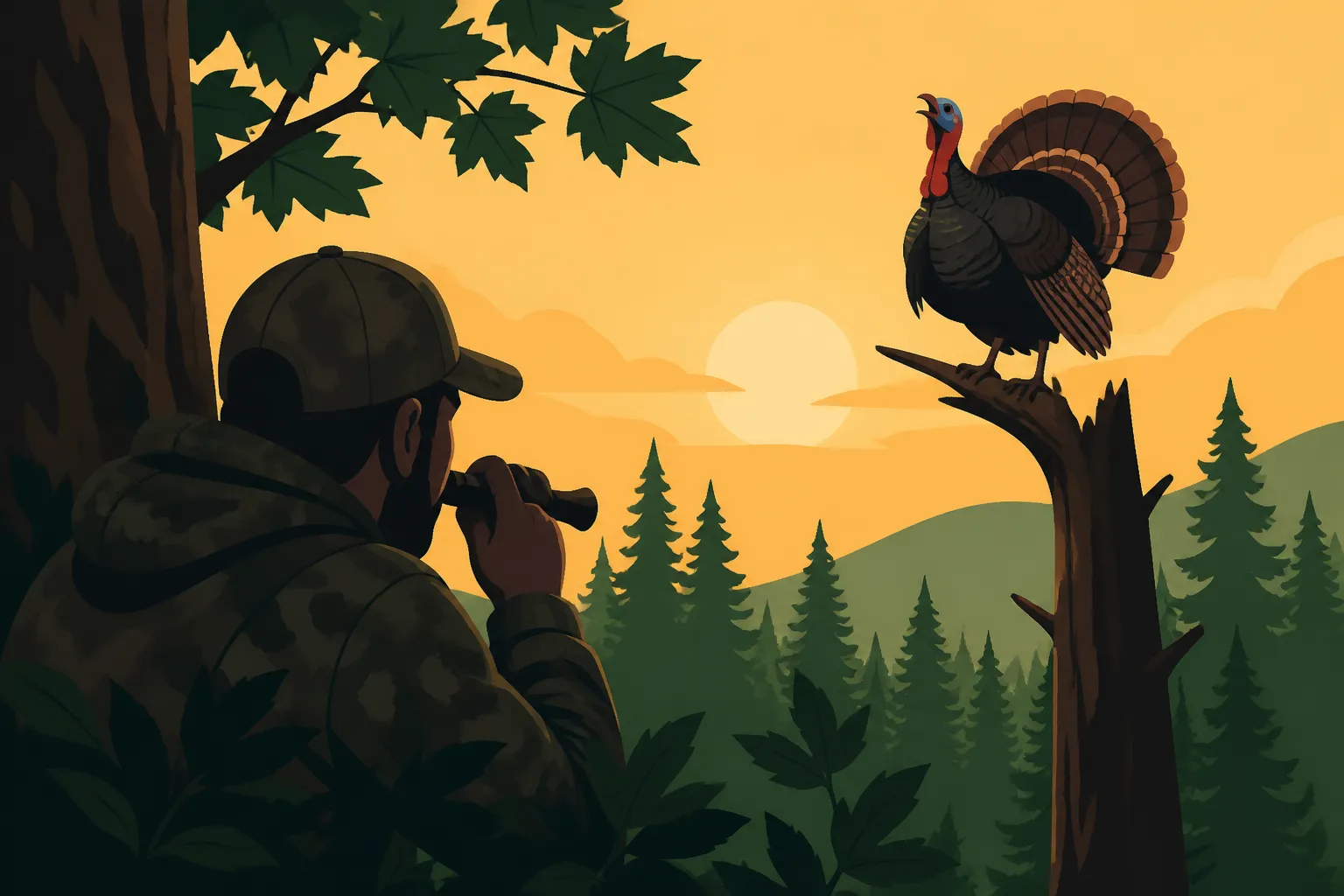
When you first hear that booming gobble from the roost, resist the urge to immediately hit him with your loudest, most aggressive calling. Often, a softer, more subtle approach is far more effective. Start with a few soft tree yelps, just enough to let him know a hen is nearby but not so much that you over-call and spook him. Think of it as a hen just waking up and stretching, letting out a few contented clucks and yelps. You want to sound natural, not like a frantic hen desperate for attention.
As daylight increases and the bird gets more vocal, you can gradually increase the volume and intensity of your calls, but always err on the side of caution. Focus on realistic hen sounds – soft yelps, clucks, and purrs – using a mouth call or a slate call to mimic a contented hen. The idea is to make him believe a real hen is just below his roost, perhaps starting to move around. This subtle invitation is often all it takes to convince him to fly down in your general direction, rather than flying off to parts unknown. Pay close attention to his responses; if he doubles his gobble or cuts you off, you know you've got his attention. You can also use a gentle, confident purr or soft cluck as a subtle invitation as he's about to fly down. For more general advice on Spring Turkey Hunting in Maine, remember that adaptability is key.
Aggressive Calling for Hung-Up Birds
Sometimes, a soft approach just isn't cutting it, especially if the gobbler is "hung up" after flying down or if he's being particularly stubborn. This is when you might need to shift gears and employ more aggressive calling tactics. If you've been working a bird for a while and he's not budging, try a series of loud, excited cutting and yelping. This can simulate a hen that's agitated or perhaps even a fight between hens, which can often pique a gobbler's interest and draw him in, especially if he thinks a rival tom might be stealing his hens.
Another aggressive tactic is the "fly-down cackle." Just as you think the gobbler is about to fly down, or immediately after he's hit the ground, let out a realistic fly-down cackle followed by some excited yelps and clucks. This mimics a hen flying off the roost and immediately starting to call, often making the gobbler feel like he's missing out on something. Be mindful of your surroundings; if you're hunting in a very tight, thick area, overly aggressive calling might overwhelm the bird. But in more open woods or when a bird is being particularly obstinate, it can be the push he needs. Tools like the GoHunt app can help you visualize the terrain around his roost, allowing you to anticipate potential hang-up spots where a more aggressive call might be needed to draw him through.
Decoy Placement and Setup
Visuals are a powerful tool in turkey hunting, especially for roosted birds. While calling gets their attention, seeing a realistic decoy can often be the final piece of the puzzle that makes them commit. For early May gobblers, a single hen decoy, or a hen and jake decoy combination, placed strategically within shooting range of your setup, can be incredibly effective. The key is to set them up before legal shooting light, ideally when you're making your final approach to the roost site.
When choosing your setup location, consider the terrain and the gobbler's likely fly-down path. You want the decoys to be easily visible to the gobbler once he hits the ground, but also for him to have a clear, easy path to approach them. If he has to navigate dense brush or a major obstacle, he might hang up. Place the decoy so it's facing away from you, presenting its tail feathers to the approaching gobbler, mimicking a submissive hen. This often encourages the gobbler to circle around the decoy to get face-to-face, bringing him broadside for a shot. Remember to always set your decoys so that any approaching gobbler is also exposing himself to your chosen shooting lane. Detailed information on Decoy Placement for Pressured Maine Birds can further refine your technique.
Tactics for Making the Gobbler Commit
The true test of a turkey hunter often comes after the bird has acknowledged your calls. Getting him to close the distance and step into range requires a blend of keen observation, strategic movement, and unyielding patience.
Reading the Bird and Adjusting Your Position
Turkey hunting is rarely a static endeavor, especially when you're trying to coax a wary gobbler off the roost. You need to constantly read the bird's responses and be ready to adjust. Is he gobbling enthusiastically but staying put? Is he cutting off your calls, indicating interest? Or is he silent, perhaps having flown down in a different direction? His gobble is your most important communication. If he moves left or right, you might need to subtly shift your position to maintain an advantageous setup. Sometimes, a slight shift of 10-20 yards can be the difference between a hung-up bird and one that walks right in.
If a gobbler flies down and starts working away from you, don't panic. Sometimes, the best move is no move at all, just continuing soft calling. Other times, if the terrain allows for it (and it's safe and ethical), a quick, quiet repositioning can put you back in the game. Imagine you've located a gobbler near a dense section of cover, using GoHunt to study the satellite imagery, and you realize he's likely to fly down into that thicket. You might choose to set up on the opposite side, anticipating his movement out of the cover towards your calls. Always prioritize safety and ensure you're aware of other hunters, especially when moving.
Patience and Persistence: The Waiting Game
It's a cliché for a reason: patience kills more turkeys than any fancy call ever will. An early May gobbler, particularly one that has already survived a few seasons, can be incredibly wary. He might gobble his head off, but then go completely silent for 15 or 20 minutes before showing up. The urge to move, to call louder, or to give up can be overwhelming, but often, the best thing you can do is sit still, stay hidden, and wait. Many times, a gobbler will circle, trying to get a visual on the hen he heard. If he doesn't see anything, he might move off, but he could just as easily swing around and approach from an unexpected direction.
Persistence goes hand-in-hand with patience. If you're confident there's a bird in the area and he's shown even a glimmer of interest, stick with it. Don't be afraid to mix up your calls, change volume, or even go silent for a period before resuming. Sometimes, a lull in calling followed by a sudden series of yelps can trigger a response from a bird that thought the "hen" had left. Especially in WMDs that have Maine's WMDs With Two-Bird Spring Limits, where birds might be slightly more pressured later in the season, this subtle patience can be the deciding factor.
Dealing with Hens and Other Obstacles
One of the most common and frustrating scenarios is when your gobbler flies down to a group of real hens. Once he's with them, he's often much harder to call away, as his primary focus is on breeding with the hens he already has. In these situations, your best bet is often to become the most appealing "hen" in the woods. Try aggressive calling to mimic a hot hen, using excited yelps and cuts, perhaps even a gobble tube to challenge him. You're trying to make him jealous or make the real hens nervous, hoping they'll move off, or he'll follow your calls away from them.
Sometimes, the hens themselves can be called in. If you can get the hens to come to you, the gobbler will often follow. This is where you might need to sound more dominant or more alluring than the real hens. Use a variety of calls, from soft purrs to excited yelps, to try and entice the entire flock. Obstacles like thick brush, stone walls, or small streams can also make a gobbler hang up. If you've Setting Up Against a Big White Pine with a clear view but the bird is stuck behind a hedgerow, consider your next move carefully. You might need to use the terrain to your advantage, slipping silently parallel to the obstacle to try and intercept him or get a better angle. Remember, while you might not always win against real hens, trying different tactics is always better than giving up.
Scouting and Pre-Hunt Preparation
Success in turkey hunting often begins long before opening day. Effective scouting and preparation can dramatically increase your chances of calling a gobbler off the roost.
Locating Roost Trees and Travel Corridors
Pre-season scouting is invaluable for early May turkey hunting. Spend time in the woods listening for evening gobblers flying up to roost or early morning birds gobbling from their perches. This helps you identify specific roost trees or general areas where turkeys are spending the night. Look for "roost trees" – often large, open-limbed trees where turkeys have a clear view and easy access. You might even find droppings and feathers underneath favored roosts.
Beyond pinpointing roosts, try to identify common travel corridors. Where do gobblers typically fly down? Do they prefer certain ridges, open fields, or logging roads? Are there natural funnels like narrow strips of woods between fields? Understanding these patterns will help you choose the best setup location, anticipating where a gobbler is likely to go once he leaves his roost. Using tools like the GoHunt mapping system, or even the Scouting With the Maine Hunting App, can help you mark potential roost sites, identify terrain features, and plan your approach long before you ever step foot in the woods with your shotgun. This kind of intel is gold for early-season birds.
Understanding Maine's Specific Regulations for Spring Turkey
Before you head out, make sure you're crystal clear on Maine's spring turkey hunting regulations. These can vary by Wildlife Management District (WMD) and year, so always check the latest Maine Department of Inland Fisheries and Wildlife (MDIFW) regulations book. You'll need a valid Maine hunting license and a spring turkey permit. Bag limits also differ by WMD; for example, some WMDs allow you to harvest Maine's WMDs With Two-Bird Spring Limits, while others might be more restricted. Knowing your WMD's specific rules is crucial.
| Call Type | Best Use for Roosted Birds | Volume | Sound Quality |
|---|---|---|---|
| Mouth Call | Soft tree yelps, clucks, purrs; fly-down cackles | Low to High | Versatile, realistic |
| Slate Call | Soft, smooth yelps and purrs; subtle clucks | Low to Medium | Consistent, good for soft calls |
| Box Call | Louder, more aggressive yelps; cutting | Medium to High | Good for attention-grabbing, can be less subtle |
| Locator Calls | Hoot owl, crow, coyote | Very High | Locating birds, not for enticing |
Additionally, be aware of legal shooting hours, which typically begin 1/2 hour before sunrise and end at 1/2 hour after sunset during the spring turkey season. Make sure your weapon is legal for turkey hunting in Maine – usually a shotgun using shot size #4 or smaller, or a bow. Ensuring you have your Maine Spring Turkey Permit Rules squared away is just as important as your calling skills. Hunting ethically and legally is paramount, and familiarity with the rules will make your hunt both enjoyable and responsible.
Disclaimer
Please note that hunting regulations, seasons, and licensing requirements can change. Always consult the official Maine Department of Inland Fisheries and Wildlife (MDIFW) website and current hunting law book before planning any hunting trip. This article is for informational purposes only and does not supersede state laws or regulations.