Hunting Standing Cover Left After Harvest
Have you ever driven by a familiar woodlot or farm field after a logging operation or a late-season crop harvest, and felt that sinking feeling that your go-to hunting spot is completely ruined? It’s a common frustration in Maine; one day you’re seeing deer signs everywhere, and the next, it feels like the landscape has been stripped bare. But the truth is, deer don’t just vanish into thin air. They adapt, and often, they simply shift into the often-overlooked "standing cover" that remains. This comprehensive guide will help you understand what this critical cover looks like, how to find it, and most importantly, how to effectively hunt these areas when everything else seems to have changed.
Understanding "Standing Cover" After Harvest
When we talk about "standing cover" after a harvest, we're focusing on those pockets of unmolested vegetation that remain following significant landscape changes. It's not just about the trees that weren't cut, but also the dense undergrowth, brush, and smaller saplings that suddenly become paramount for deer survival and security. These areas provide everything a whitetail needs: thermal protection from the brutal Maine winters, concealment from predators (two-legged and four-legged), and often, residual food sources.
What is "Standing Cover" and Why Does it Matter?
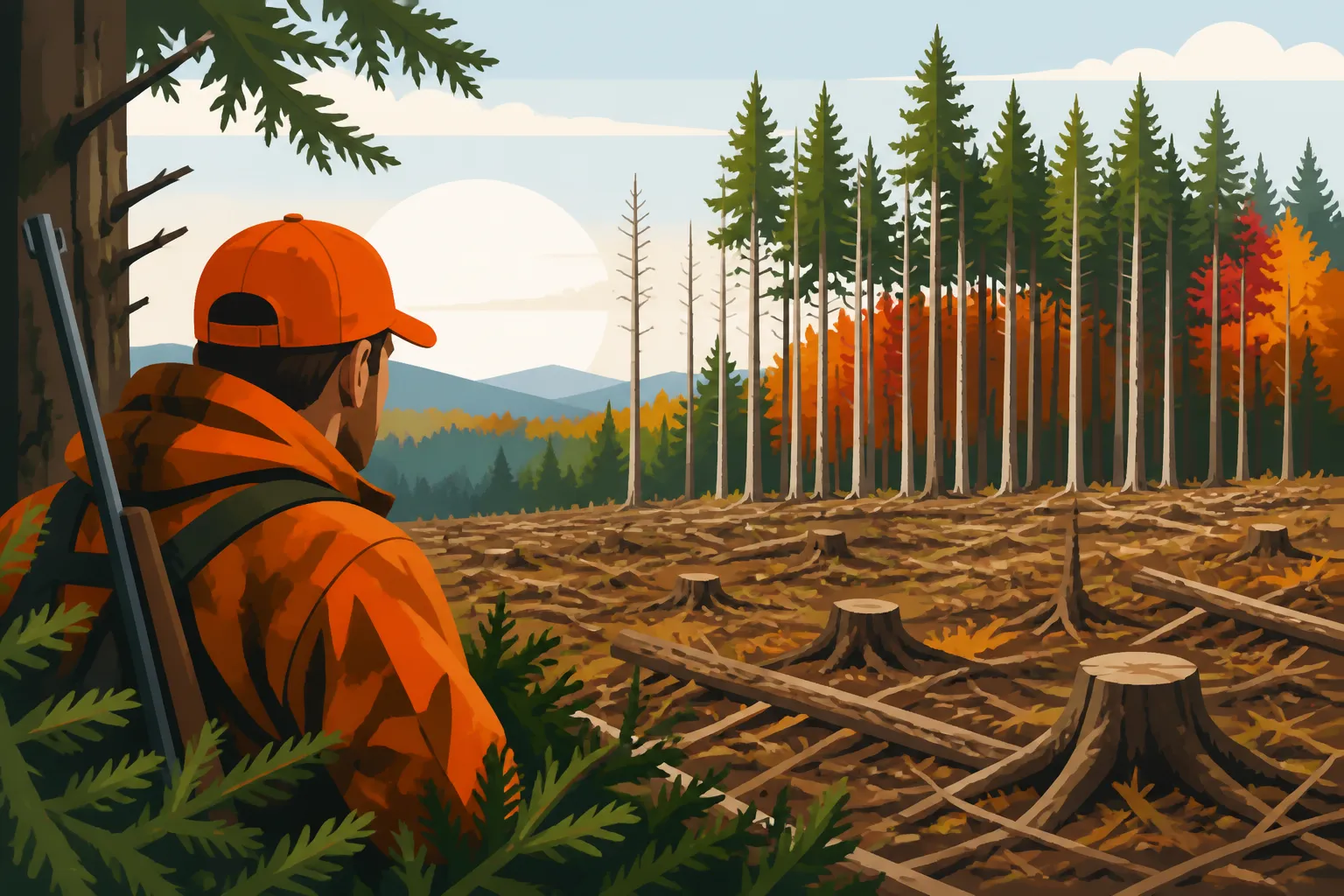
Imagine a vast timber stand that’s just been clear-cut. From a distance, it looks like a moonscape. But if you look closely, you’ll almost always find small islands of untouched conifers, thick stands of young hardwoods that were deemed too small to bother with, or even old hedgerows along property lines that loggers left alone. These are prime examples of standing cover. For deer, these patches are literal lifelines. They offer immediate refuge from the sudden exposure, a place to bed down out of the wind and snow, and a sense of security in an otherwise vulnerable environment. Without these havens, deer would be forced to travel further and expose themselves to greater risks, which isn't a winning strategy for survival, especially during Maine's Four-Week Firearms Deer Season.
Beyond immediate refuge, standing cover often connects to other crucial habitat features. It might border a swamp, a deep ravine, or a field edge, creating natural funnels and travel corridors that become even more pronounced after a harvest. Deer, being creatures of habit and efficiency, will utilize these remaining structures for movement between bedding areas and whatever late-season food sources for Maine whitetails they can still access. Hunting these zones requires a keen eye for detail and an understanding of how deer use topography and remaining vegetation to their advantage.
Types of Harvests and Their Impact on Cover
Different types of harvests leave different kinds of standing cover, and understanding these distinctions is key to effective hunting.
-
Timber Harvests (Clear-cuts, Select Cuts, Shelterwood Cuts):
- Clear-cuts: These are the most dramatic, removing nearly all trees over a large area. However, even clear-cuts often leave small "islands" of unmerchantable timber, brush piles, or riparian zones (along streams) that can become exceptionally thick and attractive to deer. The edges where the clear-cut meets standing timber become vital travel routes and ambush points.
- Select Cuts: Here, only specific trees are removed, usually larger, mature ones. This can open up the canopy, allowing more sunlight to reach the forest floor, which promotes the growth of dense understory vegetation over time. Immediately after a select cut, the remaining larger trees still provide overhead cover, but the increased ground-level brush creates fantastic bedding and browse opportunities.
- Shelterwood Cuts: Similar to select cuts, but designed to promote regeneration by leaving a portion of the mature trees to provide shelter for new seedlings. These areas often have a mix of large timber and dense young growth, creating excellent multi-layered cover.
-
Agricultural Harvests (Corn, Soybeans, Hay):
- Corn Fields: A standing cornfield is arguably the best cover in farm country. Once harvested, deer are forced out. However, remnants like unharvested rows, standing stubble, or adjacent thickets, fencerows, and woodlot edges become hyper-important. Any unharvested corners or low spots can still hold deer, especially if they provide a few leftover ears.
- Soybean Fields: After harvest, soybeans offer very little cover. Deer will quickly retreat to nearby woodlots or dense brush. The standing cover here isn't in the field, but around it.
- Hay Fields: Hay offers little cover even before harvest. After it's cut, deer will use the edges more, particularly if they are bordered by dense woods or brushy ditches.
Understanding these impacts is the first step. For instance, after a large clear-cut in northern Maine, you might be looking for those small pockets of cedar or spruce left untouched, perhaps along a stream or in a low, wet area. Whereas after a corn harvest in Aroostook County, your focus would shift to the thickest fencerows, small woodlots, or swamps adjacent to the fields.
Identifying Productive Standing Cover
Finding these hidden gems of standing cover requires a combination of modern tools and old-school boots-on-the-ground scouting. You can't just drive by and expect to see the whole picture.
Utilizing Aerial Imagery and Mapping Tools
In today's hunting world, mapping apps are indispensable. Platforms like GoHunt, which many Maine hunters use, allow you to literally fly over an area on your phone or computer, scrutinizing every acre for potential cover.
- Look for Color Differences: On aerial photos, dark green patches within a recently cut area often indicate conifers, which provide excellent thermal cover. Lighter green or brown areas might be thick, young hardwoods or regenerating brush. Pay attention to sudden changes in canopy texture.
- Identify Irregularities: Clear-cuts are rarely perfectly uniform. Look for fingers of timber that extend into the cut, unharvested points, or patches that simply look different. These are often areas loggers couldn't access easily or deemed uneconomical to cut.
- Property Line Thickets: Sometimes, loggers will stop at a property line, leaving a stark contrast between a harvested area and an adjacent untouched parcel. This abrupt edge, especially if the untouched side is dense, becomes a major travel corridor and bedding zone. Use the property line features on GoHunt to highlight these boundaries.
- Topographic Changes: Utilize contour lines on your mapping app. Steep ravines, creek bottoms, or abrupt elevation changes often dictate where timber isn't harvested or where dense undergrowth can thrive, creating natural shelters. These areas can act as funnels between two woodlots or larger blocks of timber.
Spend time pouring over these maps before you ever step foot in the woods. Identify several potential areas that fit the bill and create a scouting plan. The more you "hunt" with your map, the more efficient your actual scouting will be.
On-the-Ground Scouting for Key Cover
While maps are great, there's no substitute for putting your boots on the ground. This is where you confirm your suspicions and find the actual deer sign.
- Walk the Edges: The transition zones between the harvested area and the standing cover are critical. Look for heavy deer trails entering and exiting the thick stuff. These trails will often be well-worn, indicating consistent use.
- Penetrate the Thickets: Don't be afraid to push into the densest cover. This is where deer often feel safest. Look for fresh rubs, scrapes, and most importantly, beds. A bed will tell you exactly where a deer felt secure enough to lay down. In thick spruce or cedar, these beds can be surprisingly small pockets of cleared ground.
- Identify Food Sources: Even in harvested areas, deer are looking for food. Look for leftover acorns under oaks, browse lines on remaining saplings, or even discarded apples in an adjacent Hunting a Standing Apple Orchard. If you find food within or adjacent to dense cover, you’ve found a high-value area. The deer wintering yards explained are good places to learn about how deer use cover for food and shelter.
- Fresh Sign is King: Focus on fresh tracks, droppings, and browsed vegetation. Old sign might tell you deer were there, but fresh sign tells you they are there, or have been very recently. This is especially true after a cold snap when deer are concentrating on remaining food and cover.
Remember that scouting with the Maine Hunting App and other tools can guide you, but the real intelligence comes from physical reconnaissance. Pay attention to how deer move through the landscape and what makes certain pockets of cover more appealing than others.
Seasonal Considerations for Harvested Areas
The effectiveness of standing cover can change dramatically with the seasons.
- Early Season (Archery): If a harvest happened in late summer, early fall, the remaining green cover is still very dense. Deer might be scattered but will gravitate towards security cover, especially near mast crops.
- Firearms Season (Mid to Late Fall): As leaves drop, visibility increases, and deer seek out the thickest remaining evergreen cover for concealment. This is when standing cover becomes even more critical. The added hunting pressure from Maine's Four-Week Firearms Deer Season pushes deer into the nastiest, most impenetrable spots.
- Late Season (Muzzleloader): With deep snow and colder temperatures, thermal cover is paramount. Deer will pack into dense conifer stands, especially cedar swamps or thick spruce, for warmth and protection from the wind. Food sources will be limited, so any browse within or near this cover will be heavily utilized. This is also when you might start seeing deer yarding up in traditional areas.
Knowing the time of year helps you predict how deer will utilize these areas. In late fall, a dense patch of spruce might be far more productive than a hardwood thicket that offered great cover in September but is now bare.
Strategies for Hunting Standing Cover
Once you've identified potential standing cover, the next challenge is actually hunting it effectively. This often means adjusting your typical hunting style to match the unique characteristics of these areas.
Stealthy Approach and Entry/Exit Routes
Hunting thick cover demands extreme stealth. Deer in these areas are often high-strung, having been displaced or feeling exposed in other parts of their home range.
- Mind Your Wind and Thermals: This is non-negotiable, especially in Maine's hill country. Always approach from a direction that keeps your scent blowing away from where you expect deer to be. In early morning, thermals typically fall down slopes; in the afternoon, they rise. Understanding Wind and Thermals in Maine Hill Country is crucial. Using the GoHunt app's wind direction overlay can be a game-changer for planning your approach.
- Utilize Natural Cover: Use every bit of terrain and vegetation to mask your movement. Walk slowly, pause frequently, and scan ahead. If there's a ditch, a fencerow, or a slight rise, use it to break up your silhouette.
- Plan Your Entry and Exit: Don't just crash in. Identify quiet routes that allow you to get to your stand or still-hunt area without alerting deer. Often, this means taking a longer, roundabout path. When hunting standing cover, you're trying to sneak into the deer's bedroom; treat it with the utmost respect. Avoid walking directly through known bedding areas, especially during your entry.
Stand Placement and Ground Blind Tactics
The choice between a treestand and a ground blind in standing cover often depends on the specific situation and terrain.
- Treestands for Overlooking Edges: If the standing cover is a dense thicket bordering an open area (like a clear-cut or a field), a treestand on the edge can be highly effective. Place your stand slightly inside the timber, perhaps 10-20 yards in, to break up your silhouette against the skyline. Focus on travel corridors and pinch points where deer are forced to emerge or bottleneck. Consider Hanging a Stand on a Private Land Field Edge to capitalize on these transitional areas. Remember, deer will often parallel the edge of the cover before committing to an opening.
- Ground Blinds for Deep Penetration: In truly impenetrable standing cover, where trees are too small or too dense for a treestand, a well-placed ground blind can be deadly. Brushing in a blind on a field edge or within a thicket takes time but can offer incredible concealment. Look for natural openings, faint deer trails within the thicket, or even small clearings where deer might pause. The key is to blend in completely. A ground blind allows you to hunt inside the deer's sanctuary, reducing your chances of being spotted or scented.
Regardless of your choice, prioritize cover for yourself. Don't place a stand where you'll be silhouetted, and ensure your blind is so well-brushed in that it looks like a natural part of the landscape.
Still-Hunting Through Thick Cover
Still-hunting is a highly effective, albeit challenging, method for hunting standing cover. It requires patience, keen observation, and the ability to move with incredible stealth.
- Slow, Slower, Slowest: This isn't about covering ground quickly. It's about taking one or two steps, then stopping for 5-10 minutes (or longer) to scan, listen, and let the woods settle. Many hunters rush, but the deer that live in these thick areas are experts at melting away before you even know they're there. Think of it like a cat stalking a bird.
- Read the Landscape: Look for subtle changes in the terrain, the way branches are broken, or a patch of slightly disturbed leaves. These tiny details can reveal a deer bed or a preferred travel route. Pay particular attention to natural funnels and breaks in the cover.
- Use All Your Senses: Listen for the crunch of leaves, the snap of a twig, or even the soft blowing of a deer. Smell for the musky scent of a bedded deer, especially on a calm, damp morning.
- Work into the Wind: Just like with stand hunting, always still-hunt into the wind. This allows your scent to blow behind you and gives you the best chance of hearing or seeing a deer before it detects you. If you bump a deer, it will likely run in the direction your scent is blowing.
- Target Bedding Areas: The goal of still-hunting standing cover is often to jump a bedded deer. Move through areas you've identified as likely bedding sites. Be ready to react quickly when a deer suddenly stands up. This often happens at very close range. When still-hunting Aroostook County farmland, for instance, you'd slowly pick apart the dense hedgerows and small woodlots adjacent to harvested fields, expecting to jump deer from their mid-day beds.
This method is physically demanding and requires immense discipline, but the reward of outsmarting a wary whitetail in its sanctuary is incredibly satisfying.
Essential Gear and Safety in Harvested Areas
Hunting standing cover, especially in the rugged terrain of Maine, requires some specific gear and a strong focus on safety. These areas can be unforgiving.
Clothing and Equipment for Navigating Rough Terrain
Your gear choices should prioritize durability, protection, and comfort in challenging conditions.
- Durable Outerwear: Forget your quiet, lightweight camo if it tears easily. You'll be pushing through thick brush, thorns, and downed timber. Invest in tough, briar-resistant pants and jackets. Carhartt or similar heavy-duty materials are often preferred, or specialized hunting gear designed for rough country.
- Waterproof, Supportive Boots: You'll likely encounter wet ground, mud, and possibly snow. Good quality, waterproof boots with excellent ankle support are essential. You don't want to roll an ankle or have soggy feet miles from the truck.
- Small, Functional Pack: Carry a compact backpack with essentials: water, snacks, a small first-aid kit, a headlamp, a knife, and maybe some flagging tape to mark your way out of exceptionally dense areas.
- GPS/Mapping Device: Even if you think you know the area, dense, uniform cover can be disorienting. A reliable GPS unit or a fully charged phone with a mapping app like GoHunt is non-negotiable. Knowing where you are and tracking your progress is vital, especially when reading aerial photos for North Woods deer and navigating complex landscapes.
- Binoculars: Even in thick cover, binoculars help you pick apart brush and identify deer sign or parts of a deer before it sees you. A compact pair that's easy to access is best.
Safety First: Visibility and Communication
Maine's hunting seasons, especially firearms season, see many hunters in the woods. Safety is paramount, particularly when you're pushing into dense cover where visibility is limited.
- Blaze Orange is Your Lifeline: Always wear the legally required amount of blaze orange (or blaze pink, which is also allowed in Maine). In thick standing cover, you need to maximize your visibility to other hunters. Don't skimp. A vest, hat, and extra orange on your pack can make all the difference. Remember, the blaze orange requirements are there for a reason, protecting everyone.
- Tell Someone Your Plans: Always let a non-hunting friend or family member know exactly where you're going, your planned route, and when you expect to return. Give them a detailed map pin if possible. Cell service can be spotty in remote Maine areas, so don't rely solely on your phone for emergencies.
- First-Aid and Emergency Whistle: Carry a basic first-aid kit for cuts and scrapes. An emergency whistle can be invaluable if you get lost or need to signal for help. Three short blasts are a universal distress signal.
- Carry a Compass (and know how to use it): Batteries die, phones break. A reliable compass and the knowledge to use it in conjunction with a physical map can be a lifesaver if your electronic devices fail.
Hunting standing cover can be incredibly rewarding, offering opportunities for close encounters with wary deer. By understanding how deer use these areas, scouting effectively, employing the right tactics, and prioritizing safety, you can turn a seemingly "ruined" landscape into your next trophy spot.
Comparing Harvest Types and Deer Behavior
To help solidify the concepts, here's a table summarizing different harvest types, the kind of standing cover they typically leave, and how deer generally react:
| Harvest Type | Resulting Standing Cover | Typical Deer Behavior | Recommended Hunting Tactic |
|---|---|---|---|
| Clear-cut (Timber) | Islands of unmerchantable timber, brush piles, riparian zones, adjacent intact timber. | Retreat to dense unharvested pockets for bedding, use edges of clear-cut for travel between food and remaining cover. | Treestand on intact timber edge; still-hunt fingers of cover. |
| Select Cut (Timber) | Remaining mature trees, increased understory brush growth, natural regeneration. | Bed within new thickets, browse on regenerating vegetation, utilize remaining large timber for overhead cover. | Still-hunt thick new growth; treestand near heavy trails. |
| Shelterwood Cut (Timber) | Mix of residual mature trees and dense young growth. | Similar to select cuts but with more varied cover, providing both overhead and ground-level security. | Still-hunt through dense patches; glass from elevated points. |
| Corn Field (Ag) | Unharvested rows, standing stubble, adjacent fencerows, small woodlots, swamps. | Retreat to adjacent thick cover immediately after harvest, will stage in fencerows before entering fields at dusk. | Ground blind on fencerow/woodlot edge; still-hunt thickets. |
| Soybean/Hay Field (Ag) | Minimal in-field cover. Focus is on adjacent thickets, woodlots, ditches. | Rapid retreat to nearby dense cover, use edges as primary travel corridors. | Treestand or ground blind overlooking field edge adjacent to dense cover. |
Disclaimer
Please ensure you are familiar with all current Maine hunting laws and regulations before heading afield. Seasons, bag limits, and specific rules can change annually. Always verify information with the Maine Department of Inland Fisheries and Wildlife. This guide is for informational purposes only and does not supersede official regulations.