Maine’s One-Bird Fall Turkey Districts
Hunting fall turkeys in Maine can be incredibly rewarding, but it often comes with a layer of confusion, especially when you start looking at the bag limits. It's not a one-size-fits-all scenario across the state, and many hunters get caught off guard realizing some areas allow only a single bird. This guide will meticulously break down Maine's one-bird fall turkey districts, helping you understand the regulations, refine your strategies, and ultimately maximize your chances of filling that single, hard-earned tag.
Understanding Maine's Fall Turkey Regulations
Maine's approach to turkey management is highly localized, meaning what's legal and permissible in one part of the state might be entirely different just a few towns over. This regional variation is particularly evident when it comes to fall turkey hunting, where bag limits can swing dramatically based on the specific Wildlife Management District (WMD) you're in. Navigating these rules is the first step toward a successful hunt.
The Variability of Fall Turkey Seasons
The reality of turkey populations in Maine isn't uniform. In some areas, wild turkeys have thrived, establishing robust and expanding populations thanks to successful restoration efforts and ideal habitat. These are the zones where you'll find more generous bag limits, sometimes allowing up to five birds in the fall, which is certainly a different ballgame. However, in other WMDs, the turkey population might be less dense, more recently established, or facing specific environmental pressures. To ensure sustainable hunting and allow these populations to continue growing, the Maine Department of Inland Fisheries and Wildlife (MDIFW) implements stricter harvest regulations, including the one-bird limit.
This isn't arbitrary; it’s a calculated decision based on extensive biological data, habitat assessments, and harvest reports. The goal is always to balance recreational opportunity with sound wildlife management. So, while it might feel a bit restrictive to only have one tag in your pocket for the entire season in a particular district, it's a testament to the MDIFW's commitment to the long-term health of Maine's turkey flock. You'll find that understanding Maine's WMD-Based Turkey Bag Limits is crucial for any fall turkey hunter. For instance, in some southern Maine WMDs, where turkey populations are historically strong and widespread, you might encounter higher limits, reflecting a larger, more resilient population. Conversely, more northern W or newly established turkey ranges will often have a one-bird limit to foster growth and prevent overharvest.
Identifying One-Bird WMDs
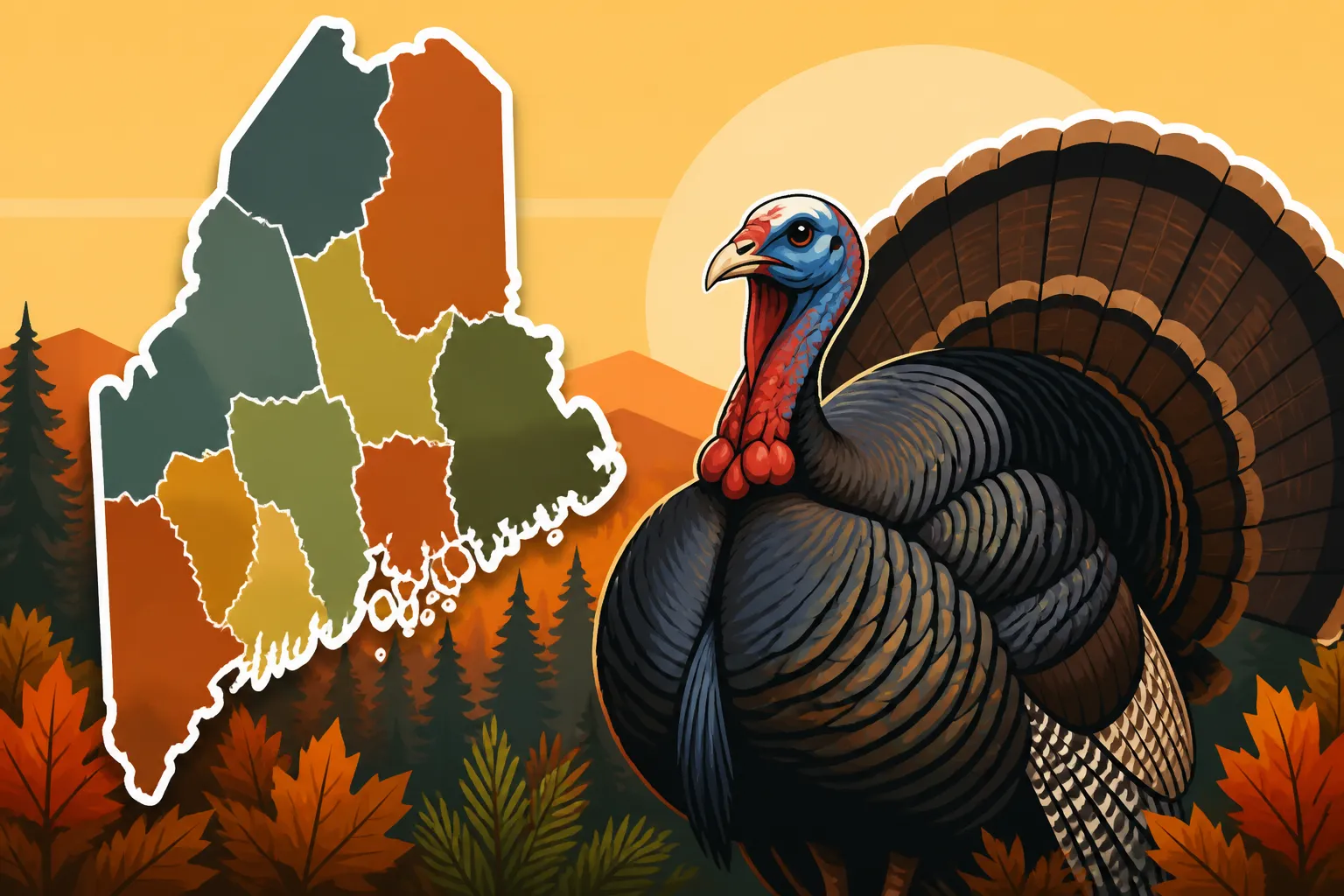
Before you even think about stepping into the woods, it is absolutely paramount to know the specific regulations for your chosen hunting area. The last thing any hunter wants is to accidentally violate a bag limit simply because they weren't aware of the WMD boundaries or rules. The MDIFW provides comprehensive and current regulations each year, typically available both online and as printed pamphlets at license agents. These resources include detailed maps outlining all the WMDs and their corresponding bag limits for fall turkey. Don't rely on last year's knowledge, as boundaries or limits can occasionally shift.
A reliable way to pinpoint these specific one-bird WMDs is to visit the official MDIFW website. Look for the annual "Maine Hunting and Trapping Laws" booklet, which typically has a dedicated section for migratory game birds and wild turkey. This section will clearly list each WMD, its opening and closing dates for fall turkey, and its precise bag limit. Moreover, digital mapping tools and hunting apps like GoHunt can be invaluable resources. By overlaying WMD boundaries on aerial or topographic maps, you can visually confirm which areas fall under the one-bird restriction. This kind of detailed planning helps ensure you're compliant and hunting legally, avoiding any headaches down the road. It also empowers you to make informed decisions about where to focus your limited time and efforts, especially if you're traveling a distance to hunt.
Strategy for Hunting One-Bird Fall Turkey Districts
Hunting in a one-bird fall turkey district fundamentally changes your approach. You're no longer thinking about filling multiple tags; every decision, every stalk, every call becomes about securing that single, precious bird. This requires a more focused, patient, and often more cautious strategy than in areas with more liberal limits.
Prioritizing Your Hunt in Limited Zones
With only one bird allowed, success isn't just about finding turkeys; it's about being incredibly selective and making that single opportunity count. This means intensifying your pre-season scouting. Instead of just looking for general turkey sign, you'll want to pinpoint specific roosting areas, feeding grounds, and travel corridors. Focus on areas with consistent food sources, whether it's acorns in a mature oak stand, beechnuts in a mixed woodlot, or residual grains in an agricultural field. Knowing the daily patterns of a specific flock or even a smaller group of birds can dramatically increase your odds.
Being selective also extends to the moment of truth. In a five-bird WMD, you might be less concerned about the size or sex of the bird, but when you only have one tag, many hunters prefer to wait for a mature hen or a jake, or even a tom if one presents itself. This often means passing on marginal shots or birds that aren't quite what you're looking for, which can be tough but ultimately more satisfying. Contrast this with the high-volume tactics sometimes employed when Hunting a Five-Bird Fall Turkey WMD, where the goal might be simply to fill tags. In a one-bird zone, patience and precision are your greatest assets, ensuring that when you do take a shot, it's a clean, ethical harvest, maximizing your chances of a quick recovery. Utilizing tools like GoHunt can aid in scouting by highlighting likely food sources and cover types, allowing you to prioritize your scouting efforts more efficiently.
Locating Fall Turkey Flocks
Finding fall turkeys can be a bit different from spring gobblers. In the fall, turkeys tend to be in larger, mixed-gender flocks, often including hens, jakes, and even mature toms, though the toms might still keep their distance or form bachelor groups. These flocks are constantly on the move, foraging for food to fatten up for winter. Therefore, your scouting needs to be dynamic. Start by looking for obvious signs: tracks along logging roads and trails, distinct "J-shaped" droppings, and widespread scratch marks in leaf litter indicating where they've been feeding. Dusting bowls, shallow depressions in soft dirt or sand where turkeys preen and remove parasites, are also clear indicators of recent activity.
Listening is equally important. While less vocal than in spring, fall turkeys still communicate. Yelps, clucks, and putts can betray their presence. Pay close attention at dawn and dusk for roosting yelps or fly-down cackles. Glassing open areas like old fields, blueberry barrens, or cut cornfields at first light or last light can reveal entire flocks. These open spaces are often used for feeding and loafing. Identifying reliable food sources is perhaps the most critical component of locating fall turkeys. If it's a good mast year, focus on oak and beech stands. If not, look towards agricultural fields, clear-cuts with abundant berries, or even creek bottoms for late-season greenery. Remember, turkeys are creatures of habit, and once you locate a feeding pattern, you can often predict their movements, perhaps even setting up near a Hunting a Funnel Between Two Woodlots that they use to travel between feeding and roosting areas.
Effective Calling and Decoy Tactics
In one-bird fall turkey districts, subtlety often trumps aggression when it comes to calling. Instead of trying to mimic a boisterous spring gobbler, your focus should be on realistic, less urgent hen and lost-bird calls. Soft yelps, clucks, and purrs can be highly effective for drawing in curious fall flocks or individual birds. Think about replicating the natural sounds a flock makes as it moves through the woods, feeding and staying in contact. A series of soft yelps, followed by some contented clucks, can make a passing flock feel comfortable enough to investigate.
Breaking up a flock, a classic fall turkey tactic, can be incredibly effective in these limited zones. Once you locate a flock, try to scatter them. Then, wait for about 30 minutes to an hour before beginning soft assembly yelps, mimicking a lost hen trying to regroup. This often brings birds back in, sometimes singles or small groups. This technique is well-covered in articles about Calling a Fall Turkey Flock Apart. When it comes to decoys, less is often more. A single hen decoy, or even no decoy at all, can be sufficient. Sometimes, the sight of a decoy can make wary fall birds hang up, especially if they're pressured. Placing a lone hen in a visible but not overly exposed location, where it looks like she's feeding or just casually moving, can sometimes provide the visual reassurance a distant turkey needs to commit. Always set up with good cover, allowing you to remain unseen as the birds approach, because in a one-bird district, you might only get one chance.
Practical Considerations and Gear
Beyond understanding the regulations and developing your hunting strategy, there are important practical aspects and gear considerations unique to fall turkey hunting in Maine's one-bird districts. Being well-prepared physically and with the right equipment can make all the difference.
Licensing and Permits for Fall Turkeys
Before you even step foot into a Maine turkey woods, securing the correct licenses and permits is non-negotiable. Every hunter, resident or nonresident, must possess a valid Maine hunting license. On top of that, if you plan to hunt fall wild turkeys, you will need to purchase a specific fall turkey permit. This permit is separate from your general hunting license and any spring turkey permit you might have purchased. These permits are typically available for purchase through the MDIFW's online portal, at local licensing agents, or even by mail. It’s always a good idea to purchase your license and permit well in advance of the season opener to avoid any last-minute rushes or technical glitches.
The cost of a fall turkey permit is usually quite reasonable, but it's essential to check the current year's fee schedule, as it can change. For non-residents, the overall cost of licenses and permits will be higher, so planning ahead is wise. Make sure you carry physical or digital proof of your valid hunting license and fall turkey permit at all times while hunting. Game wardens often conduct checks, and being unprepared can lead to citations and a ruined hunt. For a detailed breakdown of costs and how to apply, refer to Maine Fall Turkey Permit Rules. Always confirm that your permit specifies the correct WMD if it's region-specific, though generally, fall turkey permits are state-wide, with the bag limit being WMD-dependent.
Essential Gear for Fall Turkey Hunting
While many items cross over from other hunting pursuits, fall turkey hunting has its own specific gear list that can greatly enhance comfort and success, especially when you're making every effort count for that single bird.
- Shotgun and Ammunition: A 12-gauge or 20-gauge shotgun with a turkey choke (extra full or super full) is standard. Pattern your shotgun with your chosen turkey load (e.g., #4, #5, or #6 shot in lead or high-density alternatives) before the season opens to understand its effective range. Knowing your maximum ethical shot distance is crucial, particularly when you only have one bird to harvest.
- Camouflage: Full concealment is key. Fall turkeys have excellent eyesight, and their habitat might be less dense than in spring. Opt for patterns that blend with the autumn woods – browns, grays, and muted greens. Don't forget a face mask or face paint, and gloves.
- Calls: A variety of calls is beneficial. A slate call, box call, and mouth calls (diaphragm calls) allow for different sounds and hands-free operation. Practice realistic yelps, clucks, purrs, and soft contented calls for fall scenarios.
- Optics: Binoculars (8x or 10x) are invaluable for scouting and identifying turkeys from a distance without spooking them. Remember, Scouting With the Maine Hunting App often includes satellite imagery and topographic maps that can pinpoint ideal glassing locations.
- Comfortable Footwear: You'll likely be covering ground, so durable, waterproof, and comfortable boots are essential. Maine's fall weather can be unpredictable, ranging from crisp mornings to rainy afternoons, so layered clothing is also vital.
- Backpack: Carry essentials like water, snacks, a headlamp, a small first-aid kit, and game processing tools (knife, game bags). A portable seat or cushion can also make long waits more tolerable.
Post-Harvest Requirements and Ethics
Congratulations! You've successfully harvested your single fall turkey in one of Maine's designated one-bird districts. The work isn't quite over, though. Proper post-harvest procedures are just as important as the hunt itself. Immediately after harvesting, you must attach your fall turkey permit to the bird as required by MDIFW regulations. This typically involves tagging the bird through the leg or wing with your permit tag, or marking the permit number and information directly on the bird if an adhesive tag is used. This process ensures legal transport and accountability.
Next, you are required to register your turkey. Maine offers several convenient ways to do this, including online registration through the MDIFW website or via their mobile app, or by visiting a physical deer and bear registration station. This must be done within a specific timeframe, usually within 18 hours of harvest. This registration process is vital for the MDIFW to collect accurate harvest data, which in turn helps inform future management decisions and assess Maine Turkey Population Trends. When cleaning your bird, remember to preserve the beard (if present) and spurs for potential mounting or record-keeping, even if it's a hen with a beard. Always practice responsible game care by cooling the bird quickly to ensure high-quality meat. Successfully filling that single tag in a challenging district is a proud accomplishment, reflecting patience, skill, and respect for the resource. For full details on this crucial step, refer to Maine Turkey Checking Requirements.
| WMD Number | Fall Turkey Bag Limit | General Region | Notes for Hunters |
|---|---|---|---|
| 1-17 | 1 Bird | Northern & Central | Often lower population densities, focus on prime habitat. |
| 18-29 | 1 Bird | Central & Eastern | Good areas for solitude, but intensive scouting is key. |
| Example WMD | 1 Bird | Specific Town/County | Consult MDIFW map for precise boundaries. |
| 30-36 | 5 Birds | Southern & Western | Higher densities, more liberal limits. (Provided for comparison only) |
Maximizing Success in Challenging Zones
Hunting a one-bird district often means dealing with areas that might have lower turkey densities or face more hunting pressure. This requires a deeper understanding of turkey behavior and adaptable tactics to consistently find success.
Understanding Turkey Behavior in Fall
Unlike the frenzied, breeding-driven behavior of spring gobblers, fall turkeys operate under a different imperative: survival. Their primary focus shifts to feeding, flocking, and preparing for the winter. This means they are often found in larger, mixed-gender flocks, sometimes numbering dozens of birds. These flocks will move through the landscape systematically, following reliable food sources. If there's a strong acorn crop in a particular woodlot, they might spend days or even weeks there. When that resource is depleted, they'll move on to the next, whether it's an old apple orchard or a field of scattered corn.
Understanding these patterns is crucial. Instead of listening for aggressive gobbling, you'll be looking for signs of feeding, dusting, and roosting. Fall turkeys are also more prone to moving through established travel corridors, especially between feeding areas and roost sites. Identifying these routes, like a logging road or a narrow band of timber along a stream, can provide ambush opportunities. Consider how a deer hunter might scout for sign along a Scrape Lines Along a Logging Road; a fall turkey hunter needs to think similarly about turkey travel routes. They're wary, observant birds, so approaching their areas undetected and setting up quietly is paramount. Learning to Read a Maine Harvest Report can sometimes offer insights into past success rates and general turkey movements in a given WMD, informing your scouting efforts for the current season.
Adapting to Hunting Pressure and Habitat
One-bird districts, particularly those closer to population centers, can sometimes experience higher hunting pressure. This can make turkeys incredibly wary and hard to approach. To counteract this, you need to think differently about your hunting locations and timing. Instead of hunting the most obvious public land access points or easily accessible field edges, try to find overlooked pockets of habitat. This might mean walking further than most hunters are willing to go, or exploring areas with dense cover that others pass by. Utilizing detailed topographic maps or an app like GoHunt can help you identify remote ridges, hidden creek bottoms, or thick spruce swamps that might hold turkeys seeking refuge.
Consider hunting during the middle of the week when pressure is typically lower, or later in the season when many hunters have moved on to other game. If you're hunting an area with fragmented habitat, like many southern Maine WMDs, focus on connecting corridors or small woodlots that turkeys use to travel between larger tracts. Sometimes, the smallest, most overlooked patch of timber can hold a wary flock. Hunting a Clover Plot at First Light or a small, overlooked standing apple orchard can sometimes yield results, as turkeys will seek out these late-season food sources. The key is to be adaptable and persistent. The single-bird limit means you're not trying to find a dozen turkeys; you just need to find one and get a good shot opportunity. This mindset often leads to Finding Ground Others Walk Past, which can be the secret to success in these more challenging, limited-opportunity zones.
Disclaimer
Please be advised that hunting regulations and season dates are subject to change. While this guide provides comprehensive information, it is the hunter's responsibility to consult the most current Maine Department of Inland Fisheries and Wildlife (MDIFW) regulations before engaging in any hunting activities. Always verify WMD boundaries, bag limits, and licensing requirements directly with the MDIFW.