Maine’s Nearest Confirmed CWD Cases
The anxiety that sets in when you hear about chronic wasting disease (CWD) is completely understandable. For those of us who cherish Maine's wild places and the deer, moose, and caribou that call them home, the thought of this devastating disease arriving here is a real and unsettling concern. Thankfully, Maine has remained blissfully CWD-free, a testament to strict vigilance, but it's crucial to understand where the disease has surfaced closest to our borders and why continued awareness is our best defense.
Understanding Chronic Wasting Disease and Its Threat
Chronic Wasting Disease (CWD) is one of those topics that sends shivers down the spine of any hunter or wildlife enthusiast. It’s a progressive, fatal neurological disease that affects cervids – that’s deer, elk, moose, and caribou. Unlike bacterial or viral infections, CWD is caused by abnormal proteins called prions, which slowly destroy the brain and nervous system of infected animals. Imagine a silent, invisible killer that, once introduced, is incredibly difficult, if not impossible, to eradicate from a landscape. That's the challenge CWD presents.
How CWD Spreads and What It Does
The prions responsible for CWD are shed by infected animals through saliva, urine, and feces. They can persist in the environment for years, even decades, making contaminated soil or vegetation potential sources of infection for healthy animals. This environmental persistence is what makes CWD such a nightmare for wildlife managers; once it takes root in a wild population, it's notoriously hard to contain.
Infected animals may not show symptoms for a long time, often 18 to 24 months. This "incubation period" means an apparently healthy animal could be shedding prions and spreading the disease without anyone knowing. Once symptoms do appear, they are grim: drastic weight loss (wasting away), stumbling, listlessness, excessive drooling, difficulty swallowing, and a noticeable change in behavior, such as a loss of fear of humans. It’s a truly heartbreaking thing to witness an animal suffering from CWD. Unfortunately, there is no vaccine and no cure, which is why prevention is paramount.
The Impact on Wildlife and Hunting Traditions
The potential impact of CWD on Maine's wildlife populations, and our cherished hunting traditions, cannot be overstated. A widespread CWD outbreak could decimate deer and moose herds, leading to population declines that would take generations to recover from. Beyond the ecological damage, it would cast a dark shadow over hunting. Imagine having to wonder if the deer you harvested is safe to eat, or if every animal you see might be a carrier. This disease has a profound psychological effect on hunter communities in affected states, and it's a future we in Maine are desperately working to avoid. Our commitment to preserving the health of our deer and moose, like those found across White-Tailed Deer Across Maine, is deeply tied to keeping CWD out.
Maine's Vigilant CWD-Free Status
It's a huge sigh of relief for all of us that, to date, Maine remains a CWD-free state. This isn't by accident or luck alone; it's the result of continuous, dedicated effort by the Maine Department of Inland Fisheries and Wildlife (MDIFW) and an informed public. For years, Maine has maintained a proactive surveillance program, testing thousands of harvested deer, moose, and even road-killed cervids. This constant monitoring is our first line of defense, allowing us to detect any potential incursion early, should it ever happen.
Maine's Comprehensive Surveillance Program
The MDIFW's surveillance program is extensive, involving sampling animals from across the state, with a particular focus on areas near major transportation corridors or high-density deer populations. When you register a deer, for instance, there's a chance it might be selected for CWD testing, contributing to this vital effort. Hunters often wonder, "Where to Get a Maine Deer Tested for CWD?", and the reality is that samples are usually collected by MDIFW staff or authorized agents at registration stations or specific drop-off points. This systematic approach, coupled with careful analysis at veterinary diagnostic labs, ensures that we're keeping a close eye on the health of our cervid herds.
It’s not just about testing, though. It’s also about education. MDIFW works tirelessly to inform hunters and landowners about CWD, its risks, and how they can help. Understanding things like Maine's CWD-Free Status Explained is critical for everyone involved in hunting or just enjoying our wildlife.
Strict Regulations to Prevent Introduction
Maine has also implemented strict regulations designed to prevent CWD from ever getting a foothold. One of the most critical rules addresses the importation of cervid carcasses. You see, CWD prions are most concentrated in the brain, spinal cord, lymph nodes, and spleen. To prevent hunters who might have harvested a deer in a CWD-positive state from inadvertently bringing contaminated parts into Maine, there are strict rules about what parts of a cervid carcass can be legally brought across our borders.
Generally, only deboned meat, antlers, hides (without head), and cleaned skull plates or taxidermy mounts are allowed. The parts most likely to harbor prions – brains, spinal cords, etc. – are prohibited. These regulations are tough, but they're absolutely necessary. Imagine if just one infected carcass, brought back from a state with CWD, introduced the disease here. The consequences would be devastating. This proactive approach is a huge reason Why CWD Has Never Reached Maine.
Maine's Nearest Confirmed CWD Cases
While Maine itself is CWD-free, the disease isn't as geographically distant as we might wish. When we talk about "nearest confirmed cases," we're looking at wild deer populations in other states and provinces, as well as occasional captive cervid detections. It's a sobering reminder that we live in a connected world, and what happens elsewhere can eventually impact us.
Cases in Neighboring States and Provinces
Immediately bordering Maine, we have New Hampshire, Vermont, and the Canadian provinces of New Brunswick and Quebec. The good news is that New Hampshire, Vermont, and New Brunswick are also currently CWD-free in their wild cervid populations. This is fantastic news, as these are our direct neighbors.
However, the situation changes a bit further out. New York has had CWD detections. While the most recent wild deer cases have been isolated to Suffolk County on Long Island (far from mainland Maine, but still New York), it serves as a stark reminder. Historically, CWD was detected in captive deer in Oneida County in 2005, which led to an intensive eradication effort. The state continues aggressive surveillance.
Further west, Pennsylvania is a state with a much more widespread CWD problem. The disease is endemic in several areas, particularly in the central and southeastern parts of the state. While not directly bordering Maine, many hunters travel through or to Pennsylvania, and it represents a significant, long-standing CWD presence in the Northeast/Mid-Atlantic region.
And let's not forget our northern Canadian neighbors. Quebec experienced a significant scare in 2018 with a CWD detection in a captive red deer farm near the Vermont/New York border. Thanks to swift and decisive action, including depopulation of the herd and extensive monitoring, authorities believe it was contained and eradicated from that facility. However, it was a close call that highlighted the vulnerability even of seemingly isolated operations.
Understanding the Geographic Spread
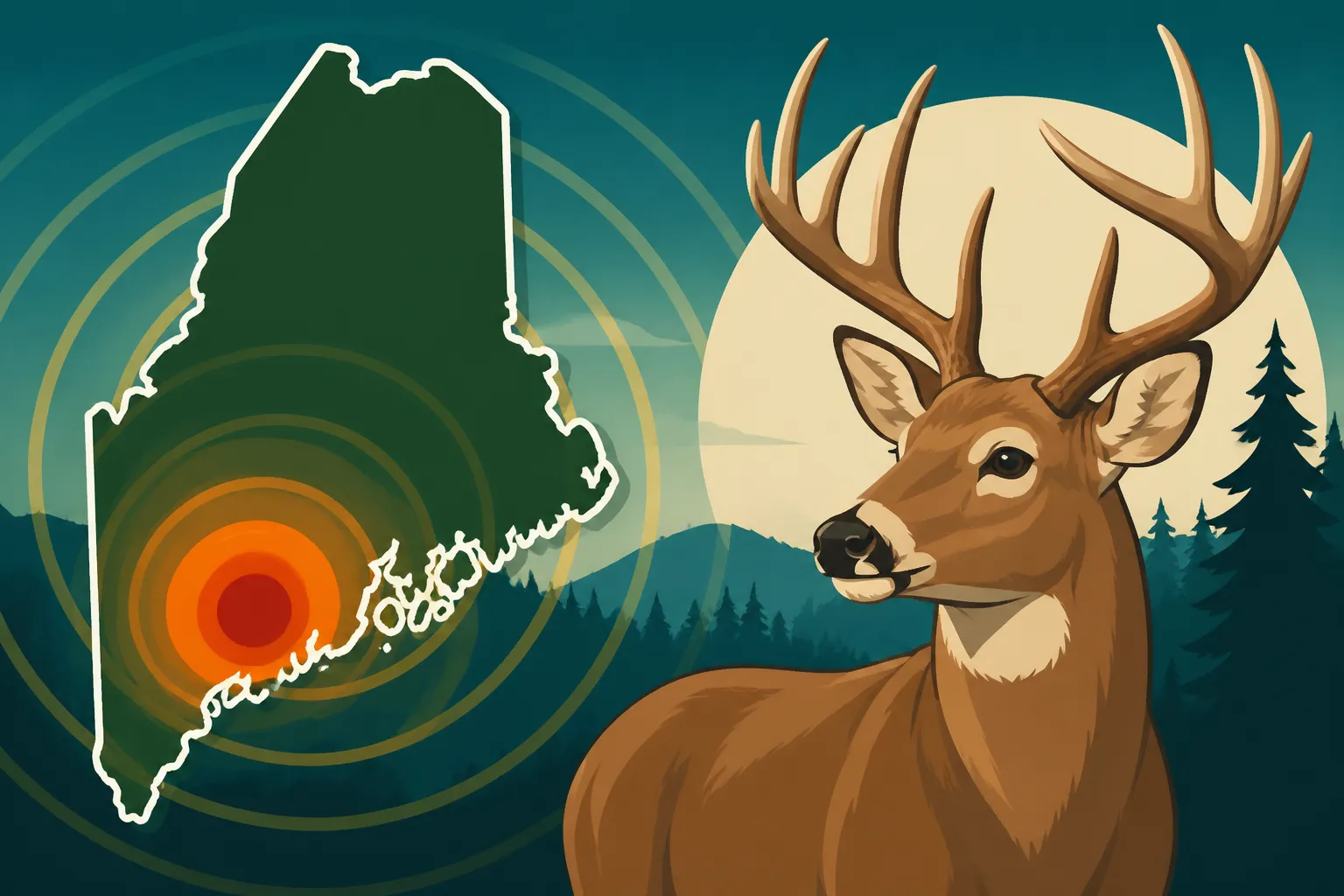
It's helpful to visualize this. Imagine Maine as an island of health surrounded by regions with varying CWD statuses. Our immediate neighbors are clear, but states within a day's drive have active CWD cases. This means the risk isn't from direct animal migration across state lines into Maine as much as it is from human-assisted movement—hunters bringing back carcasses, for example, or the transport of live cervids (which is highly regulated and generally illegal for CWD-prone species).
The following table summarizes the status of Maine and its closer neighbors regarding CWD in wild cervids:
| State/Province | Wild Cervid CWD Status | Nearest Confirmed Cases (General Area/Notes) |
|---|---|---|
| Maine | CWD-Free | N/A (Highly vigilant surveillance) |
| New Hampshire | CWD-Free | N/A (No confirmed cases) |
| Vermont | CWD-Free | N/A (No confirmed cases) |
| New Brunswick | CWD-Free | N/A (No confirmed cases) |
| Quebec | CWD-Free (Wild) | Captive farm case (2018), reportedly eradicated. |
| New York | CWD Detected | Suffolk County (Long Island); historically Oneida County (eradicated). |
| Pennsylvania | CWD Endemic | Central and Southeastern PA (widespread). |
This table really puts into perspective how critical our CWD-free status is, and why it requires constant vigilance. Organizations like GoHunt provide valuable tools, including detailed mapping layers that can help hunters visualize these geographic risks and stay informed about regulations in various jurisdictions, a useful feature for anyone traveling to hunt.
How Maine Stays Ahead of CWD: Monitoring and Prevention
Maintaining Maine's CWD-free status is an ongoing, multi-faceted effort that relies on robust scientific monitoring, strict regulatory enforcement, and active participation from the hunting community. It’s a collective responsibility, and every hunter plays a crucial role. Without these efforts, the disease could easily slip across our borders.
MDIFW's Proactive Disease Management
The Maine Department of Inland Fisheries and Wildlife (MDIFW) has a comprehensive Maine Wildlife Disease Monitoring Program in place that goes far beyond just CWD. They routinely monitor for various diseases that could impact our wildlife, understanding that a healthy ecosystem is a resilient one. For CWD, this means not only testing harvested deer but also responding to reports of sick or behaving erratically. These reports are vital, as they can sometimes be the first indication of a problem.
MDIFW also works closely with neighboring states and Canadian provinces, sharing information and coordinating efforts. Disease doesn't respect political boundaries, so cross-border cooperation is essential. This collaboration ensures that Maine is aware of any new outbreaks or concerns in regions that could potentially impact us. Their work is a constant reminder of the unseen labor that protects our hunting heritage.
Hunter Responsibility and Best Practices
As hunters, we are the eyes and ears in the field, and our actions directly impact Maine's ability to remain CWD-free. Here's how you can help:
- Report Sick Animals: If you see a deer, moose, or other cervid exhibiting signs of CWD (wasting, stumbling, excessive drooling, unusual behavior), do not approach it. Instead, contact MDIFW immediately. Provide as much detail as possible about the animal's location and condition.
- Understand Carcass Importation Laws: If you hunt out of state, especially in a CWD-positive state, make sure you understand and strictly adhere to Maine's carcass importation laws. Only bring back approved parts (deboned meat, clean antlers, hides, clean skull plates). Do not take chances. This is perhaps the single most important thing you can do to prevent CWD from entering Maine.
- Support Surveillance Efforts: If your harvested deer or moose is selected for CWD testing, cooperate fully with MDIFW staff. It might seem like an extra step, but it's a critical piece of the puzzle. Understanding Maine's Deer and Moose Disease Monitoring gives you a deeper appreciation for these efforts.
- Proper Carcass Disposal: If you process your own deer, dispose of all carcass parts properly, preferably in a landfill. Never leave bones or other parts in the woods or on public land where other cervids could come into contact with them, especially if the animal was harvested out-of-state.
- Avoid Baiting and Artificial Feeding: While a separate issue from CWD spread, congregating deer at bait sites or feed stations can increase the risk of disease transmission if CWD were ever introduced. Maine has specific regulations regarding baiting, so always be aware of the rules, especially when it comes to activities like Baiting Black Bears Legally in Maine, which is a different species but still highlights the importance of regulated feeding.
Using mapping apps like GoHunt can also aid in scouting and understanding public access rules, ensuring you're compliant with all regulations, which indirectly contributes to responsible wildlife management.
What You Can Do to Support Maine's CWD-Free Status
Every Mainer, especially those of us who spend time in the woods, has a role to play in keeping our state free from CWD. This isn't just about following rules; it's about being an active steward of our natural resources and protecting the future of our hunting heritage.
Staying Informed and Educated
Knowledge is power, especially when it comes to wildlife disease. Make it a point to regularly check the MDIFW website for updates on CWD and other wildlife health concerns. Attend local sportsman's club meetings or hunter education courses where these topics might be discussed. Understanding the nuances of Why CWD Testing Still Matters in Maine, even with no cases, is crucial. The more informed you are, the better you can make responsible decisions and educate others. Don't fall for misinformation; rely on official sources like MDIFW.
Advocate for Responsible Management
Support policies and funding for wildlife disease surveillance and management. Write to your legislators, or simply have conversations with fellow hunters and non-hunters about the importance of these efforts. When you renew your Maine Hunting Licenses and What They Cost, remember that a portion of those funds goes directly to wildlife management and research, including disease monitoring. Your license purchase isn't just a permit; it's an investment in the future health of Maine's wildlife.
When planning your hunts, whether it's Bowhunting Maine's Long Archery Season or during Maine's November Firearms Deer Season, always prioritize ethical and responsible practices. This includes respecting land boundaries, properly identifying your target, and understanding the vital role you play in maintaining a healthy environment.
Ultimately, Maine's CWD-free status is a precious asset, one we must all work diligently to protect. By staying informed, following regulations, and reporting concerns, we can help ensure that our state remains a haven for healthy deer, moose, and a vibrant hunting tradition for generations to come.
Disclaimer
The information provided in this guide is for general informational purposes only and does not constitute legal advice. Hunting regulations and disease protocols can change. Always consult the official Maine Department of Inland Fisheries and Wildlife (MDIFW) website and regulations booklet for the most current and accurate information before engaging in any hunting activities or making decisions related to wildlife management.