Maine Deer Vehicle Collisions
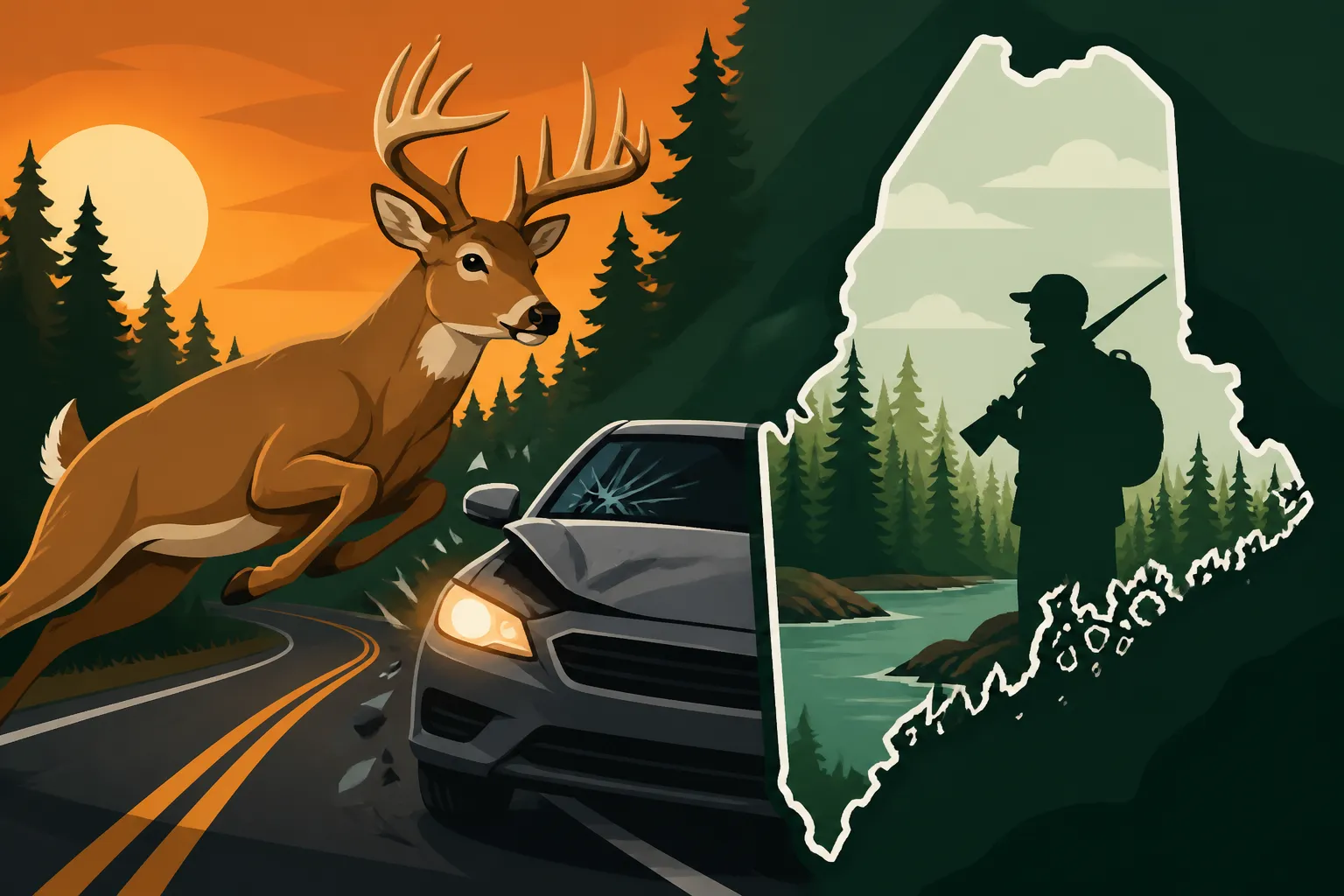
There's a specific, gut-wrenching moment many of us who drive Maine's back roads and even our major highways have faced: that sudden flash of brown, the sickening thud, and the terrifying realization that you've just had a run-in with a deer. It's a jarring, often expensive, and sometimes dangerous experience. This guide isn't about blaming anyone; it's about understanding why these collisions happen, what you can do to avoid them, and exactly what steps to take if you find yourself in this unfortunate situation here in Maine.
Understanding Deer-Vehicle Collisions in Maine
Deer-vehicle collisions aren't just random occurrences; they follow patterns tied closely to deer behavior, habitat, and even the time of year. Understanding these underlying factors is the first step in minimizing your risk. It's about recognizing that you're sharing the road with wild animals that operate on their own instincts, not traffic laws.
The Seasonal Peaks for Deer Activity
If you live in Maine, you already know the fall is prime time for deer activity, and unfortunately, deer-vehicle collisions. This isn't a coincidence. As the days shorten and the leaves turn, deer enter their breeding season, commonly known as the rut. Bucks are on the move, chasing does across vast territories, often with little regard for roads or traffic. This period, which generally peaks in early November, sees deer activity dramatically increase, especially at dawn and dusk. But it's not just the rut. Throughout the year, deer are constantly moving between bedding areas and feeding grounds. In spring, young deer are dispersing from their mothers. In winter, they're often concentrated in deeryards, and their movement can be influenced by snow depth and available forage. If you're out and about during When the Maine Rut Peaks, you need to be exceptionally vigilant.
It's also crucial to remember that deer are most active during twilight hours—that golden hour around sunrise and sunset. These low-light conditions make deer incredibly difficult to spot, especially against the dappled light of the woods or when they blend into shadows. Their camouflage is remarkable, and by the time headlights illuminate them, it can often be too late to react safely. Factor in reduced visibility from fog, rain, or snow, and the risk escalates significantly. Knowing these peak times and conditions is half the battle in staying safe on Maine's roads.
Beyond the rut, deer movements are also dictated by food sources. In late summer and early fall, they might be drawn to agricultural fields, apple orchards, or mast crops like acorns, often requiring them to cross roads to get there. Understanding these natural patterns of deer movement, perhaps even using a mapping tool like GoHunt to visualize areas with significant deer habitat and travel corridors, can give you a better sense of where to be extra cautious. This knowledge is especially valuable when driving through areas less familiar to you, allowing you to anticipate potential crossing points before they happen.
Factors Increasing Your Risk on Maine Roads
Maine's landscape, with its mix of dense forest, open fields, and winding rural roads, creates a perfect storm for deer-vehicle encounters. It's not just about how many deer are out there; it's about where they are and how they interact with our infrastructure. Roads often cut directly through prime deer habitat, creating unavoidable crossing points. A road bordered by a dense stand of spruce on one side and an open field on the other is practically a deer magnet, especially at night.
The speed limit on many rural Maine roads, coupled with often poor lighting, makes quick reactions challenging. Even on well-traveled routes, deer can appear from seemingly nowhere. We might think of collisions as a problem for the deep woods, but they happen surprisingly often on suburban streets or state highways that skirt the edges of development, where deer are still abundant and accustomed to human presence. The combination of higher traffic speeds and an often thicker deer population in areas closer to human habitation can be particularly dangerous.
Another often-overlooked factor is sudden changes in weather. A fresh snowfall might push deer to roadsides to browse on exposed vegetation or to find easier travel paths, especially if Why Deep Snow Limits Northern Maine Deer in other areas. Heavy fog can drastically cut visibility, leaving drivers with almost no reaction time. Even a bright moon can make it harder to spot deer in shadows, as their dark coats absorb available light. These environmental factors, combined with the deer's natural tendencies, mean that any drive in Maine, at almost any time, carries a degree of risk.
The Unseen Costs: More Than Just Vehicle Damage
When people think about hitting a deer, the first thing that comes to mind is often the damage to the vehicle. And yes, that can be substantial. Broken headlights, smashed fenders, deployed airbags, and even structural damage can easily run into thousands of dollars, leaving you with a deductible and potentially higher insurance premiums. But the costs extend far beyond the repair shop. There's the personal safety aspect: swerving to avoid a deer can lead to a more severe accident, involving other vehicles or fixed objects, resulting in serious injuries or even fatalities.
Beyond the immediate physical and financial toll, there's a significant emotional impact. Hitting an animal, especially a large one like a deer, can be a deeply distressing experience. The shock, the guilt, and the lingering fear can affect drivers long after the incident. For some, it might even lead to an increased anxiety about driving at night or in rural areas. The ripple effect on your daily life, from needing a rental car to taking time off work for repairs or recovery, can also be a hidden burden.
And let's not forget the impact on the deer population itself. While regulated hunting helps manage Maine Deer Herd Size and maintain healthy populations, deer-vehicle collisions are an uncontrolled and often brutal form of mortality. These incidents contribute to overall deer mortality and, on a localized scale, can impact deer density and herd dynamics. State agencies carefully track How Maine Counts Its Deer Herd and monitors these figures, using data from reported collisions as part of the broader picture of deer management across the state.
Proactive Steps to Minimize Your Risk on Maine Roads
While you can't control wild deer, you absolutely can control your own behavior and vehicle maintenance to drastically reduce your chances of a collision. It's all about awareness, preparedness, and making smart choices behind the wheel.
Defensive Driving Strategies at High-Risk Times
The most effective tool you have against a deer-vehicle collision is your own driving strategy. During those peak deer activity times—dawn, dusk, and throughout the rut—your vigilance needs to be dialed up significantly. This means slowing down, especially on rural roads or stretches that pass through wooded areas or along field edges. A few miles per hour can make the difference between a near miss and a devastating impact. Lowering your speed gives you more time to react, and if an impact is unavoidable, it lessens the force of the collision.
It's also vital to scan beyond the immediate road in front of you. Your eyes should be constantly moving, sweeping the shoulders, ditches, and even the tree line for any signs of movement or glints of eyes. Deer often dart out from dense cover or emerge from a dip in the terrain, giving you only a split second. Remember, if you see one deer, assume there are more. Deer are social animals, and it's rare for them to travel completely alone. The first one might cross, only to have its companions follow suit right behind it. When appropriate and safe to do so, use your high beams to extend your visibility, but be sure to dim them for oncoming traffic to avoid blinding other drivers.
Consider the landscape you're driving through. If you're passing Hunting a Funnel Between Two Woodlots or along a river bottom, these are natural corridors for deer movement. If you've ever used a tool like GoHunt to scout hunting areas, you know how useful satellite imagery and topographical maps can be for identifying these natural travel routes. Applying that same understanding to your driving—recognizing prime deer habitat and crossing points—can help you anticipate where a deer might appear and adjust your speed and attention accordingly.
Understanding Deer Behavior Near Traffic
Deer are not predictable. One deer might freeze in your headlights, another might bolt across the road, and a third might even double back after seemingly crossing safely. Their reactions are often instinctual and can be erratic, making them incredibly difficult to predict. The crucial thing to remember is this: if a deer appears in your path, brake firmly and stay in your lane. Your instinct might be to swerve, but swerving can be far more dangerous than hitting the deer. Swerving can lead to losing control of your vehicle, veering into oncoming traffic, hitting a tree, or rolling your car. These secondary impacts are often far more severe, both for you and your vehicle, than a direct hit on a deer.
It's a tough decision in a split second, but maintaining control of your vehicle is paramount. If you must swerve, do so only if you are absolutely certain that you will not hit another vehicle, a pedestrian, or a fixed object. However, the safest advice is almost always to brake hard, maintain control, and brace for impact. While it sounds counterintuitive, minimizing the damage and risk to human life should always be the priority.
Deer often travel in groups, especially during the fall. If you see one deer, be prepared for two, three, or even more to follow. They might be single-file, or they might be spread out. This is where your scanning becomes so important. Don't relax your guard after the first deer crosses. Keep your eyes peeled for subsequent animals, as they can often be even more erratic, trying to catch up with the first one.
Vehicle Equipment and Maintenance
While defensive driving is your primary defense, your vehicle itself can also play a role in reducing risk and mitigating damage. Ensuring your headlights are properly aimed and clean is a simple but effective step. Misaligned headlights can reduce your effective visibility, especially on unlit roads. Keeping your windshield clean and your wipers in good condition will ensure you have the clearest possible view of the road ahead, crucial for spotting movement in low light.
Having good tires and well-maintained brakes is also essential. In an emergency braking situation, you need your vehicle to perform optimally. Worn tires reduce traction, increasing your stopping distance, and faulty brakes are an obvious hazard. A regular maintenance schedule, including checking fluid levels and tire pressure, contributes to overall vehicle safety.
What about those deer whistles? You see them advertised, little devices you stick to your bumper that are supposed to emit a high-frequency sound to scare deer away. While the idea is appealing, scientific studies have largely shown them to be ineffective. Deer often don't react to them, and some studies suggest they don't produce a sound that travels far enough or is consistently audible to deer at highway speeds to make a difference. Relying on such devices rather than defensive driving is a false sense of security. Your best bet remains focused driving and awareness.
What to Do Immediately After Hitting a Deer in Maine
Even with the best precautions, accidents happen. If you do hit a deer in Maine, knowing the correct steps to take immediately afterward can make a significant difference in your safety, the outcome for your vehicle, and compliance with state regulations.
Prioritizing Safety and Assessing the Scene
Your immediate priority after hitting a deer is safety. First and foremost, pull your vehicle over to the side of the road safely, as far off the traveled way as possible. Turn on your hazard lights to alert other drivers to your presence and the potential hazard. Take a deep breath and assess yourself and any passengers for injuries. Even a minor collision can cause whiplash or other unseen issues. If anyone is injured, or if your vehicle is disabled and blocking traffic, this is a 911 situation.
Next, assess the damage to your vehicle. Is it safe to drive? Are there any fluids leaking? Are your lights working? If the damage is significant or the vehicle isn't safe, do not attempt to drive it. Remember, an injured deer can be unpredictable and dangerous. Do not approach an injured or deceased deer on the road, especially if it's still alive. A deer can kick, bite, and flail, causing serious injury to you. Keep a safe distance. If it's a road hazard, calling law enforcement is the best course of action.
Once you've ensured personal safety and assessed the immediate scene, if safe to do so, document the incident. Take photos of the vehicle damage, the deer, and the surrounding area. This documentation will be invaluable when dealing with law enforcement and your insurance company. Note the exact location, time, and any other pertinent details.
Reporting the Incident to Authorities
Maine law has specific requirements for reporting deer-vehicle collisions. While there isn't always a requirement to report to law enforcement if no human injury has occurred and the vehicle can be safely driven away, it's generally a good idea to contact them, especially if the deer is still alive, poses a hazard to other drivers, or if you intend to salvage the animal. A game warden or local police officer can often provide an incident report, which can be very helpful for your insurance claim.
If you decide to contact law enforcement, they can help secure the scene, ensure the animal is humanely dispatched if necessary, and assist with traffic control. Once the immediate safety concerns are addressed, your next call should be to your insurance company. They will guide you through the claims process. Be prepared to provide them with all the details you've gathered, including photos, the location of the incident, and any police report numbers. Understanding these protocols is part of dealing with Maine Deer Vehicle Collisions.
The decision to report to law enforcement often depends on the severity. If your vehicle is only slightly damaged, and the deer is off the road, you might just call your insurance. However, if there are injuries, substantial vehicle damage, or the deer is a traffic hazard, a call to 911 or local police is essential. It's always better to err on the side of caution when safety is involved.
Handling the Animal: Salvage and Disposal
This is where things can get a little more specific in Maine. If you hit and kill a deer, and you want to keep the animal for meat, it is often permissible to do so, but you must first contact a game warden or other law enforcement officer to obtain a tag or permit number. You cannot simply throw the deer in your truck and drive off. This is important because it prevents illegal taking of game and helps the state manage its wildlife resources. The game warden will provide you with specific instructions and ensure you are in compliance with Maine Deer Registration Requirements. If you don't call it in, you could be facing Maine Wildlife Violation Penalties.
| Step-by-Step: What to Do After a Deer-Vehicle Collision in Maine |
|---|
| 1. Prioritize Safety: Pull over, turn on hazards. Check for injuries to yourself and passengers. |
| 2. Assess Vehicle: Determine if your vehicle is safe to drive. Note damage. |
| 3. Keep Distance from Deer: Do NOT approach an injured or deceased deer. It can be dangerous. |
| 4. Call Authorities: Dial 911 if there are injuries or the vehicle/deer poses a significant road hazard. Otherwise, call local police or a game warden. |
| 5. Document Everything: Take photos of damage, the deer, and the scene. Note location, time. |
| 6. Contact Insurance: Report the incident to your insurance provider promptly. |
| 7. Salvage? Get Permit: If you wish to keep the deer, you MUST contact a game warden before moving it. |
| 8. Follow Instructions: Adhere to all guidance from law enforcement and your insurance company. |
If you do not wish to keep the deer, or if it is injured but still alive, do not attempt to put it out of its misery yourself. This can be dangerous and is best left to trained law enforcement personnel. They can humanely dispatch the animal and arrange for its disposal. Leaving a deceased deer on the side of the road is generally acceptable, though if it's a significant obstruction, law enforcement may arrange for its removal. Remember, the game wardens are there to help manage wildlife and ensure public safety, so don't hesitate to reach out to them for guidance in these situations. It's also a good idea to be aware of Maine's Chronic Wasting Disease Monitoring efforts, although Maine remains CWD-free, proper handling and reporting are crucial for continued vigilance.
Maine's Efforts and Long-Term Prevention
Deer-vehicle collisions are a complex issue, and while individual drivers play a vital role in prevention, state agencies are also actively working to mitigate the problem through data analysis, infrastructure improvements, and public education.
Data Collection and Hotspot Identification
The Maine Department of Inland Fisheries and Wildlife (MDIFW) and other state agencies play a critical role in collecting data on deer-vehicle collisions. This isn't just about counting numbers; it's about identifying patterns. By analyzing collision locations, times, and contributing factors, wildlife managers and transportation engineers can pinpoint "hotspots" where incidents are most frequent. This data helps them understand specific environmental features or road designs that might contribute to higher collision rates. For instance, an area with a high incidence of collisions might be a natural deer corridor between a wintering yard and summer feeding grounds. This information is vital for Maine Deer Population Estimate and management.
Tools like the GoHunt app or other mapping technologies, while primarily used by hunters for scouting, offer similar functionality in visualizing habitat types and potential deer movement corridors. Drivers can, in a less formal way, use such knowledge to be extra cautious in areas marked by dense woods bordering open fields or near known water sources. Knowing where the deer want to be, based on habitat characteristics, gives you a predictive edge on the road. The more accurate and comprehensive this data is, the better informed prevention strategies can be.
This information also feeds into broader wildlife management plans. When How Maine Counts Its Deer Herd and monitors populations, collision data contributes to understanding deer distribution and density, especially in areas where traditional survey methods might be less effective. It's a testament to how seemingly separate concerns – driver safety and wildlife management – are deeply interconnected.
Mitigation Strategies on Maine Highways
Armed with collision data, state agencies can implement targeted mitigation strategies. One of the most effective, though often costly and not always practical for every road, is the installation of deer fencing along stretches of highway known for high collision rates. These fences are typically paired with underpasses or overpasses, guiding deer safely across the road without direct contact with vehicles. While you might not see these large-scale structures everywhere in Maine, their implementation in specific high-traffic, high-collision areas can dramatically reduce incidents.
Other strategies include enhanced signage, particularly at identified hotspots, to better alert drivers to the potential for deer crossings. Roadside habitat management can also play a role, for example, clearing brush close to the road that might conceal deer before they dart out. In some areas, deer deterrents using light or sound might be trialed, though their effectiveness can vary. It's a constant balancing act between maintaining natural landscapes and ensuring driver safety.
Public education campaigns are another crucial component. These efforts aim to raise driver awareness about seasonal risks, defensive driving techniques, and what to do in case of a collision. By empowering drivers with knowledge, the state helps foster a culture of vigilance and responsibility on Maine's roads, ultimately working towards a reduction in these dangerous encounters.
The Hunter's Role in Deer Management
While this article focuses on collisions, it's worth noting the indirect but significant role that regulated hunting plays in managing deer populations, which can, in turn, influence collision rates. Through carefully regulated seasons and bag limits, the MDIFW works to maintain healthy deer populations that are in balance with their habitat and human communities. Maine's Four-Week Firearms Deer Season, along with archery and muzzleloader seasons, helps control deer numbers, particularly does, which are key to population growth.
When deer populations exceed the carrying capacity of their habitat, or become overly concentrated in certain areas, the likelihood of deer-vehicle collisions can increase. Hunters, through their participation in established seasons, contribute to population control efforts, potentially reducing the overall number of deer that might otherwise be crossing busy roads. This isn't a direct cause-and-effect that eliminates collisions entirely, but it's one piece of a larger wildlife management puzzle that indirectly supports road safety.
Furthermore, hunters often spend a great deal of time observing deer movement and behavior, perhaps Reading Maine Mud for Fresh Deer Movement or identifying common travel corridors. This intimate knowledge of deer patterns, while primarily for hunting success, also contributes to a deeper understanding of where and when deer are most likely to be active, which can inform both personal driving habits and broader community awareness.
Disclaimer
This article is for general informational purposes only and does not constitute professional advice. Laws, prices and regulations vary by location and change over time. Consult a qualified professional for guidance on your specific situation.