Maine Deer Harvest Records
There's nothing quite like the anticipation of deer season in Maine, but for many hunters, the question of "how did we do last year?" or "where are the big bucks really coming from?" can feel like a mystery. Trying to make sense of all the numbers, trends, and regional differences can be a real headache. This comprehensive guide will walk you through Maine's deer harvest records, explaining how the data is collected, what it all means, and how you can use this information to better understand our state's whitetail population and improve your own hunting strategy.
Understanding Maine's Deer Harvest Data
For anyone passionate about hunting whitetails in the Pine Tree State, diving into the annual deer harvest data is more than just a pastime; it's a critical way to understand the health of the herd and the effectiveness of management strategies. It tells a story of the previous season, giving us clues about population density, success rates, and even the impacts of weather or food availability. But deciphering these reports can feel like reading a foreign language if you don't know what you're looking for or where the numbers come from.
How Harvest Data is Collected
The Maine Department of Inland Fisheries and Wildlife (MDIFW) has a pretty robust system for tracking deer harvests, and it relies heavily on us, the hunters. When you successfully harvest a deer in Maine, the law requires you to register it. This isn't just a formality; it's the primary way the state gathers crucial information. You can register your deer at one of the many check stations scattered across the state, or, in more recent years, through the convenient online portal or the official Maine Hunting App. Each method collects vital information: the date of harvest, the Wildlife Management District (WMD) where the deer was taken, whether it was a buck, doe, or fawn, and if it was a buck, the antler configuration. This data is then compiled by MDIFW biologists, giving them a detailed snapshot of the season. Without every hunter doing their part to register their deer accurately and promptly, these records wouldn't be nearly as comprehensive or useful for future management.
Key Metrics in Harvest Reports
When you look at a Maine deer harvest report, you'll see a few key metrics that are essential for understanding the big picture. The most obvious is the "total harvest," which is simply the total number of deer taken statewide for the season. But beyond that, things get more granular. You'll often see breakdowns by WMD, allowing you to compare success rates and deer densities in different parts of the state. The reports also categorize harvests by sex and age class – bucks, does, and fawns – which is vital for assessing reproductive success and herd composition. For bucks, antler points are usually noted, giving insight into age structure and antler quality within the population. Another important metric is the "hunter success rate," which is the percentage of licensed hunters who successfully harvest a deer. This rate can tell us a lot about how challenging the hunting was in a particular year or region. Often, these reports will also break down harvest by weapon type, showing how many deer were taken during Maine's Four-Week Firearms Deer Season, the expanded archery season, or the muzzleloader season.
Where to Find Official Harvest Data
You don't need to be a wildlife biologist to access these fascinating insights. The MDIFW website is the best place to find official deer harvest data. They typically release preliminary numbers shortly after the season closes, with full, detailed reports becoming available a few months later. These reports are usually organized year by year and often include interactive maps or tables that let you drill down into specific WMDs or compare trends over time. Many hunting publications and forums that focus on Maine hunting will also summarize these findings, but for the raw, unadulterated data, the MDIFW site is your go-to source. Some hunters even use advanced tools from platforms like GoHunt that integrate this public data with other mapping and scouting features, allowing for even deeper analysis before the season begins. Understanding where to access and interpret these reports empowers you to make more informed decisions about where and when you might want to focus your hunting efforts.
Historical Trends in Maine Deer Harvest
Maine's deer harvest numbers aren't static; they ebb and flow with the seasons, the weather, and the long-term management efforts of the state. Looking at these trends over decades provides a fascinating history lesson in wildlife management and the resilience of our whitetail population. It helps us appreciate the challenges and successes in maintaining a healthy, huntable deer herd across such a diverse landscape.
Long-Term Fluctuations and Their Causes
If you chart Maine's deer harvest over the past 50 years, you'd see a rollercoaster ride rather than a straight line. In the early 1900s, deer populations were much lower due to unregulated hunting and habitat loss, with harvests sometimes dipping to just a few thousand animals. Conservation efforts, hunting regulations, and habitat changes saw the population rebound significantly by the mid-20th century, often reaching annual harvests over 30,000 deer in good years.
However, since the late 1980s and especially into the 2000s, Maine's deer herd, particularly in the deep woods of the north, has faced significant challenges. Severe winters, characterized by deep snow and prolonged cold, are often a primary culprit, leading to increased winter mortality, especially for fawns and older does. This is a recurring theme in Maine's deer management, as deep snow literally buries their food sources and makes travel incredibly difficult, forcing deer to concentrate in deer yards where they become more vulnerable to predation and starvation. Habitat changes, particularly the maturation of forests which reduces early successional browse, also play a role in long-term carrying capacity. The ongoing management efforts, including the Antlerless Permit System, are direct responses to these fluctuations, aiming to stabilize the herd and address regional disparities.
Influence of Major Events on Harvest Numbers
Specific, impactful events often leave their mark on the harvest numbers. For example, the severe winters of the late 1980s and early 1990s led to some of the lowest deer harvests in recent memory, particularly in northern and eastern Maine. These brutal conditions can decimate a deer population, and it often takes several mild winters and focused management to see a rebound. Conversely, a string of mild winters can lead to higher fawn survival and a more robust breeding population, which then translates into higher harvest numbers a few years down the line when those fawns mature.
Economic downturns can also subtly influence harvest data. When times are tough, more people might turn to hunting as a way to put food on the table, potentially increasing hunting pressure in accessible areas. Conversely, if fuel prices are high, some hunters might cut back on travel to remote areas, affecting harvest distribution. Disease outbreaks, though thankfully rare for Chronic Wasting Disease (CWD) in Maine, would undoubtedly have a catastrophic impact on harvest if one were ever detected. Maine's status as a Maine's CWD-Free Status Explained is something the MDIFW works hard to maintain, conducting extensive monitoring to ensure the herd remains healthy. Each year's harvest report is, in many ways, a historical document reflecting these broader ecological and societal influences.
Recent Season Performance and Notable Trends
Looking at recent seasons, we've seen some encouraging signs, particularly in central and southern Maine. While the deep woods of Aroostook and Washington counties still face challenges with deer populations, many WMDs in the more populated, agricultural regions are boasting healthy and even growing deer numbers. This is often attributed to milder winters in these areas, greater access to diverse food sources on private lands, and the success of the Antlerless Permit System in balancing the herd.
For instance, recent firearms season harvests have generally stayed above the 30,000 mark in good years, with southern and central WMDs often reporting the highest Maine Annual Deer Harvest figures. Expanded archery zones, which extend into December in many areas, have also contributed a steady, growing number of deer to the overall harvest, demonstrating the popularity and effectiveness of this method. While we haven't seen the kind of record-breaking numbers of the mid-20th century, the trend in recent years suggests a stable or slowly growing population in many areas, albeit with persistent challenges in the harshest northern climes. Hunters looking for high success rates are increasingly focusing on the central and southern regions of the state, especially on or near agricultural lands.
Factors Influencing Annual Harvest Numbers
Harvest numbers are not just a simple count; they are a complex interplay of environmental conditions, human behavior, and the biological dynamics of the deer herd itself. Understanding these underlying factors helps paint a more complete picture of why one year might be stellar for hunters, and the next, a real struggle. It’s all part of the dance between nature and hunter.
Weather Conditions Throughout the Year
The weather is arguably the single biggest external factor influencing Maine's deer harvest. It's not just the weather during hunting season, but the conditions throughout the entire year that truly shape the outcome. A mild winter, with less snow and moderate temperatures, means higher fawn survival rates and less stress on adult deer. These healthy deer enter the spring breeding season in better condition, leading to more successful pregnancies and a stronger cohort of fawns the following year. Conversely, a severe winter can decimate a deer population, particularly in areas like northern Maine where deep snow can persist for months, making it incredibly difficult for deer to access food. The impact of deep snow on Northern Maine Deer Density is profound.
During hunting season itself, weather plays a critical role. Cold, crisp days with a fresh dusting of snow can make for excellent hunting, as deer are more active and easier to track. A warm, rainy stretch, however, can suppress deer movement and make tracking nearly impossible, leading to lower hunter success. High winds can also make deer more skittish and reduce visibility, further complicating things. Hunters often watch long-range forecasts like hawks, knowing that a shift in weather could make or break their hunting efforts, especially during key periods like the peak of the rut, often around Hunting the Rut in Early November.
Hunter Participation and Effort
Even with a healthy deer population, harvest numbers are directly tied to the number of hunters in the woods and the effort they put in. Maine has a strong hunting tradition, but like many states, it has seen some fluctuations in hunter numbers over the decades. More hunters in the field, all else being equal, can lead to a higher harvest. However, it’s not just about raw numbers; it’s about effort. Hunters who spend more days afield, scout thoroughly, and employ effective tactics generally have a higher chance of success.
The ease of access to hunting grounds also plays a role. If a large parcel of land becomes posted or developed, hunter effort shifts to other areas, potentially concentrating pressure. The popularity of different hunting methods also matters; an increase in bowhunters utilizing Hunting Maine's Expanded Archery Zones can add significantly to the overall harvest before the firearms season even begins. Hunter education initiatives and programs aimed at retaining and recruiting hunters are vital for maintaining healthy participation, ensuring a consistent level of effort that contributes to the annual harvest.
Habitat Quality and Food Availability
The quality of habitat and the availability of food sources are fundamental drivers of deer population health and, subsequently, harvest success. Deer need a diverse habitat that provides food, cover, and water throughout the year. In Maine, this means a mix of young forests (providing browse), mature forests (for mast crops like acorns and beechnuts), and wetlands. Areas with rich agricultural lands, such as Hunting Aroostook County Farmland, or those with abundant apple orchards or clear-cuts that offer new growth, tend to support higher deer densities and healthier, larger deer.
When a mast crop fails, due to a late frost or dry summer, deer might be forced to range more widely in search of food, potentially making them more visible but also putting them under greater stress. Conversely, a bumper crop of acorns can lead to deer being well-fed and less active during daylight hours, making them harder to hunt. Forest management practices, such as timber harvesting, can significantly impact habitat. Well-managed clear-cuts, after a few years, can provide excellent browse for deer, creating localized hotspots. Biologists carefully monitor these habitat conditions and food availability when setting season structures and permit allocations, trying to match harvest pressure with the land's ability to support the deer.
Regional Differences in Deer Harvest
Maine is a big state, and its deer populations are far from uniform. What's happening with the whitetails in the vast North Maine Woods is often very different from the situation in the apple orchards of central Maine or the dense coastal thickets of Downeast. Understanding these regional variations is key to a successful hunt and appreciating the unique challenges and opportunities each area presents.
Aroostook County Versus Southern Maine Deer
When you look at Maine's deer harvest records, one of the most striking differences you'll see is the stark contrast between Aroostook County and the more southerly regions of the state. Aroostook, while renowned for its wilderness and sprawling potato fields, typically has a lower deer density compared to southern Maine. The primary reason for this is winter severity. Deep snow and prolonged cold in Aroostook can cause significant winter mortality, limiting population growth despite vast tracts of deer habitat. This is Why Deep Snow Limits Northern Maine Deer is such a critical management concern. Hunters in Aroostook often face a tougher hunt, relying on tracking skills in fresh snow or targeting deer during the short firearms season when conditions might be more favorable.
Southern Maine, including counties like Cumberland, York, and Kennebec, generally experiences milder winters and boasts a more diverse landscape of small woodlots, agricultural fields, and suburban edges. These areas provide abundant food and cover, allowing deer populations to thrive and often reach higher densities. Consequently, harvest numbers in these WMDs are usually significantly higher. Hunters here might find more success still-hunting small parcels of private land or focusing on areas with mixed habitat. The average Maine Deer Herd Size is certainly higher in the southern zones.
Coastal Versus Inland Success Rates
The coastal regions of Maine, particularly Downeast and along the central coast, present another unique deer hunting scenario. These areas often feature dense spruce-fir forests, rocky terrain, and proximity to saltwater. While deer densities might not be as high as in prime agricultural areas, the mild coastal winters can be beneficial for survival. Hunting here often means navigating challenging terrain and thick cover. Success rates can be variable, depending on the specific WMD and the local habitat. Some coastal areas also benefit from expanded archery zones, offering longer seasons to pursue deer.
Inland, away from the coast, the habitat diversifies, moving into larger tracts of mixed hardwoods and softwoods, agricultural valleys, and rolling hills. Areas like the Kennebec Valley or parts of Franklin and Oxford counties often have very healthy deer populations, benefiting from a mix of timber activity, agriculture, and less severe winters than the far north. Hunters in these inland zones often report higher success rates, particularly during the peak of the firearms season. Deer here might rely more on mast crops like acorns, or browse in regenerating clear-cuts. Understanding these subtle differences is key to effective scouting, whether you're looking for Hunting Downeast Coastal Cover or pushing through mature hardwoods in the Western Mountains.
WMD Specific Performance and Analysis
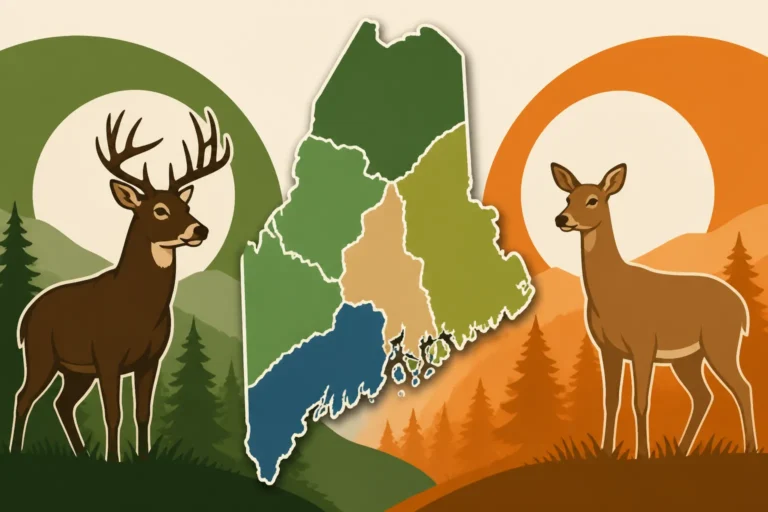
Maine is divided into 29 Wildlife Management Districts (WMDs), and each one is a unique management unit. Biologists set specific antlerless permit allocations for each WMD based on deer population goals, habitat conditions, and winter severity predictions. This means that harvest performance can vary dramatically from one WMD to the next, even within the same general region. For example, WMD 17 or WMD 23 in central Maine might consistently show high harvest numbers and hunter success, while WMD 4 or WMD 5 in the deep north might have lower harvests but potentially larger-bodied, more remote deer for those willing to put in the effort.
Hunters often pore over WMD-specific data when planning their hunts, using platforms like GoHunt that layer WMD boundaries with other crucial information. This allows them to identify Best Maine WMDs for Big Bucks or areas where antlerless permits are more readily available. The MDIFW also conducts periodic public meetings and releases WMD-specific reports that detail population estimates, harvest goals, and management challenges. This granular level of detail is invaluable for both the armchair biologist and the dedicated hunter looking to maximize their odds and contribute to sound wildlife management.
Here's a simplified table illustrating recent harvest success by a few example WMDs, based on generalized MDIFW reports. Actual numbers fluctuate annually.
| WMD | Region (General) | 2022 Total Deer Harvest (Approx.) | 2022 Buck Harvest (Approx.) | Antlerless Permit Availability (General) | Key Habitat Characteristics |
|---|---|---|---|---|---|
| 4 | Far North | 200-400 | 150-250 | Very Limited | Vast timberland, harsh winters |
| 17 | Central/Coastal | 2000-2500 | 1000-1300 | Moderate-High | Mixed woods, agriculture, suburban |
| 23 | Central/Mid-Coast | 1800-2300 | 900-1200 | Moderate-High | Mixed woods, agriculture, wetlands |
| 28 | Southern | 1500-2000 | 700-1000 | High | Suburban, small woodlots, coastal |
| 19 | Western Mountain | 1000-1500 | 500-800 | Low-Moderate | Mountainous, mature timber, logging |
Note: These numbers are generalized and approximate for illustrative purposes. For precise, up-to-date data, always consult official MDIFW reports.
The Impact of Regulations and Management on Harvest
Maine's deer harvest isn't just a reflection of deer populations; it's also a direct outcome of the regulations and management strategies put in place by the MDIFW. These rules are carefully crafted to balance hunter opportunity with population health goals, aiming for a sustainable future for our whitetails. As hunters, understanding these regulations is crucial, not just for compliance, but for appreciating how our collective actions contribute to the overall health of the herd.
The Antlerless Permit System
Perhaps the most impactful management tool affecting deer harvest in Maine is the Antlerless Permit System, often referred to as the "Any-Deer Permit." This system allows MDIFW biologists to precisely control the harvest of does within specific WMDs. In areas where deer populations are below desired levels, or where biologists want to promote herd growth, few or no antlerless permits are issued, effectively making it a bucks-only season for most hunters. Conversely, in WMDs with healthy or overpopulated deer herds, more antlerless permits are issued to help manage the population, prevent overbrowsing of habitat, and reduce deer-vehicle collisions. Applying for a Applying for a Maine Antlerless Permit is a rite of passage for many hunters.
The success of the Antlerless Permit System is evident in the harvest data. WMDs with a high allocation of antlerless permits typically see a higher overall deer harvest, with a larger proportion of does in the take. This targeted management allows the state to fine-tune harvest pressure, ensuring the population remains within ecological carrying capacity and aligns with human tolerance levels. It's a critical tool in managing the delicate balance of Maine's deer herd, especially given the diverse habitats and population dynamics across the state.
Weapon-Specific Seasons and Their Contributions
Maine offers several distinct deer hunting seasons, each with specific weapon restrictions, and each contributing uniquely to the overall harvest. The archery season kicks off first, providing hunters with an early opportunity to pursue deer. This season, particularly in the expanded archery zones, is becoming increasingly popular, contributing a steady and growing number of deer to the total harvest. Bowhunting requires a different skill set and often appeals to hunters looking for a longer season and a different challenge.
The firearms season, usually running for four weeks in November, is historically responsible for the vast majority of Maine's annual deer harvest. This is the traditional season for many hunters, and the use of rifles, shotguns, and muzzleloaders during this period often results in higher success rates due to increased range and accuracy. Finally, the muzzleloader season extends opportunities into mid-December in certain WMDs, allowing hunters to pursue deer after the main firearms season closes, often in colder weather and sometimes with fresh snow. Each of these seasons plays a vital role in providing hunter opportunity while contributing to the overall management goals for the state's deer population, offering distinct experiences and challenges for those who participate. You can learn more about the closing dates for these seasons, such as Hunting the Muzzleloader Close in Mid-December, by checking the MDIFW regulations.
Expanded Archery Zones and Urban Deer Management
A relatively newer but increasingly important aspect of Maine's deer management strategy, especially concerning harvest records, involves the Expanded Archery Zones. These are specific geographical areas, often around more populated towns and cities, where bowhunting for deer is permitted for an extended period, starting earlier in the fall and often running into December. The primary goal of these zones is to manage deer populations in areas where traditional firearms hunting might be impractical or unsafe due to dense human populations.
The impact on harvest records from these zones is significant. They provide an additional, substantial number of deer to the total statewide harvest, often contributing thousands of animals each year. This is particularly crucial in reducing conflicts between deer and humans, such as vehicle collisions and landscape damage. Hunters in these zones typically need to abide by specific rules, often requiring antlerless permits in addition to their regular archery license. The data from these zones highlights a successful approach to urban and suburban deer management, demonstrating how targeted, method-specific regulations can effectively contribute to population control and offer unique hunting opportunities in areas that would otherwise be off-limits for most of the season.
Record Book Bucks and How They're Tracked
While overall harvest numbers give us a snapshot of the herd's health, many hunters also dream of taking a truly exceptional buck—one that makes it into the record books. Maine has a rich history of producing impressive whitetails, and the pursuit of these animals adds another layer of excitement and dedication to the hunting tradition. Understanding how these trophies are recognized and recorded is part of the journey.
Maine's Big Buck Registry
Maine has its own proud tradition of recognizing outstanding whitetails through various "Big Buck" registries. While not as nationally renowned as Boone and Crockett, these local registries celebrate the significant deer taken within the state and often include categories for both typical and non-typical antlers, as well as weight. The Maine Antler & Skull Trophy Club (MASTC) is a notable organization that maintains a comprehensive record of trophy deer harvested in Maine. Their criteria often include specific measurements for antler spread, beam length, and number of points, ensuring that only truly exceptional animals make the cut. These registries are a testament to the quality of Maine's deer herd and the skill of its hunters, providing a historical record of the state's most impressive bucks.
For hunters, having their deer recognized in such a registry is a tremendous honor, a lifelong memory that goes beyond just filling the freezer. It often involves having the antlers officially scored by a certified measurer, ensuring accuracy and consistency. The records also provide fascinating insights into which regions of Maine consistently produce bigger bucks, often correlating with areas of better nutrition and older age classes of deer. You'll often find that Maine Boone and Crockett Whitetails are usually taken from areas with more consistent food sources and milder winters, allowing them to reach their full potential.
Boone and Crockett / Pope and Young
For the truly world-class deer, the ultimate recognition comes from the Boone and Crockett Club for firearms-harvested animals, and the Pope and Young Club for archery-harvested animals. These are national organizations that maintain meticulous records of North American big game trophies, using a standardized scoring system that accounts for antler length, circumference, spread, and symmetry. A deer that qualifies for Boone and Crockett or Pope and Young is not just big; it's truly exceptional by national standards.
Maine has produced its share of record-book bucks, particularly in the mid-to-late 20th century. While the extreme north might not produce the highest quantity of deer, the harsh environment can sometimes lead to older, more cunning bucks with impressive racks, making the deep woods an exciting challenge for those seeking a true trophy. Qualifying for these prestigious clubs involves a rigorous scoring process by official measurers and adherence to strict fair-chase ethics. These records serve as benchmarks for wildlife management, showcasing the potential of a healthy deer population and highlighting the success of conservation efforts across the continent.
How to Enter a Trophy Buck
So, you've taken the buck of a lifetime, and you think it might have what it takes to make it into a registry. What's next? The process typically involves a few key steps. First, you'll need to allow a drying period for the antlers—usually 60 days after harvest—to ensure stable measurements. This prevents shrinkage from affecting the final score. Next, you'll need to contact a certified measurer. For Maine-specific registries like MASTC, they will have a list of official scorers. For Boone and Crockett or Pope and Young, you can find certified measurers through their respective websites.
The measurer will meticulously evaluate your deer's antlers, taking numerous measurements to calculate a gross and net score based on the specific rules of the organization. They'll examine beam length, tine length, circumference, and spread, along with any abnormal points. There's usually a small fee for the scoring service. If your deer meets the minimum score requirement for entry, the measurer will submit the official score sheet. This process ensures the integrity of the record books and provides a lasting tribute to your remarkable harvest. It's a journey that extends long after the shot is fired, culminating in a recognition that lasts a lifetime.
Disclaimer
Please remember that hunting regulations and wildlife populations are dynamic. Information regarding seasons, bag limits, and specific WMD conditions can change annually. Always consult the most current official Maine Department of Inland Fisheries and Wildlife (MDIFW) regulations and resources before planning any hunting activity. This guide is for informational purposes only and should not replace official sources or expert advice.