Best Maine WMDs for Turkeys
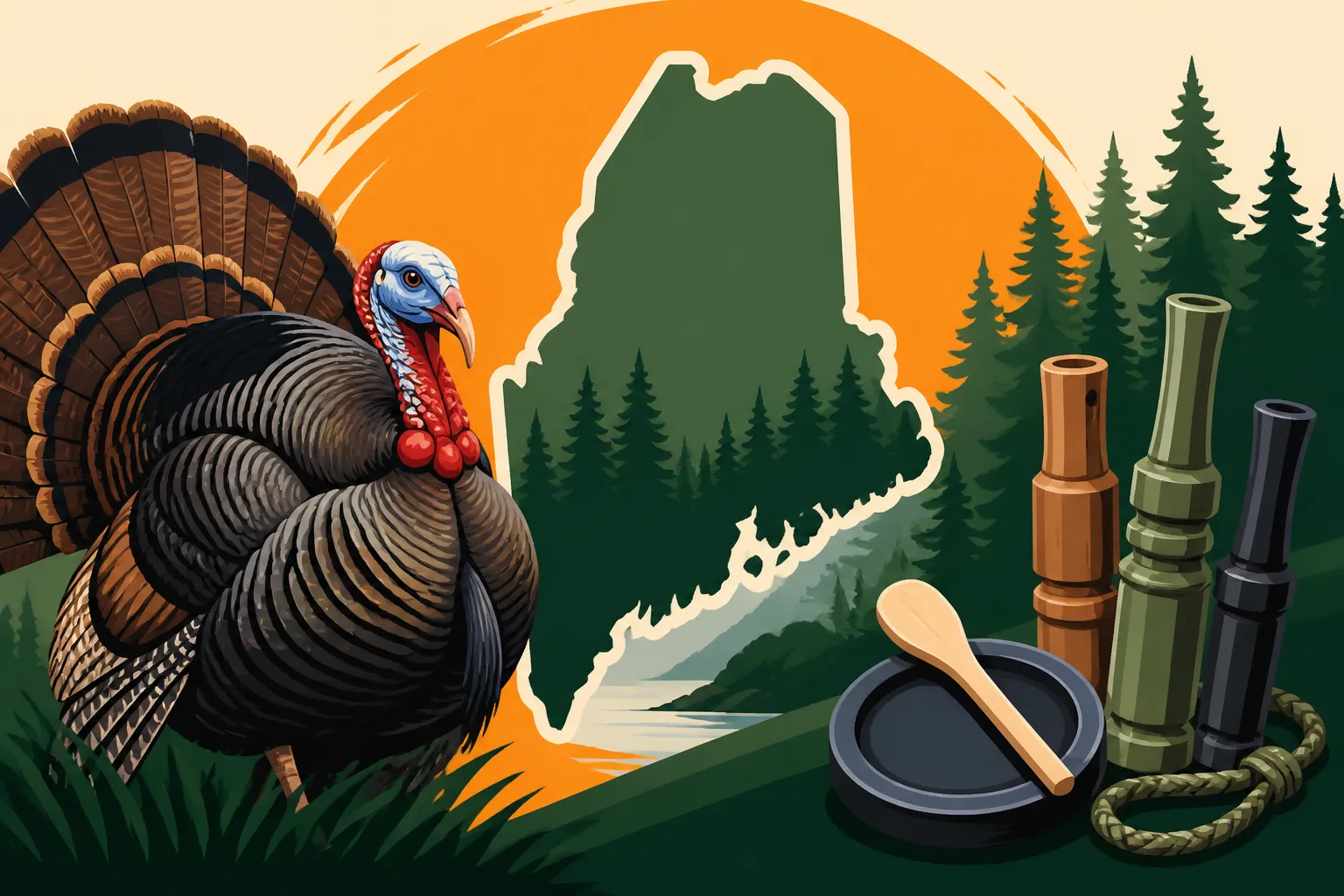
Finding the best spots to chase gobblers in Maine can feel like trying to solve a puzzle, especially when you consider how diverse our state is, from the dense North Woods to the more agricultural southern regions. You're not alone if you've spent hours poring over maps, wondering where the turkeys are actually thriving, and more importantly, where you stand the best chance of encountering a wary old tom. This guide aims to clear up some of that confusion, offering insights into which Wildlife Management Districts (WMDs) consistently offer prime turkey hunting opportunities and how you can approach them effectively.
Understanding Maine's Wild Turkey Landscape
Maine’s wild turkey population has seen an incredible resurgence, a true testament to dedicated conservation efforts. From being virtually absent for decades, these magnificent birds have spread across much of the state, though their distribution isn't uniform. You'll find pockets of high density and areas where turkeys are present but far less common. This patchwork distribution is why understanding Maine's Wildlife Management Districts is absolutely crucial for any turkey hunter. Each WMD is essentially a management unit with its own specific regulations, including bag limits, which directly reflect the local turkey population health and management goals.
Before you even think about setting foot in the woods, knowing which WMD you'll be hunting in is paramount. It dictates whether you can harvest one bird or two in the spring, or if you can even pursue fall turkeys. Imagine planning a whole trip, only to discover you're in a single-bird zone when you'd hoped for a two-bird opportunity! Checking these details beforehand saves a lot of heartache and ensures you're hunting legally and ethically. Many hunters, especially those new to Maine, overlook this crucial step, leading to frustration and missed opportunities. The Maine Department of Inland Fisheries & Wildlife (MDIF&W) provides maps and detailed regulations that clarify these distinctions, and tools like GoHunt can help you visualize these WMD boundaries overlayed on property maps, making your scouting much more efficient.
The Success Story of Maine's Turkeys
It's truly remarkable how far Maine's wild turkeys have come. Not long ago, hearing a gobble echo through our woods was a rarity. Today, in many areas, it's a regular soundscape feature of spring. This success didn't happen by accident. Reintroduction efforts, combined with adaptable habitat and careful management, allowed turkeys to re-establish and flourish. They’ve moved beyond the traditional southern agricultural areas and into more forested regions, pushing their range further north and east.
This expansion means that prime turkey habitat isn't just confined to the "banana belt" of southern Maine anymore. While those areas still hold some of our densest populations, turkeys are now found in many unexpected corners, adapting to different forest types and agricultural landscapes. It’s exciting to think about how much ground these birds have covered, offering more and more hunters a chance to experience the thrill of a spring morning gobbler hunt. Understanding How Turkeys Were Restored to Maine provides a great backstory to this current reality.
Navigating WMD Regulations for Turkeys
The WMD system is designed to manage wildlife populations sustainably, and turkeys are no exception. Depending on the WMD, you might encounter different bag limits and season lengths. For instance, some WMDs are designated as "two-bearded-bird WMDs" for spring hunting, meaning you can tag two gobblers during the season. Others might be "one-bird WMDs," limiting you to a single turkey. Similarly, fall turkey hunting opportunities vary wildly by WMD, with some areas allowing a five-bird fall limit, and others being entirely closed to fall hunting. This isn't arbitrary; it's based on extensive data collection, population surveys, and harvest reports.
It's critical to consult the most current regulations for your chosen WMD before each season. Don't rely on last year's knowledge, as things can and do change. A quick check of the MDIF&W website or the GoHunt app can save you a potential violation and ensure you’re hunting within the legal framework. Pay close attention to the specific dates for spring and fall seasons, as well as the legal hunting hours. This diligence is part of being a responsible hunter and contributes to the ongoing health of Maine's turkey population. Knowing Maine's WMD-Based Turkey Bag Limits is your first step.
Top WMDs for Spring Turkey Hunting Success
When it comes to spring turkey hunting in Maine, certain Wildlife Management Districts consistently stand out for their robust turkey populations and favorable habitat. These are the areas where you'll generally find higher densities of birds, which translates to more gobbling, more interactions, and ultimately, a better chance of filling your tag. While turkeys can be found in many places, these WMDs offer some of the most consistent action.
The southern and central regions of Maine, particularly WMDs like 15, 17, 20, 21, and 23, are often considered prime territories. These areas typically have a good mix of agricultural fields, mixed hardwood and softwood forests, and edge habitat that turkeys absolutely love. They provide ample food sources, from acorns and waste grain to insects and berries, as well as crucial roosting and nesting cover. This mosaic of habitat is essential for a thriving turkey population, supporting everything from poult survival to mature gobbler growth.
WMDs with Robust Spring Populations
Let's dive into some of the WMDs that turkey hunters often talk about with a gleam in their eye. These zones consistently boast healthy turkey numbers and offer excellent chances for a successful spring hunt.
- WMD 20 (Southern Maine): This area, encompassing parts of York and Cumberland counties, is a classic turkey stronghold. It's a mix of suburban areas, small farms, and woodlots. The birds here are often accustomed to human activity, but they are by no means easy. The habitat is rich, offering plenty of food and cover. If you can secure access to private land or find good public parcels, WMD 20 can be incredibly rewarding.
- WMD 21 (Central/Southern Maine): Spanning parts of Cumberland, Androscoggin, and Sagadahoc counties, WMD 21 shares many characteristics with WMD 20. It's another area with high turkey densities, particularly in regions with a good blend of agriculture and timber. Access can be a challenge here, too, but perseverance often pays off.
- WMD 23 (Kennebec Valley): Moving slightly inland, WMD 23 (Kennebec and Waldo counties) offers excellent hunting, often with a little less pressure than the coastal WMDs. The Kennebec River valley provides fertile ground, and the mixed forests and fields create ideal turkey habitat. You’ll often find good concentrations of birds in the agricultural fringes.
- WMD 17 (Central Maine): Covering parts of Androscoggin, Kennebec, and Franklin counties, WMD 17 is another solid bet. It’s got a great blend of managed forestland, small farms, and riparian zones that turkeys frequent. It’s a bit more rural than 20 or 21, which some hunters prefer.
In these WMDs, you're more likely to encounter higher gobbling activity and see more birds throughout the day. However, success still hinges on your scouting, calling ability, and patience. Many of these areas are also "two-bearded-bird WMDs," providing the opportunity to tag a second gobbler if you're successful early on. Remember to always consult the current regulations for Maine Spring Turkey Permit Rules before heading out.
Lesser-Known but Promising Spring Zones
While the high-density WMDs get a lot of attention, don't overlook some of the other zones that might offer a fantastic experience, often with less competition. As turkeys continue to expand their range, areas that were once considered marginal are now holding significant populations.
- WMD 15 (Southern Midcoast): This WMD, encompassing Sagadahoc and Lincoln counties and parts of Cumberland, has a beautiful coastal and inland mix. Turkeys here thrive in the mixed forests, often utilizing small clearings and the edges of tidal flats. It's a picturesque place to hunt, and while not always as dense as the more inland southern WMDs, it offers good opportunities.
- WMD 13 (Western Central Maine): Further west and more rugged, WMD 13 (parts of Franklin, Kennebec, and Somerset counties) might not be as known for turkeys as the lower WMDs, but it holds increasing numbers. It’s more forested, requiring different scouting tactics, but rewards those willing to put in the legwork. You might find birds utilizing logging cuts and river bottoms.
- WMD 19 (Central Maine): Covering parts of Penobscot, Hancock, and Waldo counties, WMD 19 is another region where turkey populations are strong and growing. Look for agricultural pockets surrounded by good timber. This WMD can be a gem for those seeking a balance of good bird numbers and a bit more solitude.
These "sleeper" WMDs can be perfect for hunters who want to explore new ground or prefer to avoid the higher pressure sometimes found in the traditional hotspots. Often, a little extra scouting with tools like GoHunt, or simply Knocking on Doors in Aroostook Farm Country (even if it's technically more central than Aroostook), can unlock fantastic private land opportunities in these zones.
| WMD Number | General Location | Spring Bag Limit (Bearded Birds) | Primary Habitat Type | Hunter Density (Qualitative) |
|---|---|---|---|---|
| 20 | Southern Coast | Two | Mixed Farm/Woodlots | High |
| 21 | Central South | Two | Mixed Farm/Woodlots | High |
| 23 | Kennebec Valley | Two | River Valley/Mixed | Medium |
| 17 | Central West | Two | Rural Farm/Forest | Medium |
| 15 | Southern Midcoast | Two | Coastal/Mixed Forest | Medium Low |
| 13 | Western Central | Two | Forested/Cuts | Low |
| 19 | Central East | Two | Mixed Farm/Forest | Medium Low |
Note: Always verify current season regulations and bag limits with the Maine Department of Inland Fisheries & Wildlife before planning your hunt.
Navigating Fall Turkey Opportunities in Maine
Fall turkey hunting in Maine offers a completely different challenge and experience compared to the spring gobbler season. Instead of the strutting and gobbling of lovesick Toms, fall hunting focuses on locating flocks, breaking them up, and calling them back together. It's a strategy-intensive hunt, often requiring more patience and a different set of calling skills. And just like spring, the opportunities and regulations for fall turkey vary significantly by WMD.
Many of the WMDs that shine in the spring also hold excellent fall turkey populations. The key difference is that fall birds are often found in larger family groups, or "flocks," which can number anywhere from a handful to dozens of birds. Their patterns are driven by food sources and flock dynamics, rather than breeding. Hunters often find success by identifying areas with abundant hard mast (acorns, beechnuts) or waste grains in agricultural fields. However, not all WMDs are open to fall turkey hunting, and the bag limits can differ even within the same WMD that had a generous spring limit. Knowing which WMDs are open and what the specific limits are is critical for a legal and successful fall hunt.
WMDs Permitting Fall Turkey Hunting
While spring turkey hunting is permitted in most of Maine's WMDs, fall hunting is more restrictive. This is a management decision to ensure sustainable populations, especially in areas where turkey numbers might be lower or more vulnerable during the fall. Generally, the WMDs with the highest spring turkey populations are also the ones open for fall hunting, and often with more generous bag limits.
The "five-bird fall turkey districts" are the real prizes for autumn hunters, offering ample opportunity. These typically include WMDs such as 15, 16, 17, 18, 20, 21, 22, 23, 24, and 25. These zones are concentrated in the southern and central parts of the state, where agriculture and mixed hardwoods provide ideal fall foraging grounds. Hunting these larger flocks often means covering more ground and spending time scouting out active feeding areas. A fresh scratch in the leaves around an oak ridge is a much more exciting find in the fall than in the spring!
For those in other WMDs, you might find "one-bird fall turkey districts" or, in some of the more northern or eastern WMDs, no fall season at all. It truly underscores the importance of checking your specific WMD. When the leaves are turning, and the air is crisp, the opportunity to call a scattered flock back in is one of the most exciting aspects of Hunting Maine's Generous Fall Turkey Season. Using a tool like GoHunt can help you quickly identify the boundaries of Maine's Five-Bird Fall Turkey Districts.
Tactics for Fall Turkeys in Prime WMDs
Fall turkey hunting in Maine's prime WMDs requires a different skillset than spring hunting. Forget the loud gobbler calls and elaborate decoy spreads. In the fall, it's all about breaking up a flock and then using soft, subtle hen and lost-poult calls to draw them back together.
Here's how it often plays out in a productive fall WMD:
- Locate a Flock: This might involve driving back roads at dawn or dusk, looking for birds feeding in fields, or listening for yelps and clucks as they move through the woods. Early morning roost checks can also be effective.
- Scatter Them: Once you've found a flock, the goal is to get them to fly or run in different directions. A well-executed "charge" into the flock can often achieve this. It sounds counterintuitive, but scattering them disorients the birds and creates the natural instinct for them to regroup.
- Set Up and Call: After the dust settles, position yourself strategically where the birds are likely to regroup. Wait about 20-30 minutes for things to calm down, then start with soft, pleading lost-poult calls or a series of clucks and yelps. The goal is to sound like a lonesome bird trying to find its flock. Often, the youngest birds will be the first to respond, but the adults will follow. This is where Calling a Fall Turkey Flock Apart truly shines.
- Patience is Key: Fall turkeys can take a long time to come back together, sometimes an hour or more. Stay put, listen carefully, and be ready when they eventually show up, often silently.
In WMDs with plenty of open hardwoods, like portions of WMDs 17, 23, or 24, you'll want to focus your efforts on oak and beech ridges, where birds will be gorging on nuts. In WMDs with more mixed agriculture, like 20, 21, and 22, checking harvested corn or grain fields can be highly effective. The key is adapting your strategy to the specific habitat and food sources available within your chosen WMD.
Factors Beyond WMDs for Turkey Hunting Success
While selecting the right WMD is foundational for successful turkey hunting in Maine, it's certainly not the only ingredient in the recipe. There are many other critical elements that can make or break your hunt, regardless of how many birds are theoretically in the area. From your pre-season preparation to your in-the-moment decision-making, these factors often separate the consistently successful hunters from those who struggle. It’s about more than just numbers on a map; it’s about understanding the land, the birds, and your own capabilities.
Even in a WMD teeming with turkeys, if you don't do your homework or practice your craft, you might still come home empty-handed. Conversely, a hunter who truly understands turkey behavior and is proficient with their calls and setup can sometimes find success in a WMD with lower overall bird densities. It’s a holistic approach that blends biological knowledge with practical hunting skills.
The Importance of Pre-Season Scouting
You've heard it a million times, but it bears repeating: scouting is king. Especially in Maine, where terrain and cover can vary wildly even within the same WMD, pre-season scouting is non-negotiable. This means getting out into the woods weeks, even months, before the season opens. What are you looking for?
- Roosting Areas: Turkeys often roost in tall pines or hardwoods near water sources or in sheltered valleys. Locating these areas can give you a major advantage, allowing you to set up close before daylight.
- Travel Corridors: Where do turkeys move from their roost to feeding areas? Look for worn trails, creek bottoms, and field edges that funnel bird movement.
- Feeding Areas: Identify reliable food sources. In spring, that might be greening fields, bugging areas, or leftover waste grain. In fall, focus on hard mast like acorns or beech nuts, or standing cornfields.
- Sign: Fresh droppings, feather piles, tracks, and dusting bowls all indicate recent turkey activity. A good sign tells you birds are using that area.
- Obstacles: Note any fences, thick brush, or bodies of water that might impede a gobbler's approach to your calls. You don't want a bird hung up out of range because you didn't anticipate a barrier.
Tools like GoHunt, with its satellite imagery and property line overlays, can be invaluable for initial e-scouting, helping you identify potential hotspots and land ownership before you even lace up your boots. Combining this digital reconnaissance with boots-on-the-ground scouting gives you the best chance. Think of it as putting together a puzzle, where each piece of information brings you closer to the full picture of where the birds are. This is also where Scouting Maine Private Land Before Season becomes invaluable.
Mastering Calls and Setup
Turkey hunting is often a game of chess, and your calls are your primary pieces. You don't need to be a champion caller, but you do need to be proficient enough to mimic the sounds turkeys make and understand when to use them.
- Spring Calling: In spring, you're trying to appeal to a gobbler's desire to breed. Yelps, clucks, purrs, and cuts are your main tools. Learning to mimic a lonely hen looking for a mate is often the ticket. Know when to be aggressive with your calling and when to back off. Sometimes, less is more, especially with pressured birds.
- Fall Calling: As discussed, fall calling is usually about lost-bird sounds—yelps of desperation, kee-kees, and clucks. You're trying to sound like a scattered flock member trying to regroup.
- Setup is Everything: Once you've got a bird talking or you've broken up a flock, your setup becomes paramount.
- Visibility: You need to see the bird coming, and it needs to be able to see a clear path to your calls (or your decoys).
- Back Protection: Always set up against a tree wider than your shoulders to protect your back from a potential rogue hunter or even the turkey itself. Setting Up Against a Big White Pine is a classic move for a reason.
- Decoys: While not always necessary, especially for pressured birds, decoys can be incredibly effective in certain situations, especially in open fields. Just be mindful of safety, especially during firearms seasons.
- Patience: Turkeys often take their time. Don't fidget, don't move, and be ready for a silent approach.
Learning how to Calling an Early May Gobbler Off the Roost is an essential skill for spring success, while knowing how to Breaking Up a Fall Turkey Flock is crucial for autumn. These skills, honed through practice and experience, will serve you well in any WMD you choose to hunt in Maine.
Disclaimer
This article is for general informational purposes only and does not constitute professional advice. Laws, prices and regulations vary by location and change over time. Consult a qualified professional for guidance on your specific situation.