Where Maine Hare Populations Hold Up Best
For many hunters, the quest for snowshoe hare can feel like a game of hide-and-seek where the hares always win. It’s frustrating to spend hours busting brush only to find sparse sign or empty cover. This guide is dedicated to shedding light on the specific areas and habitat types in Maine where snowshoe hare populations consistently thrive, giving you a better chance to find robust numbers and enjoy a more successful hunt.
Understanding Prime Snowshoe Hare Habitat in Maine
Snowshoe hares, with their incredible camouflage and ability to melt into the landscape, are creatures of specific cover. They aren't just anywhere; they prefer dense, young evergreen growth that offers both food and refuge from predators. Understanding this preferred habitat is the first step to finding the best populations.
The Allure of Young Conifer Stands
Picture a young spruce or fir stand, thick with branches that crisscross just above the snow line. This is snowshoe hare paradise. These areas, often regenerating timber cuts or natural spruce-fir thickets, provide an impenetrable fortress against aerial predators like owls and hawks, and ground predators like coyotes and bobcats. The dense canopy also intercepts snow, leaving a more manageable snow depth underneath, making travel and foraging easier for hares during the harshest Maine winters.
Hares thrive where there’s a labyrinth of small, woody stems to chew on, particularly the twigs and bark of young conifers, aspens, and birches. This isn't just a place to hide; it's a grocery store. If you're walking through older, mature timber with an open understory, you're likely walking through a hare desert. Look for those areas that are almost difficult for you to walk through – that's where the hares feel safest. It's often the spots that look like a tangled mess to us that are prime real estate for hares.
Swamp Edges and Cedar Swamps
Beyond young conifer regeneration, specific wetlands and their fringes are absolute hotspots for healthy hare populations. Cedar swamps, in particular, are incredibly valuable. The dense, low-hanging branches of cedar trees provide exceptional thermal cover, shielding hares from bitter winds and heavy snowfalls. More importantly, cedars offer a year-round food source, as hares readily browse on their needles and bark, especially when other forage is buried deep under snow.
You'll often find the highest hare densities along the edges of these cedar swamps, where they transition into mixed woods or even adjacent clearcuts that are starting to regenerate. This ecotone provides a perfect blend of escape cover within the swamp and abundant browse in the surrounding younger growth. These areas can be challenging to navigate, with boggy ground and thick vegetation, but your efforts will often be rewarded with plenty of fresh sign and active hare runways. Think about how these areas offer security from predators. A coyote or fox struggles just as much as a hunter to move through dense cedar, giving the hare a crucial advantage.
Geographic Zones Where Maine Hare Populations Are Strongest
While suitable habitat exists across Maine, certain regions consistently support healthier and more abundant snowshoe hare populations due to a combination of climate, land use, and forest types.
Northern and Eastern Maine Forests
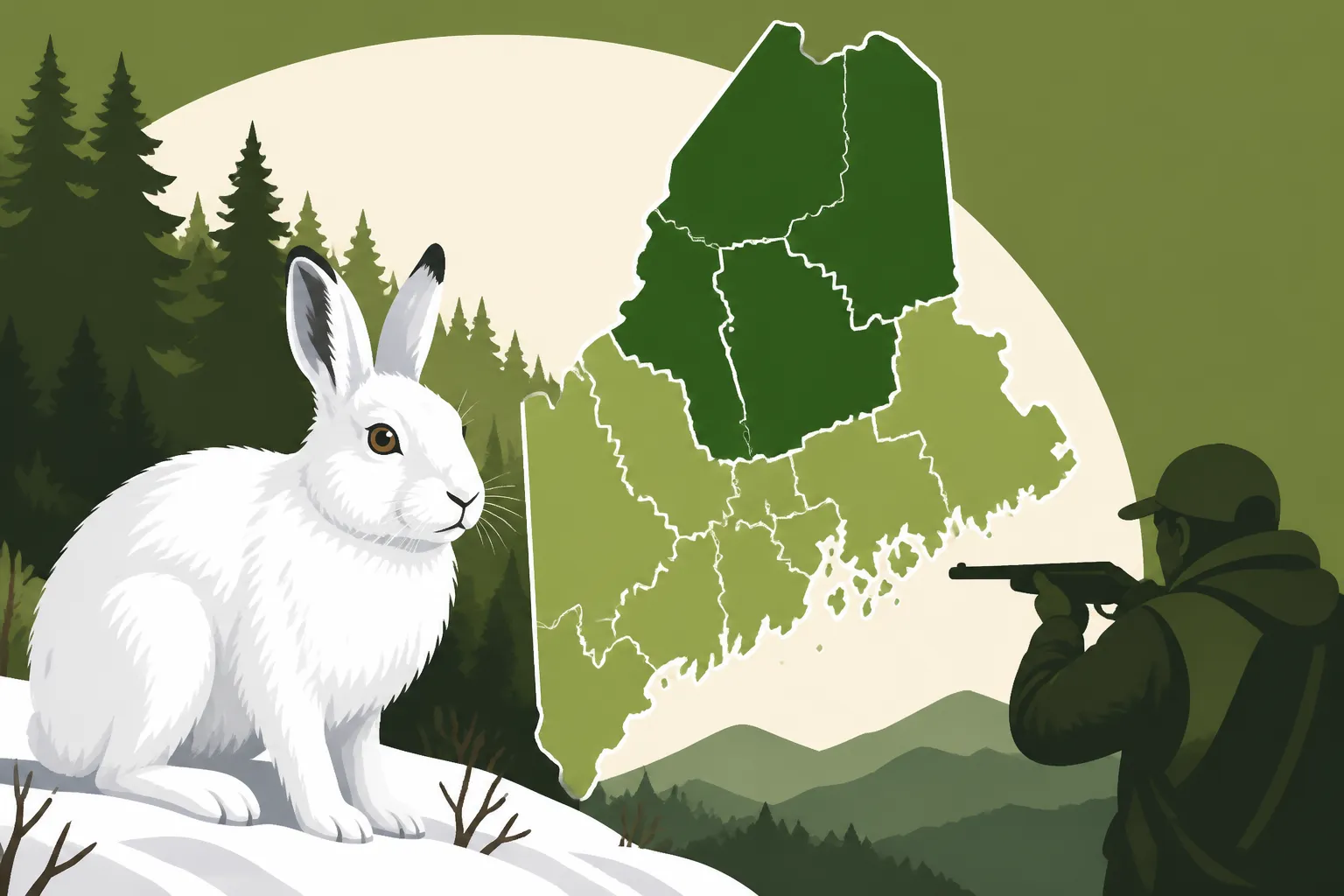
The vast, largely unbroken tracts of forestland in northern and eastern Maine are arguably the best places to find thriving snowshoe hare populations. Areas like Aroostook, Penobscot, Piscataquis, and Washington counties are dominated by the spruce-fir forest type that hares depend on. The cooler climate here also helps to support a higher overall density of the preferred conifer species.
These regions see extensive commercial forestry, which, while sometimes controversial, often creates the perfect conditions for hares. When timber is harvested, the subsequent regeneration of young conifers, hardwoods, and mixed growth provides an explosion of browse and cover. This creates a mosaic of habitat patches in different stages of succession, ensuring a continuous supply of prime hare country. Hunters willing to venture into the industrial forests, often accessed via the North Maine Woods Logging Road Access system, will find miles upon miles of potential hare habitat. Just be sure to check access rules and potential fees.
Western Maine's Mountain Foothills and Valleys
While not as uniformly dense with spruce-fir as the northern reaches, the mountainous and hilly terrain of western Maine, particularly in Franklin and Oxford counties, also holds excellent pockets of snowshoe hare. Here, hares tend to congregate in the valley bottoms and on lower slopes where soil moisture allows for denser conifer growth and regenerating clearcuts.
You'll often find hares in the thick, wet growth along stream corridors, in the dense understory of mature hemlock stands, or in the patchwork of regenerating timber on private and public lands. These areas can be rugged, but the effort to explore them can yield fantastic results. Look for areas near beaver flowages, where the combination of water, dense shrubbery, and young timber creates ideal conditions. Hunting a Beaver Flowage on Public Land can be a great strategy, and the edges of these areas often hold hares.
| Geographic Region | Dominant Habitat Type | Key Factors for Hares | Hunting Accessibility |
|---|---|---|---|
| Northern Maine (Aroostook, N. Penobscot, Piscataquis) | Vast spruce-fir forests, industrial timberlands, regenerating cuts | Extensive preferred habitat, consistent timber management, colder climate | Logging roads (some gated), remote access, can be challenging |
| Eastern Maine (Washington, Hancock) | Coastal spruce-fir, blueberry barrens, regenerating woodlands | Dense coastal cover, varied vegetation, less predator pressure in spots | Mix of private/public, some remote, often easier access than far north |
| Western Maine (Franklin, Oxford) | Mountain foothills, valley bottoms, mixed woods, hemlock stands | Varied terrain creates diverse cover, river/stream corridors | Mix of private/public, recreational trails, often good access to edges |
Factors Influencing Local Hare Population Density
Even within prime geographic areas, snowshoe hare populations can fluctuate, and certain local conditions make some spots better than others. Understanding these nuances will help you narrow down your search even further.
Snow Depth and Winter Severity
Snowshoe hares are incredibly adapted to winter, hence their name. Deep, consistent snow cover is actually a benefit to them, as it elevates them to reach browse that would otherwise be out of reach. It also provides excellent insulation when they burrow into it. However, inconsistent snow, especially freeze-thaw cycles that create crusts, can hinder their movement and foraging, making them more vulnerable to predators. In Maine, where winters are generally reliable, this isn't usually a major deterrent, but a winter with minimal snow can mean tougher times for hares.
In winters with historically deep snow, you might find hares using areas they wouldn't normally, simply because the snow gives them access to higher browse. Conversely, in open winters, they'll stick even tighter to the densest ground cover. Understanding the current winter conditions can help you predict where hares might be concentrated. Always keep an eye on the snow patterns in your chosen hunting grounds.
Predator Presence and Pressure
Where there are hares, there are predators. Coyotes, foxes, bobcats, owls, and various birds of prey all rely on snowshoe hares as a food source. While a healthy ecosystem includes predators, localized high predator pressure can impact hare numbers. Areas with very high coyote densities, for instance, might see slightly lower hare populations, even if the habitat is otherwise perfect.
When scouting, look for signs of predators – tracks, scat, or even den sites. If you see a lot of coyote sign, it doesn't mean there are no hares, but it might indicate that the hares are incredibly wary and sticking to the thickest cover available. This is where your hunting strategy really comes into play, focusing on working those dense areas thoroughly. Coyote Calling Maine Farm Country is a separate pursuit, but understanding their presence helps with hare hunting too.
Best Strategies for Hunting Strong Hare Populations
Finding the best hare populations is one thing; successfully hunting them is another. Your approach needs to match the terrain and the hares' preference for dense cover.
Working Thick Cover with Beagles
Hands down, one of the most effective and enjoyable ways to hunt snowshoe hares is with a pack of well-trained beagles. These dogs are purpose-built for the task, with incredible noses and an instinct to push hares in a circle, eventually bringing them back to the point where the chase began. This allows hunters to post up on known runways or trails and wait for the hare to come by.
When hunting with beagles in areas with good hare numbers, focus on setting up at the edges of thickets, along old logging roads, or where multiple hare trails converge. The dogs will do the hard work of rooting out the hares and getting them running. The key is patience and knowing how hares tend to circle back. Having a good mapping app, like one that GoHunt provides, can be invaluable for pinpointing these runways and setting up effectively. Running Beagles on a Maine Hare describes this thrilling experience in detail.
Still-Hunting and Jump-Shooting
If you don't have dogs, still-hunting or jump-shooting can still be productive in areas with high hare densities. This method involves slowly and deliberately moving through prime habitat, keeping your eyes peeled for the subtle outline of a hare tucked into cover or the flash of movement as it jumps out. This requires an incredible amount of focus and stealth.
Focus your efforts on those dense pockets of young conifers or cedar swamps. Move slowly, pause frequently, and scan every tangle of branches. Hares often sit tight, relying on their camouflage, so you'll need to develop an "eye" for them. When you jump a hare, be ready for a quick shot as they dart through the thick brush. This method is often best after a fresh snowfall, as tracks can guide you to likely hiding spots, and the white landscape can sometimes make a hare's dark eye or outline stand out more. It's a challenging but rewarding way to connect with the landscape.
Scouting for Sign
Before you even step foot in a likely hare spot with your shotgun or .22, scouting is paramount. Look for fresh tracks in the snow, especially after a recent snowfall. Snowshoe hares leave distinctive tracks, and their runways will be well-defined where populations are strong. You'll also see evidence of their feeding – clipped twigs, particularly on the ends of spruce, fir, or cedar branches.
Examine droppings, which are small, round pellets. Abundant droppings indicate an active area. Pay attention to natural funnels, like narrow strips of thick cover between more open areas, or where dense cover meets an old road. These are natural travel corridors for hares. Using a hunting app to mark these areas when scouting can save you a lot of time on hunting day. Maine's Maine Snowshoe Hare Season Dates generally offer a long window, giving you ample time to scout and hunt. Understanding Maine Snowshoe Hare Population Trends is also useful, as it helps you identify good years and regions.
Internal Link Table
Disclaimer
This article is for general informational purposes only and does not constitute professional advice. Laws, prices and regulations vary by location and change over time. Consult a qualified professional for guidance on your specific situation.