Best Maine Counties for Woodcock
For any upland bird hunter, the distinct thrill of a woodcock flushing from dense cover, its erratic flight a true test of skill, is simply unmatched. But finding these elusive timberdoodles in a vast state like Maine can feel like searching for a needle in a haystack, leaving many hunters frustrated and wondering where to even begin. This comprehensive guide will break down exactly what makes prime woodcock habitat and pinpoint the best Maine counties where you're most likely to connect with these migratory marvels.
Understanding Prime Woodcock Habitat in Maine
Woodcock are pretty particular about where they like to hang out, and understanding their preferences is the first step to successful hunting. They're not like grouse, who might be found in a wider variety of settings. Woodcock are ground-nesting, insect-eating birds, and their entire lifecycle revolves around specific types of damp, young forest cover. If you can learn to "read" the land for these specific features, you'll be well on your way to filling your game bag.
Alder Runs and Young Growth
When you think woodcock, think alders. These dense, wet thickets are absolutely quintessential woodcock habitat. Alders provide the perfect blend of cover for roosting and nesting, shielding them from predators, and a moist, soft soil where they can probe for earthworms, their primary food source. You'll often find them along the edges of fields, old logging roads, or meandering streams. It’s not just alders, though. Any young, dense deciduous growth, particularly areas that have been clear-cut within the last 5 to 15 years and are now growing back into a thick tangle of saplings, can hold birds. These areas offer the vertical cover they prefer, allowing them to disappear quickly into the vegetation. Looking for these dense patches of saplings, often mixed with dogwood or willow, is key to pinpointing active areas.
Imagine walking into a patch of head-high alders, the kind where you can barely see your dog, and suddenly a woodcock bursts out just a few yards in front of you. That's the magic these runs offer. The soft, damp ground underneath is teeming with the invertebrates they love. It's truly a unique type of cover that holds these birds consistently. If you're not finding birds in these spots, you might be looking in the wrong kind of woods.
Moist Bottomlands and Wetlands
Woodcock are truly birds of the moist earth. They need soft, damp soil to probe for earthworms with their long, sensitive bills. This means you'll find them gravitating towards low-lying areas, stream bottoms, the edges of beaver flowages, and other wetland environments. These areas retain moisture even during dry spells, ensuring a consistent food supply. Upland areas, while sometimes used for roosting at night or during the day, won't typically hold significant numbers of birds during feeding times.
Think about walking along a small creek that meanders through a wooded area. The banks might be lined with those alders we just talked about, and the soil is noticeably softer underfoot. This is precisely the kind of place where woodcock will settle in, especially during their migration periods when they need to refuel. The abundance of earthworms in these fertile, damp soils makes them an irresistible stopover. Paying attention to subtle changes in elevation and moisture levels on the landscape will give you a significant advantage.
Early Successional Forests
The term "early successional forest" might sound like something out of a textbook, but it's really just a fancy way of saying young, regenerating woods. These are forests that have been recently disturbed by events like clear-cutting, fire, or severe storms, and are now growing back vigorously. This type of habitat is absolutely critical for woodcock, which thrive in areas where sunlight can reach the forest floor, promoting the growth of dense understory vegetation and keeping the soil moist.
Older, mature forests, with their closed canopies and sparse undergrowth, simply don't offer what woodcock need. They need those thickets that grow after a stand of timber is harvested or a field is left fallow. As these young forests mature, they become less suitable for woodcock, which is why active forest management is so important for sustaining their populations. When you're scouting, look for aerial photos showing recent timber harvests or old fields that are now overgrown. These are goldmines. Many state and private land managers are working to create and maintain these specific habitats for species like woodcock and grouse.
Top Counties for Woodcock Hunting in Maine
Now that we know what woodcock like, let's talk about where in Maine you're most likely to find it. While woodcock can be found statewide during migration, some counties consistently offer better habitat and, therefore, better hunting opportunities. This isn't just about general abundance; it's about the landscape features that naturally support their needs.
Washington and Hancock Counties: Downeast Coastal Influence
Down East Maine, particularly Washington and Hancock counties, consistently ranks high for woodcock. This region boasts a unique blend of coastal influence, extensive timberland, and a history of logging that has created abundant early successional habitat. The coastal fog and damp conditions often mean that low-lying areas and stream bottoms retain moisture well into the fall, providing excellent probing grounds for woodcock. You'll find countless alder runs along the myriad brooks and rivers that flow into the ocean, as well as vast tracts of regenerating spruce and fir forests mixed with deciduous growth.
The sheer remoteness of much of Washington County also means less hunting pressure in many areas, allowing birds to thrive undisturbed. Hunting Downeast Coastal Cover can be a truly wild experience, and it's perfect for a species that prefers solitude. Look for areas near the blueberry barrens, where the transitions from open land to thick, wet cover create perfect edges. These counties are often a stopover for migrating birds traveling along the Atlantic Flyway, leading to concentrated flushes during peak migration.
Oxford and Franklin Counties: Western Maine Mountain Diversity
Moving west, Oxford and Franklin counties offer excellent, though sometimes more challenging, woodcock hunting. While these counties are known for their mountain ranges and vast timberlands, they also feature numerous river valleys, beaver flowages, and abandoned farmsteads that create ideal woodcock habitat. The mix of elevations means you'll find diverse cover, from higher, drier sections to the crucial moist bottomlands.
The Androscoggin River and its tributaries, as well as the multitude of small streams feeding into lakes like the Rangeley chain, provide extensive networks of alder runs. Much like Downeast, historic logging operations have left behind a patchwork of young growth that woodcock readily inhabit. Hunters here often find success working the edges of old clear-cuts and along the lower slopes of hills where moisture collects. It's a different kind of terrain than the coastal plains, often requiring more walking, but the rewards can be substantial. Still-Hunting Western Maine Mountain Slopes can be quite productive for woodcock as well, especially when targeting those damp areas.
Aroostook County: North Woods Vastness
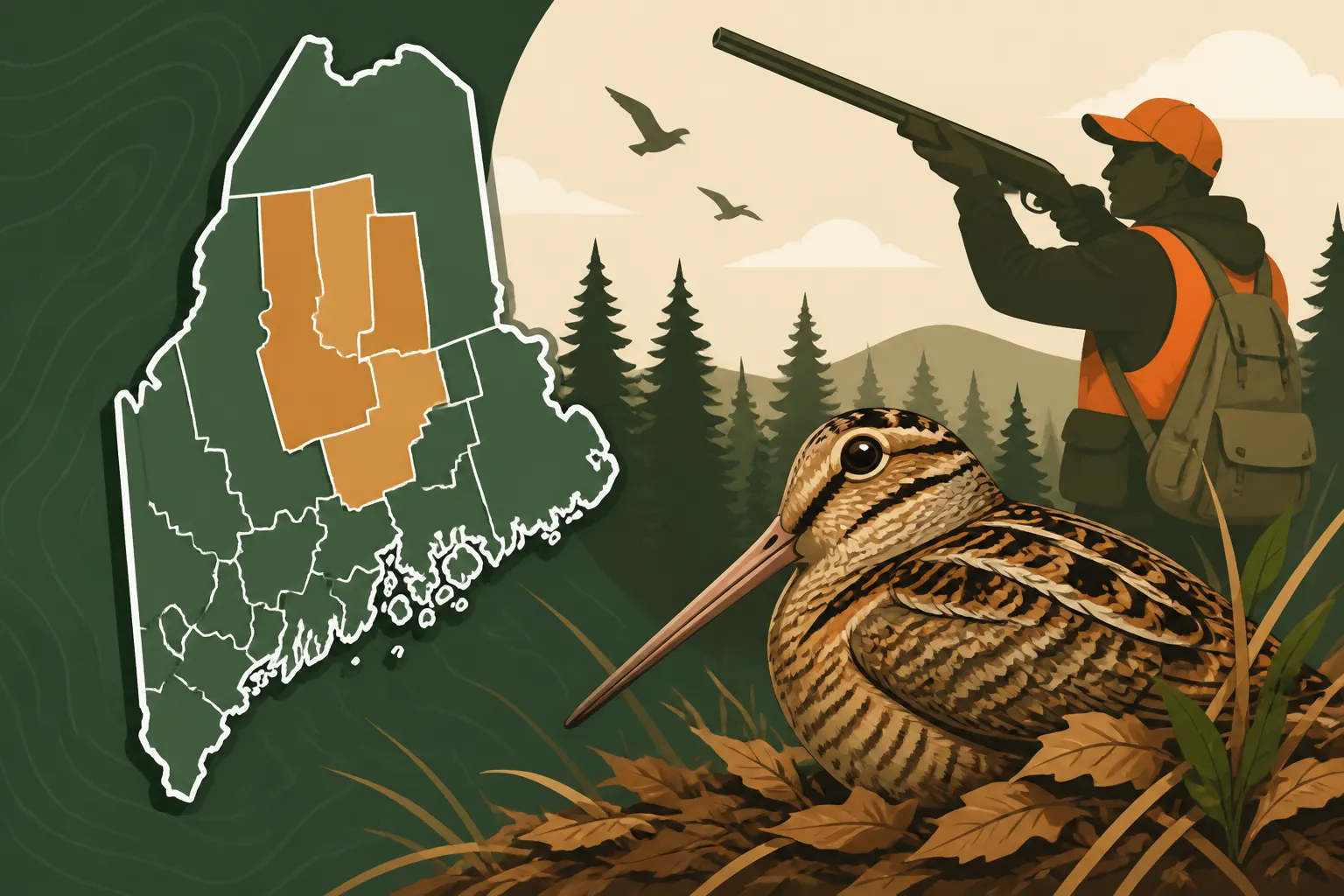
Aroostook County, Maine's largest and most northern county, is often thought of for moose and deer, but it offers fantastic woodcock hunting as well, especially in the central and southern parts. The sheer scale of the North Woods means there's an immense amount of suitable habitat, much of it tied to commercial timber operations. This creates a continuous cycle of clear-cuts and regenerating forests, perfect for woodcock.
While some of the deeper woods might be less productive, focus your efforts on the countless small streams, river valleys, and logging roads that crisscross the landscape. These areas will have the dense, young growth and moist soils that woodcock prefer. The vastness can be intimidating, but scouting with detailed maps is crucial here. Reading Aerial Photos for North Woods Deer can apply equally well to woodcock, as you're looking for similar dense, young cover and moisture. Don't be afraid to pull over and walk an alder-lined ditch along a logging road—you might be surprised by what you find.
Here's a quick comparison of some prime woodcock hunting characteristics across these top Maine counties:
| County | Primary Habitat Types | Moisture Retention | Migration Activity | Hunting Pressure | Notable Features |
|---|---|---|---|---|---|
| Washington | Alder Runs, Coastal Wetlands, Regenerating Spruce | High | High | Low | Remote, blueberry barrens, vast timberlands |
| Hancock | Alder Runs, Stream Bottoms, Young Deciduous | High | High | Moderate | Near Acadia, good access to varied cover |
| Oxford | River Valleys, Beaver Flowages, Mountain Base | Moderate to High | Moderate | Moderate | Diverse terrain, Rangeley Lakes region |
| Franklin | Stream Corridors, Old Farmsteads, Clear-cuts | Moderate to High | Moderate | Moderate | Extensive public lands, large timber tracts |
| Aroostook (South) | Logging Road Edges, Stream Banks, Clear-cuts | Moderate | Moderate | Low | Immense area, active timber management |
Other Productive Regions
While the above counties are often highlighted, don't overlook other areas of Maine. Penobscot, Somerset, and Piscataquis counties, especially in their northern and eastern sections, also contain vast tracts of timberland with plenty of early successional habitat. Even parts of Kennebec and Waldo counties, particularly along river systems and in areas with agricultural transitions, can hold good numbers of birds, especially during migration. The key, no matter the county, is always to focus on the specific habitat characteristics woodcock love. They will be there if the habitat is right, regardless of county lines.
Strategies for Finding Woodcock Hotspots Within These Counties
Knowing the right counties is a huge step, but the real work—and fun—begins when you start pinpointing the actual hotspots. Woodcock aren't evenly distributed, even within the best counties. They'll concentrate in very specific pockets.
Scouting and Seasonal Timing
Effective woodcock hunting starts long before opening day with scouting. This isn't about finding scrapes or rubs; it's about identifying suitable habitat. Drive or walk old logging roads, look for those telltale alder thickets along streams, and check out regenerating clear-cuts. Remember, woodcock are migratory birds, so timing is everything. The season typically opens in late September, and while you might find resident birds then, the real influx often comes with the first significant cold fronts in mid-October, pushing birds down from Canada.
Pay attention to weather patterns. A strong cold front from the north can bring a wave of migratory birds overnight. These new arrivals will seek out the best available cover and food sources. When Woodcock Migrate Through Maine is often tied directly to these weather shifts. You might find a spot empty one day and teeming with birds the next. Conversely, a prolonged period of warm weather can delay their southward movement. Being flexible and knowing when to check likely spots repeatedly is a critical skill for the woodcock hunter.
Utilizing Mapping Tools and Apps
Gone are the days when a paper map and compass were your only tools. Today, digital mapping applications are incredibly powerful for scouting woodcock habitat. Apps like GoHunt allow you to overlay property lines, topographic maps, and satellite imagery, helping you identify those moist bottomlands, alder runs, and early successional forests from the comfort of your home. You can often see the distinct patterns of regeneration in aerial photos, highlighting prime areas that might be miles off the main road.
Using these tools, you can pinpoint public access points, identify potential posting boundaries on private land, and mark waypoints for promising cover before you even step foot in the woods. Look for contour lines that indicate low-lying, damp areas, and zoom in on satellite views to spot the telltale textures of dense, young deciduous growth. Scouting With the Maine Hunting App or similar platforms can be a game-changer for efficiently locating hidden gems that might otherwise be overlooked. This kind of digital reconnaissance saves countless hours of aimless wandering and allows you to focus your efforts where they're most likely to pay off.
Learning to Read the Cover
Beyond looking at maps, developing an eye for "woodcock cover" on the ground is paramount. It’s about more than just seeing an alder patch; it's about understanding the nuances. Look for areas with a soft, moist underfoot, where the ground gives a little with each step. This usually indicates good earthworm habitat. Birds will often be found at the edges where one type of cover transitions to another, such as where an alder run meets a pine stand, or a young clear-cut abuts a mature forest. These edges offer both food and escape cover.
Pay attention to recent sign: small, white splashes of droppings (called "chalk") on leaves or small bare patches of ground indicate where woodcock have been probing for food. If you find one bird, keep hunting that same general area, as woodcock often congregate in pockets. The flight patterns of birds flushed—straight up then darting through timber—also tells you if you're in the right kind of dense, protective cover. Woodcock Hunting an Alder Run at Dusk can be particularly effective because woodcock become more active in the low light, moving from roosting cover to feeding areas. Developing this sixth sense for productive cover comes with experience, but knowing what to look for will accelerate your learning curve.
Disclaimer
This article is for general informational purposes only and does not constitute professional advice. Laws, prices and regulations vary by location and change over time. Consult a qualified professional for guidance on your specific situation.