Maine Deer Antler Growth Timeline
As a seasoned hunter here in Maine, one of the questions that always sparks conversation around the campfire, especially as spring approaches, is "What's that buck's rack going to look like this year?" or "When do they even start growing those things?" It’s a natural curiosity, rooted in understanding the life cycle of our magnificent whitetails. This guide aims to pull back the curtain on the fascinating, intricate process of antler growth and shedding in Maine's deer herd, giving you a deeper appreciation for the cycles that govern these incredible animals.
The Annual Cycle of Antler Growth and Shedding in Maine
Let's get down to the brass tacks: a buck's antlers are one of nature's most impressive displays of renewable energy and biological programming. They're not just bone; they're a yearly commitment of resources and a testament to the animal's health and vitality. Understanding this annual rhythm is key to truly appreciating the deer you pursue.
Why Antlers Aren't Horns: A Quick Refresher
Before we dive into the timeline, it's crucial to clarify a common point of confusion: antlers versus horns. While often used interchangeably in casual conversation, biologically, they're worlds apart. Antlers are true bone structures that grow from pedicles on a buck's skull. What makes them unique, and so intriguing to us as hunters and wildlife observers, is that they are shed and regrown every single year. Imagine growing a full set of bone armor from scratch, shedding it, and doing it all over again in under a year! That's what a Maine buck accomplishes.
When antlers are growing, they're covered in a soft, fuzzy skin called "velvet." This velvet is rich in blood vessels and nerves, providing the essential nutrients, calcium, and phosphorus needed for the rapid bone formation underneath. It's a living tissue, and during this phase, antlers are quite delicate. Any injury to the velvet can result in deformities to the growing bone. Horns, on the other hand, like those on cattle or bighorn sheep, are permanent structures made of keratin (similar to your fingernails) over a bony core, and they grow continuously throughout an animal's life without shedding. So, when you see a magnificent rack on a Maine buck, remember it’s an entirely new creation from the previous year.
The Importance of Timing: When Antlers Start to Grow
The genesis of a new set of antlers isn't some random occurrence; it's a meticulously timed biological event, primarily triggered by the changing length of daylight, known as photoperiodism, and the corresponding shifts in a buck's hormone levels. Typically, a Maine buck will begin to initiate antler growth shortly after shedding his old set, often in late winter or early spring. This usually falls around March or April, right as the harsh grip of winter begins to loosen and the first signs of green-up emerge in the woods.
As daylight hours increase, the buck's pituitary gland begins to produce more growth hormones, while testosterone levels, which plummeted after the rut and led to shedding, start their slow climb again. This hormonal cocktail signals the pedicles on the skull to spring back to life. You'll often see small, fuzzy nubs or "buttons" forming first, which are the earliest visible signs of the new season's growth. It's a subtle but profound shift, marking the beginning of another intense period of nutrient allocation and rapid development. For hunters who enjoy Shed Hunting on Private Maine Land, finding those dropped antlers can offer clues about the bucks that survived winter and are now embarking on this new growth cycle.
Key Phases of Antler Development Through Maine's Seasons
Antler growth isn't a steady, linear process. It's a dynamic journey that mirrors the seasons, from the explosive surge of spring to the hardened readiness of fall, perfectly synchronizing with the buck's life history and reproductive needs.
Spring: The Burst of Velvet Growth
Once those initial nubs appear in late March or early April, Maine bucks enter a period of astonishingly rapid antler development through the spring months. May and June are prime time for observing significant increases in antler mass and length. The velvet-covered antlers are growing at an incredible pace, sometimes adding a quarter to a half-inch of length per day, depending on the buck's age and nutritional status.
During this phase, the buck's body is demanding huge amounts of protein, calcium, and phosphorus to fuel this bone production. This is why the quality of spring and early summer forage is so vital. Think about it: lush new growth in fields and forests, tender shoots, and budding plants provide the high-energy, protein-rich diet necessary for building that impressive rack. Bucks will often frequent agricultural fields, clear-cuts with new saplings, or even residential areas with young landscaping, seeking out the most nutritious browse available. A buck with access to abundant, high-quality forage throughout the spring and summer will almost always outgrow one struggling in poor habitat, assuming all other factors are equal. This relentless demand for nutrients during the velvet stage means that any nutritional deficiencies will directly impact the size and density of the developing antlers.
Summer: Hardening and Maturation
As the long days of summer progress through July and into August, the rapid growth phase of the antlers begins to slow. While they may still be adding some mass, the primary focus shifts from outward growth to internal mineralization and hardening. The blood supply to the velvet gradually diminishes, and the once-soft, living tissue covering the antlers begins to dry and die.
By late August and into early September, you'll start to see bucks rubbing their antlers on saplings and small trees, a process known as "stripping velvet." This isn't just to remove the itchy, dying velvet; it's also a way for them to condition and strengthen the now-hardened bone, polishing them up for the coming breeding season. Once the velvet is completely removed, the antlers are a solid, dense bone, ready for the rigors of the rut. At this point, their size and shape are set for the year, and they will not grow any further until the cycle begins anew next spring.
Fall: The Rut and Beyond
With the velvet stripped and antlers hardened, Maine bucks are now in their prime, ready for the fall hunting season and, more importantly, the breeding season. These antlers are no mere decorations; they serve a crucial purpose in establishing dominance and attracting does during the peak of the rut. Bucks will use their hardened racks to spar with rivals, pushing and shoving to assert their position in the social hierarchy. It's a test of strength and a clear visual cue to both does and other bucks about their genetic quality and fighting prowess.
The intensity of the rut, typically peaking in early to mid-November for many parts of Maine, requires immense energy from bucks. For more on this critical period, check out our guide on Hunting the Rut in Early November. After the breeding season wanes, usually by late November and into December, the antlers will remain firmly attached. They continue to serve some purpose in conveying status, but their primary function has passed. The buck's body, exhausted from the rut and facing the increasing caloric demands of winter, begins a slow hormonal shift that will eventually lead to the shedding process. During Maine's Four-Week Firearms Deer Season, hunters have the opportunity to pursue bucks with fully developed, hardened antlers, showcasing the culmination of the year's growth.
Factors Influencing Antler Size and Quality in Maine Bucks
Every hunter dreams of a big rack, but what actually determines how impressive a buck's antlers become? It's a complex interplay of several key factors, and understanding them can help you better interpret the deer you see in the field.
Age: The Undisputed King of Antler Development
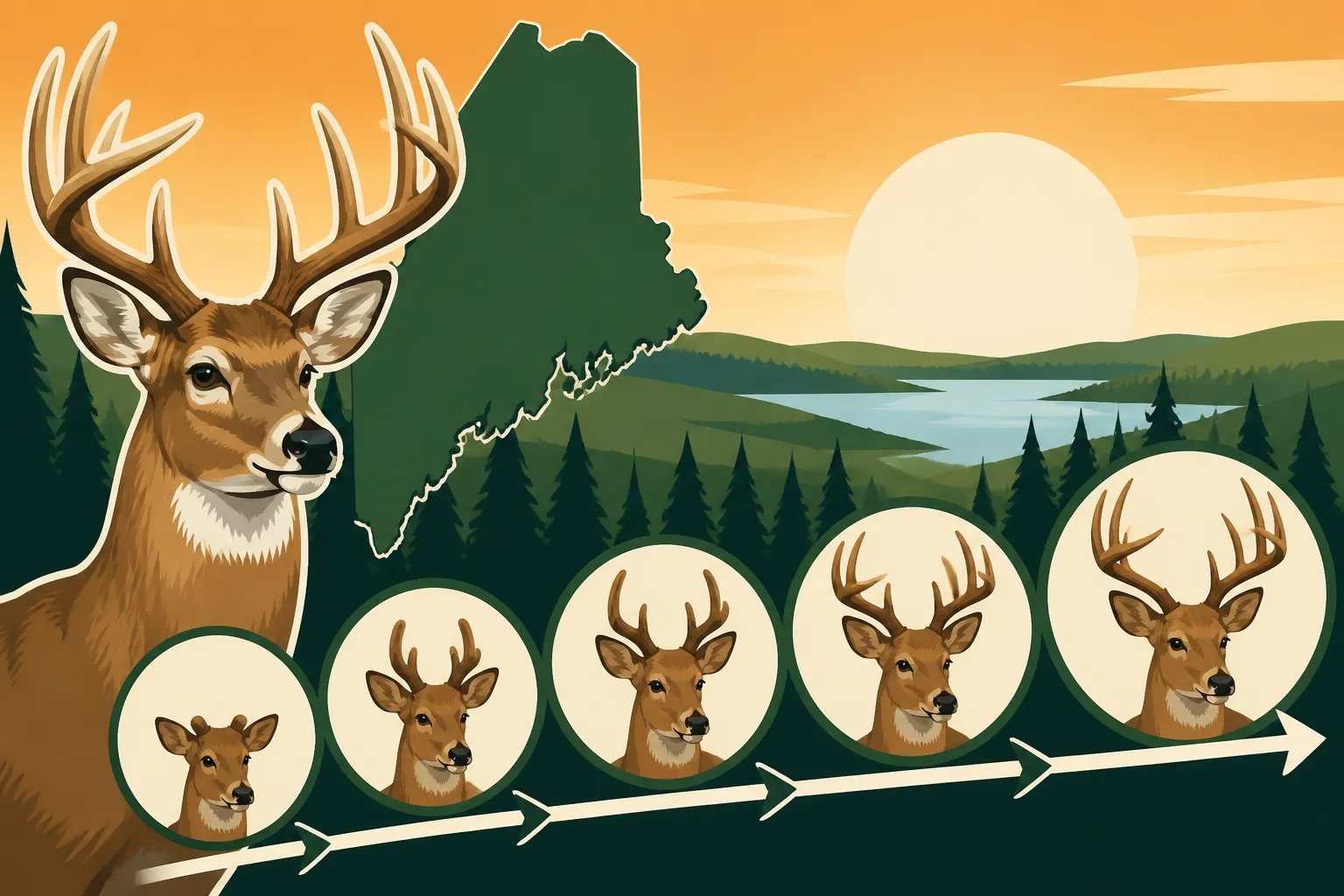
If there's one single factor that dominates antler size and quality, it's age. This often surprises new hunters who might assume bigger antlers simply mean "better" genetics. While genetics play a role, a young buck, no matter how good his genes, simply won't have the same antler potential as a mature, older buck. A buck's body prioritizes survival and growth in its early years. A 1.5-year-old buck (often called a "yearling") is still growing his skeletal structure and muscle mass. The energy he allocates to antlers is relatively small. You'll typically see spikes or small forks.
As a buck matures to 2.5 years old, you'll see a noticeable jump in antler size, often with more points and more mass, as his body can now spare more energy for headgear. The real magic often happens between 3.5 and 5.5 years old, and sometimes even older, where bucks typically hit their peak antler potential. This is when their bodies have fully developed, and they can channel maximum resources into growing the biggest, densest rack their genetics and nutrition allow. For example, a 4.5-year-old buck in southern Maine with ample food sources might carry a significantly larger rack than a 2.5-year-old in the same area. This biological progression is why age structures are so important in deer management.
Nutrition: The Fuel for Rack Growth
You can have a buck with fantastic genetics and plenty of age, but if he isn't getting the right nutrients year-round, his antlers will suffer. Nutrition is the fuel that drives antler growth. High-protein forage, especially during the crucial velvet growth period in spring and summer, is paramount. Calcium and phosphorus are also essential minerals for bone development.
Think about the difference in habitat across Maine. Deer in agricultural areas like Aroostook County or the rich, mixed forests and old farmsteads of southern Maine often have access to higher quality and more abundant food sources compared to deer struggling in over-browsed, deep spruce-fir forests of the far North Woods, especially after a tough winter. Why Southern Maine Grows Bigger Bucks often comes down to this difference in year-round food availability. A sustained diet rich in protein from legumes, young woody browse, and agricultural crops, combined with essential minerals, allows a buck to express his full genetic potential for antler growth. Conversely, a poor mast crop year, like a bad acorn season, can stress deer and impact their overall health, indirectly affecting antler development. We’ve explored this in detail in Hunting After a Poor Acorn Year.
Genetics: The Blueprint for Rack Potential
While age and nutrition are massive players, genetics provide the inherent blueprint for a buck's antler potential. Just like people inherit certain traits, deer inherit genes that influence antler characteristics such as tine length, beam circumference, number of points, and overall symmetry. You might observe certain antler characteristics recurring within a local deer population, hinting at the genetic pool.
It’s a complex dance. A buck might have the genetic potential for a massive 10-point rack, but if he doesn't live long enough (age) or has insufficient food (nutrition), he'll never reach that potential. Conversely, a buck with "average" genetics, but living in a prime habitat and reaching an old age, might still develop a very respectable rack. It’s important to remember that genetics work in concert with environment; they set the upper limits, but age and nutrition determine how close a buck gets to those limits. This is also why Maine's CWD-Free Status Explained is so crucial; herd health, including genetic vitality, depends on a healthy, disease-free population.
Environmental Stressors and Management
Beyond age, nutrition, and genetics, external factors like severe weather, disease, and population density can significantly impact antler development. A brutal winter in Maine, characterized by deep snow and prolonged cold, forces deer to burn through fat reserves just to survive. This stress means less energy available for growth and antler development in the following season. We often see a decline in antler quality after particularly harsh winters, a concept explored further in How Deep Snow Affects Maine Deer Survival.
High deer densities, especially in areas with limited food, can also lead to decreased antler size as more deer compete for the same resources. This is where active deer management, like Maine's antlerless permit system, comes into play. By managing the overall population, particularly the doe herd, managers aim to ensure healthier deer, which can translate to better antler quality for the bucks. Learning about Maine's Antlerless Permit System gives insight into how these factors are managed. Healthy deer make healthy antlers, and understanding the stressors that impact our White-Tailed Deer Across Maine helps us appreciate the challenge they face. Using tools like GoHunt, you can sometimes identify areas with better habitat and fewer stressors, which might lead to better antler potential in those locations.
When Maine Bucks Typically Shed Their Antlers
Just as reliably as they grow, Maine bucks will shed their antlers, completing the annual cycle. It's a natural, pain-free process, but the timing can be quite variable, leading to many questions among hunters and shed hunters alike.
The Trigger for Shedding
The shedding process is primarily driven by a dramatic drop in testosterone levels in the buck's body following the conclusion of the breeding season. Once the rut subsides, and the need to breed passes, the high testosterone levels that sustained antler attachment begin to plummet. This hormonal decline signals the body to start a process called "osteoclast activity" at the pedicle — the attachment point of the antler to the skull.
Essentially, specialized bone cells begin to reabsorb calcium and other minerals from the base of the antler, weakening the connection. This weakening can take weeks, or even a couple of months, depending on the individual buck. Eventually, the connection becomes so fragile that the antler simply breaks off, often with little force. It can happen during normal activity, like walking through thick brush, jumping a fence, or even just lowering their head to browse. It’s a beautifully orchestrated natural process, allowing the buck to conserve energy during the lean winter months by dropping a heavy, metabolically demanding load.
Timing Variability and Shed Hunting in Maine
While the hormonal trigger is consistent, the exact timing of antler shedding in Maine bucks can vary significantly from one individual to another, and even from year to year. Generally, the earliest shed antlers in Maine might be found in late December, particularly from older, more dominant bucks who expended maximum energy during an intense rut. These bucks often "burn out" faster. However, it's far more common for bucks to shed in January, February, and even into March.
Several factors influence this variability:
- Rut Intensity: Bucks that had a particularly intense rut may shed earlier due to greater physical exertion and a faster drop in testosterone.
- Individual Health: A buck in poorer physical condition might shed earlier as his body prioritizes survival and shedding the nutrient-demanding antlers.
- Winter Severity: While less directly causative than hormones, a particularly harsh winter can stress deer, potentially leading to earlier shedding for some as their bodies try to conserve energy.
- Age: Older bucks tend to shed earlier than younger bucks. Yearling bucks might hold their antlers well into March or even early April.
This variability is what makes shed hunting such an exciting, yet sometimes frustrating, endeavor in Maine. You might find a fresh shed in January and still see bucks carrying racks in March. For those interested in When Maine Bucks Shed Antlers, understanding this timeline is crucial for planning your late-winter excursions. Using mapping apps like GoHunt can help identify potential areas where bucks might be concentrated in winter, making your shed hunting efforts more fruitful. Always remember to check land ownership and respect private property when shed hunting, just as you would during hunting season.
Here’s a quick overview of the antler growth cycle:
| Phase | Typical Timing in Maine | Key Activity/Characteristics |
|---|---|---|
| Shedding | Late Dec – March (peak Jan-Feb) | Old antlers drop off due to testosterone decline. |
| Button/Buds | Late Feb – April | New growth initiated from pedicles, small fuzzy nubs visible. |
| Velvet Growth | April – August | Rapid growth of bone covered in blood-rich velvet; significant length and mass added. |
| Hardening | Late July – August | Antler growth slows, velvet dries and dies, mineralization occurs. |
| Velvet Stripping | Late Aug – Early Sept | Bucks rub velvet off on trees, exposing hardened bone. |
| Hard Antlers | Sept – Mid-Dec (or later) | Antlers fully formed, used for sparring and display during rut. |
Disclaimer
This article is for general informational purposes only and does not constitute professional advice. Laws, prices and regulations vary by location and change over time. Consult a qualified professional for guidance on your specific situation.