Maine Waterfowl Banding Programs
Many Maine hunters find themselves wondering about those tiny metal bands sometimes found on the leg of a duck or goose they’ve harvested. It’s a moment of both curiosity and connection to a much larger effort. These bands aren't just trinkets; they’re vital pieces of a scientific puzzle, and understanding Maine’s waterfowl banding programs can give you a deeper appreciation for the birds we pursue and the conservation work that makes it all possible. This guide will take you through why these programs exist, how they operate, and what role you play in their success.
What is Waterfowl Banding and Why Does Maine Do It?
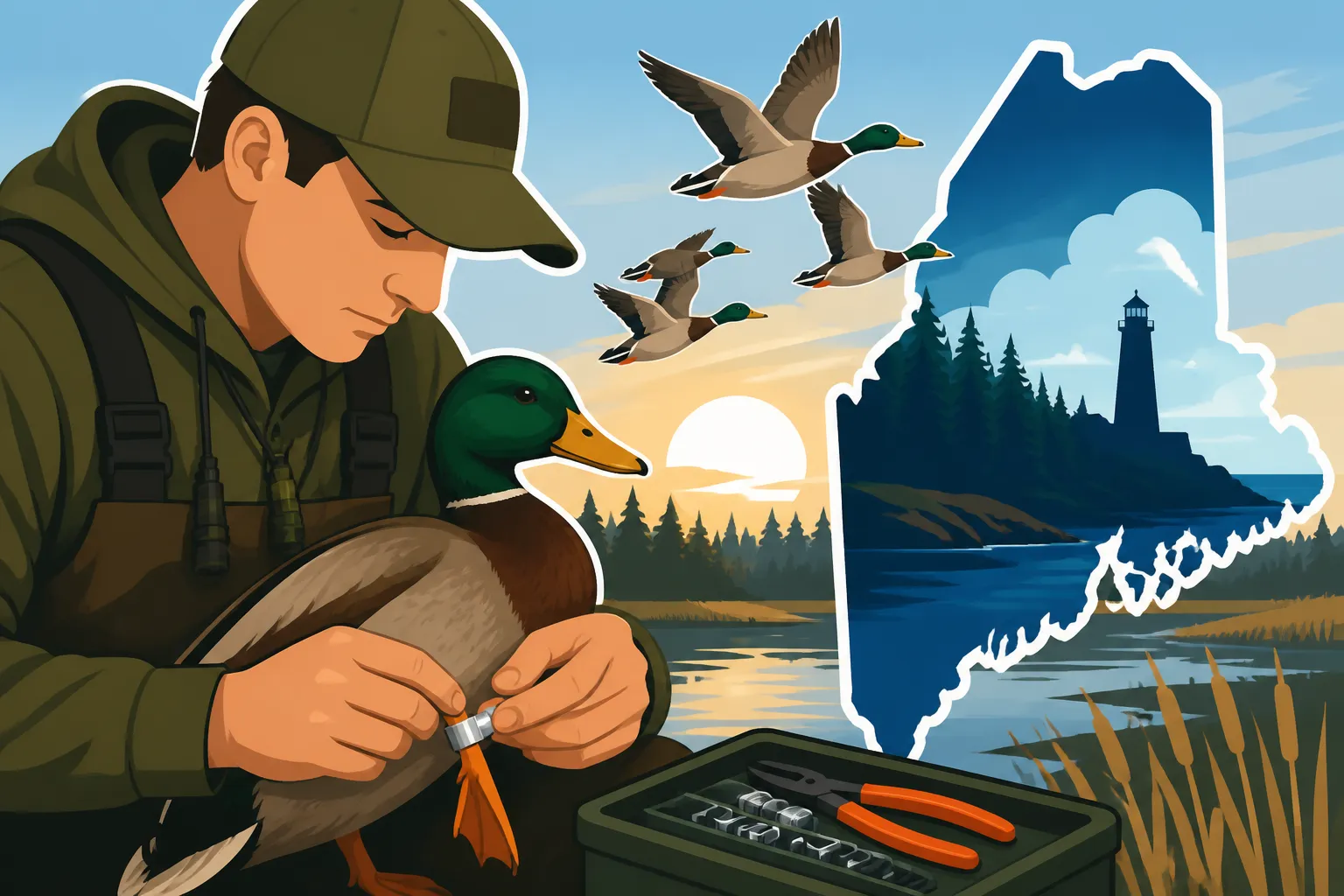
Waterfowl banding is precisely what it sounds like: capturing individual ducks, geese, and other migratory birds, affixing a small, serially numbered metal band to one of their legs, and then releasing them. Each band carries a unique identification number and a contact method (historically a mailing address, now often a website) for reporting. When a hunter recovers a banded bird and reports the band, that information creates a data point – where the bird was banded, when, and where it was recovered, and when.
Now, why does Maine, alongside state and federal partners, put so much effort into this? The reasons are rooted in science and conservation, aiming to ensure sustainable hunting opportunities for future generations. Imagine trying to manage a population of animals that spends only part of the year within your state's borders, moving across continents with the seasons. It's a huge undertaking! Banding provides crucial insights into several key areas. First, it helps track migration routes. If a bird banded in, say, eastern Maine is recovered months later in North Carolina, biologists gain a piece of the puzzle about the Atlantic Flyway's movements. This helps define migratory corridors and staging areas.
Secondly, banding data is invaluable for estimating population size and survival rates. By looking at how many banded birds are harvested over time, and how many new birds are banded each year, biologists can get a clearer picture of whether populations are growing, stable, or declining. This directly informs decisions about Maine Duck and Goose Bag Limits and season lengths. If survival rates are lower than expected, or if a particular population segment is struggling, management agencies can adjust regulations to protect the resource. Lastly, banding helps measure harvest rates and hunter distribution. It shows how many birds are being taken by hunters and where those hunters are concentrated, which can sometimes influence where management efforts, such as habitat improvements, are focused. Without this kind of granular, long-term data, managing migratory waterfowl would be like trying to navigate the North Maine Woods without a compass or a GoHunt map. It would be a shot in the dark, and that’s a risk no responsible wildlife agency is willing to take with such a valuable resource.
How Maine's Waterfowl Banding Programs Work
Waterfowl banding in Maine is a carefully planned and executed operation, often involving state biologists, federal wildlife staff, and a dedicated network of volunteers. It’s not something that just happens randomly; there’s a distinct methodology behind it, designed to maximize the data collected and minimize stress on the birds. The timing of banding is critical, usually occurring during specific periods when birds are most vulnerable to capture, such as during their flightless molting period in late summer or during concentrated staging in late summer and early fall before the main migration truly begins. For instance, ducks and geese, for a brief window each year, replace their flight feathers, rendering them temporarily unable to fly. This is a prime opportunity for banding.
One common method for capture is bait trapping, where birds are lured into large, specially designed traps with corn or other grains. Think of it like a big, gentle cage trap, but for ducks. Another method involves cannon netting, where a large net is propelled over a flock of birds gathered on the ground or water. It's dramatic to witness, but incredibly effective when done by trained professionals. Once captured, each bird is handled by skilled personnel. They record species, age, and sex. A small, lightweight aluminum band, unique to that bird, is then carefully placed on one leg. This process is quick, causing minimal disturbance to the bird, which is then released back into its habitat, often rejoining its flock within minutes.
Banding efforts are often concentrated in specific geographic areas known for high waterfowl use, like marshes, coastal estuaries, and important breeding or staging grounds. Maine has numerous such spots, from inland wetlands to its expansive coastline, which hosts significant populations of sea ducks. The data from these Maine-banded birds then contributes to a larger continental database managed by the U.S. Geological Survey's Bird Banding Laboratory (BBL). Every year, thousands of ducks and geese are banded across the Atlantic Flyway, and Maine plays its part in collecting these essential data points. It’s a quiet, ongoing scientific endeavor that forms the backbone of sound waterfowl management and ensures that future generations can enjoy Sea Duck Hunting the Maine Coast or chase greenheads in a local bog.
What Happens When You Recover a Banded Bird in Maine
Alright, so you’ve been out in the marsh, battling the cold, and finally, a duck drops. As you retrieve it, you feel something metallic on its leg. Bingo! You’ve found a band. This isn't just a cool souvenir; it's your opportunity to contribute directly to waterfowl conservation and become a citizen scientist. Your immediate next step is to report that band.
In the past, these bands often had a mailing address to send in your recovery information. Today, it’s much simpler and faster. You'll typically find a website address printed on the band, usually "reportband.gov" or a similar web address. You'll head to that website and enter the unique band number. The website will ask you for some basic information: the date you recovered the bird, the exact location (as precise as you can get, using coordinates or specific landmarks), and the species of bird. It's super important to be accurate with your location details; don't just say "somewhere in Washington County." Pinpoint it to a specific marsh, pond, or section of coastline, just like you would when trying to use your GoHunt app to mark a waypoint.
After you submit your information, you’ll receive a certificate of appreciation, usually via email. This certificate will provide you with all the details about when and where your bird was originally banded, its species, age, and sex. It’s fascinating to learn that the black duck you shot in a December storm on the Bagaduce River was banded two years ago as a juvenile in the saltwater marshes of New Brunswick, or that your mallard was banded in a grain field right here in central Maine just a few months prior. This feedback loop is what makes the whole system work. Without hunters reporting their finds, the critical data points are lost. So, if you're lucky enough to find one, consider it your civic duty as a hunter to report it. It literally helps shape the future of waterfowl hunting in Maine and beyond, influencing seasons, bag limits, and conservation priorities. Remember, don’t just hang it on your lanyard and forget about it – that band holds a story waiting to be told.
The Impact of Waterfowl Banding on Maine Hunting
The data collected through waterfowl banding programs isn't just academic; it has very real, tangible impacts on hunting regulations and the long-term health of the resource we cherish. When you’re grumbling about a reduced bag limit or a shorter season, understand that these decisions are almost always rooted in the comprehensive data that includes banding returns.
For instance, if banding data shows a significant decline in the survival rate of a particular species wintering along the Maine Sea Duck Coastal Zone Line, wildlife managers will take notice. This could be due to anything from habitat loss on breeding grounds to increased predation or, yes, even over-harvest. The data helps pinpoint these issues. Armed with this knowledge, state agencies like Maine Inland Fisheries and Wildlife (MDIFW) and federal agencies like the U.S. Fish and Wildlife Service can work together to implement adaptive management strategies. This might mean adjusting bag limits, shortening seasons, or even altering the timing of seasons to protect vulnerable populations. Conversely, if banding data indicates robust populations and healthy survival rates, it can support more liberal hunting opportunities, which is always good news for hunters.
Beyond regulations, banding data also influences habitat conservation efforts. If a large number of birds banded in Maine are consistently recovered along a particular migration corridor, it highlights the importance of conserving habitat in those areas. This can lead to targeted land acquisition, restoration projects, or incentives for landowners to manage their property in ways that benefit waterfowl. It’s a continuous cycle: we band birds, hunters report bands, biologists analyze data, and that data guides conservation and management decisions. This ensures that the tradition of waterfowl hunting in Maine remains vibrant for generations to come. It underscores why having your Maine Federal Duck Stamp Requirement met and participating in programs like HIP Certification are more than just formalities; they are active contributions to the legacy of our shared passion. So the next time you put in for a permit on the GoHunt website, or check your local WMD regulations, remember that much of that science-backed decision-making started with a small band on a bird's leg and a hunter's report.
| Data Point Collected | Importance for Waterfowl Management |
|---|---|
| Unique Band Number | Individual bird identification, tracking |
| Species | Species-specific population health |
| Age (at banding) | Survival rates of different age classes |
| Sex (at banding) | Sex-specific survival and harvest rates |
| Banding Location | Breeding/staging ground identification |
| Banding Date | Timing of migration, annual survival |
| Recovery Location | Migration routes, wintering grounds |
| Recovery Date | Survival duration, harvest timing |
| Method of Recovery | Understanding mortality factors |
Disclaimer
This article is for general informational purposes only and does not constitute professional advice. Laws, prices and regulations vary by location and change over time. Consult a qualified professional for guidance on your specific situation.