How Maine’s Implied-Permission Tradition Works
One of the biggest anxieties I hear from hunters, especially those new to our beautiful state or from out-of-state, is the fear of inadvertently trespassing. It’s a completely valid concern, as navigating land ownership can be tricky, and nobody wants to be "that guy." This guide is here to untangle the unique concept of Maine's implied-permission tradition, helping you understand how it works, what your responsibilities are, and how to confidently enjoy our abundant hunting opportunities.
What is Maine's Implied-Permission Tradition?
Maine truly stands out among states with its approach to private land access, and it’s built on a foundation of trust and respect that has deep roots in our logging and outdoor heritage. The "implied-permission tradition" essentially means that unless a private landowner has explicitly posted their property against hunting, trapping, fishing, or other recreational use, you are generally welcome to be there. It's a generous understanding, really, and it places a significant amount of faith in individuals to act responsibly.
This tradition isn't just a friendly suggestion; it's codified in Maine law, making our state fairly unique in how it handles recreational access. Unlike many other states where you must always seek explicit permission to step foot on private land, here in Maine, the burden is on the landowner to communicate if they don't want you there. If there are no signs, no purple paint, no fences clearly indicating private property boundaries and restrictions, then it's generally considered open. This is a huge boon for hunters, offering vast tracts of land that might otherwise be inaccessible.
However, this implied permission isn't a free-for-all, and it comes with significant responsibilities. It’s not an excuse for carelessness or disrespect. It's a privilege, not an inherent right, and it hinges entirely on hunters behaving ethically, safely, and courteously. If we abuse this tradition, we risk losing it, and that would be a tremendous loss for everyone who cherishes Maine's wild places and hunting opportunities. Always remember that even if you don't need to ask, showing respect for the land and its owner is paramount.
The Historical Context of Open Access
To truly grasp implied permission, it helps to understand its history. For centuries, Maine has been a working landscape, dominated by vast timberlands. Logging companies, and individual landowners alike, often found it more practical to allow public access for hunting, fishing, and wood gathering rather than trying to police every boundary. This fostered a culture where shared use of the land was common, as long as no harm was done. Rural communities were built on this give-and-take, where folks understood that a neighbor might cross their woodlot to get to a good fishing spot, or an uncle might hunt the back forty without a formal handshake.
This unwritten rule, born of necessity and community spirit, eventually became woven into the fabric of Maine's legal landscape. It’s a reflection of our independent spirit and our deep connection to the outdoors. Many Mainers believe that responsible access benefits everyone, promoting healthy outdoor recreation and supporting the local economy. It also means that much of our state’s incredible hunting opportunities, particularly for deer, moose, and bear, are accessible across private timber company lands and smaller woodlots that aren't actively posted.
Where Implied Permission Applies (and Doesn't)
It's crucial to understand that while broad, implied permission isn't universal. It predominantly applies to undeveloped or rural private land. You certainly wouldn't expect implied permission to apply to someone's backyard in Portland, or a cultivated farm field actively being worked. Think of it as generally applying to woodlots, uncultivated fields, and vast timber tracts. Developed residential areas, commercial properties, and actively farmed fields are usually exempt from this tradition.
Moreover, there are specific properties that might appear unposted but are regulated differently. For instance, specific state parks, designated wildlife sanctuaries, or certain federal lands might have their own rules regarding hunting and access, regardless of posting. Always consult the Maine Department of Inland Fisheries and Wildlife (MDIFW) regulations and any specific land management rules for the area you intend to hunt. Even with implied permission as the default, doing your homework on specific locations is always a smart move to avoid any misunderstandings.
The Legal Nuances of Implied Permission
While the concept of implied permission seems straightforward—if it's not posted, you can hunt it—the legal intricacies are where many hunters can get tripped up. It’s not a blank check to do whatever you want. Maine law has specific provisions for how landowners can restrict access and what constitutes a violation if those restrictions are ignored. Understanding these nuances is critical for staying on the right side of the law and maintaining good relationships with landowners.
One key aspect is the definition of "posting." A landowner doesn't just need to say their land is posted; there are legal requirements for how it must be marked. Signs must be of a certain size, placed at specific intervals, and clearly state the restrictions (e.g., "No Hunting," "No Trespassing"). This level of detail is designed to ensure that hunters have a clear, unmistakable warning before entering restricted property. Knowing these requirements yourself can help you assess whether land is legally posted or simply marked by a casual, non-binding sign.
Furthermore, there are circumstances where your presence, even on unposted land, could become trespass. If you cause damage to property, leave litter, block access ways, or generally behave in a disruptive manner, the implied permission can be revoked on the spot. A landowner or their agent can verbally ask you to leave their property, and if you refuse, you are then trespassing, regardless of whether the land was posted or not. This highlights the importance of respectful conduct.
What Constitutes Legally Posted Land
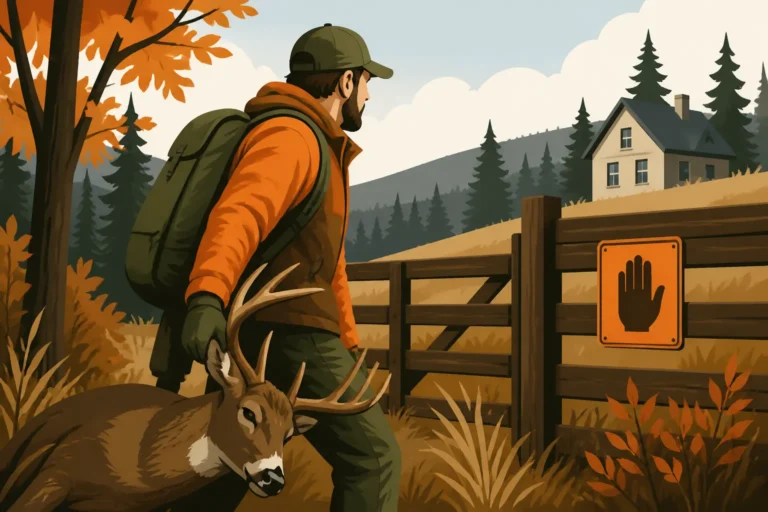
To legally restrict public access in Maine, a landowner must follow specific guidelines for posting. It's not enough to just hang a handwritten note on a tree. Maine law specifies that signs must be at least 11 inches by 11 inches square, bear the words "No Hunting," "No Trespassing," or similar prohibitory language, and include the name and address of the landowner or their agent. These signs must be placed conspicuously at intervals of 100 feet or less along the boundaries of the area to be restricted.
Alternatively, a landowner can mark their property with purple paint instead of signs. A single purple stripe, at least 8 inches long and 2 inches wide, placed on trees or posts at intervals of no more than 100 feet and clearly visible from any direction of approach, serves the same legal purpose as traditional "No Trespassing" signs. This is an increasingly popular method because paint holds up better to weather than paper or plastic signs, and it's less prone to being removed. If you see purple paint, consider that land posted, just as if you saw traditional signs. This method is codified in Maine law to provide clear notice. Maine Posted Land Rules covers this in more detail.
Consequences of Ignoring Posted Land
The consequences of ignoring legally posted land in Maine can range from fines to the loss of hunting privileges. Trespassing is a crime, and while often considered a minor offense, it can escalate if there's damage to property, repeat offenses, or other violations. A conservation officer or other law enforcement official can issue a summons or even arrest someone for trespassing, especially if they refuse to leave when asked. Beyond the legal penalties, the real cost is often far greater: the erosion of the implied-permission tradition itself.
Every instance of a hunter disregarding posted signs chips away at the goodwill that allows thousands of acres of private land to remain open. Landowners, frustrated by disrespect or property damage, are more likely to put up more signs, closing off areas that once provided fantastic hunting opportunities. This creates a negative feedback loop that harms all hunters. It’s why ethical hunting means not just following the letter of the law, but also respecting the spirit of the tradition. Maine Wildlife Violation Penalties can be quite severe, so it's always better to err on the side of caution.
Distinguishing Implied Permission from Posted Land
The primary challenge for hunters in Maine is often the subtle difference between truly open land and land that, for various reasons, might not be explicitly posted but is nevertheless off-limits, or where access is simply not implied. It's not always as clear-cut as a neatly painted sign. Sometimes, the landscape itself offers clues, or a quick, friendly conversation can save you a lot of grief. Navigating this successfully is key to a responsible and enjoyable hunt.
Understanding the visual cues is paramount. While purple paint or official "No Trespassing" signs are definitive, what about old, faded signs, or property that just looks like someone's private space even if it's not technically posted? This is where your judgment and ethical compass come into play. Always default to caution. If a property looks like a residence, has active farming equipment, or generally seems too "close to home," even if not posted, it's probably not the place to set up your deer stand without direct permission.
The best way to differentiate is to consider the context. A vast, active logging parcel deep in the North Woods is a far different situation than a small woodlot adjacent to a suburban neighborhood. While technically, implied permission might apply to both if unposted, the spirit of the tradition and the potential for conflict are vastly different. Being observant of your surroundings, and even using modern mapping tools, can help you make informed decisions.
Reading the Landscape for Clues
Even without explicit signs, the land often tells a story about its ownership and intended use. Look for tell-tale signs of active farming, such as freshly tilled soil, planted crops, or farm buildings. These areas, even if not explicitly posted, are generally understood to be private working lands where recreational access is not implied. Similarly, neatly maintained lawns, gardens, or structures like sheds or camps indicate residential or private use, and you should always assume these areas are off-limits without direct permission.
Beyond obvious residential or agricultural use, pay attention to fencing. While not always a legal barrier to hunting access (unless explicitly posted), a well-maintained fence around a specific area can indicate a desire for privacy or a defined property boundary. Old logging roads that are actively used by heavy equipment, or newly planted clear-cuts, might also suggest active management and ownership that warrants a second thought before tramping through. When in doubt, it’s always better to seek clarification or choose another spot.
The Role of Verbal Permission (Even on Unposted Land)
Even on land that falls under the implied-permission tradition, obtaining verbal permission from the landowner is always the gold standard. It’s a sign of respect and can open doors to some fantastic hunting opportunities that others might miss. A quick chat with a landowner can transform a potentially awkward encounter into a positive relationship. Perhaps they'll even tell you where the big buck has been seen, or point you to a specific stand of oaks that attracts turkeys.
Many landowners appreciate the courtesy, and it gives them a chance to share any specific concerns they might have, such as avoiding certain areas where livestock graze or where children play. This direct communication builds trust and reinforces the positive aspects of the implied-permission tradition. It shows you're a responsible hunter who values their property. Think of it not as a legal necessity, but as a community best practice that strengthens the hunting community's reputation. Asking a Maine Landowner for Permission can make all the difference.
Best Practices for Hunting on Private Land Under Implied Permission
Hunting on private land in Maine, whether by implied or explicit permission, carries with it a significant responsibility. This isn't just about avoiding legal trouble; it's about being a good steward of the land and a respectful ambassador for the hunting community. Our actions directly impact the future of access for everyone. By adhering to best practices, we ensure that landowners continue to feel comfortable allowing access, preserving this unique aspect of Maine hunting.
The core of these best practices revolves around leaving no trace, respecting property, and being safe. Imagine you're hunting your own land; how would you treat it? That's the mindset to adopt. This includes everything from how you park your vehicle to how you recover game and dispose of waste. It's about demonstrating consideration for both the environment and the people who own it.
Being proactive in showing respect can also mean going above and beyond. If you see a landowner while you're out, offer a friendly wave or a quick, polite greeting. If you notice a broken fence or a downed tree blocking a path, consider letting the landowner know. These small gestures can build invaluable goodwill and solidify your reputation as a responsible and trustworthy individual.
Respecting Property and Leaving No Trace
One of the most fundamental rules of hunting on any land, especially private land, is to leave no trace. This means packing out everything you pack in—and then some. Don't leave spent casings, food wrappers, or any other trash. If you harvest an animal, clean up any field dressing remains responsibly, ideally away from visible trails or public access points. Avoid driving vehicles off established roads unless you have explicit permission to do so.
Damage to property is a surefire way to lose access. Don't cut trees, break fences, or damage gates. Be mindful of where you park, ensuring you don't block access roads, driveways, or fields, and avoid tearing up soft ground, especially during wet conditions. When placing treestands or ground blinds, ensure they are removable and do not permanently alter the landscape. Remember, this land isn't yours, and treating it with the utmost care is a sign of respect for the owner and the privilege of access.
Safety First and Foremost
Safety is always paramount, but it takes on an added layer of importance when hunting on private land that may have other users or be near residences. Always know your target and what's beyond it. Be acutely aware of your surroundings, including any potential non-hunting recreationalists or nearby homes. Maintain appropriate distances from dwellings when discharging firearms. Maine Firearms Discharge Setback Distance regulations are there for a reason, and you must know them.
Always wear the legally required blaze orange, particularly during firearms season, to ensure you are highly visible to other hunters and landowners who might be recreating or working on their property. How Much Blaze Orange Maine Requires can vary by season and weapon. Communicate your presence, especially if you encounter other people. A friendly "Just hunting, safe day to you!" can go a long way in preventing anxiety or misunderstanding. Showing you are a safe and responsible hunter helps maintain trust and keeps land open for everyone.
Tools and Resources for Navigating Private Land
In today's world, hunters have access to an incredible array of tools that can make navigating Maine's private land a much simpler and more confident endeavor. Gone are the days of relying solely on paper maps and intuition, though those still have their place. Modern technology, particularly mapping applications, has revolutionized how we understand property boundaries and landowner information. These tools empower you to hunt with greater confidence and respect.
However, it's important to remember that these tools are aids, not absolute guarantees. Property lines on an app, while usually quite accurate, can sometimes have slight discrepancies or be based on older data. Always use them as a guide, and combine them with visual clues on the ground. Think of them as your personal scout, giving you a comprehensive overview before you even step foot in the woods.
Beyond mapping, the MDIFW website is a treasure trove of information, including regulations, WMD maps, and often, links to landowner relations programs. Familiarizing yourself with these official resources is another layer of due diligence that every responsible hunter should undertake. The more informed you are, the less likely you are to make a mistake.
Utilizing Mapping Apps like onX Hunt
Mobile mapping applications like onX Hunt have become indispensable for responsible hunting in Maine. These apps overlay property ownership data directly onto satellite imagery and topographic maps, allowing you to see property lines, landowner names, and often, public land boundaries right on your phone or tablet. This is a game-changer for identifying where implied permission applies and where it definitely does not. GoHunt is another excellent resource for specific tags and drawing odds, but for mapping property lines, onX Hunt is often the go-to for hunters.
Before you head into the woods, especially to an unfamiliar area, take the time to scout it virtually using these apps. You can identify potential access points, see if any parcels are clearly posted (virtually, the app often flags this if available), and even note areas where obtaining direct permission might be wise. Downloading maps for offline use is crucial, as cell service can be spotty in many of Maine's prime hunting areas. Using an App for North Maine Woods Land Status can be invaluable. This proactive approach helps avoid accidental trespass and gives you a much clearer understanding of the landscape.
Publicly Available Landowner Information
While mapping apps consolidate a lot of information, it’s worth knowing that most landowner information is publicly accessible through town offices and county registries of deeds. If you're particularly keen on hunting a specific, smaller parcel of private land, and you can't find clear posting, you could potentially look up the landowner's name and address. This might seem like a lot of effort, but for a potentially prime spot, it could be worth it to try and reach out directly for explicit permission.
Many towns in Maine also have online GIS (Geographic Information System) maps available on their municipal websites. These can provide very detailed property lines and parcel information, sometimes even more granular than commercial hunting apps, though they might not be as user-friendly for navigation in the field. Using a combination of these resources ensures you have the most accurate and up-to-date information possible, giving you peace of mind and demonstrating your commitment to ethical hunting. Finding Maine Property Lines is a task made much easier with these resources.
Potential Pitfalls and How to Avoid Them
Even with the best intentions, navigating Maine's implied-permission tradition can sometimes present challenges. It’s easy to misunderstand a boundary, misinterpret a sign, or simply make an assumption that leads to an uncomfortable situation. Being aware of these potential pitfalls and having strategies to avoid them is just as important as understanding the rules themselves. The goal is always to avoid conflict and maintain the positive relationship between hunters and landowners.
One common pitfall is relying solely on outdated information. Property changes hands, land use changes, and sometimes, what was once open becomes posted. This is why continuous diligence and checking up-to-date resources are so important. Another issue can arise from simply not being familiar enough with the specific nuances of a given area – a big timber company's land might be managed differently than a small, private woodlot, even if both are unposted.
Ultimately, preventing problems comes down to proactive research, constant vigilance, and a commitment to courtesy. When in doubt, always default to seeking permission or choosing an alternative spot. It’s never worth the risk of a confrontation, a fine, or damaging the reputation of hunters in general.
Misinterpreting Boundary Markers
It’s surprisingly easy to misinterpret boundary markers, especially in dense woods or unfamiliar terrain. An old, faded ribbon, a partial fence line that doesn't fully encircle a property, or even natural features like a stream or stone wall might be perceived as a boundary, but they don't always align with legal property lines. This is where those mapping apps become invaluable, showing you the surveyed lines rather than relying on ambiguous physical markers.
Be especially cautious in areas where land ownership is fragmented or irregular. A large tract of implied-permission timberland might suddenly butt up against a small, privately owned camp lot that is sensitive to hunting pressure, and that camp might not be posted in the same way as a large parcel. Always take the time to confirm boundaries, especially if you plan to sit for an extended period or set up permanent equipment. Double-checking ensures you won't accidentally stray onto land where your presence isn't welcome.
Dealing with Unwelcoming Landowners (Even on Unposted Land)
While Maine's implied permission tradition is broad, it doesn't mean every landowner is enthusiastic about having hunters on their property, even if they haven't legally posted it. You might encounter someone who asks you to leave, even if you are on unposted land. In such a scenario, the best course of action is always to comply immediately and courteously. Their verbal request instantly overrides any implied permission. Refusing to leave once asked constitutes trespassing, regardless of prior posting status.
It can be frustrating, especially if you've done your homework, but a respectful retreat is the only way to avoid escalating the situation. A friendly "No problem, sorry for the misunderstanding, have a good day" goes a long way. This situation, while rare for truly remote unposted land, is more common closer to residences or in areas with increased human activity. Remember, the implied-permission tradition rests on mutual respect, and honoring a landowner's wishes, even if unexpected, helps preserve that delicate balance. Retrieving Game From Private Land in Maine is one area where even if asked to leave, specific rules apply for carcass recovery.
Conclusion
Maine's implied-permission tradition is a truly special aspect of hunting in our state, offering unparalleled access to vast tracts of private land. It's a testament to a long-standing culture of trust and shared outdoor recreation, but it’s a privilege that comes with significant responsibilities. By understanding the law, respecting landowners' wishes, utilizing modern tools, and consistently practicing ethical hunting behavior, we can all contribute to preserving this unique heritage for future generations.
Disclaimer
This article is for general informational purposes only and does not constitute professional advice. Laws, prices and regulations vary by location and change over time. Consult a qualified professional for guidance on your specific situation.