Tracking a Deer in Fresh Maine Snow
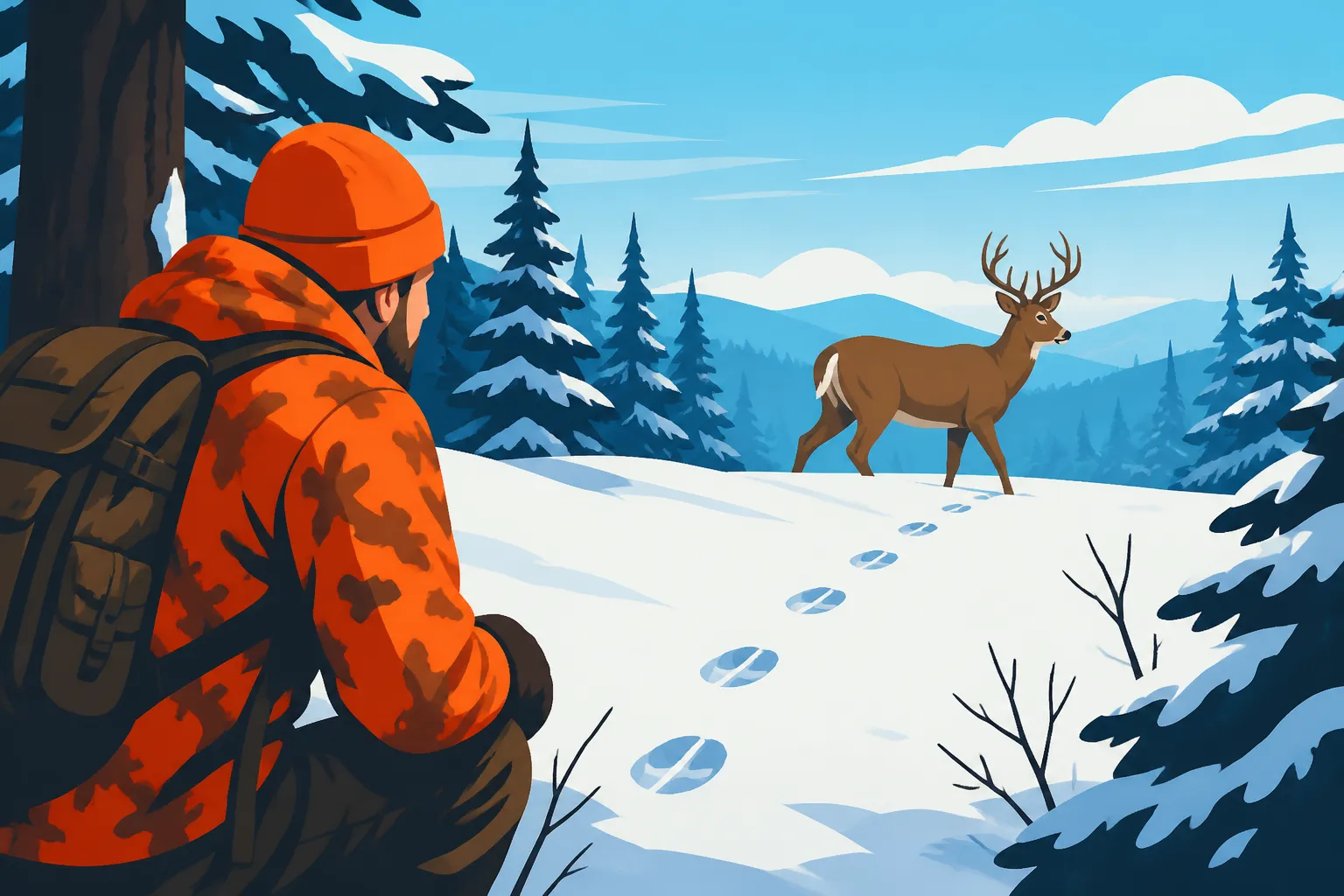
You’ve just heard the thump, seen the kick, and watched your deer bound away into a pristine, snow-covered Maine forest. That initial surge of adrenaline is quickly followed by the profound, slightly terrifying realization that you now have to find that animal. Tracking a deer in fresh Maine snow can be both a blessing and a curse; the tracks are clear, but a light snowfall or melting conditions can turn a promising trail into an infuriating puzzle. This comprehensive guide is here to transform that anxiety into competence, helping you read the nuances of the snow and recover your hard-earned deer.
Understanding the Snow and Its Impact on Tracking
The type of snow beneath your boots makes all the difference when you’re on the trail of a deer. It’s not just "snow"; it's a dynamic medium that tells a story, if you know how to read its many chapters. Knowing what you're up against before you even step into the woods can help you prepare mentally and strategically.
Different Snow Types and Their Tracking Challenges
Maine offers a smorgasbord of snow conditions throughout its long hunting seasons, from the crisp early archery days to the cold, often deep, late muzzleloader close. Each snow type presents unique challenges and opportunities for the tracker.
- Fresh Powder (Light, Dry Snow): This is often the ideal scenario for tracking. Deer hooves leave crisp, well-defined impressions, and even a small amount of blood stands out starkly against the white canvas. The challenge here is if the snow is too light and still falling, it can quickly obscure tracks and blood, especially if the deer is still moving quickly and not bleeding profusely. You might find yourself having to move faster, or risk the trail literally disappearing before your eyes.
- Wet, Heavy Snow: Think late November, early December thaw, or a warm front moving in. This snow holds tracks very well, creating deep, distinct prints. Blood can also be very apparent, often melting into the snow around the impact site. The downside? This snow is heavy to walk through, making silent tracking difficult, and your own boots will obliterate previous sign. Deer also exert more energy in this snow, so their tracks might show more "plowing" or drag, especially if they are injured.
- Crusty Snow (Refrozen or Windblown): This is the tracker's nemesis. A hard crust might hold an impression only if the deer breaks through it, leading to inconsistent and vague tracks. A deer might also "skip" across the crust, leaving no discernible prints for yards. Blood can be difficult to see if it soaks into the crust or if the crust breaks into pieces that cover it. The sound of your own boots breaking through the crust can also spook any bedded deer ahead.
- Deep Snow: Common during our later seasons, deep snow affects deer movement significantly. If you’re Hunting Into the December Muzzleloader Close, you’re likely to encounter this. Deer will often "post-hole," sinking deep with each step, creating very obvious tracks. They'll also often take the path of least resistance – old logging roads, game trails, or even snowmobile tracks. While tracks are clear, deep snow means a deer is exerting more energy, and if wounded, it might bed down sooner. It can also mean a more arduous recovery once the animal is down, especially when considering Recovering a Deer From a Cedar Swamp.
| Snow Type | Track Definition | Blood Visibility | Tracker Mobility | Deer Energy Expenditure | Key Challenge |
|---|---|---|---|---|---|
| Fresh Powder | Excellent | Excellent | Easy | Low | Quickly obscured by falling snow |
| Wet, Heavy Snow | Very Good | Good | Moderate | Moderate | Tracker's tracks obscure, tiring to walk |
| Crusty Snow | Inconsistent | Poor | Difficult | High | Tracks vague, noisy, blood difficult to see |
| Deep Snow (>6") | Excellent, deep | Good | Difficult | Very High | Tiring for deer and tracker, slow progress |
How Temperature and Melting Conditions Affect the Trail
Temperature is the invisible hand guiding how snow behaves. A crisp, cold day means tracks stay sharp and blood retains its color longer. But as temperatures rise, even slightly, everything changes.
When the mercury climbs, even a few degrees above freezing, the edges of tracks start to soften and blur. Blood, especially if it's not a lot, can quickly melt into the snow, creating a small, pinkish depression that's easily missed. It also means your window for tracking effectively shrinks. If you shoot a deer on a morning when the temperature is forecast to rise significantly, you need to be on that trail quickly. The frustration of seeing a promising trail turn into vague, slushy puddles is something every Maine hunter has experienced. This is where diligent marking with surveyor's tape or flagging becomes critical, as a visible marker won't melt away like blood can. It also emphasizes the importance of good shot placement to minimize tracking distance, especially when conditions are marginal.
Reading the Sign: More Than Just Footprints
Tracking isn't just about putting one foot in front of the other, following prints. It's about reading the entire story the deer leaves behind – its gait, its behavior, and every tiny speck of blood or displaced snow. Becoming a skilled tracker is like learning a new language, and the forest, particularly a snow-covered one, is constantly speaking to you.
Distinguishing Deer Tracks and Gaits
A deer's track can tell you so much more than just "a deer was here." It tells you what kind of deer, how fast it was moving, and potentially, how badly it's injured.
- Buck vs. Doe Tracks: While not always foolproof, generally, a mature buck will have a larger, more blunt-ended track. The hooves might also splay out more, especially if it's a heavier animal. Does, particularly younger ones, often have daintier, more pointed tracks. However, a big doe can leave tracks just as large as a small buck, so don't solely rely on track size. The length of the stride and other accompanying signs are often more telling.
- Gait Analysis:
- Walking: The deer's hind track will typically land slightly behind or directly on top of the front track. The stride will be consistent. In deep snow, a walking deer will often make a deliberate, almost plowing motion with its feet.
- Trotting: The stride lengthens, and the hind tracks will often land in front of the front tracks. There's a noticeable increase in pace.
- Bounding/Running: This is the most common gait for a wounded deer. You'll see long leaps, with all four tracks often grouped together, sometimes with the hind feet landing in front of the front. In deeper snow, this looks like a series of distinct "groups" of tracks, where the deer has launched itself forward. If a deer is running "with its tail tucked," it's often a sign of injury or extreme fear.
- Hoof Impressions: Look closely at the depth and consistency of the hoof print. If one side of the track is consistently deeper, it could indicate the deer is favoring a leg. Drag marks, especially if they are consistent and not just incidental, can be a sign of a wounded leg or a deer simply being exhausted in deep snow. Don't confuse incidental brush or small branches dragging with actual hoof drag.
Interpreting Blood Trails and Other Signs
The blood trail is, of course, the most critical piece of evidence. But its appearance can tell you about the shot placement and the severity of the wound.
-
Color and Consistency:
- Bright Red/Pink, Frothy: This is often lung blood, a very good sign. It usually indicates a double-lung shot, which is typically lethal and results in a shorter track. The frothy texture comes from air mixing with blood in the lungs.
- Dark Red, Thick, Clotting: This often indicates liver or muscle tissue. Liver shots are typically fatal but can take longer to bring the animal down, requiring a more patient track. Muscle hits can be non-fatal or take a very long time, and the deer may travel a great distance.
- Dark Red with Stomach Contents/Green Matter: This is gut blood, usually a very bad sign for a quick recovery. The deer will likely travel a long distance and bed down quickly. This is when patience is absolutely paramount; you should back out immediately and give the deer at least 6-8 hours, preferably longer, to stiffen up. Pushing a gut-shot deer is the quickest way to lose it entirely.
- Sparse Specks, Bright Red: Sometimes you only get a few drops. This could be a muscle hit, or an entrance/exit wound that is quickly clotting. These sparse trails are the hardest to follow and require extreme diligence.
-
Other Tell-Tale Signs: Don't just look for blood on the snow.
- Hair: Look for hair at the shot site. Short, white hair often indicates a brisket or belly shot. Long, brown body hair suggests a quartering shot or a superficial hit. Look for how the hair is cut – clean cuts from a broadhead, or macerated hair from a bullet wound.
- Disturbed Vegetation: Freshly broken twigs, scuff marks on trees, or overturned leaves can indicate the deer's path, especially if the blood trail is minimal.
- Bedding Areas: A wounded deer will often try to bed down in thick cover, often facing its backtrail. Look for depressions in the snow, fresh urine, or increased amounts of blood. If you jump a bedded deer, mark the spot and then reassess. If the deer seems strong, back off and give it more time. If it looks wobbly, you might choose to push. This is where local knowledge and experience come into play. Apps like GoHunt can be invaluable here for marking these critical spots and planning your next move.
The Art of the Track: Step-by-Step Strategies
Once you’ve confirmed a hit and assessed the initial signs, it’s time to settle in and track. This isn't a race; it's a methodical process that demands patience, attention to detail, and a smart approach.
Initiating the Track: First Steps and Marking the Trail
The first 50-100 yards are crucial. This is where you gather the most information and establish a clear starting point.
- Mark the Shot Location: As soon as you believe you've hit a deer, mentally mark the spot it was standing when you shot. Then, walk to that spot and place a piece of surveyor's tape, toilet paper, or a bright hat. This is your "Point of Impact."
- Find the First Blood/Hair: From the point of impact, scan for the first signs of blood or hair. This can be anywhere from a few feet to 20-30 yards away. Once found, mark this spot as well.
- Assess the Initial Trail: For the first 50-100 yards, don't just follow; study. What kind of blood is it? How much? What's the deer's gait? Is there hair? How is the snow disturbed? Is it leaving a drag mark? This initial assessment will help you decide how long to wait before continuing the track.
- Mark Progress Frequently: This is non-negotiable, especially in challenging snow. Use surveyor's tape (biodegradable is best for the environment) or toilet paper tied to branches every 10-20 yards, or at every point where the trail changes direction or becomes difficult. This creates a breadcrumb trail you can always return to if you lose the main path. Use your GPS or a hunting app like GoHunt to drop pins along the trail. This becomes essential if you need to Blood Trailing After Dark in Maine.
Following the Trail: Patience, Precision, and Partners
Tracking can be a solo endeavor, but often, having a partner makes it much more effective.
- Slow and Steady: Resist the urge to rush. Walk slowly, scanning not just the immediate track but also 5-10 yards ahead. Look for future blood drops, disturbed snow, or broken twigs.
- Use Your Eyes and Knees: Don't be afraid to get down on your hands and knees to examine a faint sign. What looks like a shadow from standing height might be a crucial speck of blood up close.
- The "One Tracker Ahead" Method: If you're with a partner, have one person stay on the last confirmed blood or track, while the other slowly moves ahead, searching. When the next sign is found, the person behind moves up, and the process repeats. This ensures you never lose the last known spot.
- Look Off the Trail: A wounded deer might take an unexpected turn or use heavy cover. Don't get tunnel vision just on the direct line of tracks. Glance to the sides, especially into thickets, blowdowns, and along creek bottoms or Scrape Lines Along a Logging Road.
- Think Like a Deer: Where would you go if you were hurt? Deer often seek thick cover, water (especially if gut-shot, to cool their internal organs), or high ground to observe their backtrail. They'll use the path of least resistance in deep snow, often following existing deer trails or old woods roads. Consider Where Maine Bucks Bed in Big Timber as potential bedding areas.
- Wind and Thermals: Be mindful of the wind direction. Approach slowly and into the wind if possible, to avoid spooking the deer if it's bedded down ahead. In hilly country, remember how Wind and Thermals in Maine Hill Country affect deer movement and scent dispersal.
Overcoming Challenges: When the Trail Gets Tough
Even the most meticulous tracker will eventually hit a wall. The snow might change, another deer might cross the path, or the blood trail might simply vanish. These moments test your resolve, but there are strategies to keep you in the game.
Losing the Blood Trail: Grid Searches and Expanding Your Search
It happens to everyone. The blood trail just… ends. Don't panic.
- Return to the Last Confirmed Sign: This is why marking is so important. Go back to your last piece of surveyor's tape or GPS pin.
- Circle Search: From that last sign, slowly walk in an ever-widening circle, meticulously examining every inch of ground. Expand your circle in 5-10 yard increments. Look for any sign – a disturbed patch of snow, a broken twig, a single hair.
- Grid Search: If the circle search yields nothing, implement a grid search. Mark a square area around the last sign and systematically walk parallel lines, 5-10 yards apart, within that square. This is tedious but effective.
- Look for Escape Routes: Think about what a deer would do. If it was spooked, which way would it go? Look for natural travel corridors, thick cover, saddles in ridges, or water sources. Your GoHunt app or other mapping tools can highlight these features.
- Call for Backup: If you're truly stumped, call a friend or family member for help. More eyes on the ground can make a huge difference. Fresh eyes often spot what tired, frustrated eyes have missed.
- Use Binoculars: Sometimes, a deer will bed down on a distant hillside or in a clearcut edge. Use binoculars to scan ahead, especially in open areas or recently logged timber cuts. You might spot the deer itself, or a dark spot that indicates a bedded animal.
Dealing with Multiple Deer Tracks and Confusing Intersections
Nothing complicates a snow track like having a whole herd of deer cross your animal's path.
- Size and Stride: This is where the initial assessment of your deer's track size and stride length comes in handy. Try to pick out the consistent size and pattern of your deer's hooves.
- Look for Distinctive Marks: Did your deer have a chipped hoof? A slightly splayed track? These small details can be your lifesaver in a maze of tracks.
- Follow the Blood: When in doubt, prioritize the blood. Even if the tracks are a mess, blood is unequivocal evidence.
- Slow Down and Be Patient: This is not the time to rush. Take your time at every intersection. Have one person stay on the last confirmed sign while others fan out slightly to identify which set of tracks carries the blood.
- The "Walk Around" Method: If a large group of deer tracks completely obscures your trail at an intersection, walk around the entire intersection, looking for where your deer's track re-emerges on the other side. This can sometimes be quicker than trying to sort through every single track in the middle of the chaos.
- Reassess the Situation: If you're consistently losing the trail or getting confused by other deer, take a break. Have some water, eat a snack, and re-evaluate your strategy. Sometimes a fresh perspective is all you need. Understanding Maine Deer Wintering Yards Explained can also help anticipate areas where multiple tracks might converge, as deer congregate in these areas during harsher conditions.
Tracking a deer in fresh Maine snow is a skill honed over seasons, often through frustrating experiences and hard lessons. But by understanding the snow, meticulously reading every sign, and employing smart tracking strategies, you dramatically increase your odds of a successful recovery. Remember, every deer you track is a puzzle, and with patience and persistence, you can put the pieces together.
Disclaimer
Hunting is an inherently dangerous activity. Always prioritize safety, responsible gun handling, and ethical hunting practices. The advice provided here is for informational purposes only and should not supersede local laws, regulations, or professional guidance. Always hunt with proper licensing and permissions, and consider taking a certified hunter education course.