Finding Access Near Machias
Trying to find good hunting access, especially when you're exploring a new area like the Downeast region of Maine around Machias, can feel like you're trying to solve a puzzle with half the pieces missing. It’s a common frustration, isn't it? You know the game is there, the landscape looks prime, but actually figuring out where you can legally and ethically step foot with a firearm or bow can be daunting. This guide is here to untangle that knot, offering practical strategies and insights for uncovering both public and private hunting opportunities in the beautiful Machias area, helping you spend less time stressing and more time hunting.
Understanding the Downeast Landscape for Hunters
The Machias area, nestled in Washington County, is a truly unique part of Maine. It's rugged, wild, and largely undeveloped compared to other parts of the state. This means incredible potential for hunters, but it also means a different kind of access puzzle. You're dealing with vast tracts of timberland, interwoven with blueberry barrens, coastal marshes, and smaller state-managed parcels.
The Mix of Private and Public Lands
Unlike some states where public land is clearly demarcated and plentiful, much of the hunting land in Downeast Maine, including around Machias, is privately owned. Large timber companies, smaller private woodlot owners, and individuals own huge swaths of the forests. This can be intimidating, but it's not a dead end for hunters. In fact, Maine has a strong tradition of Maine's Private Land Access Tradition, where unposted land is generally open to hunting, fishing, and trapping. However, it's crucial to understand that this implied permission is a privilege, not a right, and it absolutely does not apply to land that is clearly marked "Posted" or where there are obvious signs of cultivation or development.
You'll find pockets of public land, too, though often smaller and more dispersed than the massive tracts found in northern or western Maine. These might include state Wildlife Management Areas (WMAs), Public Reserved Lands, or even certain federal holdings. The challenge is often identifying these parcels amidst the sea of private ownership and understanding any specific rules that might apply to them. It really requires a bit of detective work and some good mapping tools, but the rewards can be significant if you find those less-pressured spots.
Key Game Species Around Machias
The Machias region offers a diverse array of hunting opportunities, driven by its unique blend of forest, wetland, and coastal habitats. Understanding what game you're targeting can help you narrow down where to focus your access efforts.
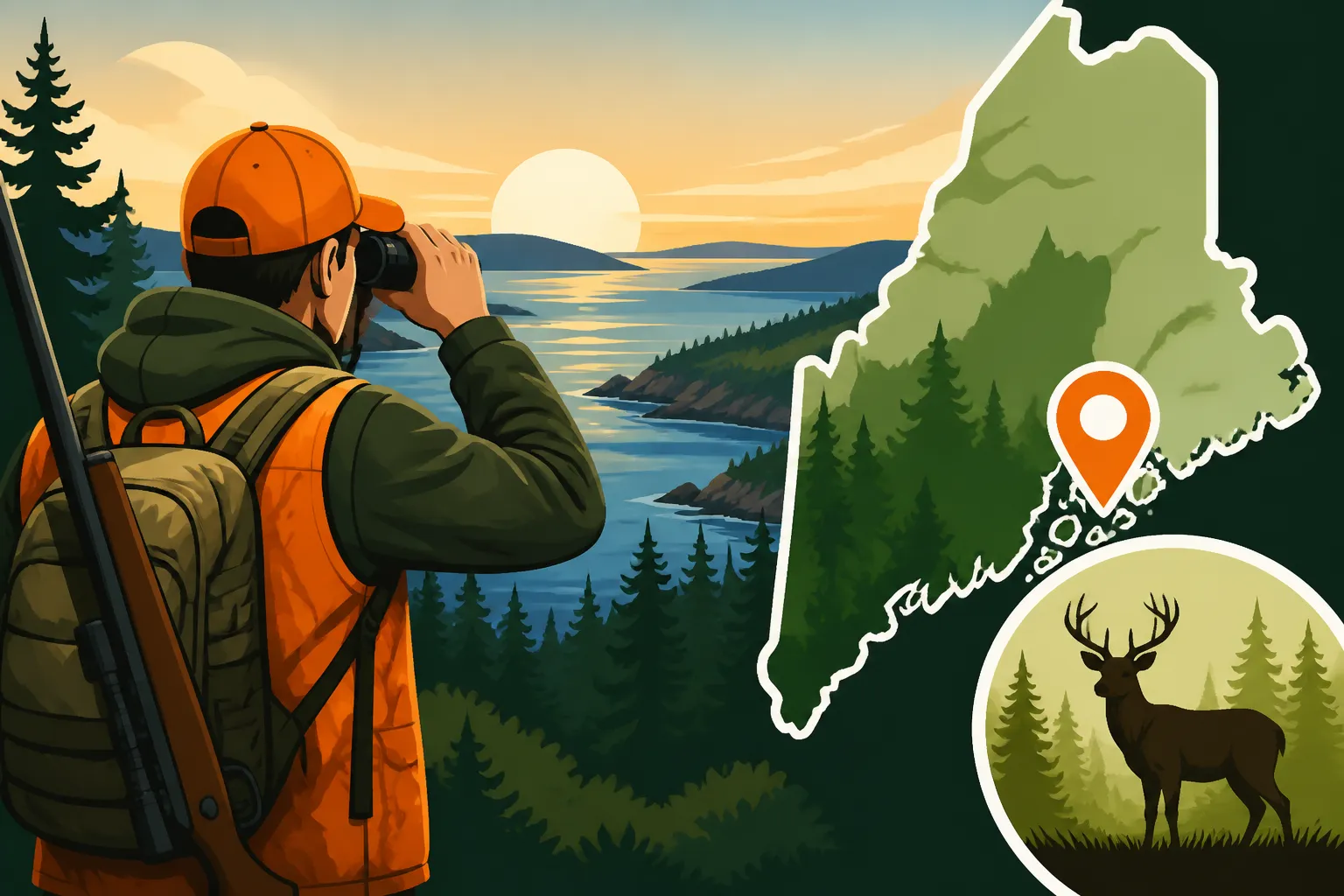
Of course, the white-tailed deer are a primary draw for many hunters. While the deer density might not be as high as in some southern Maine WMDs, the quality of the hunting experience in Downeast is often unparalleled. Bucks here grow big and live longer, adapting to the challenging terrain and often vast, unbroken cover. You’ll find deer in the mixed hardwoods and softwoods, along the edges of blueberry barrens, and especially near cedar swamps that offer critical wintering cover. Hunters often focus on transition areas between dense cover and feeding areas, or along old logging roads and skid trails. Washington County's extensive timberlands provide excellent habitat for White-Tailed Deer Across Maine, though finding them can be a challenge.
Black bears are also plentiful in this region. The dense forest cover and abundance of food sources, including blueberries and acorns, make it prime bear country. Bear hunting opportunities here are robust, whether you prefer baiting, still-hunting, or hunting with hounds. Access to large private timberlands is often key for bear hunters, as these areas provide the undisturbed habitat bears need.
For the upland bird hunter, ruffed grouse and American woodcock thrive in the mixed age forests, especially in areas with regenerating timber stands, alder runs, and dense young growth. These birds offer fast-paced action and a chance to explore some incredibly beautiful country. The extensive network of logging roads and old two-tracks provides excellent walking access for those hunting with or without dogs. The Machias area is also part of a major migration corridor for woodcock, particularly in the fall, making it a hotspot during peak migration.
Finally, for those who love the cold, raw beauty of the ocean, the Downeast coast near Machias offers fantastic sea duck hunting. Eiders, scoters, and long-tailed ducks (formerly oldsquaws) winter in significant numbers off the rugged coastline. Access usually involves launching a boat from local ramps to reach tidal flats, rocky ledges, and open water areas. You'll need specialized gear and boats for this type of hunting, and a keen understanding of tides and coastal weather, but it’s an experience like no other.
Navigating Private Land Access Near Machias
Given that so much of the Downeast region is privately owned, mastering the art of gaining private land access is absolutely essential for a successful hunt around Machias. It takes effort and a respectful approach, but it's often where you'll find the least pressured game.
The Importance of Permission
Let’s be crystal clear about this: respect for private property is paramount in Maine. While the tradition of implied permission for unposted land exists, it's always, always best practice to seek explicit permission, especially if you're venturing beyond a casual walk. When land is "Posted," meaning marked with signs or paint indicating no trespassing, you must have permission from the landowner to enter for any reason, including hunting. Ignoring these signs is not only illegal but also damages the relationship between landowners and hunters, potentially leading to more land being posted in the future.
Hunting on land you don't have explicit permission for, when it's posted, can lead to fines, confiscation of equipment, and loss of hunting privileges. It's just not worth the risk. More importantly, it undermines the very fabric of Maine's hunting culture. Always remember that landowners have the right to manage their property as they see fit, and we, as hunters, are guests. Being a good guest ensures future opportunities for everyone. To truly understand the nuances, it's worth reading up on specific legal requirements like Do You Need Written Permission in Maine?.
Identifying Landowners and Asking for Access
So, how do you actually go about finding out who owns the land and then asking for permission? It's a multi-step process that often starts with technology and ends with good old-fashioned communication.
First, invest in a good mapping application like onX Hunt or GoHunt. These tools are absolute game-changers for identifying property boundaries, landowner names, and often even contact information. You can zoom in on an area that looks promising, see who owns it, and immediately tell if it’s public land, a large timber company parcel, or a smaller private lot. The satellite imagery helps you identify potential food sources, cover, and travel corridors, letting you focus your permission-seeking efforts. Many hunters find that simply having these apps on their phones revolutionizes their scouting and hunting plans, allowing them to confidently navigate properties.
Once you’ve identified a landowner, the next step is to make contact. This can be intimidating, but approach it with courtesy and respect. Start by visiting the local town office in Machias or a neighboring town; the tax assessor’s office usually has maps and records of property ownership. Sometimes, a quick chat with the clerk can even lead to local insights or tips.
When you do approach a landowner, whether in person or by phone, introduce yourself, explain your intentions, and be prepared to be flexible. Offer to share your harvest, promise to be careful with their property, close gates, pick up any trash, and respect any specific requests they might have (e.g., "don't drive down that old logging road," or "stay away from the house"). Dressing presentably and speaking politely goes a long way. Many landowners are happy to grant access to respectful hunters, especially those who demonstrate a commitment to safety and land stewardship. Be prepared for a "no" – it happens – and always accept it gracefully. Remember, even a single "yes" can open up incredible hunting opportunities. For larger timber companies, you might need to contact their regional land management offices, which can often be found with a quick online search or through your mapping apps.
Exploring Public Hunting Opportunities Around Machias
While private land dominates, there are still valuable public hunting opportunities near Machias that shouldn't be overlooked. These areas offer guaranteed access, though they often come with their own unique set of regulations and hunting pressure.
State Wildlife Management Areas (WMAs) and Public Reserved Lands
Maine has a system of Maine Wildlife Management Areas (WMAs) and Public Reserved Lands that are managed by the Maine Department of Inland Fisheries and Wildlife (MDIFW) or the Bureau of Parks and Lands (BPL). While Washington County might not have the sprawling WMA complexes seen in other parts of the state, there are still parcels worth investigating. These lands are managed for a variety of purposes, including wildlife habitat, timber production, and public recreation, which includes hunting.
Near Machias, you’ll find smaller Public Reserved Lands or focused WMAs that might provide access for deer, bear, grouse, and woodcock. These areas are often actively managed, meaning you might find diverse forest ages, clear-cuts, and specific habitat improvements that concentrate game. Always check the MDIFW website for specific regulations pertaining to each WMA or Public Reserved Land, as some might have special rules regarding vehicle access, camping, or target shooting. Maps for these areas are often available online, and using your onX Hunt or GoHunt app can help you overlay boundaries with satellite imagery to find good entry points and potential hunting spots. Look for areas with a mix of cover, water sources, and potential food.
Federal Lands and Easements
Federal lands directly adjacent to Machias for hunting are less common for big game, but it's always worth researching. Sometimes, certain units of the National Wildlife Refuge System may have limited hunting seasons. However, a more significant opportunity often comes in the form of conservation easements or public access agreements on large private timberlands. These agreements, often brokered by land trusts or state agencies, allow public access for activities like hunting across vast private holdings, even if the land remains privately owned.
These easements are often marked on the ground by specific signage, and critically, they are usually clearly delineated on mapping apps like onX Hunt. When you see a large private timber company tract show up as accessible for hunting on your app, it's often due to such an easement. This is where tools like onX Hunt truly shine, showing you the exact boundaries of these access agreements and preventing you from inadvertently trespassing. Always verify the rules for these lands, as they can sometimes differ from general public land regulations, especially regarding vehicle use or seasonal restrictions.
Hunting the Downeast Coastline
For the dedicated waterfowl hunter, the coastline around Machias and into the wider Downeast region offers fantastic opportunities for sea ducks. This isn't your typical marsh or river hunting; it's a wild, open-water experience targeting resilient birds like common eiders, scoters, and long-tailed ducks that thrive in the choppy, cold waters of the Atlantic.
Access for sea duck hunting typically involves launching a boat from public or private ramps along the coast. Areas with abundant ledges, rocky islands, and tidal currents tend to hold the most birds. You'll need appropriate safety gear for cold water, a reliable boat, and a good understanding of the tides and currents. Decoying is a common tactic, often placing large spreads of decoys on or near submerged ledges at various tide stages. Before heading out, make sure you understand the specific regulations for Maine Sea Duck Coastal Zone Line, including bag limits and shooting hours, and have your federal duck stamp and HIP certification. Local marinas or bait shops can sometimes offer insights into popular launch points or current bird movements.
Tools and Tactics for Effective Scouting
Finding access is only the first step; effectively scouting these areas, whether public or private, is what truly sets up a successful hunt. The Machias region presents unique challenges and opportunities that can be unlocked with the right tools and a solid plan.
Leveraging Mapping Applications
I can't stress this enough: modern hunting demands modern tools. Mapping applications like onX Hunt and GoHunt are no longer just a luxury; they're an essential part of a hunter's toolkit, especially when trying to decipher the patchwork of land ownership around Machias.
These apps provide invaluable layers of information that static paper maps simply can't. You can overlay aerial imagery with property boundaries, showing you at a glance who owns what. This is crucial for distinguishing between private timberland where you might need permission, publicly accessible easements, state WMAs, or entirely off-limits conservation areas. Beyond ownership, the high-resolution satellite views allow you to identify critical habitat features. You can spot old clear-cuts that are now growing into dense young spruce, perfect for deer and grouse. You can trace the lines of a beaver flowage, identify a mature oak ridge that might be dropping acorns, or pinpoint a thick cedar swamp that offers bedding cover. These details, visible from your couch, save countless hours of aimless wandering in the woods. Scouting With the Maine Hunting App goes into more detail, but for the Machias area, imagine using these tools to find a funnel between two dense woodlots, or to pick out a secluded clearing deep within a timber block that might serve as a bedding area. You can drop waypoints for potential stand sites, mark fresh sign you find, and even track your movements to avoid getting turned around in unfamiliar country.
Boots on the Ground Reconnaissance
While digital maps are powerful, they are not a substitute for "boots on the ground" scouting. The satellite image can tell you what is there, but only your own two feet can tell you how deer are using it, when turkeys are gobbling, or if grouse are drumming in a particular cover.
Pre-season scouting is vital, particularly in the vast, often featureless timberlands around Machias. Walk those old logging roads and skid trails you identified on your map. Look for fresh deer tracks, rub lines, and scrapes. Pinpoint potential food sources like wild apple trees or areas with abundant browse. Pay attention to bedding areas – often dense thickets or the leeward side of a ridge. For upland birds, focus on dense young growth, alder thickets, and the edges of clear-cuts where they feed and find cover. Finding Sign in Big North Woods Timber is a great resource for understanding what you're looking for.
One tactic for Downeast is to identify historical logging activity. Old growth forests are generally less productive for most game species. Instead, focus on areas that were logged 5-20 years ago, creating the dense cover and abundant forage that deer, bear, and grouse thrive in. These areas are often difficult to walk through, but that's precisely why game uses them and why they see less hunting pressure. Don't be afraid to put in the hard miles; the wildness of Machias means that the further you get from easy access points, the more likely you are to find undisturbed game.
Practical Considerations for Hunting Near Machias
Hunting in the Machias region, like anywhere in Maine, requires more than just finding access and scouting. It involves understanding and adhering to local regulations, prioritizing safety, and sometimes, tapping into the invaluable local knowledge that only comes from experience.
Understanding Local Regulations and Seasons
Before you even pack your hunting gear, the absolute first thing you must do is consult the current Maine hunting regulations. These regulations are published annually by the MDIFW and are available online and wherever hunting licenses are sold. Do not rely on information from previous years or assumptions from other states. Maine's rules, especially concerning specific Weapon Management Districts (WMDs), season dates, bag limits, and legal hunting methods, can change.
For the Machias area, which typically falls within certain WMDs in Washington County, pay close attention to the specific dates for deer (archery, firearms, muzzleloader), bear (bait, hounds, trapping), turkey (spring and fall), and migratory birds. Ensure you have all the necessary licenses and permits. This includes your basic Maine Hunting Licenses and What They Cost, any specific permits like an Any-Deer (Antlerless) permit if you're drawn for one in a local WMD, or a federal duck stamp and HIP certification for waterfowl. Always carry proof of your license while hunting. The state's online portal is a convenient way to purchase and manage your permits.
Safety and Respect
Safety is always paramount in the field. When hunting in Maine, it’s mandatory to wear hunter orange during certain seasons. How Much Blaze Orange Maine Requires dictates specific amounts of blaze orange or blaze pink on your person, ensuring you're highly visible to other hunters. This is especially important in areas with mixed public and private land, or on vast timber company lands where other hunters might be present. Always identify your target clearly and be certain of what lies beyond it.
Beyond personal safety, demonstrating respect for the land and other users is critical. If you're granted access to private land, leave it better than you found it. Close gates, don't block access roads, and avoid disturbing any farming or logging operations. Pack out all your trash, including spent shell casings. If you encounter other hunters, whether on public or private land, offer a friendly greeting and maintain a respectful distance. Maine's hunting culture thrives on mutual respect, and upholding that tradition benefits everyone. Be prepared for remote conditions, too; carry a map, compass or GPS, a first-aid kit, and sufficient water and food, especially if you plan to venture deep into the woods. Cell service can be spotty at best in many Downeast locales.
Finding Local Expertise
Sometimes, the best access isn't found on a map or through an app, but through a conversation with someone who knows the area intimately. Locals often possess a wealth of knowledge about specific land access, game movements, and hidden gems. Strike up polite conversations at local diners, hardware stores, or gas stations in Machias, East Machias, or neighboring towns like Lubec or Jonesport. You might learn about a landowner who's generally amenable to hunters, a new logging operation that's opened up fresh cover, or a particularly productive apple orchard that's holding deer. Approach these conversations with humility and genuine interest, not with an entitlement to their secrets.
Another excellent option, particularly if you're new to the area or have limited time, is to consider hiring a local Registered Maine Guide. Hiring a Registered Maine Guide can provide an unparalleled advantage. These professionals not only know the land like the back of their hand but also have established relationships with landowners, understand local game patterns, and can navigate regulations with ease. While there's a cost involved, the value of their experience and their ability to put you on game in an unfamiliar area can be immense, saving you years of trial and error. They can guide you on private timberlands, public parcels, or even sea duck charters, significantly increasing your odds of a successful and enjoyable hunt.
Here’s a quick overview of public vs. private land hunting in the Machias area:
| Feature | Private Land (Unposted) | Private Land (Posted/Company) | Public Land (WMA/Reserved/Easement) |
|---|---|---|---|
| Access Default | Implied Permission (with caveats) | Explicit Permission REQUIRED | Open to Public (Check specific rules) |
| Landowner Contact | Recommended, but not always legally required | Absolutely essential for entry | Not applicable |
| Game Pressure | Can vary; often lower with good permission | Can be very low if access is limited | Can be higher, especially near easy access points |
| Tools Needed | Mapping apps (onX Hunt), town office records, communication skills | Mapping apps (onX Hunt), company contact info, persistence | Mapping apps (GoHunt), MDIFW/BPL maps, regulations |
| Ethical Responsibility | High, to maintain implied permission tradition | Highest, as a guest on specific property | High, to maintain public access and respect wildlife |
| Primary Advantage | Opportunities in diverse, vast tracts | Exclusive access to prime, undisturbed habitat | Guaranteed access, sometimes managed for specific game |
Finding hunting access near Machias, like much of Downeast Maine, certainly requires diligence, research, and a respectful attitude. But don't let that deter you! This region offers some of the most authentic and rewarding hunting experiences in the state. By leveraging mapping technologies like onX Hunt and GoHunt, putting in the effort for in-person scouting, understanding and respecting private landowners, and knowing where to find public opportunities, you'll unlock incredible hunting grounds. The rewards of pursuing deer, bear, grouse, woodcock, or sea ducks in this wild, beautiful corner of Maine are well worth the initial effort. Happy hunting!
Disclaimer
This article is for general informational purposes only and does not constitute professional advice. Laws, prices and regulations vary by location and change over time. Consult a qualified professional for guidance on your specific situation.