How Turkeys Spread North Into Aroostook County
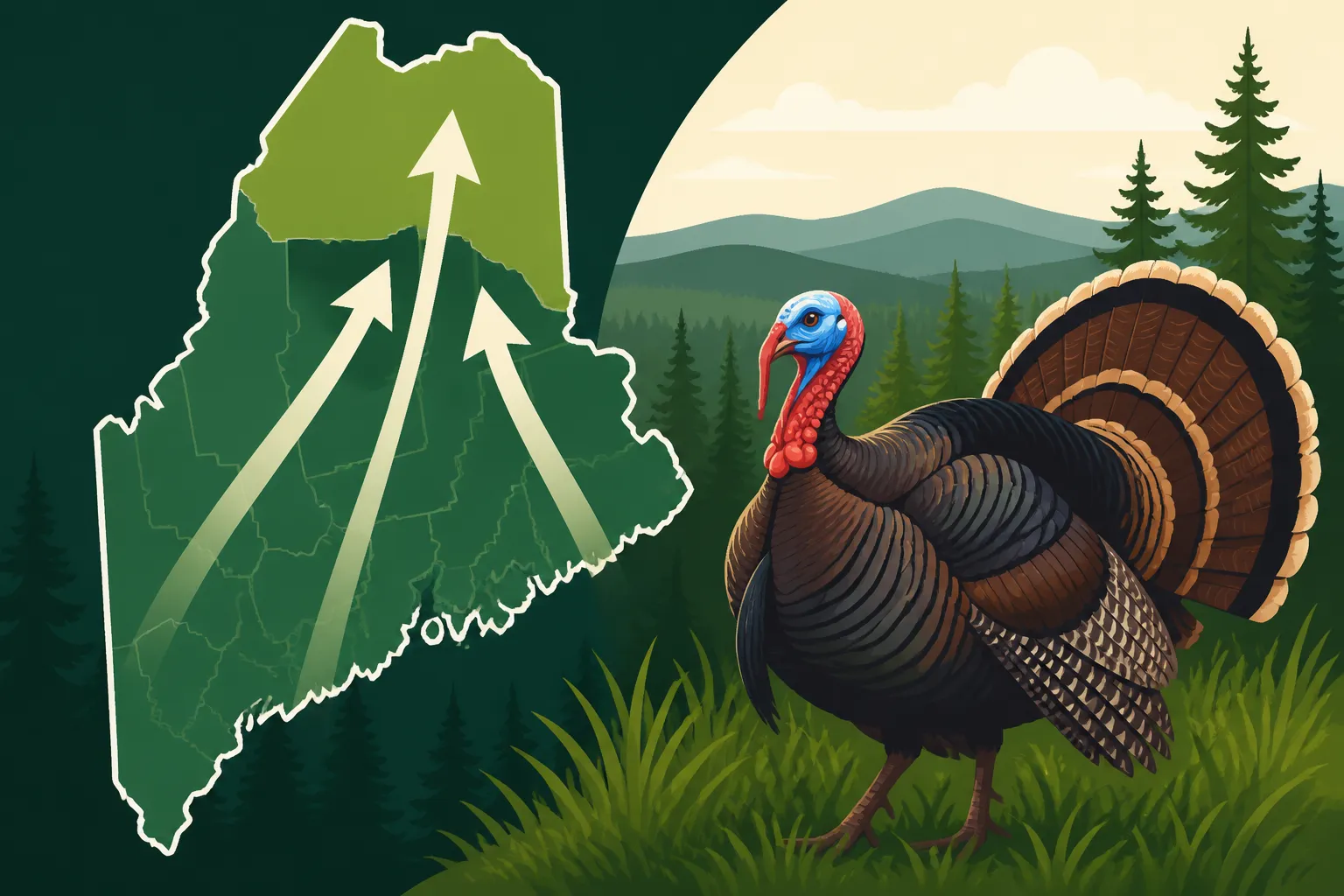
For many years, the idea of hunting a wild turkey in Aroostook County would have sounded like a pipe dream. Generations of hunters in Maine's northernmost county simply didn't grow up with turkeys, a bird that was extirpated from the state by the early 1800s. But times have changed dramatically, and these magnificent birds have steadily pushed their range northward, establishing thriving populations in areas once thought too harsh. This guide dives deep into the incredible journey of how wild turkeys made their way into Aroostook County, exploring the historical restoration efforts, the environmental shifts that aided their expansion, and what this exciting development means for hunters seeking gobblers in "The County" today.
The Journey Back: Maine's Initial Turkey Restoration
The story of wild turkeys in Aroostook County doesn't start in Aroostook at all. It begins much further south, with dedicated conservation efforts to bring the birds back to Maine after over a century of absence. Their original disappearance was largely due to unregulated hunting and extensive habitat loss from widespread deforestation for agriculture and timber. It was a classic example of human impact, leaving a void in Maine's rich wildlife tapestry.
Early Transplants and Southern Expansion
The serious work of reintroducing wild turkeys to Maine began in the late 1970s and early 1980s. The birds used for these initial transplants weren't simply released from captivity; they were wild-trapped turkeys from states with robust populations, primarily Vermont and Pennsylvania. These were hardy, intelligent birds that knew how to survive in a wild landscape, and that was crucial to the success of the program. The first releases occurred in southern Maine, where habitat conditions were deemed most favorable and most similar to the areas these birds historically occupied. Places like York and Cumberland counties became the initial footholds.
These initial populations, though small, took hold. Hunters and naturalists alike watched with anticipation as the birds slowly but surely began to reproduce and expand their range. The strategy was to allow these initial populations to grow and then, through a process called "trap and transfer," move birds from these burgeoning southern flocks to other suitable locations within the state. This method proved far more effective than releasing pen-raised birds, which often lack the survival instincts needed for a truly wild existence. This careful management laid the groundwork for the incredible expansion we see today, with the birds demonstrating a remarkable ability to adapt and thrive. It's a testament to sound wildlife management and the resilience of the species itself. You can learn more about the specifics of this amazing comeback in How Turkeys Were Restored to Maine.
Overcoming Initial Hurdles and Building Momentum
Reintroduction efforts are rarely without their challenges. Early attempts in some areas faced setbacks, often due to predators, harsh weather conditions, or insufficient habitat. However, wildlife biologists continuously refined their approach, learning from each release. They carefully selected release sites that offered a mosaic of mature woods for roosting, open fields for foraging, and dense cover for nesting and protection. Over time, as the populations in southern Maine gained momentum, their genetic diversity and natural hardiness contributed to greater success.
The initial years were about slow, steady growth. It wasn't an explosion overnight, but a gradual filling in of suitable territories. As more and more birds became established, their numbers reached a point where regulated hunting seasons could be implemented, first in the spring and then in the fall. These hunting seasons, far from hindering the population, actually help to manage it and maintain a healthy age structure, while also fostering public support for the species. The success in the southern and central parts of the state gave biologists confidence that turkeys could eventually push beyond those traditional boundaries, setting the stage for their incredible move northward. This momentum was critical, proving that Maine could indeed sustain a vibrant wild turkey population, paving the way for birds to push into new, unexpected territories.
The Northern Migration: Paving the Way to Aroostook
Once established in southern and central Maine, wild turkeys began to do what wild animals do best: expand into new available habitat. This northern push wasn't just a random walk; it was driven by a combination of factors, both environmental and land-use related, that created a welcoming environment for these adaptable birds.
Habitat Changes and Agricultural Shifts
One of the most significant factors facilitating the turkey's northern expansion, and their eventual arrival in Aroostook, has been the shifting landscape of Maine. In many parts of the state, including sections of Aroostook, there has been a dynamic interplay between forestry practices and agriculture. While much of northern Maine remains heavily forested, logging operations create clear-cuts and regenerating stands. These areas, while initially not ideal, eventually grow into dense young forests that provide excellent cover and food sources as they mature, particularly for insects and berries.
More critically, changes in agricultural practices have created significant food sources. Aroostook County is famous for its vast potato fields, but there are also increasing acreages dedicated to other crops, including corn and grains. These agricultural lands, especially when adjacent to wooded areas, provide a consistent and rich food supply for turkeys, particularly during the critical fall and winter months. Waste grain left after harvest can sustain flocks through periods when natural forage is scarce. The combination of these agricultural food plots and the diverse forest types—from mature hardwoods for roosting to young saplings for security cover—formed a crucial bridge for turkeys to colonize new ground. Hunters understand the importance of identifying these food sources when scouting, and tools like GoHunt can be invaluable for pinpointing potential habitat by layering agricultural data over topographic maps.
The Role of Mild Winters and Adaptability
Maine is known for its legendary winters, and for a long time, the deep snows and prolonged cold were considered a natural barrier to turkey expansion into the far north. Wild turkeys, while incredibly resilient, struggle to find food when snow depths exceed a certain threshold for extended periods. However, recent trends have seen fluctuations in winter severity. Periods of milder winters, with less consistent deep snow cover, have provided crucial windows of opportunity for turkey flocks to survive, reproduce, and establish themselves further north.
Turkeys are also incredibly adaptable. They learn to utilize new food sources, ranging from forest mast crops like acorns (where available) to agricultural waste, and even backyard bird feeders in more settled areas (though feeding wild game can come with its own set of challenges). They also adapt their behavior, forming larger winter flocks that can more effectively forage and break through lighter snows. This adaptability, combined with a series of less severe winters, allowed pioneering flocks to push beyond their established territories, eventually reaching the southern and central portions of Aroostook County. Each successful winter survival for a newly established flock meant another step in their northern journey, firmly rooting them in regions where they hadn't been seen in centuries. Understanding these habitat nuances is key to hunting success, whether you're chasing them in southern Maine or searching for them up north. You might find more general strategies for Calling an Early May Gobbler Off the Roost helpful, regardless of location.
Turkeys in Aroostook Today: A Hunter's Perspective
For hunters in Aroostook County, the presence of wild turkeys is a relatively new and exciting development. What was once considered primarily moose and deer country now offers opportunities for chasing these elusive and challenging birds. Understanding their current status and how to approach hunting them in this unique northern landscape is key to success.
Current Population Status and Hunting Zones
The turkey population in Aroostook County is still considered more localized and generally less dense than in the southern parts of Maine. However, they are definitely here, particularly in the southern half of the county and along river drainages where agricultural land meets forest. These areas provide the best combination of food and cover. While you might not find turkeys on every woodlot, dedicated scouting will reveal their presence.
Maine uses a Wildlife Management District (WMD) system for turkey hunting, and it's absolutely vital to know which WMD you're in and what the specific regulations are for that zone. Some WMDs in Aroostook County might have spring seasons, but perhaps not fall seasons, or different bag limits. This is where your research comes in, making sure you're compliant with all state rules. For example, some WMDs allow a two-bird spring limit, while others might be one-bird zones. Always check the current regulations each year.
Here's a general idea of how turkey hunting opportunities might look in Aroostook, though specific WMD boundaries and rules change, so always consult the latest official guide:
| Aroostook County WMD (Example) | Spring Season Outlook | Fall Season Outlook | Typical Habitat |
|---|---|---|---|
| WMD 3 (Southern Aroostook) | Good, growing | Possible, limited | Mix of agriculture, mixed forest |
| WMD 4 (Central Aroostook) | Fair to Good | Unlikely or very limited | More forest, some agriculture |
| WMD 5 (Northern Aroostook) | Scarce | Closed | Mostly deep forest, limited agriculture |
| WMD 6 (Eastern Aroostook) | Growing, localized | Possible, limited | River valleys, potato fields, mixed forest |
Note: This table uses example WMDs and generalized outlooks. Always refer to the current Maine DIFW hunting regulations for specific WMD seasons and bag limits.
Understanding Maine's WMD-Based Turkey Bag Limits is paramount. These districts define not only how many birds you can harvest but also whether you can hunt in the spring and/or fall. Hunters need to be diligent about checking these boundaries, as a slight geographical shift could mean a completely different set of rules. The overall Maine Turkey Population Trends continue to be positive in many areas, and with careful management, Aroostook's turkey population should continue to thrive.
Scouting for Aroostook Gobblers
Hunting turkeys in Aroostook County requires a different approach than in southern Maine, where birds might be more abundant and accustomed to human presence. Up north, turkeys tend to be more spread out, and finding them often means focusing on prime habitat. Your scouting efforts will be key. Start by looking for areas where large blocks of timber, especially mature hardwoods that provide good roosting trees, intersect with agricultural fields like corn, oats, or potato fields. These intersections are food-rich zones. River valleys often provide excellent travel corridors and diverse habitat.
When scouting, look for fresh turkey sign: tracks in muddy areas or dirt roads, droppings, and scratchings in the leaves where they've been foraging. Listening for gobblers at dawn is a classic turkey hunting tactic, and it's just as effective in Aroostook. Get out before first light, find a high point, and listen for those tell-tale calls announcing their presence. Pay close attention to subtle sounds, as birds might be more hesitant to gobble loudly in new or less established areas. Using mapping software, like GoHunt, to identify agricultural fields, woodlots, and elevation changes can give you a massive advantage before you even step foot in the woods. These tools allow you to visualize the terrain and pinpoint potential hotspots, significantly cutting down on your "boots on the ground" scouting time.
Remember, Aroostook is still wild country in many places. You'll often be hunting larger tracts of land, so mobility is an asset. Whether you're still-hunting slowly through timber or trying a run-and-gun approach, be prepared to cover ground. Persistence pays off when you're targeting birds in newer territories. For specific tactical advice, exploring resources like Hunting a Funnel Between Two Woodlots or Scrape Lines Along a Logging Road (for deer, but the principles of understanding animal movement apply) can help you think about how game uses the landscape.
Disclaimer
This article is for general informational purposes only and does not constitute professional advice. Laws, prices and regulations vary by location and change over time. Consult a qualified professional for guidance on your specific situation.