Maine Bobcat Range Expansion
It’s no secret that Maine is a wild place, but for many years, the idea of regularly encountering a bobcat was reserved for those deep in the North Woods or remote, heavily forested areas. Yet, a real-world shift is happening right before our eyes: bobcats are increasingly being sighted, and their populations are clearly expanding into territories where they were once rare or absent. This guide will dive into the fascinating phenomenon of Maine's bobcat range expansion, exploring the reasons behind it and what it means for our landscape, our wildlife, and those of us who cherish the outdoors.
Understanding Maine's Bobcat Population Dynamics
To truly grasp the concept of bobcat range expansion, we first need to understand the historical context of their presence in Maine. These elusive felines have always been a part of our state's wild tapestry, but certain ecological factors traditionally kept them confined to specific types of habitat.
Historical Range and Habitat Preferences
For decades, if you wanted to find a bobcat in Maine, your best bet was to head north or seek out vast, unbroken tracts of forest, particularly those with a mosaic of mixed hardwoods and softwoods, dense cedar swamps, and rocky ledges. These areas provided the perfect combination of cover for stalking prey, secure denning sites, and protection from the harsh elements. Bobcats are incredibly adept at navigating thick underbrush and using natural features to their advantage, making them exceptionally difficult to spot even when present in good numbers. Their historical distribution was heavily skewed towards the more remote, less populated regions, where human disturbance was minimal, and the wild character of the land remained largely untouched. This kind of deep woods, with its abundance of snowshoe hare, grouse, and white-tailed deer fawns, was their undisputed kingdom. You might have gone years without seeing one, even if you spent a lot of time in their territory.
Factors Driving Range Expansion
So, what has changed? The expansion of bobcat range isn't a single, simple answer but rather a complex interplay of environmental and biological factors. One significant driver is the evolving landscape itself. As agricultural lands in southern and central Maine have been abandoned over the past century, they've slowly reverted to forest. This maturation of forests, combined with timber harvesting practices that create diverse age classes of trees, results in excellent new habitat that bobcats can utilize. Think of it like a slow-motion real estate boom for furbearers, with prime properties opening up in new locales.
Another crucial factor is prey availability. White-tailed deer populations, for example, have rebounded significantly in many parts of Maine, particularly in the central and southern regions. Deer fawns make up a crucial part of a bobcat's diet, especially during late spring and early summer. Where deer thrive, so too can their predators. Similarly, GoHunt and other wildlife observation platforms often show how robust small game populations, like cottontail rabbits and snowshoe hare, create a consistent food source that allows bobcat numbers to grow and spread. These smaller prey animals are abundant in the brushy regrowth and mixed woods that are becoming more common across the state.
Finally, we can't ignore the subtle but impactful role of a changing climate. Milder winters, with less sustained deep snow, reduce a significant historical barrier to bobcat expansion.
The Role of Snow Depth
Snow depth has always been a critical limiting factor for many wildlife species in Maine, and bobcats are no exception. Unlike their longer-legged cousin, the Canada lynx, bobcats have relatively smaller feet and shorter legs, making travel through deep, powdery snow incredibly energy-intensive. When snow accumulates and persists for extended periods, bobcats must work harder to hunt, often leading to reduced foraging success and higher mortality rates, especially for younger animals. Historically, this meant that the truly deep-snow country of northern Maine was more favorable to lynx, while bobcats thrived in areas with less formidable snowpacks.
However, as southern and central Maine experience shorter periods of deep snow, or simply less overall accumulation, this natural barrier diminishes. This allows bobcats to move more freely, pursue prey more efficiently, and conserve vital energy during the colder months. Imagine walking through knee-deep snow every day versus ankle-deep; the difference in effort is immense. This subtle shift, occurring over decades, has gradually opened up vast new territories that were once marginally suitable or entirely inaccessible due to the sheer physical challenge of winter. It's a key piece of the puzzle in understanding why Maine Bobcat Population Trends show a clear shift.
Where Bobcats are Being Seen Now
The most compelling evidence of bobcat range expansion comes from on-the-ground observations and official data. Hunters, trappers, landowners, and casual observers are all noticing more of these beautiful animals in unexpected places.
Shifting Sightings and Harvest Zones
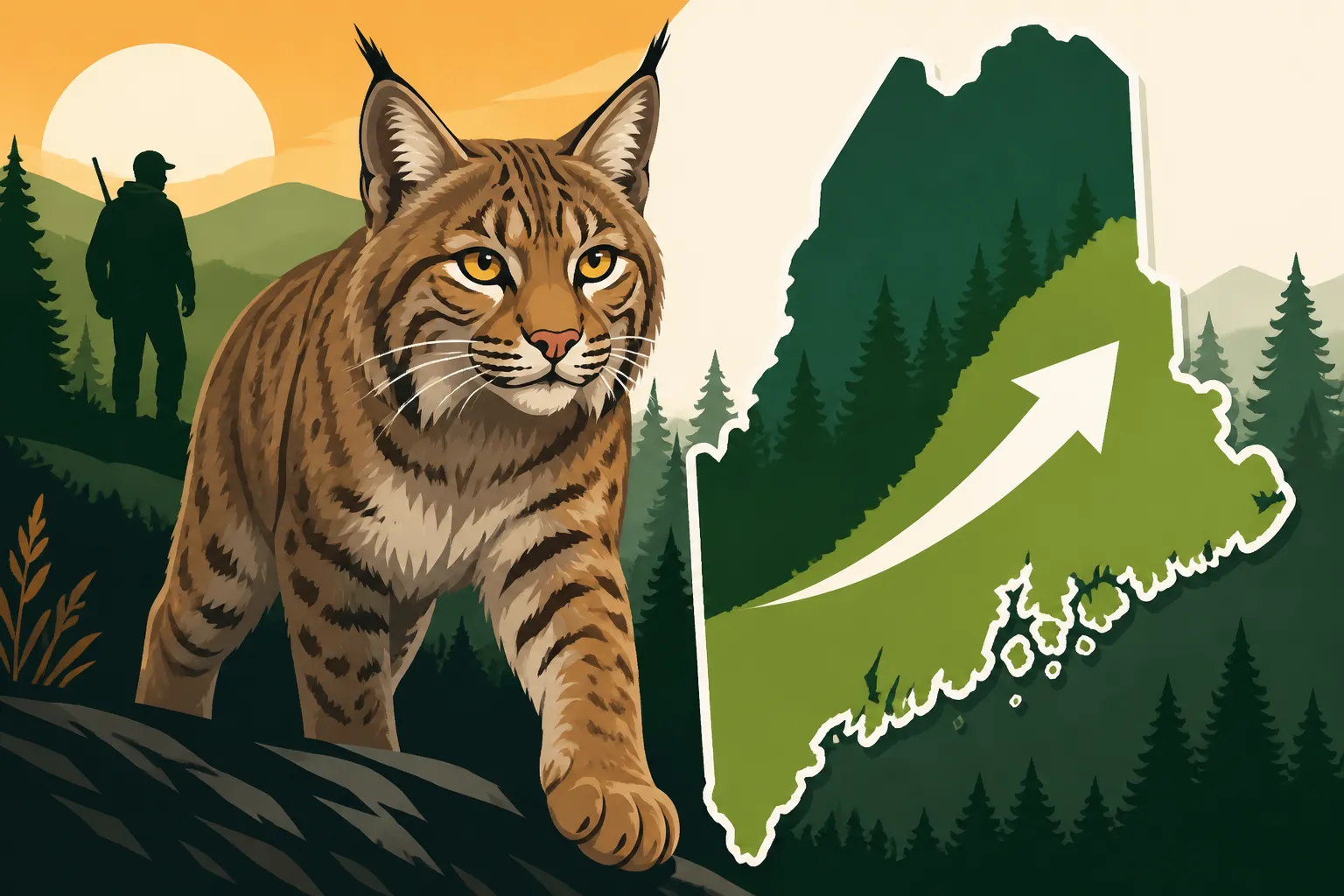
Historically, if you were to look at a map of bobcat sightings or trapping harvests, the concentrations would clearly be in the more remote, northern and western parts of Maine. Think of the vast timberlands, the kind of country you might hunt moose in, or where you'd typically find Black Bears in Maine. Today, however, those lines are blurring. We're seeing a definite shift, with regular sightings and successful harvests reported further south and along the coast. It’s no longer surprising to hear of a bobcat spotted in a woodlot near Augusta, or even darting across a field in York County.
This isn't just anecdotal evidence; it's reflected in wildlife management data. Harvest numbers, while carefully regulated, indicate a broader distribution. Trappers, who spend countless hours in the field and are keenly attuned to furbearer populations, have reported increased activity in zones that were once considered fringe habitat for bobcats. Areas around the central lakes region and even coastal downeast areas, once thought too fragmented or too close to human activity, are now consistently producing bobcat observations. This expansion suggests that these territories are not just temporary stopovers but are becoming established parts of the bobcat's new normal.
Urban and Suburban Encounters
One of the most surprising and sometimes unsettling aspects of this range expansion is the increasing frequency of bobcat encounters in urban and suburban environments. Just as we've seen with coyotes, deer, and even bears venturing into more populated areas, bobcats are adapting to living in closer proximity to humans. You might see one crossing a backyard in a quiet neighborhood, darting into a greenbelt behind a shopping center, or even showing up on trail cameras set up for deer in a suburban woodlot. These encounters can be startling for homeowners who never expected to see such a wild creature so close to home.
The reasons for this urban push are often rooted in resource availability. Suburban areas, with their mix of managed lawns, dense shrubbery, and small woodlots, can offer a surprisingly rich bounty of small prey like rabbits, squirrels, and voles. These areas can also provide relatively undisturbed travel corridors and bedding cover within the urban sprawl. Furthermore, human activity, while present, might not always be perceived as a direct threat, especially if the bobcats are nocturnal and learn to avoid people. If you live in an area where bobcats are becoming more common, securing pet food, covering compost piles, and keeping an eye on small pets, especially at dawn and dusk, is wise advice, mirroring what you'd do for foxes or Coyotes and Predators in Maine.
Monitoring the Expansion
Wildlife agencies, like the Maine Department of Inland Fisheries and Wildlife (MDIFW), play a crucial role in monitoring these range expansions. They rely on a combination of scientific surveys, harvest data from hunters and trappers, and increasingly, public reports. Citizen science, where people report sightings through dedicated portals or apps, provides valuable supplementary information on where and when these animals are being seen. Platforms like GoHunt can also be invaluable for hunters and outdoor enthusiasts to look at mapping layers that indicate different habitat types or prey distributions, indirectly suggesting where bobcats might be moving.
By tracking harvest locations, examining the health and age of harvested animals, and analyzing long-term population trends, biologists can paint a clearer picture of where bobcats are thriving and where their numbers are growing. This data is essential for making informed management decisions, ensuring that the population remains healthy and sustainable as its range expands. Keeping track of these shifts helps us understand the broader ecological changes happening across the state, from Maine Deer Herd Size fluctuations to Maine Snowshoe Hare Population Trends.
Here's a simplified look at bobcat presence across Maine regions:
| Region | Historical Bobcat Presence | Current/Expanding Bobcat Presence | Primary Habitat Types |
|---|---|---|---|
| North Woods | Abundant | Stable, consistently high | Vast forests, cedar swamps, clear-cuts, rocky areas |
| Western Mountains | Common | Stable to increasing | Mountainous terrain, mixed forests, logging roads |
| Central Maine | Sparse to Moderate | Moderate to Common | Mixed forests, agricultural fringes, wetlands |
| Southern Maine | Rare | Increasing, becoming regular | Woodlots, suburban greenbelts, maturing forests |
| Downeast Coastal | Rare to Sparse | Increasing, scattered sightings | Coastal spruce-fir, blueberry barrens, small woodlots |
Implications for Maine's Ecosystem and Hunters
The expansion of the bobcat's range is more than just an interesting biological anecdote; it has tangible implications for Maine's natural ecosystems and for those who enjoy hunting and trapping in the state.
Ecological Impact of Increased Bobcat Presence
When a predator like the bobcat increases its numbers and expands its territory, it naturally creates ripples throughout the local ecosystem. Bobcats are efficient hunters, preying on a variety of animals from small rodents to white-tailed deer fawns, wild turkeys, and snowshoe hare. An increase in their presence means more predation pressure on these species. For example, in areas where wild turkeys have re-established themselves and are now abundant, a growing bobcat population might become another factor influencing their nesting success or poult survival. The same can be said for Maine Fawn Survival Rates, as fawns are vulnerable to predation by bobcats, especially in their first few weeks of life.
This isn't necessarily a bad thing; it's simply a natural part of a healthy predator-prey system. Predators like bobcats help to keep prey populations healthy by culling weaker individuals and ensuring a natural balance. However, understanding these dynamics is crucial for wildlife managers who must balance various species' needs and consider the broader ecological picture. This includes constantly monitoring for diseases, and programs like Maine Wildlife Disease Monitoring Program help ensure the overall health of our game species.
Hunting and Trapping Opportunities
For hunters and trappers, an expanding bobcat range presents new and exciting opportunities. In areas where bobcats were once a rare catch, they might now become a viable target during the furbearer season. This means hunters in southern or central Maine, who once might have had to travel north for a chance at a bobcat, could now find good sign closer to home. Understanding bobcat behavior, such as their preference for dense cover, rocky outcrops, and brushy edges, becomes even more important when scouting new areas. Looking for tracks in the mud along creek bottoms or in fresh snow, or identifying scratch marks on trees, can give away their presence. For more on tracking, check out Reading Maine Mud for Fresh Deer Movement.
Trappers, too, will find new ground to explore. With proper education and licensing, and adherence to specific regulations for Maine Fox and Bobcat Trapping Season, they can ethically harvest these valuable furbearers. The challenge and reward of pursuing a bobcat can be a deeply satisfying part of Maine's hunting tradition. It also highlights the importance of tools like the Scouting With the Maine Hunting App, which can help identify prime habitat, including funnels between woodlots or thick cover where bobcats might be moving.
Coexisting with Bobcats
As bobcats expand into more human-populated areas, the need for understanding and coexistence grows. Most bobcats are shy and elusive, preferring to avoid human contact. However, encounters are becoming more common, and it’s important for landowners and homeowners to know how to respond responsibly. The primary concern is often for small outdoor pets, which can, unfortunately, be seen as potential prey. Keeping cats indoors, especially at night, and ensuring small dogs are supervised when outside, particularly during dawn and dusk, can greatly minimize any risks.
Beyond pet safety, simple measures like securing trash cans, avoiding leaving pet food outside, and generally keeping your property less attractive to small prey animals can help deter bobcats from lingering. If you do see a bobcat, enjoy the sighting from a respectful distance. Like all wild animals, they should never be approached, fed, or harassed. This respect for wildlife is a cornerstone of Maine's Maine Private Land Access Tradition and our broader conservation ethics, ensuring that these beautiful felines can continue to thrive alongside us.
Disclaimer
This article is for general informational purposes only and does not constitute professional advice. Laws, prices and regulations vary by location and change over time. Consult a qualified professional for guidance on your specific situation.