Hunting a River Confluence for Waterfowl
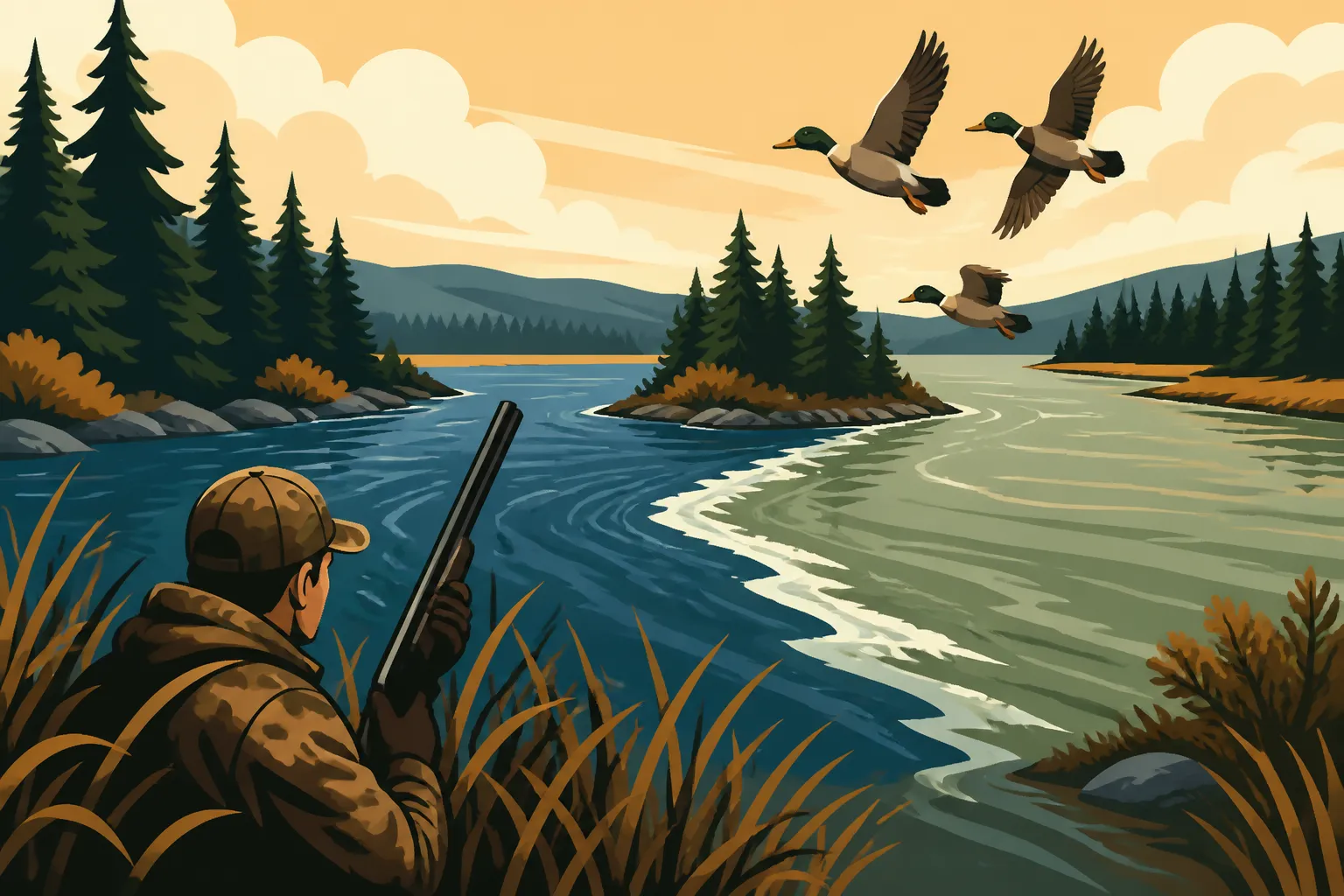
Finding prime waterfowl habitat can feel like a game of hide-and-seek, and one of the most consistently productive, yet often overlooked, spots is a river confluence. These dynamic meeting points of two waterways in Maine create unique micro-habitats that ducks and geese absolutely love, concentrating birds in a way few other locations can. This guide will walk you through understanding, scouting, and effectively hunting these fantastic waterfowl havens.
Why River Confluences Are Waterfowl Magnets
A river confluence, simply put, is where two rivers or streams meet. But it's far more than just a geographic junction; it's a bustling hub of activity for waterfowl, a natural funnel that draws them in. Think of it as a prime piece of real estate in the duck and goose world, offering everything they need in a compact, accessible package.
Diverse Habitat and Food Sources
One of the biggest draws of a confluence is the sheer diversity of habitat it presents. Where two different waterways combine, you often get a mix of water depths, current speeds, and bottom compositions that cater to various species. A fast-flowing smaller stream meeting a wider, slower river, for instance, might create deep scour holes in one area, while depositing rich sediments to form shallow flats or sandbars in another. This varied topography supports a wider array of aquatic vegetation, insect life, and small invertebrates – all prime food sources for ducks and geese. You might find areas where dabbling ducks like mallards and black ducks can tip up and feed on submerged plants and seeds, right alongside deeper pockets where diving ducks, if present, can chase baitfish. The converging currents also act like a natural conveyor belt, concentrating seeds, waste grain from nearby agricultural fields, and other organic matter, making for an easy meal for hungry birds.
Consider a scenario where a smaller, timbered brook flows into a larger river that winds through more open agricultural land. The brook might bring down acorns and other forest mast, while the larger river picks up corn or other grains from adjacent farms. Where these two food supplies meet at the confluence, it's like a buffet for waterfowl. They don't have to travel far to find a diverse diet, and this makes these spots incredibly attractive, especially during migration or in late season when food can be scarcer elsewhere. Late-Season Food Sources for Maine Whitetails might focus on deer, but the principle of concentrated resources applies equally to waterfowl.
Natural Travel Corridors and Staging Areas
Waterfowl are creatures of habit, and they often use natural landmarks and corridors for their daily movements and migration routes. Rivers serve as highways in the sky for ducks and geese, guiding them from roosting areas to feeding grounds, and from one region to the next during their long migrations. A confluence acts as a major interchange or a rest stop along these avian highways. Birds traveling down one river will naturally encounter the other, and often pause to assess the situation, feed, or rest before continuing their journey.
In Maine, where rivers like the Kennebec, Penobscot, and Aroostook cut through diverse landscapes, these confluences become critical staging areas. Ducks and geese will land, preen, and loaf in the calmer waters often found along the edges of a confluence, taking a break from the current. This makes them predictable spots for hunters who understand these patterns. Observing how birds approach and leave a confluence, especially at dawn and dusk, can reveal their primary flight paths, helping you strategically position your spread and blind. It's not just about where they land, but how they get there. The angles of approach, influenced by wind and terrain, are often funneled directly over a confluence.
Scouting Confluences for Waterfowl Success
You can't just show up at any old river junction and expect success. Effective scouting is paramount, and it blends modern technology with old-fashioned boots-on-the-ground observation. Identifying the specific features that make a confluence attractive to birds is the key to consistent harvests.
Reading the Water and Identifying Key Features
Before you even step foot in the waders, digital scouting tools can give you a massive advantage. Apps like onX Hunt are incredibly valuable for studying aerial photos and topographic maps. Look for changes in water color, which can indicate varying depths or bottom compositions. Identify areas where the current slows down, creating eddies or backwaters, as these are prime loafing and feeding spots. Pay close attention to subtle changes in the riverbanks – sandbars, gravel points, or small islands formed by the converging currents are magnets for waterfowl. Think about how these features might provide shelter from the wind or create shallow water access.
When you're physically on site, don't just look for ducks. Look for sign. Fresh droppings on a sandbar, muddled bank edges where birds have walked ashore, plucked feathers, or even feeding holes in the mud are all indicators of recent activity. Observe the water itself: are there natural channels or depressions that birds might use as travel lanes within the confluence? Are there submerged logs or rocks that break the current and create calm pockets? Pay attention to vegetation, too. Is there wild rice, smartweed, or other emergent aquatic plants that provide both food and cover? Even subtle variations can make a huge difference. For instance, a small, grassy point that extends into the main flow might be just the spot a flock of green-winged teal consistently uses to feed. GoHunt is another excellent resource for researching overall habitat and patterns in a broader region, which can inform your local scouting.
Observing Flight Patterns and Timing Your Hunt
Waterfowl are creatures of habit, and their movements are often dictated by the sun, the wind, and in tidal areas, the ebb and flow of the tide. Spend time watching a confluence at different times of day – early morning, midday, and late afternoon – to understand these patterns. Do birds fly in directly from a distant roost, or do they stage in a nearby quiet cove before committing to the confluence? How does the wind direction affect their approach? Ducks and geese almost always land and take off into the wind, so knowing the prevailing winds will help you predict their flight paths.
For coastal or tidal rivers, understanding the tide is absolutely crucial. A confluence might be a feeding hotspot at low tide when mudflats are exposed, but completely barren at high tide when those same areas are submerged. Conversely, some spots become more attractive at high tide, offering deeper water close to emergent vegetation. Keep a tide chart handy and correlate bird activity with tidal phases. Observing a confluence over several days, if possible, will give you the most accurate picture of when and where the birds prefer to be. This patience in scouting often translates directly into success when the season opens. You might find that a specific bend, or a particular gravel bar, is routinely used by birds coming downriver, presenting a perfect opportunity for a setup. For more specific insights on waterfowl movement, understanding Maine Waterfowl Banding Programs can give you a sense of migration routes.
Crafting Your Setup: Decoys, Blinds, and Calling
Once you've done your homework and identified a promising confluence, the next step is to execute a strategic setup. This involves everything from your decoy spread to your blind placement and your calling cadence. The goal is to make your setup look as natural and inviting as possible.
Decoy Spreads and Motion
Your decoy spread is your primary tool for luring birds into range. At a confluence, you have the added advantage (and challenge) of current. Instead of just static blocks, think about how the water movement can bring your spread to life. Use motion decoys – jerk cords, spinners, or even simply setting some decoys on a swivel stake that allows them to bob and turn with the current – to mimic live birds. A classic "J" hook or "U" shaped spread with a clear landing zone (often called a "kill hole") is effective. Place the open end of the "J" or "U" facing into the wind, as this is where birds will naturally want to land.
For ducks, a mix of mallards, black ducks, and maybe a few teal or wood ducks can be effective, depending on what species are prevalent in your area. For geese, larger full-body or shell decoys in family groups are often best. If you're hunting a mixed bag, consider separate groups of duck and goose decoys. Remember to leave plenty of space in your landing zone. Birds are wary, and a cluttered spread can deter them. The number of decoys will depend on the size of the confluence and the typical flock sizes you're seeing; sometimes a smaller, realistic spread is more effective than a huge, artificial-looking one. Don't be afraid to experiment. Setting Decoys on a Beaver Flowage offers great tips that are directly transferable to river settings.
| Confluence Type | Typical Waterfowl Species Attracted | Key Decoy Spread Considerations | Blind Placement Strategy |
|---|---|---|---|
| Small Stream into Big River | Mallards, Black Ducks, Wood Ducks, Teal | Small, naturalistic spread; motion in eddy | Blend into bank vegetation; near slack water |
| Tidal River into Bay | Brant, Scoters, Eiders, Mergansers, Geese | Large, scattered groups; floaters in current | Portable blinds or boat blinds on shore/ledge |
| Two Rivers of Similar Size | Mallards, Black Ducks, Geese, Wigeon | Larger spread in main flow; clear landing zone | Utilize pinch points; brush in heavily |
| River into Lake/Pond | Canvasbacks, Ring-necked Ducks, Divers | Diver spread in deeper water; dabblers near edge | Focus on shorelines or points near deeper water |
Concealment and Blind Placement
Concealment is non-negotiable for waterfowl hunting. Birds have incredible eyesight, and even a slight glint or an unnatural outline can send them flaring. At a river confluence, you'll often have a mix of natural cover available. Look for thick stands of alders, cattails, or dense evergreens along the bank. If natural cover is sparse, a well-brushed-in portable blind or a camouflaged boat blind is essential. Position your blind so you have a clear shot at your landing zone, but also so you're not silhouetted against the skyline.
Think about the sun's position throughout the morning or afternoon. You don't want to be staring directly into it, and you certainly don't want it glinting off your face or gun barrel. When hunting from a boat, ensure it's securely anchored and well-camouflaged. You can often push a boat into thick shoreline vegetation or use camouflage netting draped over a frame to break up its outline. Always be aware of your backdrop. A blind that blends perfectly into a dark stand of pines will stick out like a sore thumb if a bird circles around and sees it against a bright sky. Sometimes, simply using a ground blind on posted-free land can be effective, especially if you can brush it in well against a natural feature like a large rock or a fallen tree.
Calling Effectively
Calling is the art of communication with waterfowl, and at a confluence, it can be particularly effective because the birds are already "looking" for a place to go. Start with basic greeting calls – short, sharp quacks for ducks, or honks for geese – to get their attention. Once they've seen your spread and are showing interest, switch to softer, more contented calls to reassure them. A soft feed chuckle or a contented cluck can often seal the deal.
The key is realism and knowing when to call and when to be quiet. Don't overcall. If birds are locked up and heading straight into your spread, put the call down. A common mistake is to keep calling right up until they're over the decoys, which can actually spook them. Pay attention to how the birds react to your calls. Are they turning? Are they cupping their wings? Adjust your calling volume and cadence based on their response. Different species respond to different calls, and having a variety of calls for mallards, black ducks, and geese will serve you well. Rattling Volume in Thick Spruce Cover and Grunt Calls in Mature Maine Hardwoods highlight how subtle sounds can be effective, a principle that applies to waterfowl calling as well.
Navigating Legalities and Ensuring a Responsible Hunt
Hunting waterfowl in Maine's river confluences requires not only good strategy but also a solid understanding of the rules and regulations. Being a responsible hunter means knowing the law, respecting other users of the waterways, and prioritizing safety.
Licenses, Stamps, and Permits
Before you even think about setting foot in the water, ensure you have all the necessary paperwork. This includes a valid Maine hunting license, which you can purchase online through Maine's online portal or at a licensed agent. For migratory birds like ducks and geese, you'll also need a federal duck stamp. This stamp is not just a requirement; it's a vital contribution to waterfowl conservation, with funds going directly to protect and restore wetland habitats. Additionally, Maine requires a Maine migratory bird hunting permit (often called an HIP — Migratory Bird Harvest Information Program — registration). This helps state and federal agencies collect crucial data on harvest numbers, which in turn informs management decisions. Carrying proof of these licenses and permits is essential, and many hunters now carry them on their phones for convenience, though a physical copy is always a good backup. Maine Hunting Licenses and What They Cost provides a comprehensive breakdown, and Maine Federal Duck Stamp Requirement details that specific necessity. Don't forget Maine HIP Certification for Bird Hunters either!
Understanding Public vs. Private Land and Access
Maine has a long tradition of implied permission on private land, but this does not extend to all private land, especially land that is clearly marked as "Posted." Riverbanks and islands can be tricky to navigate in terms of ownership. While navigable waterways are generally considered public domain, the land directly adjacent to them may be private. This is where digital tools like onX Hunt become indispensable. Its property line layers can show you exactly where you stand, helping you avoid accidental trespassing.
Always err on the side of caution. If there's any doubt about land ownership, seek explicit permission from the landowner, or stick to clearly marked public access areas. Many river confluences fall within larger tracts of industrial timberland, some of which may have specific access rules or require permits. Be familiar with these. Remember, even if you can float down a river, setting foot on unposted private land without permission can be considered trespass. Always be respectful of property boundaries and leave no trace of your presence. For those hunting federal or state-managed lands, Maine Public Land Hunting Hours are important to review.
Species Identification and Bag Limits
Maine hosts a wide variety of waterfowl, and it's critical to be able to identify your target species accurately, especially before you pull the trigger. Different species often have different daily bag limits and possession limits. For example, the daily limit for mallards might differentiate between drakes and hens, or there might be specific limits for pintails or canvasbacks. Shooting an over-limit or an illegal species is a serious violation.
Study your waterfowl identification guides before the season. Pay attention to wing patterns, flight characteristics, and distinctive markings. Many hunters use flashcards or apps to practice identification. It's especially important in low light conditions, common at dawn and dusk, when species can be harder to distinguish. If you're unsure, don't shoot. It's always better to pass on a questionable bird than to risk a violation or, worse, accidentally shoot a protected species. Always check the official Maine Duck and Goose Bag Limits for the current season, as these can change.
Safety on the Water and Ethical Hunting Practices
Hunting around water presents unique safety considerations. Always wear a personal flotation device (PFD) when in a boat, especially in cold weather or strong currents. Hypothermia is a real danger in Maine, and a PFD can save your life if you unexpectedly end up in the water. Be aware of changing river conditions, particularly after heavy rains, which can increase current speed and bring down debris. Tell someone where you are going and when you expect to return.
Beyond personal safety, practice ethical hunting. This includes making clean, ethical shots to ensure a quick harvest, and diligently retrieving every bird you shoot. Wounded birds can travel far, and it's your responsibility to pursue them. Use a trained retriever dog if you have one; they are invaluable in waterfowl hunting. Respect other users of the river, whether they are anglers, kayakers, or other hunters. Maintain safe distances from dwellings and other structures. Maine Firearms Discharge Setback Distance regulations are there for a reason, protecting both people and property. Be an ambassador for hunting, leaving the environment cleaner than you found it, and upholding the integrity of our sport.
Disclaimer
This article is for general informational purposes only and does not constitute professional advice. Laws, prices and regulations vary by location and change over time. Consult a qualified professional for guidance on your specific situation.