How Close a Maine Mentor Must Stay
It can be incredibly confusing to navigate all the specific rules and regulations when you're introducing a new hunter to the field, especially when it comes to the legal requirements for supervision. Many folks wonder exactly how close a mentor needs to stay to their young charge while out hunting in Maine, and it's a valid concern. You want to make sure you're doing everything by the book to keep everyone safe and avoid any unintended legal trouble. This guide will walk you through Maine's specific requirements for mentored youth hunting, clarifying the proximity rules and offering practical advice for a safe and successful experience.
Understanding Maine's Mentored Youth Hunting Program
Maine's mentored youth hunting program is a fantastic initiative designed to foster the next generation of outdoors enthusiasts. It allows young, unlicensed hunters to experience hunting under the direct, watchful eye of an experienced adult, essentially providing an apprenticeship in the field. This isn't just about bagging game; it's about instilling proper ethics, safety, and a deep respect for wildlife and the land.
The Philosophy Behind Mentored Hunting
At its heart, the mentored hunting program is all about responsible introduction. It recognizes that hunting is a skill-based activity with significant safety considerations, especially when firearms are involved. Rather than throwing someone into the deep end after a single hunter education course, it provides a structured, hands-on learning environment. The idea is that an experienced mentor can guide a young person through the nuances of woodsmanship, tracking, ethical shot placement, and game recovery, all while emphasizing safety above all else. It builds confidence in the mentee and ensures that critical lessons are learned in real-time, under real-world conditions. It's a bridge from classroom learning to practical application, giving kids the chance to truly understand what hunting entails before they carry a license of their own.
Who Qualifies as a Mentor and Mentee?
To participate in Maine's mentored youth hunting program, both the mentor and the mentee have specific requirements they need to meet. For the youth hunter, they must be at least 10 years old but cannot have reached their 16th birthday. They don't need to have completed a hunter education course yet, but they must hold a valid junior hunting license, which is readily available.
On the other side, the mentor must be at least 18 years old and possess a valid Maine hunting license for the current year. Importantly, the mentor must also have completed a hunter education course or held an adult hunting license prior to January 1, 1970. This ensures that the adult guiding the youth has the foundational knowledge and experience to provide proper instruction. The mentor is fully responsible for the actions of the mentee while hunting, which underscores the importance of understanding the proximity rules we'll get into next. You can learn more about specific requirements by checking out the official Maine Mentored Youth Hunting Rules.
The Critical Proximity Rule for Mentors
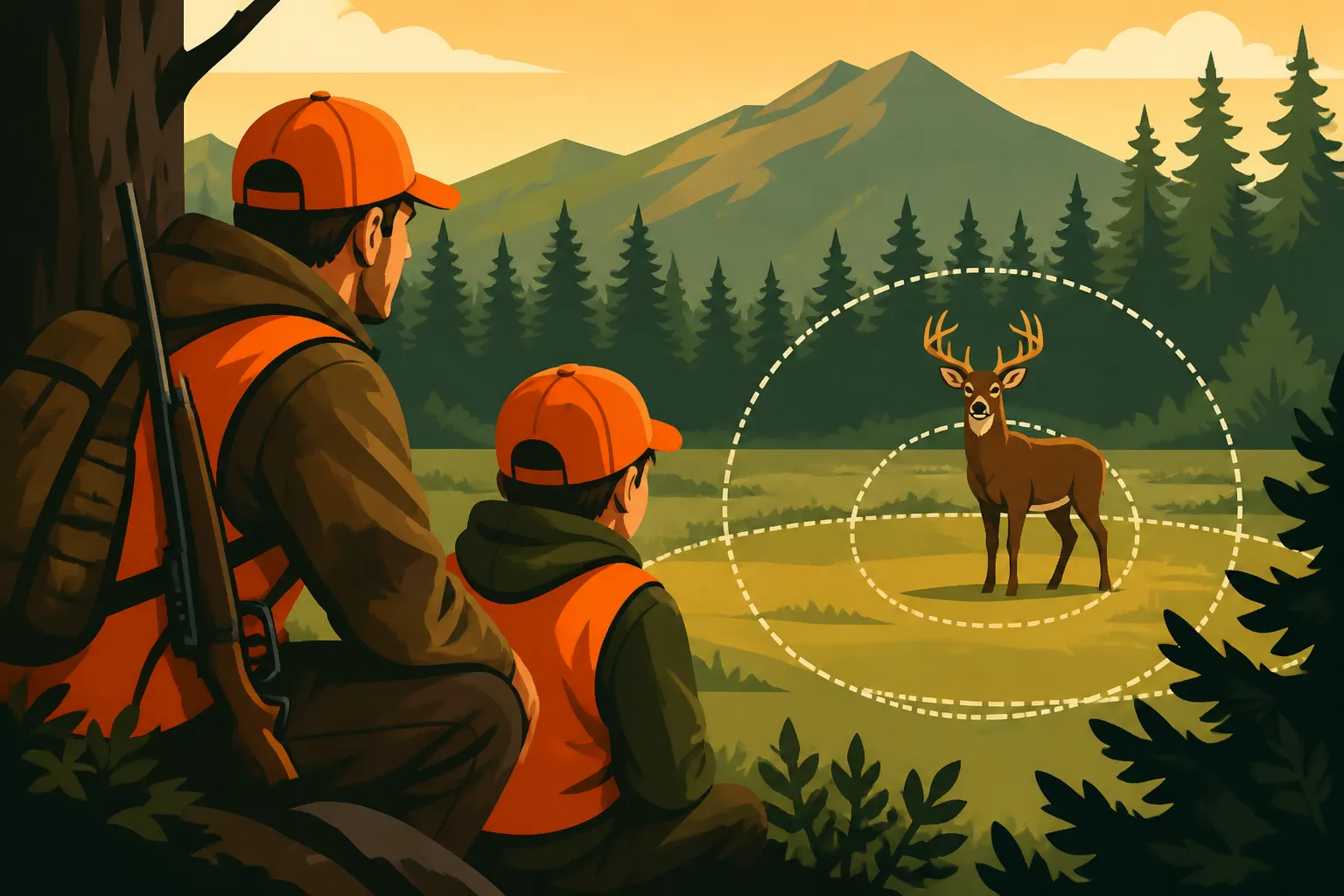
Now, let's get down to the brass tacks: how close does a mentor really need to stay? Maine law is clear but uses language that can sometimes be interpreted differently depending on the specific hunting scenario. The core requirement is that the mentor must be "at all times in the immediate presence of" the junior hunter. This isn't a suggestion; it's a legal mandate that carries significant weight for safety and compliance.
Defining "Direct Supervision"
When the law says "in the immediate presence of," it's not giving you a specific number of feet, and that's often where the confusion sets in. Instead, it implies a functional proximity that allows for direct supervision and immediate intervention. This means the mentor must be close enough to:
- Maintain continuous visual and verbal contact: You need to see and hear your mentee at all times, and they need to be able to see and hear you. Shouting across a vast field or being around a bend in a thick forest where you can't see each other doesn't cut it.
- Provide immediate instruction: If the youth is about to make a mistake, whether it's identifying a target, handling a firearm incorrectly, or making too much noise, you need to be able to offer a correction instantly.
- Ensure safety: This is paramount. If there's an unsafe situation, like another hunter appearing unexpectedly, an animal moving in an unforeseen way, or the mentee pointing a firearm in an unsafe direction, the mentor must be able to physically intervene or give a loud, clear command to prevent an accident.
Think of it this way: if something goes wrong, can you get there in a second or two to prevent a serious issue? If the answer is no, you're too far away. This isn't just about legal compliance; it's about the safety of everyone in the woods.
Practical Scenarios and Examples
Let's break down what "immediate presence" might look like in various hunting scenarios in Maine:
Still-Hunting or Stalking
When you're still-hunting or stalking through the woods, moving slowly and deliberately, the mentor and mentee should ideally be walking shoulder-to-shoulder or in a single file line, with the mentor directly behind or slightly ahead of the mentee. If the cover is extremely thick, you might be a few yards apart, but you must be able to see each other constantly. If one of you stops to scan, the other should stop too, maintaining that close visual and auditory contact. You should be close enough to whisper instructions or physically guide a firearm if necessary. If you're using a mapping app like the one available through GoHunt, you can even mark each other's positions to reinforce awareness, though never as a substitute for direct visual contact.
Stand or Blind Hunting
This is often where the "how close" question comes up most frequently. If you're in a tree stand or ground blind together, immediate presence is naturally met. You're right there. However, if you decide to set up separate stands or blinds, even if they're relatively close, you need to exercise extreme caution. Generally, you should be in the same blind or stand. If you are in separate positions, you must be within constant voice contact and clear line of sight. This means no dense foliage blocking your view, and not so far apart that you need to shout. For example, if you're in a ground blind and your mentee is in another blind 15 yards away, and you can see them clearly and speak at a normal volume, that might pass. But if it’s 30 yards with a thick cedar patch between you, that’s almost certainly too far. The whole point of Hunting the Youth Deer Weekend is to learn together, side-by-side.
Upland Bird Hunting
When hunting grouse or woodcock with a dog, the mentor and mentee need to stay tight. If you're walking a logging road edge or an alder run, the mentee should be right there with the mentor, maybe a few steps apart. When a dog goes on point, both hunters need to approach the flush together. The mentor must be ready to give immediate instructions on safe shooting lanes and target identification. It's not acceptable for the mentee to be 50 yards down the trail out of sight, even if they're "just walking." Remember that proper Maine Blaze Orange Requirements are crucial for everyone, especially when working in thicker cover with a young hunter.
Ensuring Safety and Responsibility in the Field
The proximity rule isn't just a tick-box item; it's the foundation of safety in the mentored hunting program. Beyond just staying close, there are other crucial elements to ensure a safe and responsible experience for everyone involved. The mentor bears a heavy responsibility, and proactive planning is key.
Communication and Planning
Before you even step foot into the woods, thorough communication and planning are essential. Don't just assume the mentee knows what to do or what your expectations are. Sit down and talk through every aspect of the hunt.
- Pre-hunt Briefing: Discuss the specific area you'll be hunting. Review the route, potential obstacles, and where you expect game to appear. If you're using a mapping tool, show them the property lines—many of these apps, including GoHunt, offer detailed parcel information, which can be invaluable. Emphasize the importance of positive target identification: never point a firearm at anything you haven't positively identified, and always know what's beyond your target.
- Safety Signals: Establish clear, simple hand signals or verbal cues for various situations. What does it mean if you tap your head? What if you hear a sharp whistle? How will you signal to stop, move slowly, or indicate game? This is critical for maintaining "immediate presence" even when verbal communication needs to be minimal to avoid spooking game.
- Emergency Plan: What happens if you get separated? What if someone gets hurt? Where is the first aid kit? Who do you call? Have a plan and ensure the mentee understands it. Even if you're staying close, unexpected events can occur, and being prepared is a sign of a responsible mentor.
- Reviewing Regulations: Take a few minutes to review the specific regulations for the game you're hunting, including bag limits and legal shooting hours. Many experienced hunters use tools like GoHunt to quickly access the most current regulations right from their phone. This ensures that you both are on the same page and fully compliant.
Gear and Preparedness for Both Mentor and Mentee
Being well-prepared with the right gear significantly enhances safety and comfort, which in turn helps maintain focus on the hunt and adherence to the proximity rule.
- Proper Clothing: Ensure both mentor and mentee are dressed appropriately for the weather, including layers for changing conditions, and, crucially, plenty of blaze orange. Maine has strict Maine Blaze Orange Requirements to ensure visibility, and adhering to them is non-negotiable, especially with a young hunter.
- Essential Safety Gear: A fully stocked first-aid kit is a must. Whistles are great for signaling if you get separated or need to alert someone to your presence. A reliable compass and map (or a fully charged GPS device/phone with mapping app like GoHunt) are vital, even in seemingly familiar areas.
- Firearm Familiarity: For firearm hunting, ensure the mentee is completely comfortable with their firearm before the hunt. This means practice at the range, understanding how to load, unload, and clear the action safely. The mentor should carry the primary firearm until the moment of the shot, or at least be prepared to take immediate control. Discuss trigger discipline constantly.
- Snacks and Water: Simple things like enough food and water can prevent fatigue and maintain focus, reducing the chances of careless mistakes. A tired or hungry mentee is a distracted mentee, making it harder for them to stay attentive to your instructions and maintain their situational awareness.
- Physical Conditioning: While not always obvious, ensure the mentee is physically capable of the terrain and duration of the hunt. An exhausted mentee might struggle to keep up, inadvertently increasing the distance between mentor and mentee, and thus violating the immediate presence rule. Planning for breaks and understanding the mentee's limits is part of being a good mentor. For instance, if you're considering Still-Hunting Aroostook County Farmland, remember that vast open areas can make maintaining immediate presence challenging if the mentee is struggling to keep pace.
Maine Mentored Youth Hunting Checklist
To help you keep track of the key requirements and best practices for mentored youth hunting in Maine, here's a handy checklist:
| Requirement/Action | Mentor Responsibility | Mentee Responsibility (with mentor guidance) | Notes |
|---|---|---|---|
| Eligibility | – At least 18 years old | – Ages 10-15 (inclusive) | Mentee must not have turned 16 yet. |
| – Valid Maine Hunting License | – Valid Junior Hunting License | No hunter education required for mentee yet. | |
| – Hunter Ed certified OR licensed pre-1970 | |||
| Proximity Rule | – Maintain "immediate presence" (visual & verbal contact, able to intervene immediately) | – Stay close to mentor, maintain contact | This is the most critical safety and legal rule. |
| Safety Gear | – Provide/ensure mentee has plenty of blaze orange | – Wear appropriate blaze orange | Refer to Maine Blaze Orange Requirements. |
| – Carry first-aid kit, map/GPS, communication device | – Know location of safety gear | Mentors should have emergency plans. | |
| Pre-hunt Planning | – Review all hunting regulations for species/WMD | – Understand rules as explained by mentor | Use resources like the Maine IFW website or GoHunt for current regulations. |
| – Discuss route, target ID, shot placement, backstop | – Ask questions, confirm understanding | Emphasize positive identification and safe shooting lanes. | |
| Firearm Handling | – Ensure mentee knows safe firearm handling, loading, unloading | – Practice safe firearm handling with mentor | Mentor should carry the firearm until moment of shot or be in position to intervene instantly. |
| Ethical Hunting | – Teach ethical hunting practices, respect for game and land | – Learn and practice ethical behavior | This program is about more than just harvesting; it's about character. |
| Landowner Relations | – Understand land access rules; get permission if needed for private land | – Respect private property | For insight, check Scouting Maine Private Land Before Season. |
This comprehensive approach not only fulfills legal obligations but creates a positive, educational, and most importantly, safe hunting experience for the junior hunter.
Beyond the Rules: The Spirit of Mentorship
While the rules and regulations, especially around proximity, are critical for legal compliance and safety, the true spirit of Maine's mentored youth hunting program goes much deeper. It's about passing on a legacy, sharing knowledge, and fostering a love for the outdoors that will last a lifetime.
Building Confidence and Skill
A good mentor does more than just ensure the mentee stays within legal distance; they actively teach, encourage, and build confidence. This means:
- Explaining the "Why": Don't just tell a mentee to do something; explain why it's important. Why do we need to check our backstop? Why is wind direction crucial? This turns instructions into lessons.
- Hands-on Experience: Let the mentee participate as much as possible. If it's safe, let them help scout, set up decoys, or call for turkeys. Even simple tasks like helping to carry gear or identifying different tree types contributes to their overall learning.
- Celebrating Small Victories: The goal isn't always a harvest. Celebrate every learning moment—identifying fresh sign, a quiet stalk, or even just sitting patiently. These small successes build enthusiasm and grit. Remember, a successful hunt isn't solely defined by punching a tag, but by the lessons learned and the memories made.
- Teaching Environmental Awareness: Use the time in the woods to teach about local flora and fauna, conservation efforts, and the importance of healthy habitats. Show them how to use tools like GoHunt to understand habitat types and public access areas better, fostering a deeper connection to the landscape.
Fostering Lifelong Respect
The mentor's role is also to instill a profound respect for the game animals, the environment, and the hunting tradition. This includes:
- Ethical Harvest and Game Care: Teaching proper shot placement, quick and humane dispatch of game, and respectful field dressing. Knowing how to properly Field Dressing a Deer in Cold Weather is a vital skill.
- Conservation Principles: Explaining how hunting contributes to wildlife management and conservation funding. Maine's wildlife populations thrive in part due to responsible hunters.
- Being a Good Ambassador: Stressing the importance of ethical behavior, respecting landowners, and leaving no trace. Every hunter is an ambassador for the sport, and young hunters learning this early on helps ensure positive public perception.
By embracing both the letter and the spirit of the law, mentors in Maine provide an invaluable experience, shaping responsible, ethical, and knowledgeable hunters for generations to come. It’s a privilege to mentor, and doing it right leaves a lasting, positive impact.
Disclaimer
Please remember that hunting regulations can change, and it is always the hunter's responsibility to review the most current laws published by the Maine Department of Inland Fisheries and Wildlife (MDIFW) before heading afield. This guide provides general information and should not be considered a substitute for the official regulations.