Maine Rabbit Habitat Restoration Efforts
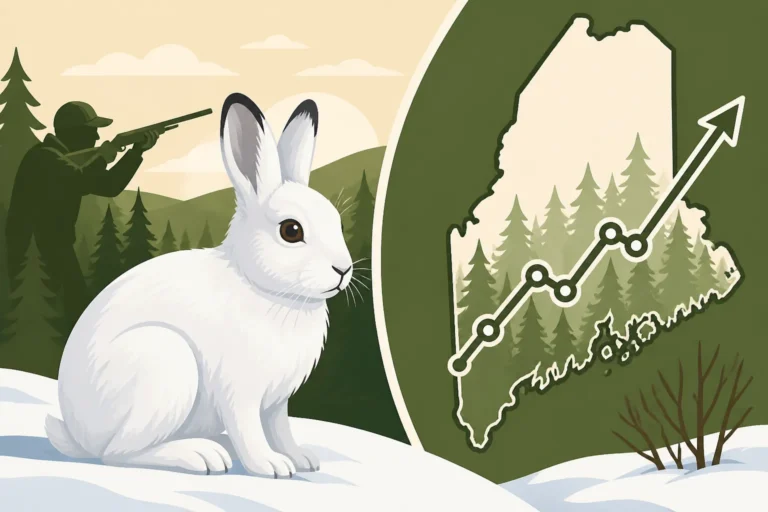
For many years, it’s felt like Maine’s beloved cottontail and snowshoe hare populations have been facing an uphill battle, especially as our landscape changes. Hunters, wildlife enthusiasts, and even casual observers have noticed fewer rabbits scampering through brushy areas, leading to a real concern about the future of these quick, elusive game animals. This guide will delve into the critical efforts being made across our great state to restore and enhance rabbit habitat, explaining why these projects are so vital and how you, too, can play a part in bringing back robust rabbit numbers.
Understanding the Need for Rabbit Habitat Restoration in Maine
The sight of a snowshoe hare bounding through fresh powder or a cottontail darting into a briar patch is a quintessential part of Maine's natural heritage. However, many of us have seen these sightings become less frequent over the past few decades. It's a frustrating trend, particularly for those who cherish small game hunting or simply enjoy the diversity of our wildlife. The reality is, rabbit populations, especially the New England cottontail, have faced significant challenges, primarily due to changes in their natural environment.
The Decline of Snowshoe Hare and Cottontail Populations
Historically, both snowshoe hare and various cottontail species thrived in Maine, populating different niches within our varied ecosystems. The snowshoe hare, with its iconic seasonal coat change, is a creature of the dense northern woods, especially areas with thick conifer cover. Cottontails, particularly the native New England cottontail, prefer patchy, early successional habitats – those overgrown fields, shrublands, and young forests often found closer to human habitation, especially in southern and central Maine.
The problem is that suitable habitat for both has been shrinking. For snowshoe hares, changes in logging practices and the maturation of forests have reduced the amount of critical young, dense conifer stands they depend on for food and predator escape. For cottontails, the issue is often even more pronounced. The New England cottontail is particularly vulnerable, being a species that relies on extremely dense, shrubby cover, sometimes referred to as "shrublands." As old farms are developed or allowed to grow into mature forests without disturbance, these crucial shrublands disappear. It’s a sad cycle to witness when you remember how plentiful they once were. You can learn more about these trends in Maine Snowshoe Hare Population Trends and Maine Cottontail Population Trend.
Habitat Challenges: Development, Succession, and Forest Management
Think about the landscape around you. Where once there might have been sprawling farms with untended edges, old orchards, and reverting fields, there are now often housing developments, manicured lawns, or mature timber. This march of development directly consumes critical habitat. Even in areas spared from bulldozers, natural processes are at play. Ecological succession, where open fields gradually become shrublands, then young forests, and finally mature woodlands, means that without active management or natural disturbances like fires or floods, those prime, dense, low-growing habitats preferred by rabbits eventually fade away.
Furthermore, traditional forest management practices, while vital for timber production, haven't always prioritized the specific, dense cover rabbits need. Clear-cuts, for instance, can provide a burst of early successional growth, but if they lack sufficient escape cover or are too isolated, they might not offer a complete habitat solution. This patchwork of challenges – from human development to natural forest maturation and specific forestry approaches – creates a complex problem that requires focused, collaborative solutions. It’s not just about one thing; it’s about a whole host of factors that have slowly chipped away at the places rabbits call home.
Key Strategies for Restoring Rabbit Habitat
Restoring rabbit habitat isn't about simply planting a few bushes; it's a strategic, often hands-on effort to recreate the specific conditions these animals need to thrive. For both snowshoe hare and cottontails, dense cover is paramount – a sanctuary from predators like coyotes, bobcats, and raptors, and a source of food. Without places to hide and browse safely, their numbers simply can't rebound. It's a big undertaking, but it's one where individual landowners and larger organizations can make a real difference.
Creating Early Successional Habitat
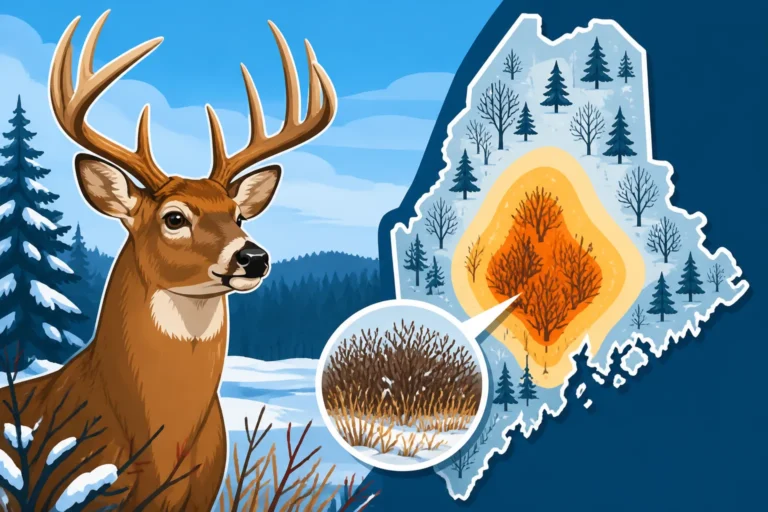
Early successional habitat refers to young, regenerating forests, shrublands, and old fields that are dominated by grasses, forbs, and young woody plants. This is the absolute gold standard for cottontails and provides excellent benefits for young snowshoe hares, too. Think of those thickets of sumac, alders, young aspen, and various berry bushes. This dense, low-lying vegetation offers both food and crucial overhead and horizontal cover.
How is this created? On private land, it might involve selective cutting of mature trees to open up the canopy, allowing sunlight to reach the forest floor and stimulate new growth. It could also mean brush-hogging or mowing older fields on a rotational basis to prevent them from becoming mature forest. Sometimes, planting native shrubs like dogwood, viburnum, or even certain types of willow can jump-start the process. The key is to create a tangled, almost impenetrable landscape that makes it difficult for predators to operate effectively and easy for a rabbit to disappear into.
The Importance of Dense Cover and Escape Routes
For any rabbit, life is a constant game of hide-and-seek with predators. Whether it’s a sharp-eyed hawk overhead or a stealthy fox on the ground, cover is their ultimate defense. This is why dense cover isn’t just a preference; it’s a survival necessity. This can take many forms:
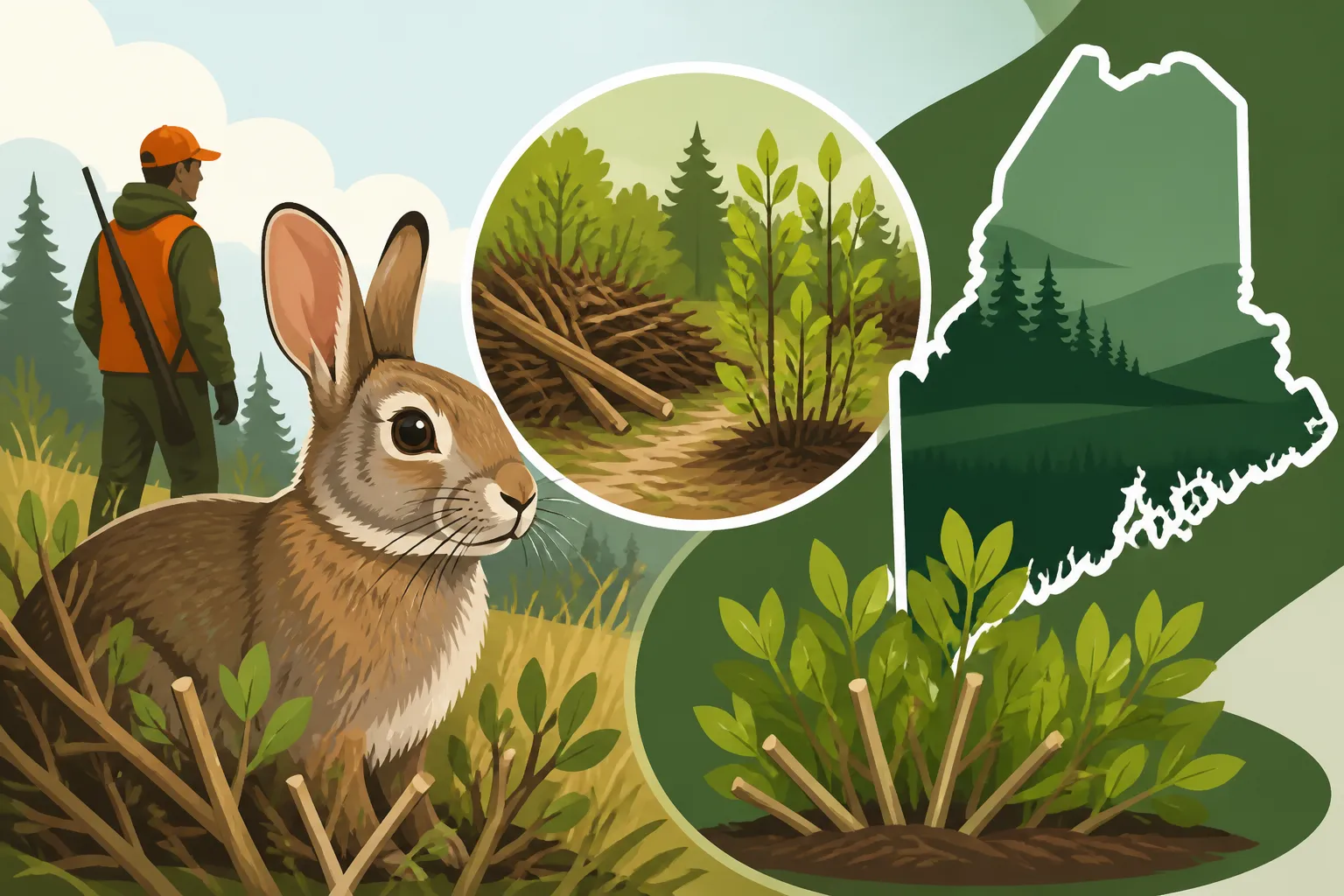
* **Brush Piles:** Not just any old pile of branches, but *structured* brush piles. These should have a sturdy base of larger logs to create internal tunnels and chambers, with smaller branches piled tightly on top to form a thick, protective outer layer. These act as mini-fortresses, offering immediate refuge. They are especially effective when placed along habitat edges or within larger blocks of shrubland.
* **Conifer Thickets:** For snowshoe hares especially, dense stands of young fir, spruce, or cedar provide year-round cover. The low-hanging branches and tight needles create a roof and walls that predators struggle to penetrate, and it offers critical thermal protection during harsh Maine winters.
* **Stone Walls and Rock Piles:** These natural features can also provide excellent escape routes and denning sites, particularly for cottontails. If you have old stone walls on your property, resist the urge to dismantle them. Enhancing them with some surrounding shrub growth can make them even more valuable.
The goal is to provide a network of safe zones, allowing rabbits to move and feed without being constantly exposed. This is often described as creating "connected habitat corridors," so they don't have to venture into open, vulnerable areas for long.
Integrating Rabbit Habitat into Forest Management
For larger landholders, timber companies, and state agencies, integrating rabbit habitat into broader forest management plans is a game-changer. This means looking beyond just timber production and seeing the forest as a dynamic ecosystem.
* **Patch Cuts and Group Selection:** Instead of large clear-cuts, smaller, irregularly shaped patch cuts (a few acres in size) can mimic natural disturbances, promoting dense regeneration while still leaving mature forest nearby. Group selection, where small groups of trees are harvested, achieves a similar effect, creating varied age classes of forest that benefit a wider array of wildlife, including rabbits.
* **Extended Rotations:** Allowing some stands of forest to grow older before harvest can benefit certain species, but creating specific areas for *early* successional growth is also vital. A balanced approach can ensure both mature timber and crucial young habitat are available across the landscape.
* **Riparian Buffers:** Maintaining wide, uncut buffers along streams and wetlands provides natural corridors of dense vegetation, often rich in the shrubs and young trees rabbits prefer. These areas are frequently overlooked but are incredibly important for connectivity.
By working with foresters who understand wildlife needs, landowners can design harvest plans that provide economic benefits while simultaneously creating or enhancing rabbit habitat. It's a win-win scenario that many in Maine are embracing. You can see how these efforts play out when considering Habitat Work on Maine Wildlife Management Areas.
Who is Involved in Restoration Efforts and How to Participate
The challenge of restoring rabbit habitat is too big for any single entity. It requires a collaborative spirit, drawing on the expertise and resources of government agencies, conservation groups, and, crucially, private landowners. If you're a hunter or a land steward in Maine, you have an important role to play, whether it's through direct action or supporting these vital initiatives.
Government Agencies and Conservation Groups
Maine’s Department of Inland Fisheries and Wildlife (MDIFW) is a key player, often leading or partnering in large-scale habitat projects. They conduct research, identify critical habitat areas, and offer technical assistance to landowners. Their work often focuses on managing public lands, including various Wildlife Management Areas (WMAs), to promote diverse habitat structures.
Beyond state agencies, numerous non-profit conservation organizations are deeply invested in rabbit restoration. Groups like the Wildlife Management Institute or local land trusts often acquire and manage properties specifically for early successional habitat. They secure grants, mobilize volunteers, and implement scientifically-backed habitat improvements. These organizations are often at the forefront of the New England cottontail recovery efforts, as this species requires very specific, intensive management to bounce back. They might organize volunteer days for brush pile construction or lead educational workshops for landowners.
Private Landowner Initiatives
The vast majority of Maine is privately owned, making private landowners absolutely essential to any widespread habitat restoration success. Without their participation, even the best public land efforts would be isolated islands. The good news is, many landowners are eager to help once they understand the value and how to go about it.
Programs exist through state agencies and conservation groups to provide landowners with financial assistance and technical guidance. This might include cost-sharing for tree and shrub plantings, grants for creating patch cuts, or advice on managing existing habitat. For example, if you own a few acres of overgrown pasture or a woodlot transitioning from field to forest, you might be surprised at how effectively you can transform it into a rabbit haven with a little planning. Even smaller actions, like building a few strategic brush piles on your property, can significantly benefit local rabbit populations. Tools like GoHunt can be invaluable here, allowing landowners to visualize their property, overlay habitat maps, and even identify potential areas for improvement, helping them plan out their restoration efforts more effectively. Understanding Maine's Landowner Relations Program can also open doors to opportunities.
Leveraging Technology for Habitat Planning
In this modern age, we have some incredible tools at our disposal that can make habitat planning much more accessible and efficient for everyone, especially private landowners. Forget poring over outdated paper maps; today’s technology puts detailed information right at your fingertips.
Geographic Information Systems (GIS) and mapping applications are transformative. With platforms like GoHunt, you can access detailed aerial photography, topographic maps, and even specific habitat layers right from your computer or smartphone. This allows you to:
- Identify Existing Cover: Pinpoint areas on your property that already offer good cover and identify gaps where more is needed.
- Plan Strategic Placements: Determine the best locations for new brush piles, shrub plantings, or patch cuts to create interconnected habitat. For example, you might see a natural funnel between two woodlots on your GoHunt map and realize that a series of dense brush piles along that funnel would create an ideal travel corridor for rabbits.
- Understand Surrounding Landscape: See what habitat types are on adjacent properties, helping you plan for connectivity across a larger landscape, even if you only own a small parcel.
- Track Progress: Document your restoration efforts over time, marking where you've planted shrubs or created brush piles, which can be immensely satisfying to see.
This kind of detailed, visual planning makes habitat restoration less daunting and more effective, empowering individual landowners to contribute meaningfully to the bigger picture. It's truly changing how we approach conservation, one property at a time.
Measuring Success and Future Outlook
No matter how enthusiastic we are about restoration, it’s all for naught if we don’t measure the impact of our efforts. Understanding whether our actions are actually benefiting rabbit populations is crucial for refining strategies and ensuring resources are used effectively. This isn’t just about feeling good; it’s about making a tangible, positive difference.
Monitoring Rabbit Populations and Habitat Quality
Monitoring can take various forms, from formal scientific surveys to more casual observations by hunters and naturalists.
* **Snowshoe Hare Surveys:** Biologists often use pellet counts (counting droppings along transects) or live-trapping and radio-tagging to estimate snowshoe hare densities and track their movements. These scientific methods provide quantitative data on population health and response to habitat changes.
* **Cottontail Surveys:** For the elusive New England cottontail, specialized methods like DNA analysis from fecal pellets are sometimes used to differentiate them from the more common eastern cottontail. Tracking dogs can also be employed to help locate cottontails in dense cover.
* **Habitat Assessments:** Alongside population monitoring, regular assessments of habitat quality are conducted. This involves measuring the density of shrubs, the height of overhead cover, and the presence of escape structures like brush piles. If you’re building brush piles, for instance, a follow-up assessment might involve checking if rabbits are actually using them by looking for tracks or droppings, giving you immediate feedback on your efforts.
These data points help state agencies and conservation groups understand what's working, what isn't, and where further efforts are most needed. It’s a continuous learning process, ensuring that the hard work translates into real ecological gains. Hunters also play a role by reporting observations and harvests, which contribute to the overall picture of Maine Snowshoe Hare Harvest Numbers.
Here's a look at common habitat improvement techniques:
| Technique | Primary Benefit for Rabbits | Key Considerations | Best for (Species) |
|---|---|---|---|
| Brush Piles | Immediate escape cover, thermal refuge | Durable base, dense top, multiple entry points | Cottontail, Snowshoe Hare |
| Shrub Planting | Food source, dense low cover, nesting | Native species, species diversity, site prep | Cottontail |
| Patch Cutting | Early successional growth, food, cover | Size/shape, connectivity, timber value balance | Cottontail, young Snowshoe Hare |
| Edge Feathering | Transition zone, cover, food | Gradual transition from forest to field, dense shrubs | Cottontail |
| Conifer Release | Dense evergreens for cover | Release young conifers from hardwood competition | Snowshoe Hare |
The Long-Term Vision for Maine’s Rabbit Habitat
The long-term vision for Maine’s rabbit habitat is one of a connected, resilient landscape where both snowshoe hares and cottontails can thrive, supporting not only healthy ecosystems but also traditional hunting opportunities. This means fostering a mosaic of habitats across both public and private lands, recognizing that different species and life stages require different types of cover.
For snowshoe hares, the vision involves working with the timber industry to promote forest management that creates a sustained supply of young, dense conifer stands, especially in northern and western Maine. For cottontails, the focus is on creating and maintaining robust shrublands, particularly in the historically agricultural areas of southern and central Maine. This often means targeted efforts on smaller parcels and encouraging landowners to embrace these "messy" but ecologically rich habitats.
Ultimately, it’s about understanding that rabbits are an indicator species. A healthy rabbit population often signals a healthy early successional ecosystem, which benefits many other species, from ruffed grouse to various songbirds. So, while our focus might be on the rabbits, the ripple effect of these restoration efforts is far-reaching, enhancing the overall biodiversity and resilience of Maine's beautiful and wild places. It's a commitment to ensuring future generations can experience the thrill of seeing a rabbit dart through the brush, just as we have.
Disclaimer
This article is for general informational purposes only and does not constitute professional advice. Laws, prices and regulations vary by location and change over time. Consult a qualified professional for guidance on your specific situation.