Habitat Work on Maine Wildlife Management Areas
It can be incredibly frustrating to hit public land hoping to find game, only to discover vast, unproductive tracts of mature timber or dense, impassable thickets that offer little in the way of food or cover for the species you’re after. Many hunters feel like public land is just a place to burn boot leather, but in Maine, our Wildlife Management Areas (WMAs) are often prime examples of dedicated habitat work that actively benefits game. This guide will walk you through the nitty-gritty of what habitat work means on these crucial lands and how understanding it can drastically improve your hunting success.
Understanding Maine's Wildlife Management Areas and Their Purpose
Maine's Wildlife Management Areas are more than just parcels of public land; they are vital, actively managed ecosystems dedicated to wildlife conservation and public access, especially for hunting, trapping, and fishing. These areas are specifically designed to provide high-quality habitat for a diverse range of game and non-game species. If you're looking for consistent action, WMAs often represent some of the most targeted and productive hunting grounds available.
The Foundation of Maine's WMA System
The primary goal of WMAs in Maine is to conserve, enhance, and restore habitats for the state's diverse wildlife populations. This isn't just a passive "let nature take its course" approach; it's a proactive, science-based strategy. The Maine Department of Inland Fisheries and Wildlife (MDIFW) oversees these areas, developing long-term management plans that address specific habitat needs. For instance, creating or maintaining early successional forests benefits species like deer, moose, ruffed grouse, and woodcock, while wetland management directly supports waterfowl populations. These efforts ensure that hunters today, and generations to come, have access to robust wildlife populations.
Funding and Management That Directly Impacts Your Hunt
The work on our WMAs doesn't happen by magic. It's largely funded by the very people who use them most: hunters, trappers, and anglers. When you purchase a Maine Hunting Licenses and What They Cost or other permits, a portion of those funds, along with federal aid from programs like the Pittman-Robertson Act, goes directly into these habitat projects. This self-sustaining model is why hunters are often considered the original conservationists. MDIFW biologists and land managers are constantly assessing conditions, planning controlled burns, scheduling timber harvests, and maintaining water levels in impoundments, all with the explicit purpose of improving the land for wildlife, which, in turn, creates better hunting opportunities for you. Understanding this connection can make you appreciate the "why" behind what might look like a random clear-cut or a flooded timber stand.
Diverse Habitat Work Projects on Maine WMAs
The term "habitat work" is broad, encompassing a wide array of activities, each tailored to specific ecological goals and target species. From managing forests to creating wetlands, these projects are designed to maximize biodiversity and support healthy game populations.
Strategic Forest Management for Game Species
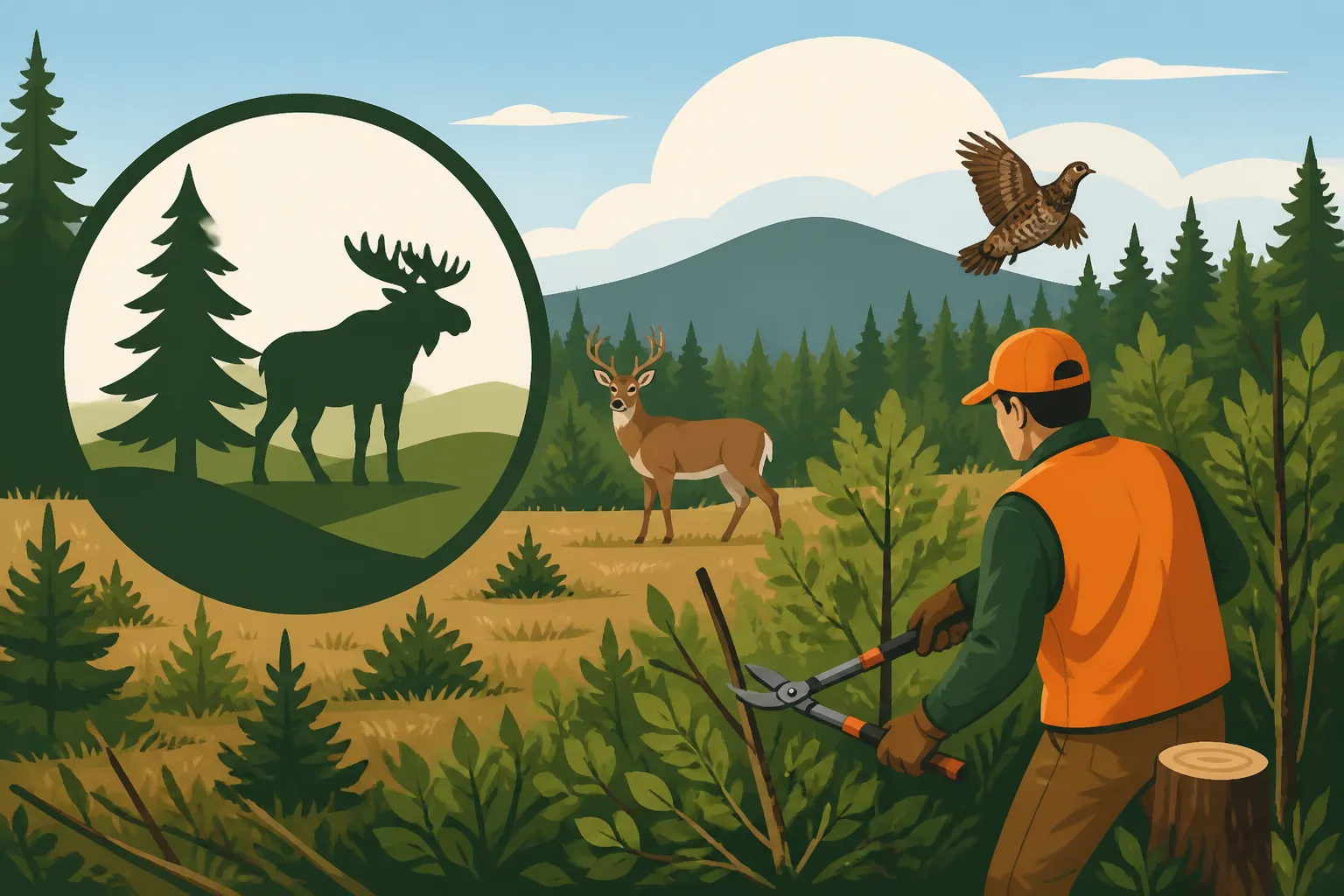
Walk through many WMAs, and you'll often see areas that have been recently logged, thinned, or even subjected to prescribed burns. These aren't random acts of deforestation; they are carefully planned forest management practices. Clear-cuts, for example, create dense regeneration that provides vital browse and thick cover for deer, especially young deer, and snowshoe hare. It also creates prime early successional habitat that benefits Ruffed Grouse in Maine and American Woodcock in Maine, which thrive in these younger forests.
Thinning operations, on the other hand, can open up the forest canopy, allowing sunlight to reach the forest floor, stimulating the growth of understory plants and enhancing forage quality. This also promotes mast production (acorns, beechnuts) in remaining trees, which are critical food sources for deer and bear. These managed disturbances mimic natural processes like wildfires and wind events, but in a controlled manner, preventing the entire landscape from becoming uniformly mature and less diverse. When you see a young, thick clear-cut, don't just walk past it; recognize it as a nursery and dinner table for game.
Wetland and Waterfowl Impoundment Enhancements
Many WMAs, particularly those in coastal or lowland areas, feature extensive wetland systems. A significant portion of habitat work here focuses on creating and maintaining impoundments – areas where water levels can be controlled. These are often equipped with dikes and water control structures that allow managers to flood or drain sections at different times of the year. Why is this important for hunters? Because controlled water levels are crucial for promoting the growth of aquatic vegetation like wild rice, smartweed, and other moist-soil plants that are critical food sources for migrating waterfowl.
Imagine a large marsh where the water has been intentionally drawn down in late summer, allowing these crucial food plants to grow. Then, as fall approaches and waterfowl migration begins, the area is slowly reflooded, making those food sources accessible to ducks and geese. These efforts make WMAs some of the best spots for Maine Sea Duck Season and Zones and general waterfowl hunting, providing essential rest and feeding grounds along the Atlantic Flyway. Without this active management, many of these areas would either dry out, become choked with undesirable vegetation, or simply offer less food.
Maintaining Open Fields and Edge Habitats
Not all game lives deep in the woods or on the water. Many species thrive in open fields and the transitional zones, or "edges," where fields meet forests. Habitat work on WMAs often involves the creation and maintenance of these open areas. This could mean regular mowing to prevent forest encroachment, prescribed burns to stimulate new growth and control invasive species, or even planting specific food plots.
These fields provide critical foraging areas for wild turkeys, especially during the spring and fall. Deer utilize them heavily at dawn and dusk, feeding on grasses and forbs, and often bedding just inside the adjacent cover. Small game like rabbits and grouse also benefit from the diverse vegetation and cover found along these edges. When you see a mowed field bordered by thick woods on a WMA, recognize it as a strategic feeding zone and a travel corridor for deer and turkeys. Using tools like onX Hunt, you can often identify these managed field edges and agricultural plots, which are prime spots for setting up a blind or stand.
How Habitat Work Directly Benefits Maine's Game Species
All this intentional habitat manipulation isn't just for show; it has tangible, positive impacts on the health, numbers, and accessibility of game animals, directly translating to better hunting opportunities.
Boosting Deer and Moose Populations
For white-tailed deer and moose, habitat work is paramount. Clear-cuts, as mentioned, provide an explosion of regenerating woody browse, which is like an all-you-can-eat buffet. This high-quality forage allows deer to pack on weight, especially bucks needing energy for the rut and does preparing for winter. The dense, young growth also offers crucial thermal and escape cover, protecting deer from predators and harsh winter weather. In northern Maine, healthy wintering yards, often enhanced by specific forestry practices, are critical for deer survival when snow gets deep. Understanding Maine Deer Wintering Yards Explained helps you see how these managed areas become sanctuaries.
Moose, too, are big browsers, and young, regenerating forests provide optimal feeding grounds. While a mature forest provides some cover, the sheer volume of palatable twigs and shoots in a regenerating cut is what truly helps moose thrive. By creating a mosaic of different forest ages, WMAs ensure there's always a new food source emerging, which is especially important for the continued health of Moose in Maine's North Woods.
Cultivating Upland Bird Havens
If you love hunting Upland Bird and Small Game Hunting in Maine, specifically grouse and woodcock, then WMAs with active habitat work are your sweet spot. Both species rely heavily on early successional habitat. Grouse need thick, young forest stands for drumming, nesting, and escape cover, often found in areas that were clear-cut 5-15 years prior. Woodcock, those elusive timberdoodles, require moist, young alder thickets and regenerating hardwoods for feeding on earthworms and for their breeding displays.
The active management on WMAs ensures a continuous supply of this crucial habitat, rather than letting forests grow uniformly old and less productive for these birds. Managers will often rotate timber harvests, ensuring there are always patches of prime habitat somewhere within the WMA. This proactive approach supports robust populations of both birds and makes for some fantastic hunting, especially if you know how to Grouse Hunting Maine Alder Runs or target areas post-harvest.
Sustaining Waterfowl Through Managed Wetlands
For waterfowl hunters, the wetland enhancements on WMAs are a game-changer. By providing reliable sources of food and sanctuary, these areas become magnets for migrating ducks and geese. The controlled flooding and draining cycles ensure that preferred food plants are available when birds need them most, from early fall migrants to late-season birds pushing south.
This habitat work creates a predictable resource for waterfowl, which benefits hunters by concentrating birds in accessible areas. Without the dikes, pumps, and planting efforts, many of these wetlands would be far less productive. These managed impoundments are often bustling with dabblers and divers during the migration, offering consistent action compared to unmanaged, natural wetlands that might be feast or famine depending on rainfall and natural cycles.
Finding and Utilizing Habitat Work Areas on WMAs for Your Hunt
Understanding what habitat work is happening is one thing; knowing how to find and leverage it during your hunt is another entirely. This is where your scouting skills and modern tools come into play.
Scouting for the Signs of Active Management
Before you even step foot into a WMA, you should be doing some digital scouting. Start with the MDIFW website; they often have maps and sometimes even descriptions of active management projects on specific WMAs. Once you have a general idea, use satellite imagery on platforms like onX Hunt or GoHunt. Look for areas with different shades of green, indicating different forest ages. Recent clear-cuts will often appear as lighter green patches with sharp edges, while mature timber will be a darker, more uniform shade. You can also identify impoundments, dikes, and mowed fields from aerial views.
When you're boots-on-the-ground, look for the tell-tale signs. Stumps from recent harvests, access roads created for logging, and areas with dense, young saplings are all indicators of past or present habitat work. Look for the actual plants: dense patches of raspberry, blackberry, or young aspen are great food and cover. If you're near wetlands, look for evidence of past water level manipulation, like old dikes or culverts, and observe the types of vegetation present. Remember that game animals will key into these changes, often using the edges of these projects as travel corridors or bedding areas. Reading a North Woods Deer Yard or looking for rub lines along a logging road are prime examples of leveraging these features.
Timing Your Hunt to Habitat Work Cycles
The effectiveness of habitat work for hunting isn't static; it changes with the seasons and the age of the habitat. For instance, a very recent clear-cut (1-3 years old) might be too thick to hunt effectively, but it's an important bedding area. A 5-10 year old clear-cut, however, might be perfect for grouse and woodcock, and offer excellent deer browse that's still accessible. Understanding these cycles allows you to plan your hunt accordingly. Early season bowhunters might target the edges of newly growing cuts for deer browse, while late-season hunters might focus on more mature timber adjacent to food plots or areas with good mast crops.
Similarly, waterfowl impoundments are often most productive after they've been reflooded in the fall. Knowing when water levels are being manipulated on a WMA can give you a significant advantage. Using resources from MDIFW or even local knowledge can help you pinpoint these critical times. For example, if you know a particular impoundment is managed for smartweed, you'd target it after the growing season when the seeds are mature and the water is up. This strategic timing is crucial whether you're chasing deer, turkeys, or waterfowl.
Respecting and Preserving Managed Hunting Areas
While WMAs are managed for public access, it's vital to respect the ongoing habitat work and the resource itself. This means adhering to all regulations, staying out of active work zones if posted, and practicing Leave No Trace principles. Don't disturb recently planted food plots, and avoid creating excessive pressure on newly created cover if you can.
Remember that these areas are a testament to conservation efforts, funded by hunters for hunters. Treat them with the respect they deserve, and they will continue to provide exceptional hunting opportunities for years to come. Report any suspicious activity or violations to MDIFW, helping to safeguard these valuable public lands for everyone. By doing your part, you ensure that the investment in Maine Wildlife Management Areas continues to pay dividends for all hunters.
| Habitat Work Type | Target Species | Ideal Hunting Timing | Key Features to Look For |
|---|---|---|---|
| Forest Clear-cuts | Deer, Moose, Grouse, Hare | 5-15 years post-cut (browse/cover) | Dense saplings, old logging roads, stumps |
| Forest Thinning | Deer, Moose, Bear, Turkeys | Any season (improved browse/mast) | More open canopy, ground vegetation, mast-producing trees |
| Wetland Impoundments | Ducks, Geese, Shorebirds | Fall/Winter post-reflooding (food access) | Dikes, water control structures, aquatic vegetation |
| Field/Edge Maintenance | Deer, Turkeys, Small Game | Dawn/Dusk (feeding), early season (cover) | Mowed fields, brushy edges, planted food plots |
| Prescribed Burns | Grouse, Woodcock, Deer, Turkeys | 2-5 years post-burn (new growth, insect activity) | Charred ground, regenerating grasses/forbs, open understory |
Disclaimer
This article is for general informational purposes only and does not constitute professional advice. Laws, prices and regulations vary by location and change over time. Consult a qualified professional for guidance on your specific situation.