Maine Grouse Drumming Log Surveys
For any passionate upland bird hunter in Maine, the ruffed grouse is a prized game bird, known for its explosive flush and challenging pursuit. But one of the most persistent questions we all grapple with is, "How are the grouse doing this year?" It's a question that often feels like pure guesswork out in the woods, but thankfully, Maine has a dedicated system to help us understand these elusive birds: the drumming log surveys, which provide crucial insights into the health and trends of our beloved grouse populations.
The Enigma of the Drumming Grouse
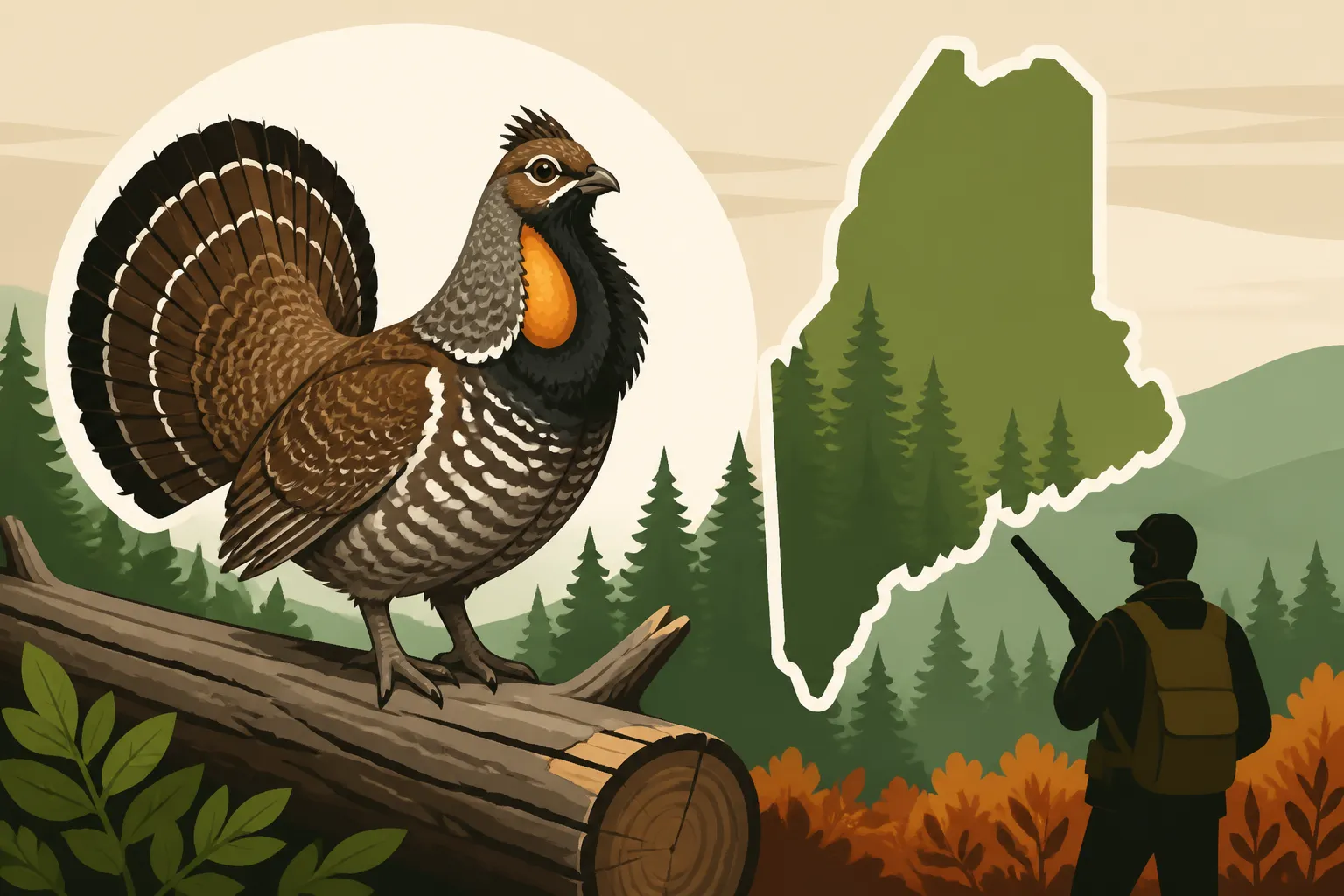
If you've spent any time in the Maine woods during spring, you might have heard it – a muffled thumping that starts slowly, picks up speed, and ends in a rapid blur of sound. This isn't a distant engine or a beaver slapping its tail; it's the distinctive drumming of a male ruffed grouse. This sound, created by the bird rapidly beating its wings against the air, is a cornerstone of grouse behavior, and understanding it is key to understanding the surveys.
Why Male Grouse Drum
The drumming display is primarily a territorial proclamation and a mating ritual. Imagine you're a male grouse, and you've found the perfect patch of dense cover, perhaps a thick alder run or a spruce thicket. You've also secured an ideal drumming log – usually a fallen tree that offers good visibility, a solid perch, and an escape route. From this stage, you announce your presence to the world, essentially saying, "This is my turf, and I'm here for a mate!" The drumming serves to warn off rival males and, more importantly, to attract hens looking for a strong, healthy partner. It's a loud, clear signal in the otherwise quiet woods, and it's absolutely vital for their breeding success.
The Art of Choosing a Drumming Log
A drumming log isn't just any old fallen tree. A prime log is typically well-rotted but sturdy enough to withstand the vibrations of the drumming display. It's often elevated slightly off the forest floor, allowing the grouse to gain a better vantage point. Critically, these logs are usually surrounded by dense cover, such as regenerating clear-cuts, young hardwoods, or thick coniferous stands. This cover provides essential protection from aerial predators like hawks and owls, and terrestrial threats like coyotes and bobcats, allowing the male to drum with relative safety. The density of cover around a log is often more important than the log itself; a grouse needs to feel secure enough to announce his presence so boldly.
The Seasonality of the Drumming Display
While grouse can drum at various times of the year, the most intense and consistent drumming activity occurs during the spring breeding season, typically from late April through May. This is when hormones are high, and the drive to establish territories and find mates is at its peak. The drumming often begins just before sunrise and can continue for a few hours, then picks up again in the late afternoon. Weather conditions play a role too; calm, clear mornings are usually the best for hearing drumming, as wind and rain can dampen the sound. It's this predictable seasonality and consistency that makes the drumming behavior such a reliable indicator for population surveys. This peak window is precisely when biologists and volunteers hit the woods to listen.
Executing Maine's Drumming Log Surveys
Collecting accurate data on a bird as cryptic and widespread as the ruffed grouse is no easy feat. Maine relies on a systematic approach, combining scientific methodology with dedicated fieldwork to get a clear picture of the state's Ruffed Grouse in Maine population.
Survey Methodology and Designated Routes
Maine's drumming log surveys are primarily conducted along established roadside routes. These routes are carefully selected to traverse a variety of grouse habitats across different regions of the state. Each route consists of a series of listening stops, usually spaced about a mile apart, ensuring that the same locations are surveyed year after year. This consistency allows for direct comparisons over time, revealing trends rather than just snapshots. Observers drive the route, stopping at each designated point, stepping out of their vehicle, and listening intently for four to ten minutes for drumming activity. The timing is critical – surveys are conducted in the early morning hours, usually starting about 30 minutes before sunrise, when drumming activity is at its highest and environmental noise is at its lowest. These routes are run multiple times within the prime drumming season to account for variations in daily activity.
The Crucial Role of Volunteers and Biologists
While state biologists oversee the program, much of the fieldwork is often done by dedicated volunteers. These are often passionate birders, local residents, or hunters who care deeply about the outdoors and want to contribute to conservation efforts. Volunteers undergo training to ensure they can accurately identify the drumming sound and follow the precise protocols for each listening stop. This involves understanding how far they can reasonably hear a drum (which is often surprisingly far in quiet conditions), how to record data, and how to maintain the integrity of the survey route. The collaborative effort between biologists, who design the surveys and analyze the comprehensive data, and the volunteers, who are the "ears on the ground," is what makes these broad-scale surveys possible across Maine's vast landscape.
Collecting and Interpreting the Data
At each listening stop, observers record the number of individual drums heard. They also note the weather conditions – temperature, wind, and precipitation – as these can influence drumming activity and audibility. All this data is compiled, typically using a standardized form or even a digital app for efficient capture. Once the drumming season concludes, all the collected data is sent to the Maine Department of Inland Fisheries and Wildlife (MDIFW) biologists. They then meticulously analyze the results. The primary metric is usually the average number of drums heard per stop. An increase in this average might indicate a growing population, while a decrease suggests a decline. This data is critical for understanding Maine Ruffed Grouse Population Cycles and for making informed decisions about hunting seasons and habitat management. It's a scientific backbone that informs many of the discussions we have around grouse hunting.
Deciphering the Story of Maine's Grouse Populations
The data collected from drumming log surveys isn't just a collection of numbers; it tells a compelling story about the health, trends, and future of ruffed grouse in the state. For hunters and conservationists alike, this information is gold.
Unveiling Population Trends and Cycles
One of the most significant insights gained from drumming log surveys is the ability to track the cyclical nature of ruffed grouse populations. It's widely known that grouse populations often follow a roughly 8-10 year boom-and-bust cycle, largely driven by predator populations and habitat conditions. By consistently surveying the same routes year after year, biologists can clearly see when Maine is on an "up" swing, with higher drumming counts indicating a healthier population, or a "down" swing, where counts are lower. This long-term data helps to differentiate natural fluctuations from more concerning, long-term declines that might signal deeper environmental issues. Knowing where we are in the cycle helps everyone, from policymakers to hunters using a GoHunt subscription to scout new areas, adjust their expectations and strategies.
Habitat Health and Management Insights
The density of drumming activity can also be a direct indicator of habitat quality. Areas with consistently high drumming counts typically boast excellent grouse habitat – a mosaic of young, regenerating forests, dense cover, and diverse food sources. Conversely, routes with declining or consistently low counts might signal habitat degradation, perhaps due to maturing forests that lack the young growth grouse need, or increased predation pressure. This direct link allows MDIFW to make targeted habitat management decisions. For instance, if surveys show declines in certain regions, it might prompt efforts to encourage timber harvests that create the necessary early successional habitat, or focus on managing specific land parcels for grouse, aligning with the principles discussed in Habitat Work on Maine Wildlife Management Areas. It's about ensuring future generations of grouse have suitable places to thrive.
Regional Differences Across the Vastness of Maine
Maine is a massive state, and grouse habitat and population dynamics aren't uniform from Aroostook County down to York County. Drumming log surveys are designed to capture these regional differences. For example, some years, Best Maine Counties for Grouse might see robust numbers, while others experience a dip due to localized weather events, timber harvesting patterns, or varying predator loads. The surveys can highlight these disparities, showing which Wildlife Management Districts (WMDs) are performing better or worse than others. This granular data is invaluable for local hunting strategies; if you know that the birds are doing particularly well in, say, the western mountains compared to the downeast coast, it might influence where you plan your next hunt or where you focus your Upland Bird and Small Game Hunting in Maine efforts.
| Survey Aspect | Description | Significance for Grouse Management |
|---|---|---|
| Primary Goal | Estimate male ruffed grouse abundance and track population trends over time. | Informs hunting season lengths and bag limits. |
| Timing | Early spring (late April – May), mornings around sunrise. | Coincides with peak breeding and territorial drumming. |
| Methodology | Roadside stops, listening for drumming for fixed duration. | Standardized, repeatable, covers wide geographic area. |
| Data Collected | Number of drums heard per stop, weather conditions. | Provides quantifiable index of population density. |
| Key Output | Long-term population trends, cyclical patterns, regional variations. | Guides habitat restoration, land use planning. |
Leveraging Survey Insights for Your Maine Grouse Hunt
While drumming log survey data isn't a treasure map to every grouse covert, it offers a powerful backdrop against which to plan your hunting season. Smart hunters understand how to interpret these broader trends.
Identifying Potential Productive Areas
When the annual survey results are released, savvy hunters pay attention to the regions showing higher drumming counts. If the data indicates that a particular WMD or even a general geographic area (like Western Maine Mountain Country, for instance) had a strong drumming season, it suggests a healthier local grouse population. While it won't tell you the exact alder run where a bird is hiding, it gives you a much better starting point than simply guessing. You might then combine this knowledge with Reading Aerial Photos for North Woods Deer to identify promising new logging cuts or thickets within those generally good areas. It's about stacking the odds in your favor before you even tie your boots.
Adjusting Your Expectations for the Season
Knowing where Maine's grouse populations stand in their natural cycle is crucial for managing your own expectations. If the surveys indicate that it's a "down" year in the grouse cycle, you might anticipate fewer flushes and more challenging hunts. This doesn't mean you won't find birds, but it helps mentally prepare you for potentially tougher hunting conditions and perhaps encourages you to work harder or explore more ground. Conversely, an "up" year, with robust drumming counts, can generate excitement and confidence that your efforts will be well-rewarded. This knowledge, combined with the Maine Grouse Season Dates, can help you plan your time in the woods more effectively. A tool like GoHunt might help you cross-reference this information with topographical maps to pinpoint areas that align with both good survey data and optimal habitat.
Supplementing Personal Scouting and Strategies
The drumming log survey data is a valuable macro-level tool, but it should always be combined with your own micro-level scouting. Think of it as a broad forecast that helps you decide if you need a heavy coat or a light jacket, but you still need to check the local radar for rain. Use the survey information to narrow down your general hunting zones, and then dive into detailed scouting for specific coverts. This could involve scouting new areas in the off-season, looking for fresh sign, or pinpointing the best places for Grouse Hunting a Logging Road Edge. Many experienced hunters use apps like GoHunt or similar platforms to overlay property boundaries and habitat types, which, when combined with general population trends from surveys, can be a game-changer. Whether you're hunting with a pointing dog or still-hunting, understanding the big picture provided by these surveys can refine your approach and make your time in the Maine woods more productive and enjoyable. It gives you context beyond just the individual birds you encounter, painting a fuller picture of our cherished Maine Ruffed Grouse Harvest Numbers.
Disclaimer
This article is for general informational purposes only and does not constitute professional advice. Laws, prices and regulations vary by location and change over time. Consult a qualified professional for guidance on your specific situation.