North Maine Woods Logging Road Access
The vast wilderness of the North Maine Woods calls to so many of us, promising unparalleled hunting experiences. But for those new to this expansive private land or even seasoned hunters who haven't ventured far north, the intricate web of logging roads can feel like a daunting maze. Navigating these roads, understanding access, and respecting the working forest is crucial to a successful and ethical hunt. This guide aims to demystify logging road access in the North Maine Woods, helping you plan your next adventure with confidence.
Understanding the North Maine Woods System
The North Maine Woods isn't one big, unified public land. It's actually a massive tract of privately owned timberland, managed by various companies and private landowners. This distinction is absolutely critical to grasp, as it shapes every aspect of access, from fees to regulations. While these landowners generously allow public access for recreation, including hunting, it's always under specific conditions, and those conditions are primarily managed through a system of gates and checkpoints.
The Working Forest Concept
Imagine trying to run a timber operation when hunters, anglers, and campers are constantly disrupting equipment, blocking roads, or accidentally causing issues. That's the challenge the landowners in the North Maine Woods face daily. These aren't just pretty trails for your enjoyment; they are active industrial roads, the lifeblood of the logging industry. Trucks hauling massive loads of timber often have the right-of-way and move at speeds that demand your constant attention. This concept of a "working forest" means that recreation is a privilege, not an inherent right, and it comes with responsibilities.
Understanding this helps you appreciate why gates exist, why there are fees, and why rules might seem strict. It’s all about balancing active timber operations with public recreation. When you drive down a logging road, you're not just enjoying scenery; you're traversing a private business's infrastructure. Treating it with respect ensures these landowners continue to allow us access to such incredible hunting grounds.
Ownership and Management Diversity
While we often refer to it broadly as the "North Maine Woods," it's not a single entity. It’s a mosaic of different timber companies, investment groups, and large private landowners, each with their own management policies. Some areas might be managed by a large corporation like Weyerhaeuser or JD Irving, while others might be smaller, privately held tracts. This means that rules and fees can sometimes vary slightly from one region to another, depending on whose land you're on, even within the broader NMW system.
This diversity in ownership also means that the quality and maintenance of logging roads can differ. Some main haul roads are meticulously maintained for heavy truck traffic, while others, less frequently used, might be rougher, with washouts, potholes, or overgrown sections. It's always wise to anticipate varied road conditions and plan your vehicle choice and speed accordingly. Checking for North Maine Woods Day-Use Fees before you go is a smart move, as they can sometimes vary by gate and management area.
Navigating Gate Systems and Fees
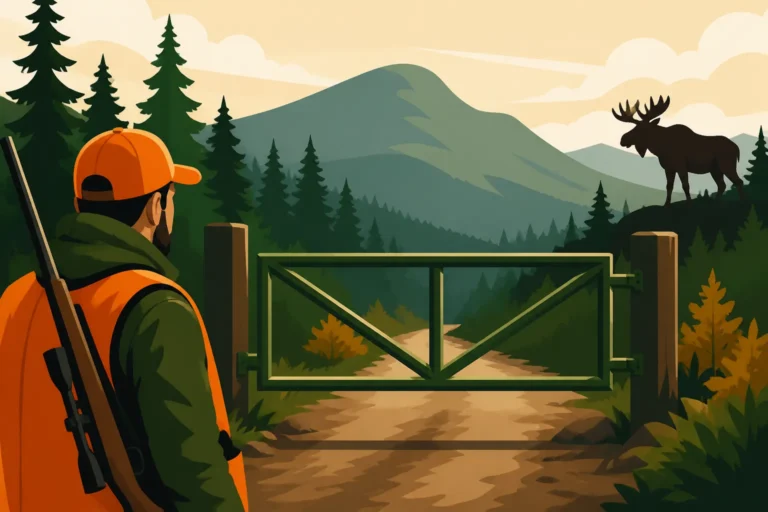
Accessing the heart of the North Maine Woods almost invariably involves passing through a gate system. These gates are the primary control points for managing public entry, collecting fees, and ensuring visitors are aware of the rules. They aren't just obstacles; they're your first point of contact with the NMW management.
Types of Gates and Entry Points
You'll encounter various gate structures when heading into the North Maine Woods. The most common are manned checkpoints, like the famous Telos Gate or St. Francis Gate. At these locations, friendly staff will greet you, provide information, collect fees, and issue a pass. This is an excellent opportunity to ask about current road conditions, recent game sightings, or any specific closures in the area you plan to hunt. They often have maps and can offer invaluable local insights.
Beyond these main manned gates, you might find smaller, unstaffed gates deeper within the system, or even locked gates that restrict access to active logging sites or sensitive areas. Some areas might also have what feels like "implied access" from smaller towns, where there isn't a formal gate but you are still entering private timberland and are expected to abide by the rules. Always be on the lookout for signage, as land ownership can change quickly, and what seemed like open access might suddenly become posted or require specific permission. If you're using a mapping app like onX Hunt, it can be incredibly helpful for Using an App for North Maine Woods Land Status and identifying property lines to ensure you're on accessible land.
Understanding Day-Use and Camping Fees
The fees collected at North Maine Woods gates serve a vital purpose: they help maintain the extensive road network, support land management operations, and fund emergency services in remote areas. These aren't just arbitrary charges; they are an investment in keeping this vast hunting ground accessible to us. Most gates charge a day-use fee, which allows you access for a single day. If you plan an overnight trip, you'll pay a camping fee, which often covers both access and a designated campsite.
The specific amounts can vary, so it's always best to check the North Maine Woods official website or call ahead to the specific gate you plan to use for the most current information. Typically, you'll pay per person, sometimes with an additional vehicle fee. It’s important to remember that these fees are separate from your Maine Hunting Licenses and What They Cost. Having cash on hand is often recommended, as cell service can be spotty, and not all gates accept card payments. Factor these costs into your overall trip budget, as they are a necessary part of enjoying this unique hunting experience.
Rules and Regulations for Logging Road Use
Because the North Maine Woods is an active working forest, there are specific rules and regulations that all visitors, especially hunters, must adhere to. These aren't just suggestions; they are in place for safety, conservation, and to ensure the continued privilege of access. Ignoring them can lead to fines, loss of access, or, worse, dangerous situations.
Vehicle and Road Safety Guidelines
Safety is paramount on logging roads. Heavy logging trucks always have the right-of-way. These trucks are often massive, moving at surprising speeds, and have limited visibility, especially on curves or over hills. When you encounter one, pull over immediately and completely off the road if possible, allowing them ample room to pass. Dust can be a major issue, reducing visibility to near zero, so drive cautiously, especially in dry conditions. Many roads are one-lane, so be prepared to back up or find pull-offs when meeting oncoming traffic.
Speed limits are often posted, and even if they aren't, a defensive driving approach is best. Expect sudden dips, sharp turns, blind crests, and sometimes even freshly graveled sections that can be loose. Four-wheel drive is highly recommended, especially if you plan to venture onto less-traveled side roads or if there's any chance of rain, which can quickly turn dirt roads into slick mud. Always ensure your vehicle is in good working order, with a spare tire, jack, and basic emergency supplies. These remote areas mean help is often a long way off. Being prepared for Maine Public Land Hunting Hours also means understanding that logging traffic typically operates during daylight hours, making early morning and late afternoon the highest risk times for encounters.
Respecting Private Property and Timber Operations
Even after you pass a gate, you are still on private land. This means respecting all posted signs, staying on designated roads, and not interfering with any logging equipment or operations. Do not block roads, even temporarily, for scouting or game retrieval. A blocked road can halt a multi-million dollar timber operation, and you don't want to be the cause of that. Avoid active work sites entirely; if you see machinery or timber crews, give them a wide berth.
This also extends to cutting firewood or harvesting other natural resources. Generally, you cannot cut trees or remove timber from these lands without explicit permission. Your hunting activities are what’s permitted; other resource extraction is not. Always clean up any trash, spent casings, or other debris you create. The "carry in, carry out" principle is strictly enforced and is a key part of maintaining good landowner relations. Remember, this access is a privilege, and our collective actions dictate whether that privilege continues for future generations.
Planning Your Hunt: Access and Strategy
Effective planning is the cornerstone of a successful North Maine Woods hunting trip, and understanding how logging roads factor into that plan is crucial. It’s not just about getting there; it’s about strategically using these arteries to maximize your hunting opportunities.
Mapping Your Route and Identifying Hotspots
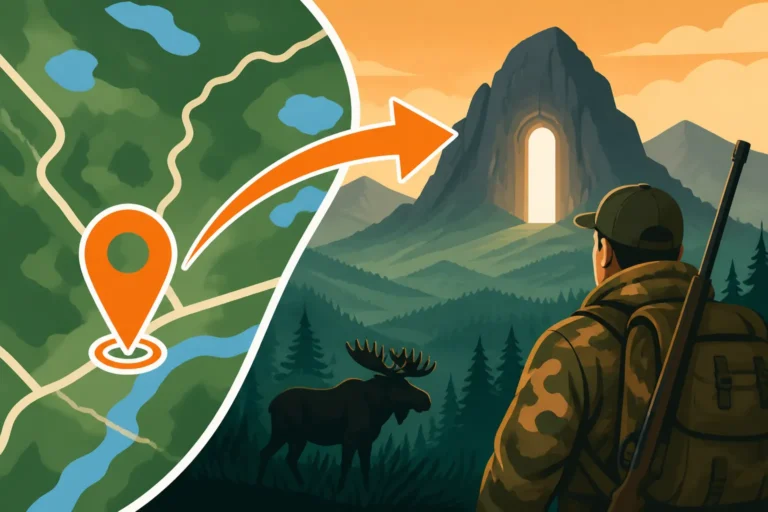
Before you even leave home, spend considerable time with maps – both physical paper maps (which are essential backups where technology fails) and digital mapping tools. Brands like onX Hunt and GoHunt are incredibly valuable for this. You can use them to identify primary logging roads, smaller feeder roads, and even faint old skid trails that might offer foot access into promising areas. Look for features like clear-cuts in various stages of regrowth, beaver flowages, ridge saddles, and dense cedar swamps – all prime deer or moose habitat. Reading Aerial Photos for North Woods Deer can help you visualize the terrain and identify potential travel corridors.
Pay attention to topography and water features. Logging roads often follow contours, so they can lead you directly to strategic spots like creek bottoms or over ridge lines that animals might also use. Mark potential parking spots, walk-in routes, and areas where logging has recently occurred, as these areas often have high deer densities due to new browse growth. Remember that while logging roads offer access, the best hunting often happens a quarter-mile or more off the main drag, requiring some footwork.
Vehicle Selection and Gear for Remote Travel
Your choice of vehicle is critical for a North Maine Woods hunt. A reliable 4×4 truck or SUV with good ground clearance is highly recommended. You'll encounter rough sections, rocks, mud, and water crossings. All-wheel drive passenger vehicles are generally not sufficient for venturing far off the main paved roads into the more remote logging tracks. Ensure your vehicle is mechanically sound, with robust tires. A full-size spare, a tire repair kit, and a small air compressor are not luxuries but necessities.
Beyond the vehicle, consider your gear. You'll be in remote areas with limited or no cell service, so communication devices like satellite messengers or two-way radios are smart investments. Always carry emergency supplies: extra food and water, a comprehensive first-aid kit, fire-starting materials, a sturdy knife, and warm, waterproof clothing, even if the forecast looks good. Packing for a North Woods Moose Hunt demands meticulous attention to detail, given the size of the animal and the remoteness of the terrain. A winch, tow strap, and a shovel can also be lifesavers if you get stuck. Think self-sufficiency; you are your own first responder out here.
Leveraging Technology for Logging Road Access
In today's hunting world, technology can be an incredible asset, especially when navigating vast, dynamic landscapes like the North Maine Woods. Used wisely, it can enhance your safety, improve your efficiency, and help you respect private land boundaries.
GPS and Mapping Applications
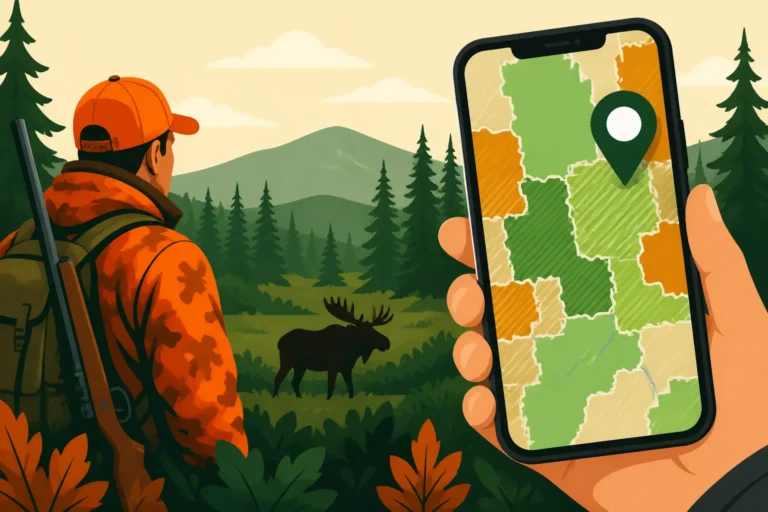
Gone are the days when a crumpled paper map and compass were your only tools (though you should still carry them as backup!). Modern GPS units and smartphone apps have revolutionized navigation. Apps like onX Hunt are invaluable for logging road access in Maine. They provide detailed satellite imagery, topographical maps, and, most importantly, clearly delineate property lines. This allows you to see exactly whose land you're on, which roads are private, and where potential public access corridors might exist. This is especially crucial given Maine’s unique Maine's Private Land Access Tradition and the need to know what constitutes "posted" land.
With these apps, you can drop pins for your vehicle, plan exact walk-in routes off logging roads, and even track your movements. Knowing your precise location relative to property boundaries or active logging areas means you can avoid trespassing accidentally. Before heading out, download offline maps for your specific area, as cell service will almost certainly disappear deep in the North Maine Woods. GoHunt also offers some mapping and scouting layers that, while often focused on Western states, can sometimes provide useful data overlays for terrain and land features that might be accessible via the NMW road network.
Communicating and Staying Connected
The North Maine Woods is notoriously rugged, and cell service is scarce to non-existent in many areas. While this is part of its allure, it also presents a significant safety challenge. Relying solely on your cell phone for communication is a recipe for trouble. For lone hunters or small groups, a satellite messenger (like a Garmin InReach or Spot device) is highly recommended. These devices allow you to send and receive text messages, share your GPS location, and, most critically, trigger an SOS call to emergency services, even without cell signal.
For groups hunting together, two-way radios (walkie-talkies) can be incredibly useful for communication within a several-mile radius, especially when hunters are spread out along different logging roads or working through dense cover. Establish clear communication protocols before you head out, including check-in times and emergency procedures. Even if you're not planning to stay overnight, always let someone know your specific travel plans, including which gates you'll be entering and your expected return time. Safety in numbers and clear communication are key in these remote settings.
Respecting the Land and Ensuring Future Access
The privilege of hunting in the North Maine Woods comes with a profound responsibility. Our actions as hunters directly impact the landowners' willingness to continue granting access. Maintaining a positive relationship with these private entities is vital for preserving this incredible resource for generations to come.
Leave No Trace Principles on Logging Roads
The "Leave No Trace" philosophy is more than just a catchy phrase; it's a set of ethical guidelines that minimize our impact on the environment. For hunters accessing the North Maine Woods via logging roads, this means packing out everything you pack in, including all trash, spent casings, food wrappers, and anything else you bring with you. Don't leave gut piles in visible areas right off the main roads; move them into the woods a bit. Use existing campsites and fire rings where possible, and completely extinguish all fires.
Avoid cutting or damaging live trees, even for camp use. Stick to designated travel routes and minimize off-road vehicle use to prevent soil erosion and habitat destruction. If you use a ground blind, ensure it's removed at the end of your hunt, adhering to Ground Blind Rules on Maine WMAs, which often apply in principle to private timberlands as well. By consistently demonstrating respect for the land and leaving it cleaner than you found it, we reinforce the idea that hunters are responsible stewards of the environment, not just users.
The Importance of Landowner Relations
Maine has a long and proud tradition of implied access to private land, but this is a delicate balance that relies heavily on positive landowner relations. Every time you pass through a gate, talk to the gate attendant, or simply drive responsibly on a logging road, you are representing the entire hunting community. Be courteous, follow all rules, and express your appreciation for the access. If you have questions about specific land use or boundaries, ask. It's far better to ask than to assume and inadvertently trespass or cause an issue.
Support the fees charged by the North Maine Woods; they are an investment in maintaining the very access you enjoy. If you see others acting irresponsibly, whether it's littering, driving recklessly, or damaging property, consider reporting it. Protecting access means actively participating in its stewardship. Understanding and respecting the working forest model, as well as the needs of the landowners, is the foundation for ensuring that the North Maine Woods remains a hunter's paradise for many years to come. Remember that resources like the Maine Landowner Relations Program are built on fostering this mutual respect.
Here's a quick overview of some common logging road scenarios:
| Access Type | Characteristics | Typical Rules/Expectations | Considerations for Hunters |
|---|---|---|---|
| Manned Gate Roads | Main entry points (e.g., Telos, St. Francis) with staff, typically well-maintained primary haul roads. | Pay per-person day-use or camping fee. Strict adherence to posted rules. Logging trucks have absolute right-of-way. Open/close hours enforced. No littering. | Best for initial entry, getting updates on conditions. Can be busy. Good access to large areas. |
| Ungated Private Roads | May appear as public roads but are private timberland. No formal checkpoint. | Implied permission for recreation, but specific restrictions (e.g., no ATVs, no camping) may apply. Still active logging. Respect all signage. | Common near smaller towns. Requires more diligence in identifying property lines (onX Hunt is key). May lead to less pressured areas further in. |
| Fading/Secondary Roads | Less maintained, older skidder trails, or infrequently used spurs off main haul roads. | May require 4×4, high clearance. Can be overgrown, muddy, or have washouts. Potentially closed or blocked without warning. | Often lead to excellent, secluded hunting spots away from main traffic. Higher risk of getting stuck. Requires careful scouting and appropriate vehicle. |
Disclaimer
This article is for general informational purposes only and does not constitute professional advice. Laws, prices and regulations vary by location and change over time. Consult a qualified professional for guidance on your specific situation.