Ground Blind Rules on Maine WMAs
It's incredibly frustrating to want to make the most of Maine's amazing public hunting opportunities, especially on our Wildlife Management Areas, only to feel bogged down by a tangle of rules and regulations. Setting up a ground blind feels like it should be straightforward, but knowing the exact dos and don'ts can prevent a lot of headaches, wasted effort, or even an unwanted interaction with a game warden. This guide will walk you through the specific ground blind rules on Maine WMAs, helping you understand how to use these invaluable hunting tools legally and effectively.
Understanding Maine's Wildlife Management Areas (WMAs)
Before we dive into the nitty-gritty of ground blinds, it’s crucial to grasp what Wildlife Management Areas are all about in Maine. These aren't just random tracts of public land; they're specifically managed for wildlife habitat and public recreation, with hunting being a primary activity.
What Exactly is a WMA in Maine?
Maine’s Wildlife Management Areas, often just called WMAs, are parcels of land managed by the Maine Department of Inland Fisheries and Wildlife (MDIFW). Their main purpose is to provide diverse habitats for various wildlife species, from deer and moose to upland birds and waterfowl. They're established with conservation in mind, but they also serve as vital public access points for outdoor enthusiasts, particularly hunters and anglers. Unlike some other public lands, WMAs are generally acquired or designated with a clear mission to enhance wildlife populations and offer recreational opportunities related to those populations. Think of them as dedicated wildlife havens where you, as a hunter, are welcome to pursue game, provided you adhere to the specific rules designed to protect both the wildlife and the integrity of the area. Knowing about Maine Wildlife Management Areas in general is a great starting point for any hunter looking to expand their opportunities.
General Regulations for Hunting on WMAs
While WMAs are open to hunting, they often come with their own set of guidelines that might be more stringent or specific than general state hunting laws. These can include restrictions on vehicle access, camping, specific hunting methods, or even the type of blaze orange you need to wear. The MDIFW manages these areas, and their goal is to ensure sustainable hunting while minimizing impact. It’s never a bad idea to review the most current regulations for the specific WMA you plan to visit, as rules can sometimes have nuances based on the area's primary management objectives. For example, a WMA managed primarily for waterfowl might have different rules regarding blind construction near wetlands than one focused on deer in a timbered landscape. Understanding Maine Public Land Hunting Hours is also a key component of being a responsible WMA user. Always double-check signage at the WMA entrance or the MDIFW website for the most up-to-date information.
Specific Ground Blind Rules on Maine WMAs
Now, let's get down to what you really need to know about setting up those ground blinds on Maine's WMAs. The overarching principle is usually "leave no trace," but there are practical implications to that.
Temporary Versus Permanent Blinds
This is one of the most critical distinctions when it comes to ground blind rules on WMAs. Generally speaking, permanent structures are not allowed. This means no cutting down trees to build a blind, no constructing elaborate wooden platforms, and no leaving behind anything that looks like it's meant to stay there year after year.
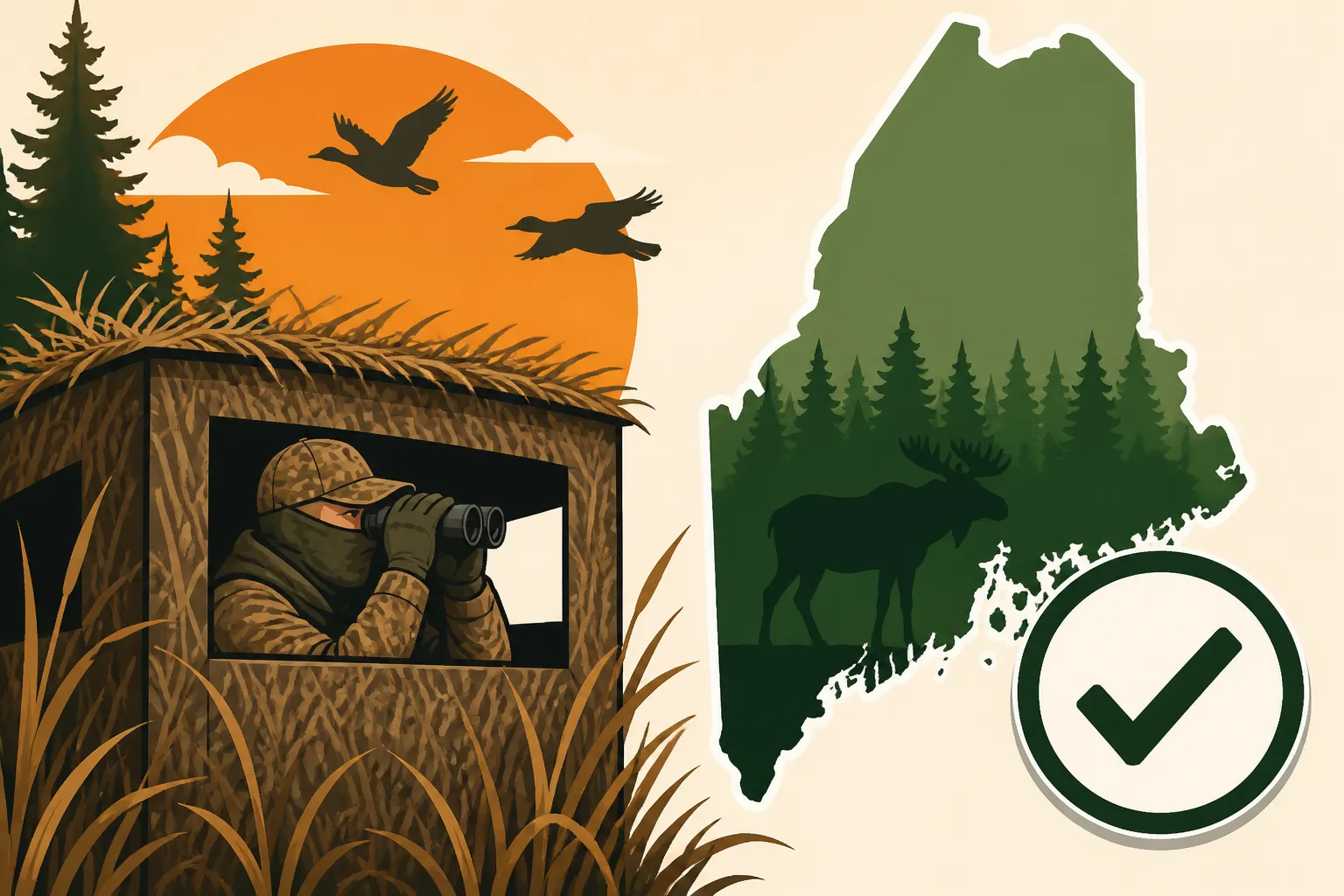
Temporary blinds, on the other hand, are typically permitted. What constitutes "temporary"? It usually means a blind that can be easily removed, leaves no lasting impact on the environment, and is not a fixed structure. This could be a commercially manufactured pop-up blind, a blind constructed from natural materials found on site (like fallen branches, brush, or rocks) that are simply arranged without cutting or damaging living vegetation, or a portable fabric blind. The key is that it shouldn't be affixed to live trees in a way that damages them, and it should be easy to disassemble and pack out when you're done. For many hunters, this means relying on lightweight, collapsible blinds that go up and come down with ease. Don't forget to also familiarize yourself with Treestand Rules on Maine Public Land if you also plan to hunt from elevated positions, as similar "temporary" principles apply.
Identifying and Marking Your Blind
Maine’s WMAs are public spaces, and as such, it's possible for multiple hunters to be in the same general vicinity. To avoid confusion, ensure accountability, and promote safety, any ground blind you set up, especially if you leave it for more than a day (which is often allowed for temporary blinds, provided it meets other criteria), needs to be clearly marked.
The standard requirement is usually to have your name and current hunting license number clearly and legibly displayed on the blind. This helps wardens identify the owner and ensures that you're held responsible for its removal at the end of the season or if it becomes derelict. Think of it like putting your name on your school backpack; it's yours, and everyone knows it. This marking should be durable enough to withstand weather conditions for the duration you plan to leave it. For example, writing on a piece of Tyvek or a laminated card and securely attaching it to the blind with zip ties or strong twine is a good practice. This transparency helps foster a positive hunting community and avoids conflicts over "ownership" of a spot.
Duration and Removal Requirements
Even temporary blinds aren't meant to become part of the landscape permanently. The duration a ground blind can remain on a WMA is strictly regulated. Typically, ground blinds must be removed within a specific timeframe after the close of the hunting season for which they were used. This is critical for environmental stewardship and to ensure that WMAs remain pristine for all users, not just hunters.
Leaving a blind up year-round can lead to it breaking down, becoming trash, or even becoming a hazard to wildlife. Imagine an old, tattered blind collapsing and becoming a snare for small animals. Therefore, always check the exact dates for removal, but generally, expect to take your blind down shortly after the final day of the specific season you're hunting (e.g., if you're Hunting Maine's Generous Fall Turkey Season, your blind should be removed soon after that season concludes). Failure to remove your blind can result in fines, and the state may remove it at your expense. It's not just about compliance; it's about respecting the land and ensuring future access for everyone.
Environmental Impact and Ethical Considerations
Beyond the letter of the law, there's the spirit of ethical hunting and environmental responsibility. When using a ground blind on a WMA, your actions should always minimize impact. This means:
- No Cutting Live Vegetation: If you're brushing in a blind, use only deadfall, broken branches, or existing sparse vegetation. Never cut down live trees, shrubs, or saplings. This is often explicitly forbidden and defeats the purpose of managing land for wildlife habitat.
- Leave No Trace: Pack in, pack out. Anything you bring with you – food wrappers, water bottles, spent shell casings, blind material – must leave with you. This also applies to any natural materials you might have temporarily arranged to enhance your blind.
- Avoid Disturbing Wildlife: While you're there to hunt, be mindful of your overall presence. Avoid excessive noise or disturbance that could stress non-target wildlife or other hunters. Your goal is to blend in, not disrupt the natural flow of the WMA.
These ethical considerations are often embedded in the regulations themselves, but a mindful approach ensures we uphold the strong conservation traditions of Maine hunters.
Here’s a quick overview of temporary ground blind considerations for Maine WMAs:
| Feature | Temporary Ground Blind (Permitted) | Permanent Structure (Not Permitted) |
|---|---|---|
| Construction | Commercially manufactured, pop-up, or natural materials (deadfall, brush). | Built from cut live trees/vegetation, fixed wooden/metal frame. |
| Attachment | Freestanding or minimally secured without damage to live trees. | Nailed, screwed, or otherwise permanently affixed to live trees. |
| Marking | Required: Hunter's name and license number clearly visible. | Not applicable, as these are prohibited. |
| Removal | Must be removed within specific timeframe after season close. | Not applicable, as these are prohibited. |
| Environmental | Minimal impact, leaves no trace, uses natural, non-living materials. | Destroys habitat, leaves debris, alters natural landscape. |
| Purpose | Short-term concealment for a specific hunting season. | Long-term, year-round use or storage. |
Practical Tips for Using Ground Blinds on Maine WMAs
Knowing the rules is one thing; putting them into practice effectively is another. Here are some pointers for making your ground blind experience on Maine WMAs successful and compliant.
Scouting and Placement Strategies
Successful ground blind hunting begins long before you set foot in the WMA with your blind. Scouting is paramount. You need to find active game sign, understand bedding and feeding patterns, and identify natural funnels or pinch points. This is where modern tools can really shine.
Before you even set foot on a WMA, tools like onX Layers for Maine Land Status can be invaluable for identifying WMA boundaries, topography, and potential access points. You can mark potential blind locations on your app, noting distances to trails, roads, and property lines. Using satellite imagery, you can pick out natural cover that will help conceal your blind, even before you get there. Similarly, GoHunt offers resources and mapping capabilities that allow you to analyze terrain, timber cuts, and water sources to predict game movement.
When physically scouting, look for high-traffic game trails, rubs, scrapes, and feeding areas. Consider prevailing winds and sun angles to ensure your scent is carried away from your target area and that morning or evening sun isn't blinding you. Place your blind in natural shadows or against dense cover to help it disappear. Remember that a great spot for White-Tailed Deer Across Maine might be different from where you'd set up for Upland Bird and Small Game Hunting in Maine. Always scout thoroughly and strategically.
Concealment and Blending In
A ground blind's primary purpose is concealment. While manufactured blinds offer a good base, they rarely disappear entirely on their own. Take the extra steps to brush in your blind using natural materials found on-site, such as dead branches, tall grasses, or ferns. This breaks up the outline of the blind and helps it blend seamlessly into the environment. Remember, never cut living vegetation.
Think about your approach and exit routes. Can you get to and from your blind without being detected? This is especially crucial when hunting wary game like deer or turkey. Consider wearing camouflage that matches the season and habitat, even inside your blind, as light can still filter in, and sudden movements might be seen if you're wearing bright colors. If you're setting up near a field edge, think about Brushing In a Blind on a Field Edge effectively so it becomes part of the natural cover.
What to Do if You Encounter Another Hunter's Blind
Maine WMAs are public, and you're bound to encounter other hunters. If you come across a ground blind that's already set up and marked, respect it. It's considered extremely poor etiquette, and potentially illegal depending on the circumstances, to hunt directly over someone else's established blind or to disturb it in any way.
If you find an unmarked blind, you could report it to the MDIFW, as it might be an abandoned or non-compliant structure. However, it's generally best to simply move on and find your own spot. There's plenty of ground to cover in Maine, and maintaining good hunter ethics helps everyone enjoy their time in the woods. Learning how to identify Finding Ground Others Walk Past can lead to more solitude and less conflict.
Avoiding Common Pitfalls
To ensure you stay compliant and have a good experience, be mindful of these common mistakes:
- Not Checking Current Regulations: Regulations can change, and specific WMAs might have unique rules. Always consult the latest MDIFW hunting law book or their website for the WMA you plan to visit. Resources like Scouting With the Maine Hunting App can sometimes include WMA-specific info.
- Poor Marking: Faded labels, unreadable writing, or flimsy attachment that allows your identification to fall off can lead to your blind being considered abandoned or confiscated. Use durable materials and attach them securely.
- Leaving Blind Components Behind: Even small pieces of plastic, fabric, or cordage left behind contribute to litter and negate the "leave no trace" principle. Be meticulous when packing out.
- Damaging Vegetation: Cutting branches or trees, even small ones, to "improve" your blind is a big no-no and can result in fines and loss of hunting privileges.
- Misidentifying Land: Before setting up, confirm you are indeed on WMA land. Mistakes can happen, and tools like Reading Maine Public Land Boundary Signs and mapping apps can prevent accidental trespass onto private property.
By understanding and adhering to these rules and embracing ethical practices, you can enjoy the fantastic opportunities Maine's Wildlife Management Areas offer for ground blind hunting. Happy hunting!
Disclaimer
This article is for general informational purposes only and does not constitute professional advice. Laws, prices and regulations vary by location and change over time. Consult a qualified professional for guidance on your specific situation.