Hunting a Timber Bridge Crossing
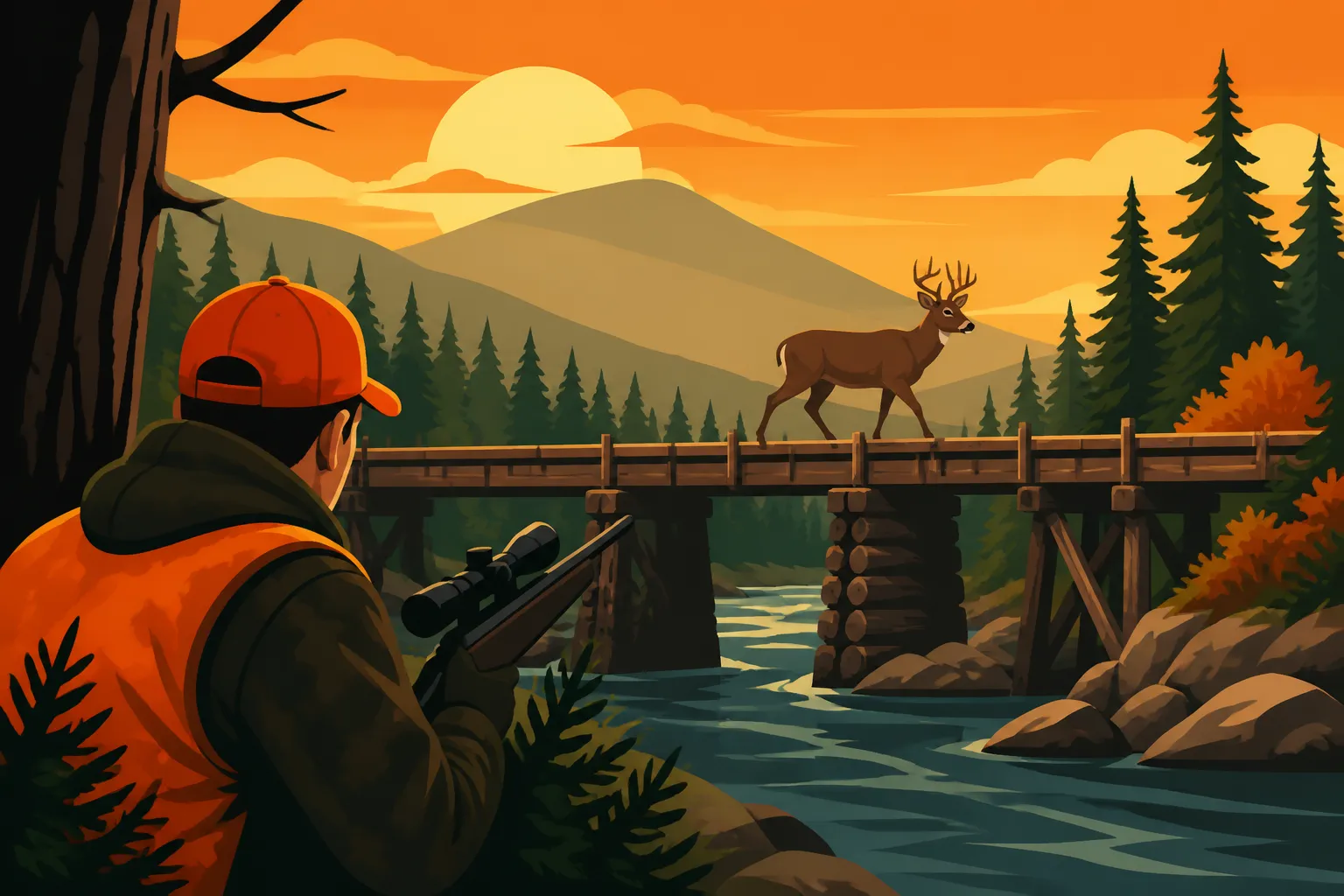
Many hunters head into the Maine woods with visions of intercepting a big buck crossing a ridge or working a clear-cut edge, but they often overlook some of the most consistent travel corridors: timber bridge crossings. It's easy to dismiss these structures, especially if you've walked across a few and seen little more than a couple of old tracks. However, deer, particularly those wary, mature whitetails, are absolute masters of efficiency and security, and a well-used timber bridge offers both. This guide will help you decode why deer utilize these seemingly mundane crossings, how to pinpoint the most promising ones, and the best tactics to turn a simple bridge into a productive hunting setup in the vast and varied landscapes of Maine.
Understanding Why Timber Bridges Matter to Deer
Timber bridges might seem like mere utilitarian structures, built for logging trucks and ATVs, but to a deer, they represent a predictable and often secure pathway through otherwise difficult terrain. Ignoring them means missing out on crucial intel about deer movement.
The Bridge as a Funnel and Bottleneck
Imagine a sprawling, low-lying cedar swamp, impassable for much of the year, or a winding stream with muddy banks that make for difficult crossing. Now picture a sturdy timber bridge spanning that obstacle. For a deer, this bridge isn't just a convenience; it's often the path of least resistance, a natural funnel that condenses movement.
Deer are incredibly energy-efficient creatures. They will almost always choose the easiest route to get from point A to point B. If crossing a bog means slogging through knee-deep muck, expending precious energy and potentially getting mired, while a solid timber bridge offers a quick, dry passage, which do you think they'll pick? Especially during periods of high water, heavy rain, or deep snow, these bridges become even more critical. They act as bottlenecks, forcing deer traffic into a confined area that might otherwise be too dispersed to hunt effectively. You might track a deer for miles through dense woods, only to find their path inevitably leads them to a well-trodden crossing point like a timber bridge, or perhaps even a beaver dam crossing. The key is recognizing these natural choke points and understanding that deer will predictably use them, sometimes for generations, because they offer a consistent, reliable way to navigate their home range.
Cover and Concealment on Approach
While the bridge itself might often be open and exposed, deer rarely just sprint across a timber bridge in broad daylight. Instead, they utilize the cover leading up to and *immediately after the crossing to ensure their safety. Think about the landscape surrounding these bridges: often, they're nestled in areas of regenerating timber, dense alder thickets along a stream, or mature softwood stands that offer excellent security cover.
A smart buck will approach a bridge cautiously, often pausing in the thick brush just off the crossing to survey the area, scent-check for danger, and listen for any disturbances. He might parallel the stream in dense cover for a short distance before committing to the crossing. On the other side, he'll likely duck back into the protective cover of a young clear-cut or a patch of hemlocks almost immediately. This behavior means that your hunting setup shouldn't necessarily be on the bridge, but rather within striking distance of these approach and exit points. Understanding how deer use this associated cover for security is paramount to successfully hunting a timber bridge crossing. They want to be as unseen as possible, making the edges of these cover patches prime ambush locations.
Scouting the Right Timber Bridge
Not all timber bridges are created equal in the eyes of a deer. Some are high-traffic highways, while others are rarely used except by a lost wanderer. Your scouting efforts are crucial for distinguishing between the two and identifying the ones with the most potential.
Reading the Landscape Around the Bridge
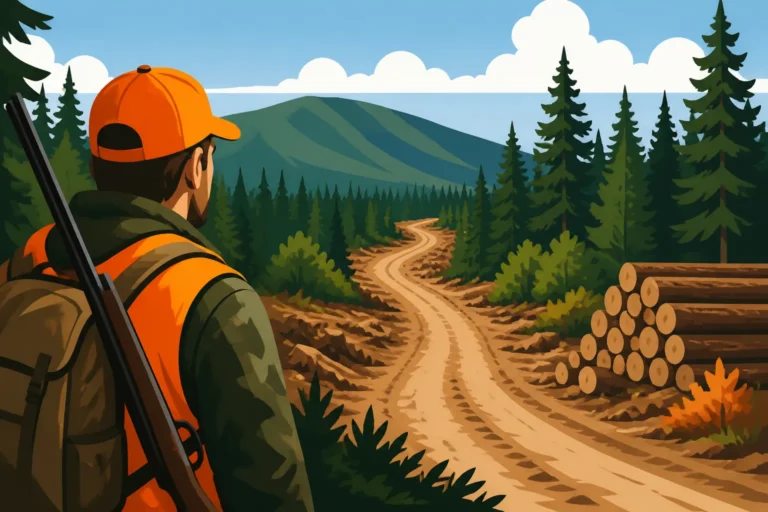
When you're out scouting, don't just look at the bridge itself. You need to read the entire landscape surrounding it. What other terrain features are funneling deer toward this particular crossing? A bridge is often just one piece of a larger puzzle. For instance, you might find a bridge connecting two distinct habitat types, like a dense bedding area in a spruce bog on one side and an oak ridge or a recent clear-cut (which will eventually grow into excellent deer browse) on the other. This creates a natural travel corridor that deer will consistently use.
Look for a prominent ridge line that terminates at the bridge, or a natural deer trail that follows a stream bank through thick cover until it hits the crossing. These are clues that this particular bridge isn't just an arbitrary crossing, but a strategic one. OnX Hunt, with its detailed satellite imagery and topographical maps, can be incredibly helpful here. You can identify potential funnels, analyze contour lines, and even see vegetation changes that might indicate prime bedding or feeding areas that are connected by a bridge. Consider if there's standing water that makes other crossings difficult, or if the bridge offers the only elevated, dry path. A bridge might even be part of a larger network of trails, like a scrape line running along a logging road that periodically crosses streams via these bridges. Reading Aerial Photos for North Woods Deer can significantly enhance your ability to interpret these landscape features from afar, saving you precious boot leather.
Identifying Fresh Deer Sign
Once you've identified a promising bridge location, it's time to get on the ground and look for the undeniable proof: fresh deer sign. This means more than just a single old track. You're looking for evidence of consistent, current use.
Walk the trails leading to and from the bridge. Are there multiple, well-worn deer paths converging? Are there fresh tracks in the mud or soft soil near the bridge approaches? Pay close attention to the edges of the bridge where deer might step off into softer ground. Look for fresh droppings, which can give you an indication of how recently deer have been using the area. During the rut, keep an eye out for rubs on saplings or scrapes near the trails leading to the bridge. A fresh rub line terminating at a crossing indicates a buck is actively checking that funnel. If you find heavy, consistent sign on both sides of the bridge, and on the trails directly associated with it, you've likely found a winner. Remember that deer sign can look different depending on the season; a well-used trail in summer might be less obvious under a blanket of snow in late season, but fresh tracks will still tell the tale. Scouting Maine Private Land Before Season delves deeper into what to look for when evaluating an area's deer sign.
Seasonal Usage and Time of Day
The way deer use a timber bridge can shift throughout the hunting season, and understanding these patterns is key to being in the right place at the right time. In the early archery season, deer might use bridges more casually, as they move between summer bedding and feeding areas. However, as the rut approaches, these crossings become high-traffic zones for bucks on the prowl. A mature buck might use a bridge to efficiently check for does in bedding areas on one side, then cross over to scent-check another area on the opposite bank. Hunting the Rut in Early November explores this heightened movement.
Later in the season, as winter approaches and food sources become scarce, bridges connecting secure cover to critical late-season food sources like oak stands or conifer thermal cover become invaluable. A deer's primary goal in late season is to conserve energy and find sustenance, and a reliable bridge crossing can facilitate both. As for time of day, deer will often use these corridors during crepuscular hours (dawn and dusk) when moving between bedding and feeding areas. Morning might see them crossing from a feeding area back to bedding, while evenings will find them heading from bedding to feed. However, during the peak of the rut, a cruising buck might use a bridge at any time of day, making an all-day sit a viable strategy. Understanding these temporal shifts will inform your stand placement and hunting hours. Late-Season Food Sources for Maine Whitetails is a great resource for understanding deer patterns as the temperatures drop.
Setting Up for Success at a Timber Bridge
You've found the perfect bridge, you've seen the sign, and you've got a sense of how deer are using it. Now comes the critical part: setting up your ambush. This isn't just about putting a stand in a tree; it's about strategic placement that accounts for deer behavior, wind, and your own stealth.
Choosing Your Stand or Blind Location
This is where many hunters make a mistake. They see the bridge and think, "I'll just set up right on the edge of it!" While tempting, a position directly on or immediately adjacent to the bridge is often too exposed. Deer are wary, and they're especially cautious when crossing an open area. Instead, focus your efforts on positioning yourself 30-60 yards away from the actual crossing, along the primary deer trails leading to or from the bridge.
Look for a pinch point or a funnel created by the terrain or vegetation that directs deer onto that specific trail before they hit the bridge. An ideal spot might be where a dense thicket meets the open approach, or where a slight rise offers you an elevated vantage point over the trail. If you're using a treestand, look for a tree that offers good cover and a clear shot lane to the trail. For ground blinds, consider brushing in a blind a bit further back in the cover, allowing you to remain unseen as deer approach. Remember, deer will often pause to scent-check and survey the area before stepping onto the bridge, giving you a perfect shot opportunity if you're positioned correctly. The key is to be in a position where you can intercept them before they detect you, or as they are committing to the crossing. For more details on choosing a strategic location, check out Using a Ground Blind on Posted-Free Land.
Camouflage and Scent Control
When hunting a timber bridge crossing, especially one that sees daylight activity, your camouflage and scent control efforts need to be top-notch. The ground around timber bridges, particularly in autumn, can be surprisingly noisy with fallen leaves, dry twigs, and gravel. Your entry and exit routes must be planned to minimize noise, avoiding crunching through dry leaves or scraping against brush.
Deer approaching a crossing are already on high alert. They're often pausing just out of sight, listening and sniffing the air for any hint of danger. This makes scent control absolutely paramount. Imagine a big, cautious buck approaching a stream crossing. He's not just going to waltz blindly across; he'll stop in the cover, raise his nose, and take a long, deliberate sniff of the wind. If your scent cone drifts across his path, even subtly, he's gone. Use scent-eliminating sprays, wash your hunting clothes in scent-free detergent, and store them properly. Always play the wind. Even with perfect scent control, a direct blast of your human odor will alarm a deer. Positioning yourself so the prevailing wind carries your scent away from the deer's approach path is critical. Wind and Thermals in Maine Hill Country offers an in-depth look at how these invisible forces can make or break your hunt.
Calling and Decoy Strategies
While a timber bridge crossing isn't typically the first place you'd think of for elaborate calling or decoy setups, these tactics can certainly complement your ambush, especially during the rut. A well-timed grunt call or a subtle rattling sequence might be just enough to pique a buck's curiosity as he approaches or passes through the area. If you've identified a heavily used bridge during the rut, a buck might be cruising for does, and a quick series of grunts could pull him into range. Rattling and Grunting Maine Bucks discusses effective calling strategies for different situations.
Decoys, however, require a bit more finesse at a bridge crossing. The open nature of many bridges means placing a decoy directly on it would be too exposed and unnatural. Instead, consider positioning a doe decoy in dense cover near a primary trail leading to the bridge. The idea is to create a visual incentive that might pull a buck into your shooting lane before he even commits to the crossing. If you're using a ground blind, placing a decoy 20-30 yards out in a clearing near the trail can also draw attention away from your hidden position. Always consider the line of sight and the prevailing wind when using decoys, and ensure they look as natural as possible within the environment. Sometimes, less is more, but knowing when to apply these subtle attractants can make a difference. For more on vocalizations, Grunt Calls in Mature Maine Hardwoods offers specific advice relevant to Maine's wooded terrain.
Practical Considerations and Safety
Hunting timber bridge crossings offers unique opportunities, but like all hunting in Maine, it comes with important practical considerations and safety measures you need to keep in mind.
Access and Permission
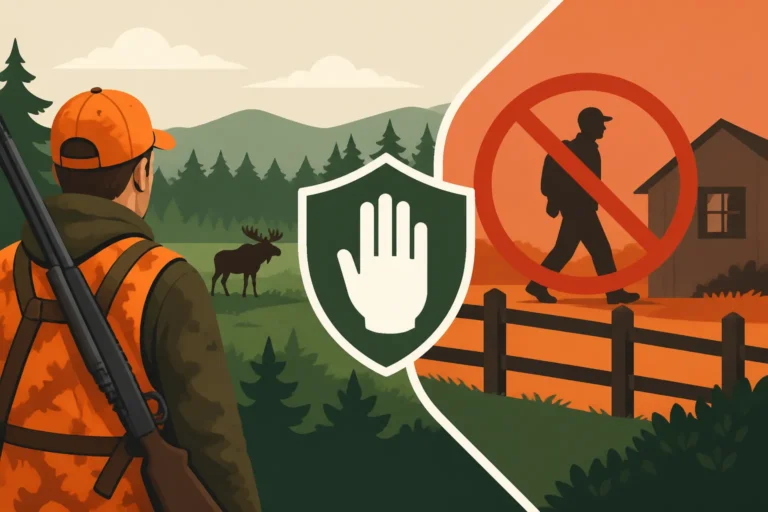
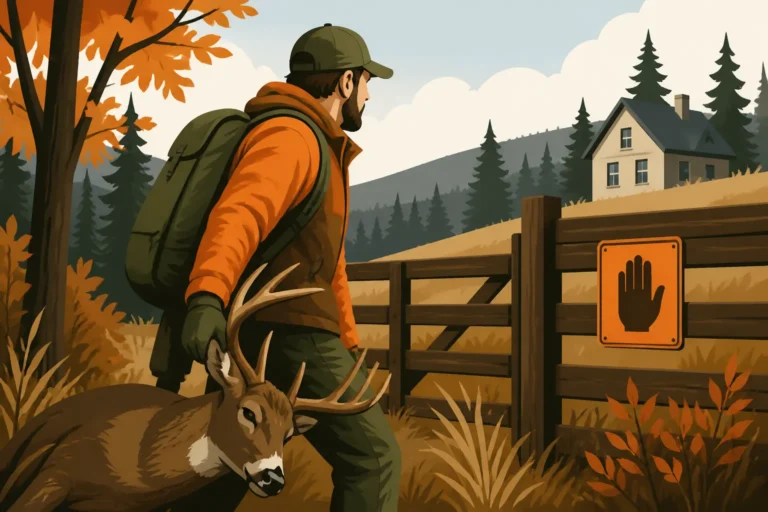
One of the biggest practical considerations for hunting timber bridge crossings in Maine is land access. Many, if not most, of these bridges are located on industrial timberland, private woodlots, or other private property. Maine has a long tradition of implied permission for recreational access, but this doesn't mean you can ignore property lines. It's absolutely crucial to know who owns the land you plan to hunt. Tools like onX Hunt or GoHunt are invaluable for this, allowing you to instantly check property boundaries, landowner names, and assess potential access points from your phone.
If the bridge is on private land, you must obtain permission from the landowner. A simple conversation can often grant you access and build goodwill, opening up more hunting opportunities in the future. If the bridge is located within the vast expanse of the North Maine Woods, be prepared for potential gate access fees and specific rules. Hunting a North Maine Woods Checkpoint Tract details what to expect in these areas. Always assume you need permission or official access, and err on the side of caution. Trespassing can quickly lead to lost hunting privileges and strained landowner relations, something we all want to avoid. Getting Landowner Permission in Maine provides guidance on how to approach landowners respectfully and effectively.
Environmental Factors
Maine's weather is notoriously fickle, and environmental factors can significantly impact how and when deer use timber bridge crossings. Heavy rain can swell streams and turn low-lying areas into impassable swamps, potentially making a bridge the only dry route for deer to cross. Conversely, extreme cold might freeze over smaller streams, creating alternative crossing points for deer, though often less secure than a timber bridge.
Snow depth is another major factor. In areas with deep snow, a timber bridge that offers a clear, packed path can become an even more critical travel corridor for deer trying to conserve energy. This makes them particularly productive spots for late-season hunts. However, be mindful of ice on the bridge itself, both for your safety and the deer's. A slippery surface might deter deer, or at least make them extremely cautious. Always dress appropriately for the conditions and be prepared for sudden changes in weather. Understanding how these factors influence deer movement is key to anticipating their patterns. For insights on adapting to changing weather, consider Hunting Deer After a Cold Front or Tracking a Deer in Fresh Maine Snow.
Bridge Crossing Characteristics for Hunting
To help you categorize and strategize, here's a breakdown of different types of bridge crossings you might encounter and how they factor into your hunting plans:
| Bridge Type | Common Location | Deer Usage Characteristics | Hunting Strategy Notes |
|---|---|---|---|
| Timber Bridge | Logging roads, industrial forests, private land over small streams/wetlands | Primary funnels, especially in wet/snowy conditions. Excellent cover on approaches. | Set up 30-60 yards off the bridge on main trail. Watch wind carefully. Position in dense cover for concealment. |
| Culvert Crossing | Road ditches, smaller streams under logging roads | Less obvious. Deer may use directly (if large enough) or walk over the culvert. Often integrated with road shoulders. | Locate subtle trails leading to/from. May offer more concealment for a ground blind setup near the culvert's mouth. |
| Old Stone Bridge | Abandoned roads, older homesteads | Less frequent use than active timber roads, but can be historical, less-pressured crossings. | Look for heavy, aged sign. Deer might be more wary of old, open structures. Focus on adjacent thickets. |
| Natural "Bridge" | Fallen logs, narrow rock formations across small gaps, beaver dams | Highly used by deer in specific, constrained areas. A true "path of least resistance." | Excellent ambush spots if terrain funnels deer naturally to one specific log or rock formation. Often in remote, dense cover. |
Hunting timber bridge crossings in Maine requires a keen eye for deer sign, an understanding of deer behavior, and a strategic approach to setup. By focusing on the details, from the subtle nuances of the landscape to the specifics of scent control, you can turn these overlooked structures into some of your most productive hunting spots. Good luck out there!
Disclaimer
This article is for general informational purposes only and does not constitute professional advice. Laws, prices and regulations vary by location and change over time. Consult a qualified professional for guidance on your specific situation.