Running Hounds on an October Bear
There's nothing quite like the sound of a well-trained hound pack opening up on a fresh bear track in the crisp Maine October air. Many hunters feel a real crunch when the September baiting season wraps up, wondering how they'll connect with a bear without those dependable piles of treats. But for those dedicated to the chase, October signals the prime time to shift gears and truly immerse themselves in the wild pursuit of a black bear with the aid of dogs. This guide will walk you through the ins and outs of running hounds on an October bear, covering everything from understanding bear behavior to mastering the art of the chase and navigating the season's unique challenges.
The Unique Challenges and Rewards of October Bear Hunting with Hounds
When the calendar flips to October, the bear hunting landscape in Maine changes dramatically. The lush, thick foliage of summer begins to thin, and bears, knowing winter is coming, are in a completely different mode. This shift presents both unique challenges and incredible rewards for the hound hunter.
Transitioning from Baiting to Hounds
For many, bear hunting in Maine starts and ends with baiting, which is a highly effective method. However, the season for baiting black bears legally in Maine closes in late September. This transition often leaves hunters feeling a bit lost if they haven't experienced the thrill of a hound hunt. You're moving from a relatively static, ambush-style hunt to a dynamic, high-energy pursuit where you're relying entirely on the keen senses and stamina of your dogs, combined with your own woodsman skills. It's less about waiting and more about actively engaging with the forest and the animal on its own terms. The dogs become your ears and nose, interpreting a world of scent that you can only imagine.
The October Bear's Behavior: Fueling Up for Winter
As October progresses, Maine black bears are in a critical phase known as hyperphagia. This means they are voraciously consuming calories, trying to pack on as much fat as possible before denning up for the winter. Their primary focus shifts from a more varied summer diet to high-calorie foods like acorns, beechnuts, apples, and late-season berries. You'll find them spending significant time in areas rich with these food sources, often traveling between feeding grounds and bedding areas. Understanding Maine black bear denning habits is crucial here; they are looking for secure, insulated spots, but they are still actively foraging. This intense feeding behavior can sometimes make them less cautious, but it also means they are constantly on the move, covering more ground than they might earlier in the season. Your scouting efforts, even with hounds, need to focus heavily on these late-season food sources. Using mapping applications like GoHunt can help you identify potential mast crop areas or old orchards from aerial photos, giving you a head start.
Why Hounds Excel in Late-Season Bear Pursuit
Hounds truly come into their own during the October hunt. The cooler temperatures mean dogs can work longer and harder without overheating, preserving their stamina for extended chases. Furthermore, the leaves are falling, making visibility better for hunters attempting to follow the chase or get to a treed bear. While the lack of foliage might seem to reduce cover, it also means scent can hold better on the damp ground without being evaporated by intense summer sun. Hounds are built for this. Their incredible sense of smell allows them to pick up a faint bear track that might be hours old, unraveling the bear's movements across varied terrain, through dense spruce thickets, over rocky ledges, and along game trails. This innate ability to trail allows you to pursue a bear that isn't confined to a bait site, offering a much larger, more natural hunting experience across vast tracts of Maine timber.
Building Your Bear Hunting Dog Team
A successful hound hunt isn't just about showing up with a few dogs; it's about having a cohesive, well-trained, and healthy team. Your dogs are your partners, and their performance directly impacts your success.
Understanding Different Hound Breeds and Their Roles
Various hound breeds are used for bear hunting, each bringing unique strengths to the pack. Often, a mixed pack proves most effective, combining the best attributes of a few different breeds.
| Breed | Common Traits | Primary Role |
|---|---|---|
| Bluetick Coonhound | Excellent cold nose, strong drive, vocal, good stamina | Often used for trailing, starting a track, and keeping the bear moving |
| Plott Hound | Aggressive, tenacious, fast, often a "silent" trailer | Bay dog, excels at holding a bear at bay or up a tree, good for rough terrain |
| Walker Coonhound | Very fast, intelligent, good tree dogs, moderate nose | Chasing, treeing, maintaining speed on a hot track |
| Black & Tan Coonhound | Deep, booming voice, steady, good cold nose, persistent | Trailing, often a steady "line dog" that stays on track |
| Redbone Coonhound | Good speed, strong desire to tree, high energy | Chasing, treeing, bringing enthusiasm to the pack |
A typical pack might include a "strike dog" with an exceptional "cold nose" to pick up an old track, faster "chase dogs" to push the bear, and a "tree dog" or "bay dog" to hold the bear once it's cornered or treed. Choosing the right dogs for your team, understanding their individual personalities, and leveraging their strengths is key.
Training Your Hounds for Maine Bear
Training is an ongoing process, not a one-time event. It starts with basic obedience and progresses to specific tasks required for bear hunting. You'll want to expose young dogs to bear scent early on through hides or training cages, building their drive. Then, moving to controlled chases on "training bears" (where the bear is not harvested, often in conjunction with research programs, or following smaller bears where legal) helps them learn how to track, work as a pack, and ultimately tree or bay a bear. Consistency is paramount. Dogs need to learn to ignore other game species, focusing solely on bear scent. This often involves specific training exercises and time spent in the woods during the off-season. Remember, a well-trained dog understands commands, stays within a reasonable range, and responds to recall, which is vital when you're deep in the North Maine Woods. You can also find resources through hunter education and local clubs focused on Maine Hunter Education Requirements.
The Importance of Conditioning and Care for Your Pack
Your hounds are athletes. They need to be in peak physical condition to withstand the rigors of a Maine bear chase, which can cover many miles over challenging terrain. Regular exercise, a high-quality diet, and routine veterinary care are non-negotiable. Pay close attention to their paws, checking for cuts or abrasions after each hunt. Hydration is also critical, especially on longer chases. A tired, injured, or dehydrated dog isn't just ineffective; it's at risk. Keeping your dogs healthy means they'll be ready when Maine Hound Season Dates roll around, ensuring they can perform at their best and stay safe in the wilderness. Many experienced hound hunters consider their dogs family, and their care reflects that deep bond.
Executing a Successful October Bear Hunt with Hounds
With a healthy, well-trained pack, the next step is putting it all together in the field. October bear hunting with hounds is a dynamic and often physically demanding endeavor.
Scouting and Locating Bear Sign
Even with dogs, scouting is fundamental. Your hounds are amazing, but they can't magically conjure a bear track from thin air. In October, focus your scouting on areas with prime late-season food sources: oak ridges, beech stands, apple orchards (wild or abandoned), and clear-cuts where berry bushes might still hold fruit. Look for fresh tracks, scat full of berry seeds or nut casings, claw marks on trees, and overturned rocks or logs. Early morning dew or light frost can make fresh tracks stand out. Utilize mapping tools like GoHunt or other topographic apps to pinpoint these areas. By doing this, you're not just hoping your dogs hit a track; you're putting them in the best possible position to succeed. Knowing where to look for concentrations of bear activity significantly increases your odds of striking a bear.
The Chase: From Strike to Tree
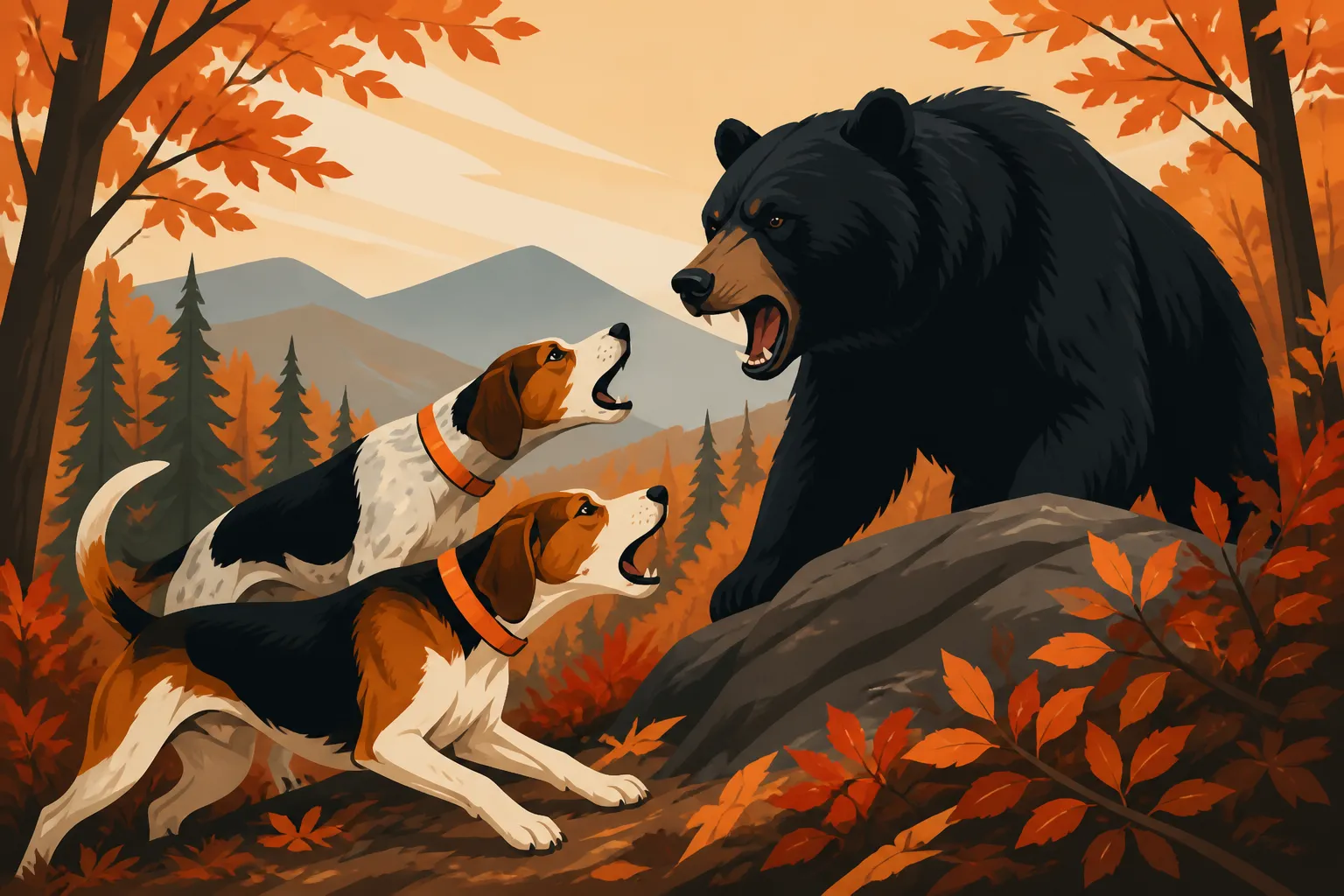
Once your hounds hit a fresh track, the magic begins. The sound of a pack opening up is exhilarating. You'll listen intently to the barks, bays, and chops of your dogs, interpreting their language to understand the direction and intensity of the chase. This is where a good GPS tracking system for your dogs becomes invaluable. Many modern collars integrate with handheld units or smartphone apps, allowing you to monitor your pack's location and movement in real-time. As the chase unfolds, you'll attempt to follow, often on foot, though some hunters will use ATVs or trucks on logging roads to get ahead of the bear or cut off its escape routes. The goal is to keep the bear moving until it eventually trees or bays. When the dogs switch from a running bay to a steady, urgent bark, it usually means the bear is treed. This is the moment you've worked for, and the rush of adrenaline is intense as you push to reach the treed bear. This can be miles into dense cover, so preparing for a long haul is crucial.
Ethical Considerations and Recovery
Reaching a treed bear is only part of the equation. Once you arrive, you need to assess the situation. Is it a sow with cubs? Is it a legal bear? Judging a Legal Bear From a Sow With Cubs is paramount. If it's a legal bear and you choose to harvest, aim for a clean, ethical shot. Remember, your dogs are right there, so safety for both your pack and yourself is critical. Once the bear is down, get your dogs secured immediately. Then, the real work begins: field dressing and recovery. This often means a long, difficult drag or carry out of the woods, sometimes miles from the nearest road. Having a plan for extraction, whether it's using a game cart, a sled, or multiple people, is essential. Once out, you'll need to know about Handling a Bear Harvest Check-In to legally register your animal.
Legal Framework and Safety Protocols for Hound Hunting
Bear hunting with hounds in Maine, like all hunting activities, is governed by specific regulations and requires a strong commitment to safety and ethical practice.
Navigating Maine's Specific Regulations
Maine has specific rules regarding bear hunting with dogs. First and foremost, you need the proper licenses and permits. This includes a valid hunting license and a bear hunting permit, in addition to any specific permits required for hunting with hounds. The Maine Bear License Cost can vary depending on residency. Pay close attention to the Maine Hound Season Dates to ensure you are hunting legally. There are also regulations concerning the number of dogs you can use, the type of collars (often GPS collars are required or highly recommended for tracking), and prohibitions on hunting near dwellings or certain protected areas. Ignorance of the law is no excuse, so thoroughly review the current Maine Department of Inland Fisheries and Wildlife (MDIFW) regulations before every season. Resources like the MDIFW website, GoHunt's regulatory summaries, or speaking with a Registered Maine Guide who specializes in hound hunting can keep you informed.
Essential Safety Practices in the Maine Woods
Safety is paramount when running hounds. You're often deep in remote terrain, navigating dense woods, steep inclines, and potentially treacherous footing. Here are some critical safety considerations:
- Communication: Carry a reliable two-way radio or satellite messenger in areas with no cell service. Let someone know your hunting plan, including your expected route and return time.
- Navigation: Always carry a map, compass, and a GPS device (like those found in a GoHunt app on your phone, though a dedicated GPS unit is often more robust in deep woods). Know how to use them.
- First Aid: Carry a well-stocked first-aid kit for both humans and dogs. Learn basic canine first aid.
- Blaze Orange: Even though bear season overlaps with other seasons, wearing blaze orange is a smart practice to make yourself visible to other hunters, especially if you are pursuing a treed bear in a populated area.
- Firearms Safety: Always handle firearms safely, especially when dogs are excited around a treed or bayed bear. Be aware of your shooting lanes and what's beyond your target.
- Weather Awareness: Maine weather can change rapidly. Dress in layers, carry rain gear, and be prepared for sudden drops in temperature.
- Water: Carry plenty of water for yourself and your dogs.
Responsible Land Use and Public Perception
Maine has a proud tradition of private land access, and as hound hunters, it's our responsibility to uphold this. Always respect private property, even if it's not posted. If you're going to cross private land, make an effort to get permission beforehand. This might mean Knocking on Doors in Aroostook Farm Country or similar efforts in other regions. Understand that while many landowners are welcoming, some may have concerns about dogs or firearms, and addressing these respectfully goes a long way. The perception of hound hunting can sometimes be negative among non-hunters, so demonstrating ethical practices, responsible dog control, and respecting wildlife is crucial for maintaining our hunting heritage and ensuring future access. Always clean up after yourself, leave gates as you found them, and be an ambassador for the sport.
Disclaimer
Please note that hunting regulations, seasons, and licensing requirements can change. Always consult the official Maine Department of Inland Fisheries and Wildlife (MDIFW) website or their current hunting law book for the most up-to-date and accurate information before planning any hunting trip.