Setting Up Against a Big White Pine
There’s nothing quite like a crisp Maine morning, the air sharp and clean, promising a perfect day in the woods. But often, that same clarity can make you feel incredibly exposed when you're trying to set up for a hunt. We’ve all been there, trying to melt into sparse cover, only to feel every twitch and movement is under a spotlight. This guide is dedicated to one of Maine's most reliable natural assets for hunters – the majestic white pine – and how to leverage its unique characteristics to create a highly effective, concealed setup for your next hunting adventure.
The Maine White Pine Advantage: More Than Just Cover
When you're trying to disappear into the Maine woods, particularly during the late fall and winter months when deciduous trees have shed their leaves, the Eastern White Pine ( Pinus strobus) becomes an absolute MVP. These towering evergreens offer a distinct advantage that goes far beyond just blocking a deer's line of sight. Their dense needle clusters and often substantial trunks provide multifaceted concealment, thermal protection, and even a unique olfactory profile that can help you blend in.
Year-Round Concealment and Thermal Protection
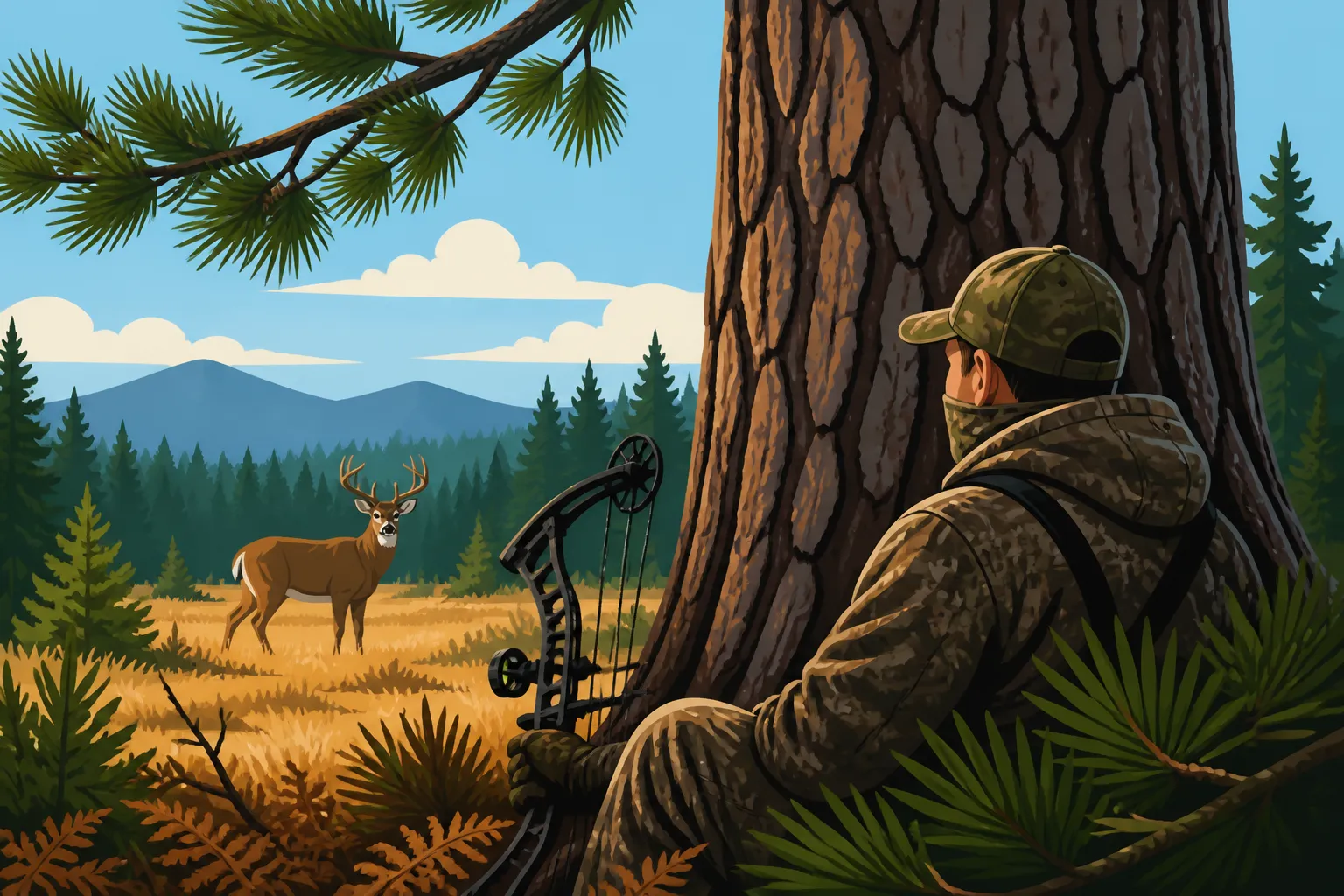
Unlike hardwoods that stand bare and stark against the winter sky, white pines hold onto their needles throughout the year. This evergreen characteristic means they offer consistent, robust visual cover, no matter the season. Imagine a stand of hardwoods in November – you can see for hundreds of yards. Now picture a cluster of mature white pines, their branches reaching down, creating a natural fortress of green. When you tuck yourself into the base of one of these giants, you instantly gain a significant edge in breaking up your human outline.
Beyond visual concealment, these large pines offer incredible thermal protection, especially when the wind is whipping through the woods. The dense canopy and thick trunk act as a natural windbreak, creating a small, calmer microclimate directly behind it. On a brutally cold, windy day, the difference in temperature and comfort can be astonishing. This isn't just about your personal comfort, although that's certainly a bonus; it also reduces the amount of body heat you radiate, which can be picked up by sensitive thermal imaging equipment or even just sensed by a keen-nosed deer if you're emitting too much warmth against the cold backdrop. When considering a Cold-Weather Sitting Strategy in Maine, a big white pine provides a crucial natural shelter.
Breaking Up Your Silhouette Naturally
A deer's primary defense isn't just seeing you, it's detecting an unnatural shape in its environment. A hunter sitting bolt upright in an open area, even if camouflaged, can still stick out like a sore thumb. This is where the white pine truly shines. Its rough, often flaky bark, irregular branch patterns, and the sheer scale of its trunk work wonders in disrupting your silhouette. By positioning yourself snugly against the trunk, you become part of the tree's natural irregularities.
Furthermore, the lower branches of a large white pine, especially older ones, often form a skirt of needles around the base. This natural barrier helps to obscure your legs and lower body, making it incredibly difficult for an animal to define your shape. It's not just about matching colors; it's about breaking the clean lines of a human form into something the woods see every day. Even subtle movements become harder to detect against the busy, textured backdrop of a massive pine trunk and its surrounding branches.
Strategic Setup: Becoming One With the Pine
Choosing any white pine won't cut it. To truly capitalize on this natural advantage, you need a strategic approach to selecting your tree and positioning yourself. It's about more than just finding cover; it's about integrating yourself into the landscape in a way that maximizes your chances of success.
Angle of Approach and Shooting Lanes
Before you even commit to a specific pine, take a moment to consider your intended shooting lanes. A big white pine might offer fantastic cover, but if it completely blinds you from a critical travel corridor or an open feeding area, it's not the right spot. Walk around the tree, picturing where deer or turkeys might approach from. Identify natural openings in the undergrowth or between other trees that you can use as shooting lanes. You might need to make some minor, legal modifications, like carefully clipping a few small branches with hand pruners, but avoid major alterations that could alert animals to your presence.
Your approach to the pine is just as important. Think about how you'll get to your spot without being detected. Choose a route that offers the most cover, ideally utilizing natural features like swales, ridges, or other dense vegetation. When you're scouting for potential stands, using mapping tools like GoHunt can be incredibly helpful. You can overlay aerial imagery with topographic maps to identify hidden access routes and mark potential white pine setups, ensuring you have a clear understanding of the terrain before you even step foot in it. A silent, concealed entry is paramount to a successful sit.
Using Wind and Thermals to Your Advantage
This is non-negotiable, especially for deer hunting. Even the best visual cover is useless if your scent is blowing directly into an animal's path. Always set up with the wind in your favor, blowing your scent away from where you expect game to appear. Big white pines, due to their size, can sometimes create localized swirling winds directly behind them, so pay close attention to the actual wind direction with a powder bottle or milkweed seeds once you're on site.
In Maine's varied topography, you also need to consider thermals. In the mornings, air often sinks down into valleys and low-lying areas. In the evenings, it rises up slopes. If you're hunting in hilly country, a pine positioned just below a ridge crest might offer a perfect morning setup as your scent sinks, but be disastrous in the evening as rising thermals carry your scent upwards. Understanding Wind and Thermals in Maine Hill Country is crucial for making these decisions. Try to find a pine that offers good cover while also allowing you to play the prevailing wind and thermal patterns effectively throughout your planned sit.
The Importance of a Backrest and Comfort
While the primary goal of setting up against a big white pine is concealment, comfort is a huge, often overlooked, factor in successful hunting. Sitting still for hours on end, especially in cold weather, can be excruciating if you're not comfortable. A large white pine provides an excellent natural backrest. Its broad, sturdy trunk can support you, reducing fatigue and allowing you to remain motionless for longer periods.
Consider bringing a small, portable seat cushion or even a lightweight ground pad to insulate you from the cold, damp ground and add a layer of comfort. A comfortable hunter is a patient hunter, and patience is often the key to success. If you're fidgeting, constantly shifting, or just plain miserable, you're far more likely to make noise, move at the wrong time, or give up too early. The pine offers the structure; you provide the padding. This is part of the Cold-Weather Sitting Strategy in Maine that can make or break a late-season hunt.
Reading the Landscape Around Your Pine
A white pine isn't just a blind; it's a piece of a larger puzzle. The effectiveness of your setup depends heavily on how well that pine is situated within the overall landscape and how it relates to game movement patterns.
Identifying Natural Funnels and Travel Corridors
Deer, moose, and even turkeys often utilize the path of least resistance or areas that offer them a sense of security. Look for white pines that are strategically located near natural funnels, such as saddles between ridges, narrow strips of timber connecting larger woodlots, or edges of thick cover. These are the highways of the woods, and a well-placed pine along one can put you right in the action.
Before the season, and even during, spend time scouting. Look for deer trails, rubs, scrapes, and tracks. If you're seeing consistent sign leading past a particular pine, that's your spot. Tools like GoHunt can again assist by highlighting terrain features that create natural pinch points or travel corridors. Sometimes, a single, dominant white pine will stand guard at the mouth of a transition zone between different habitat types, making it a perfect ambush point. Focusing on Hunting a Funnel Between Two Woodlots can greatly increase your odds, and a well-chosen white pine provides ideal concealment in such a spot.
Proximity to Food, Water, and Bedding
Animals move with purpose, primarily driven by their need for food, water, and security (bedding areas). A prime white pine setup will be one that intercepts game moving between these critical resources. For instance, a large pine on the edge of a mature oak stand, where deer are actively feeding on acorns, could be a goldmine. Similarly, a pine overlooking a beaver flowage or a secluded spring could be perfect for intercepting animals coming for a drink.
In the late season, when natural food sources are scarce, white pines near agricultural fields or active logging operations that expose fresh browse can be phenomenal. Pay close attention to Late-Season Food Sources for Maine Whitetails when scouting. For bedding, deer often seek out dense cover, and thick stands of young pines or cedar swamps serve this purpose well. A mature white pine on the perimeter of such an area, particularly one offering a vantage point into or along the edge of the bedding ground, can be an ideal spot. You're trying to predict their daily routine, and positioning yourself along that routine is key. Understanding Where Maine Bucks Bed in Big Timber will help you choose the best pine locations.
Adapting Your White Pine Strategy Season by Season
While white pines offer year-round concealment, the specific tactics for using them can change dramatically depending on the time of year, weather conditions, and game behavior. Being adaptable is a hallmark of a successful Maine hunter.
Early Season to Mid-Fall Considerations
During the warmer early archery season and into the peak of fall foliage, the abundant deciduous cover might make a white pine seem less critical for concealment. However, even then, a large pine offers unique advantages. In the early season, particularly When Maine's Archery Season Opens, insects can be a real nuisance. The dense canopy of a white pine can offer some shade and relief from biting bugs, allowing you to sit more comfortably and still. The solid trunk also provides a secure anchor for a portable treestand if you prefer to get elevated, or simply for a comfortable ground sit.
As the leaves begin to drop in mid-fall, the value of the white pine rapidly increases. It becomes a beacon of green in an increasingly bare landscape, drawing the eye and providing a substantial backdrop. During this period, deer are becoming more active with the rut approaching. Setting up a white pine near a well-used scrape line along a logging road or a ridge-top saddle where bucks are cruising for does can be deadly. Using your GoHunt app, you can mark specific buck sign and note which pines offer the best concealment and shooting lanes in those areas. This is also a good time to consider Hunting a Ridge-Top Saddle for Rutting Bucks.
Late Season and Winter Tactics
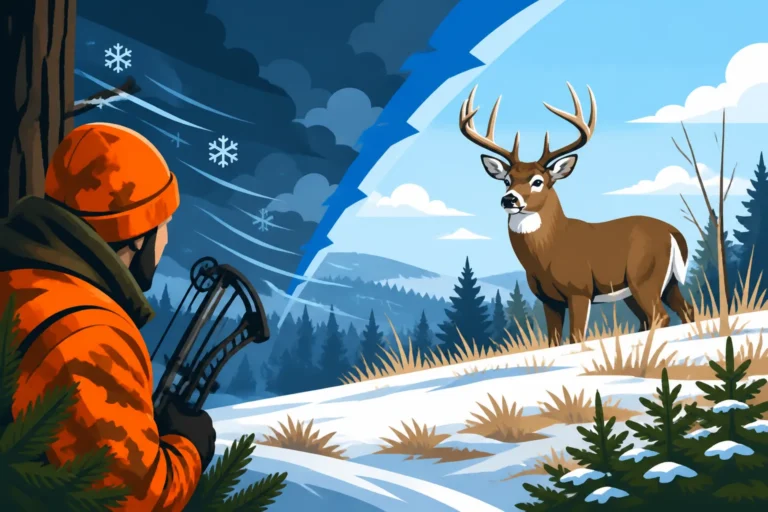
Once the firearms season is in full swing and especially after the snow flies, the white pine transforms from a convenient cover into an absolute necessity. With the landscape stripped bare, human movement is easily detected. A large white pine, particularly one with low-hanging branches, offers unmatched concealment against the stark white or brown background of winter. The contrast between your dark hunting clothes and the bare woods can be stark, but against a dense pine, you simply vanish.
In winter, deer often yard up in dense conifer stands, especially cedar swamps, to escape deep snow and brutal winds. A big white pine on the perimeter of these deer yards, or along a travel corridor leading to or from them, can be a highly productive spot. For instance, if you've scouted a Reading a North Woods Deer Yard and know where deer are entering and exiting, setting up against a strategic pine can offer an ethical shot. Food sources become extremely important in winter, and deer will conserve energy, making predictable movements to browse. A pine overlooking a late-season browse cut or a field edge that still holds forage can be very effective. Remember, the colder it gets, the more deer rely on thick cover and predictable food sources, and your white pine setup should reflect that understanding.
| Seasonal White Pine Setup Considerations | Early Season (September-October) | Mid-Fall (October-November) | Late Season (November-December) |
|---|---|---|---|
| Primary Advantage | Shade, insect relief, base cover | Robust visual cover, windbreak | Essential concealment, thermal |
| Deer Activity Focus | Browsing, small buck activity | Rutting, increased movement | Bedding, winter food sources |
| Key Setup Location | Food plots, water sources | Funnels, scrapes, transition zones | Deer yards, dense cover edges |
| Concealment Need | Moderate | High | Critical |
| Thermal Benefit | Low | Moderate | High |
| Recommended Gear | Bug spray, lightweight pad | Layers, scent control | Heavy layers, warm seat cushion |
Disclaimer
Always check the most current Maine Department of Inland Fisheries & Wildlife regulations before heading afield. Hunting laws and seasons can change, and it is your responsibility to be aware of and adhere to all applicable rules and regulations.