Grouse Hunting a Logging Road Edge
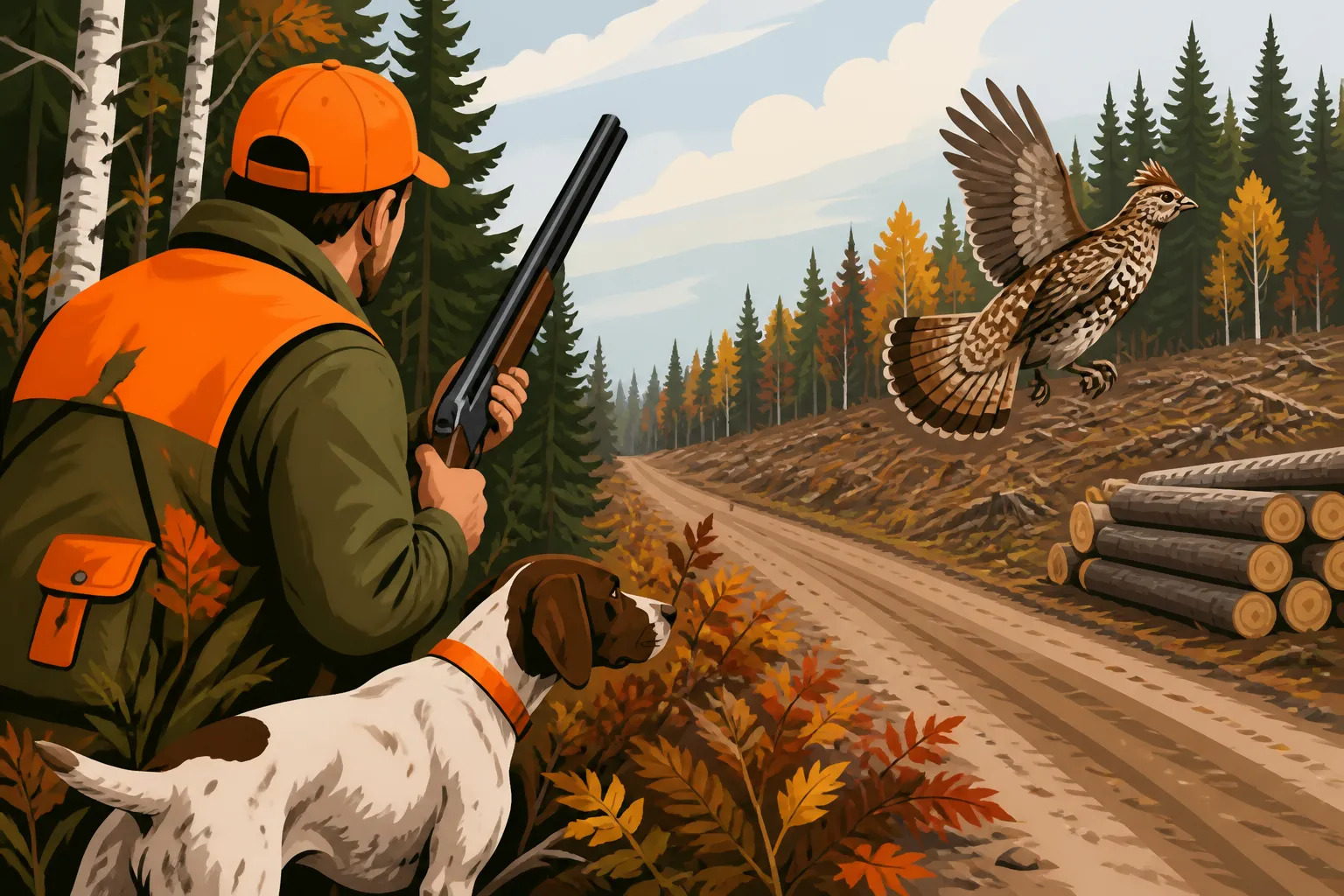
There’s a unique frustration that comes with hunting ruffed grouse in Maine: you know they’re around, you hear those tell-tale thumping drums, but actually putting boots on the ground in dense cover can feel like searching for a needle in a haystack. Many hunters, especially those new to the game or short on time, find themselves wondering where to even begin. This guide is all about simplifying that search, focusing on one of the most productive, yet often overlooked, tactics: hunting the edges of logging roads.
Why Logging Roads Are Grouse Gold Mines
Logging roads crisscross vast swathes of Maine's landscape, from the remote North Woods down to the more settled southern regions. These aren't just pathways for timber trucks; they're linear ecosystems that offer ruffed grouse exactly what they need to thrive: food, cover, and grit for digestion. Understanding why grouse gravitate to these areas is the first step to a successful hunt.
Habitat Diversity Along the Edges
Think about a logging road. On one side, you often have mature timber, offering roosting spots and escape cover. On the other, there might be a recently cut-over area, a young growth sapling patch, or even a stream bed. This diversity creates a buffet for grouse. The sun-drenched edges often grow wild berries like partridgeberry, raspberries, or forgotten apple trees if it's an old homestead road. Insects, a crucial food source, are also more prevalent in these sunny openings. You'll find a mix of hardwood and softwood species, providing different food sources throughout the year. For instance, in the fall, aspen buds and birch catkins are prime targets, often found right along these edges.
The varying vegetation heights along a road edge provide perfect tiered cover. Taller trees offer protection from aerial predators, while dense shrubbery and young conifers give grouse places to hide from ground-based threats like coyotes or bobcats. These transitional zones, where one habitat type meets another, are notoriously productive for many game species, and ruffed grouse are no exception. They can dart into the thick stuff at a moment's notice, making them challenging targets, but that's part of the fun. Plus, the gravel of the road itself serves as a readily available source of grit, small stones essential for a grouse's gizzard to grind up food. You'll often find birds dusting themselves or picking grit right on the open road.
Ease of Access and Movement
For both grouse and hunters, logging roads offer relatively easy travel. For grouse, they act as clear corridors, allowing them to move between feeding areas, water sources, and roosting cover with minimal effort. This is particularly true in early morning or late afternoon when they are most active. They can walk or fly along these clearings, making them prime spots to intercept birds moving from one habitat to another.
For us hunters, these roads simplify navigation significantly. Instead of bushwhacking through dense, tangled woods, we can cover ground more efficiently, allowing us to explore larger areas and find more birds. This is a huge advantage, especially when you're short on daylight or energy. While walking the road itself is productive, it’s often the edges—the first 10-20 yards into the cover on either side—where you’ll flush most birds. The road simply gets you there. Using a mapping tool like GoHunt can be incredibly helpful here, allowing you to identify a network of logging roads in a chosen area and plan your route to maximize coverage.
Predicting Grouse Locations
Grouse aren't just randomly distributed along these roads. They tend to prefer specific micro-habitats that offer a combination of food and security. Look for areas where the road itself is less traveled, perhaps growing in with grass, indicating less human disturbance. Focus on intersections of old logging roads or where a road crosses a small stream or drainage. These areas create natural funnels and breaks in the canopy that grouse love.
Pay close attention to patches of young aspen, birch, or wild apple trees. These are top-tier food sources, and if you find one, chances are grouse aren't far away. Also, cedar swamps or dense conifer stands adjacent to roads provide excellent thermal cover in colder weather, drawing birds in when temperatures drop. Even old stonewalls or brush piles along the road can hold a bird or two looking for a quick hiding spot. The more you hunt them, the more you'll develop an eye for these key spots.
Essential Tactics for Roadside Grouse
Hunting logging roads isn't about aimlessly wandering; it's a strategic endeavor. Whether you're hunting with a dog or going it solo, a thoughtful approach will greatly increase your chances of success. It’s a different game than still-hunting for deer or setting up on a turkey, but equally rewarding.
The Slow and Steady Approach
One of the biggest mistakes hunters make when walking logging roads for grouse is moving too quickly. Grouse are masters of camouflage, and they'll often hold tight, relying on their drab plumage to blend in with the leaf litter or brush. A brisk walk simply doesn't give you enough time to spot them before they flush, or to react if they do. Slow down your pace, almost to a crawl. Take a few steps, then pause for 10-15 seconds. This "stop-and-go" method often causes wary grouse to flush, thinking you've moved past them. The sudden movement after a pause can spook them into flight.
While moving slowly, let your eyes constantly scan the edges of the road, not just the road itself. Look for any slight disturbance, a flicker of movement, or the tell-tale shape of a bird tucked into cover. Pay particular attention to dense spots, low-hanging branches, or areas with good ground cover. The moment you see something that looks "grousey," raise your gun and be ready. Often, the first flush will be unexpected and fast, so quick reflexes are paramount. Practicing your mount and swing beforehand can make all the difference when that bird erupts from the brush.
Working With a Dog (or Without)
Hunting grouse with a well-trained bird dog is an absolute joy. A pointing dog, like a Setter or a Pointer, will lock up on a bird, allowing you to walk in and prepare for the flush. A flushing dog, like a Springer Spaniel or a Lab, will push birds out, often giving you a better idea of where they are. Either way, a dog covers more ground, finds more birds, and allows you to hunt more efficiently. Their keen sense of smell can detect birds that you would walk right past, often deep in the cover just off the road. When hunting with a dog, pay attention to their body language. A change in gait, a raised head, or a focused nose often signals a bird is nearby.
If you don't have a dog, don't despair! Many successful grouse hunters in Maine hunt without one. The key here is to rely even more heavily on the slow-and-steady technique. You become the "dog," visually working the cover. Focus on walking just inside the treeline or on the very edge of the road, rather than directly in the middle. This allows you to surprise birds that might be feeding openly. You might try to employ a slight "zig-zag" pattern, moving a few feet into the cover, then back to the road, covering more ground and flushing birds you might otherwise miss. Consider having a hunting partner: one person walks the road, while the other walks 10-20 yards into the woods parallel to the road, effectively "pinching" the birds between them. For those who hunt with pointing breeds, understanding Running Pointing Dogs on Maine Woodcock can also provide insights, as many tactics overlap for both species.
Reading the Sign
Experienced grouse hunters aren't just walking; they're reading the landscape. Fresh grouse droppings, often resembling small dark pellets, are a clear indication that birds are in the area. Look for them on the road, on logs, or at the base of trees. Dusting bowls—small depressions in dry soil or dust where birds have been bathing to clean their feathers—are another strong indicator. These are often found in sunny, sheltered spots along the road edge.
Beyond droppings and dust baths, keep an eye out for preferred food sources. Clusters of wild apple trees, stands of aspen, birch, or even patches of clover in a neglected corner of the road can draw birds in like a magnet. When you find these, slow down even more and scrutinize the surrounding cover. Tracks in mud or soft earth are less common but certainly tell a story. If you’re utilizing digital tools like the GoHunt app, you can mark these "hot spots" on your map for future reference, building a library of productive areas. This continuous scouting, even during your hunt, helps you understand where birds prefer to be and why, refining your strategy for future outings.
Gear and Safety Considerations
A successful grouse hunt isn't just about tactics; it's also about being properly equipped and, most importantly, staying safe. Maine's varied terrain and weather can present challenges, so preparation is key.
Shotgun and Ammunition Choice
For ruffed grouse, speed and spread are often more important than knockdown power. Most grouse hunters opt for lighter, fast-swinging shotguns in 20 gauge or 28 gauge, though a 12 gauge can certainly get the job done, especially with lighter loads. The key is to find a gun you can shoulder quickly and accurately. Open chokes, like improved cylinder or skeet, are generally preferred due to the close-range, fast-flushing nature of grouse. You'll rarely get a long-range shot at a bird erupting from dense cover.
When it comes to ammunition, fine shot sizes like 7.5 or 8 are ideal. These shells contain a high pellet count, creating a dense pattern that increases your chances of hitting a small, fast-moving target without over-penetrating the bird. While heavier loads might be used for other game, they're unnecessary and can damage the meat of a grouse. Always carry a variety of shells, but lean towards lighter loads for these quick-flying rockets.
| Shotgun Gauge | Recommended Shot Size | Choke Preference | Notes |
|---|---|---|---|
| 12 Gauge | 7.5, 8 | Improved Cylinder, Skeet | Versatile, but can be overkill; use lighter loads. |
| 20 Gauge | 7.5, 8 | Improved Cylinder, Skeet | Excellent balance of weight and pattern density. |
| 28 Gauge | 7.5, 8, 9 | Skeet, Cylinder | Lightweight, fast handling, ideal for close flushes. |
Blaze Orange and Visibility
Safety should always be your top priority when hunting, especially on public lands or areas with multiple users. In Maine, specific Maine Blaze Orange Requirements are in place during certain seasons. For small game hunting, while perhaps not always legally mandated to the same extent as deer season, wearing blaze orange or blaze pink is a non-negotiable best practice. A bright orange hat, vest, or jacket makes you highly visible to other hunters, loggers, or hikers, significantly reducing the risk of an accident. You want to be seen, clearly and unequivocally.
Beyond protecting yourself from other people, being visible can also help you keep track of your hunting partner or dog in thicker cover. Never assume you are the only one in the woods. The Maine woods are vast, but shared. Always identify your target clearly and be absolutely certain of what's beyond it before taking a shot. Carrying a whistle can also be a simple yet effective safety tool for communication.
Navigating Maine's Backcountry Roads
Maine's logging road networks can be extensive and confusing, especially in the North Maine Woods. Even a well-maintained map or a GPS unit is essential. Using a robust mapping app like GoHunt, which often includes property boundaries, topo maps, and satellite imagery, can be a game-changer. Download offline maps before you head out, as cell service is often non-existent in these remote areas. Knowing how to read a compass and a paper map as a backup is also a wise move. For those venturing into truly remote areas, a personal locator beacon or satellite messenger can be a lifesaver.
Always let someone know your hunting plan, including your intended route and expected return time. Carry extra water, snacks, a first-aid kit, and appropriate clothing layers for changing weather conditions. Many of these roads are actively used by logging trucks, which always have the right of way. Drive cautiously, especially around blind corners or over hills, and be prepared to pull over quickly. Understanding Scouting With the Maine Hunting App can significantly improve your ability to navigate these complex road systems safely and effectively.
Optimizing Your Hunt: Timing and Conditions
Grouse hunting isn't a "one-size-fits-all" endeavor. The best times to hunt, and how birds behave, can vary significantly depending on the time of day, the season, and even the weather. Adjusting your strategy to these factors will put more birds in your game vest.
Best Time of Day and Season
Just like most game animals, ruffed grouse are typically most active during the early morning and late afternoon hours. These are prime feeding times, when they're likely to be moving along the road edges, picking at berries, buds, or insects. Hunting during these windows significantly increases your chances of encountering birds that are out and about, rather than tucked away in dense cover. Mid-day can be slower, but birds might still be found dusting or picking grit from the road.
Seasonally, Maine's generous Upland Bird and Small Game Hunting in Maine season for grouse generally opens in the fall, and each stage offers different opportunities. Early season (September/October) means dense foliage, making birds harder to see but also often less wary. They're scattered, feeding on a wide variety of berries. As the season progresses into late October and November, leaves fall, making flushes more visible and shooting opportunities clearer. Birds start to flock up more and feed heavily on buds. The late season, particularly after the first snow, can be incredibly productive. Fresh snow makes tracking easier, and birds often concentrate near reliable food sources or dense thermal cover, which often happens to be along logging roads.
Weather's Impact on Grouse Behavior
Weather plays a huge role in grouse behavior. On calm, overcast days, grouse tend to be more active and less wary, potentially holding tighter. They might feed more openly along road edges. Sunny, warm days, especially in the early season, can make birds less active during midday, sending them deeper into shaded cover.
Rainy days can be hit or miss. Light rain often doesn't deter them, but heavy downpours will send them seeking shelter under thick evergreens, making them difficult to find. Wind is another significant factor; high winds make it harder for both hunter and dog to hear flushes and for birds to hear approaching threats. Grouse will often seek shelter from the wind in protected valleys or dense stands of conifers. The best conditions often involve crisp, cool mornings with little wind, which is perfect for both hunter and bird activity. When the first snow flies, particularly a light dusting, pay extra attention to road edges where tracks might show recent activity.
Understanding Logging Activity
Maine is a working forest, and active logging operations are a common sight. While it might seem counterintuitive, recent logging can be fantastic for grouse. The clear-cuts and young regeneration create prime habitat, offering abundant food and thick cover. However, active logging roads are also busy and can be dangerous. Always yield to logging equipment, and be aware of their schedules. Some companies will close roads entirely during active operations, while others might just ask you to be cautious.
Before heading into an unfamiliar area, especially one with active logging, it's wise to consult with local land managers or check public notices. Some areas might experience high logging traffic during specific days of the week, allowing you to plan your hunt around these times. Keep an eye out for fresh tire tracks, saw dust, or recently felled timber. These are all signs of recent or ongoing work. Many landowners and timber companies welcome hunters but ask that you respect their operations. For more information on navigating these private lands, particularly the industrial forest lands, you might find details in resources like those explaining Hunting a North Maine Woods Checkpoint Tract or general Maine's Private Land Access Tradition. The dynamic nature of logging means habitat is constantly changing, offering new opportunities for the persistent grouse hunter.
Disclaimer
The information provided in this guide is for general informational purposes only and does not constitute legal advice. Hunting regulations, seasons, and access rules in Maine can change frequently. Always consult the official Maine Department of Inland Fisheries and Wildlife (MDIFW) regulations booklet or website for the most current and accurate information before planning any hunting trip. It is your responsibility to know and follow all applicable laws and regulations.