Snowshoe Hare Hunting Deep Snow Cover
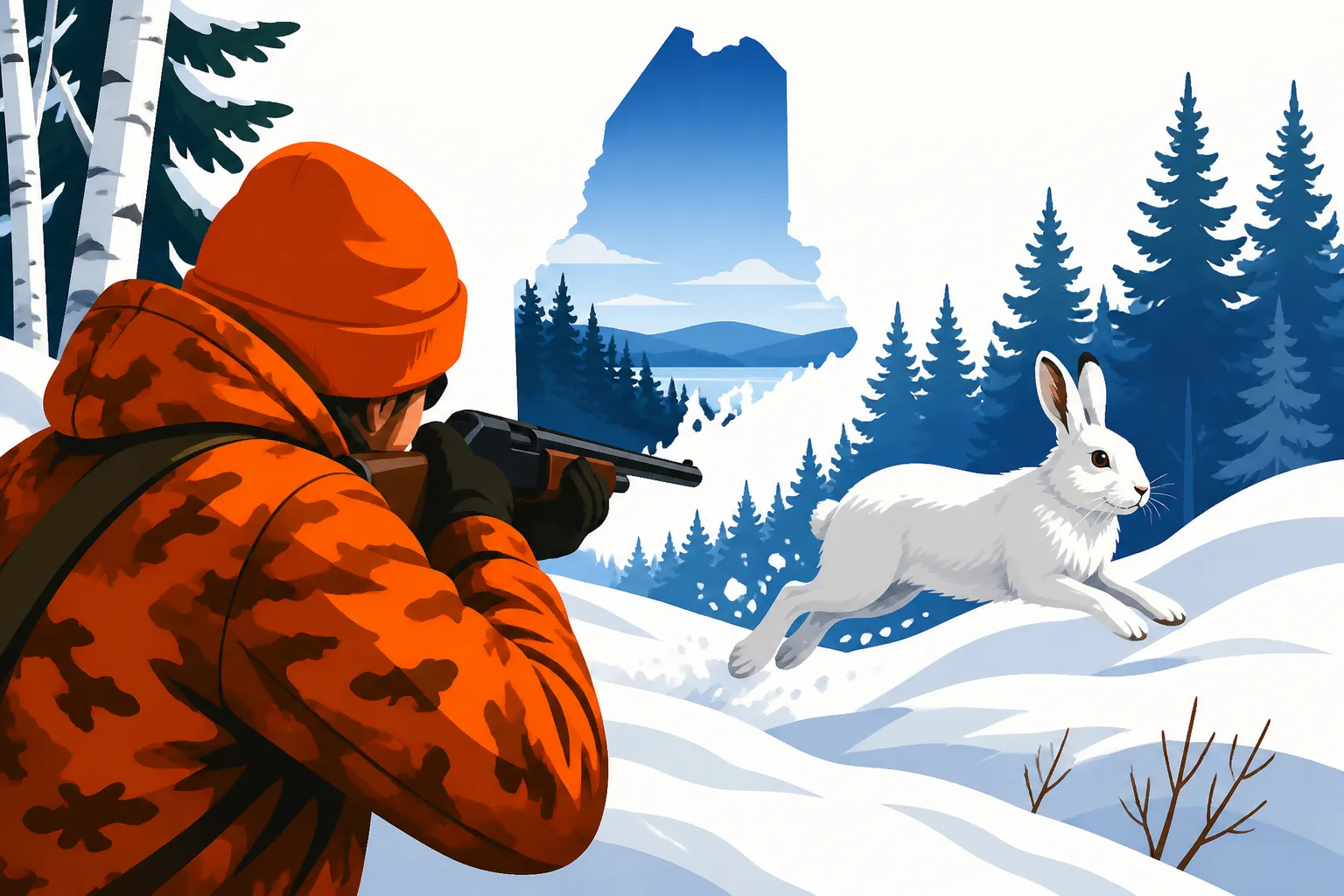
Deep snow can transform the landscape, and while it might look serene, it can present a real challenge for hunters, especially when you're after something as elusive as the snowshoe hare. The thick, fluffy stuff can make navigating the woods feel like wading through concrete, and it completely alters how these little critters move and hide. This guide is here to walk you through the ins and outs of successfully hunting snowshoe hare in Maine's deep snow, covering everything from understanding their changed habits to the specialized gear and tactics that will put you on track for a productive day.
Understanding Hare Behavior in Deep Snow
When the snow piles up in Maine, everything changes for wildlife, and snowshoe hares are no exception. What was once easy travel becomes a restricted maze, and their survival instincts kick into overdrive, making them even more challenging to find.
Why Deep Snow Changes Hare Habits
Imagine trying to walk through chest-deep snow without snowshoes – that’s essentially what a snowshoe hare faces when the depths reach a foot or more. Their large, furry feet are fantastic adaptations for staying on top of moderate snow, but even they have limits. When the snow gets truly deep, hares drastically reduce their travel. Instead of ranging widely, they tend to create a network of packed-down trails, tunnels, and runs within very dense cover. These "hare highways" become their primary means of movement, offering both energy conservation and protection.
This restricted movement also impacts their exposure to predators. While the deep snow might make it harder for animals like a Maine Coyote Range and Density or Maine Bobcat Population Trends to move quickly, it also funnels hares into predictable, if hidden, routes. They become masters of concealment, burrowing into snow drifts or utilizing the natural architecture of thick evergreens to create cozy hideaways. They're trying to conserve energy and avoid being an easy meal, so they become much less active during daylight hours, often waiting until dusk or dawn to venture out, sticking to their established runs.
Preferred Habitat and Food Sources
In deep snow, hares don't have the luxury of browsing on every shrub. Their world shrinks to areas where they can either reach food or where dense cover provides protection from both the elements and predators. This typically means thick, regenerating conifer stands, especially spruce, cedar, and balsam fir, where the low-hanging branches create natural snow shelters and provide accessible browse. Alderswamps and wetland edges choked with dense brush are also prime locations, as the thick growth creates a canopy that can shed some snow, offering a slightly more open understory.
Think about a thick cedar swamp deer yard – that’s the kind of dense, almost impenetrable cover that a snowshoe hare seeks out. The snow's depth actually helps them here. It lifts them closer to the browse line, allowing them to clip the tender tips of young evergreens, small deciduous saplings, and even the bark of some woody plants. These areas often have a mix of new growth, offering plenty of twigs and buds to sustain them. They'll also gnaw on evergreen needles, which provides some nutrition when other options are buried. You might find areas where they've completely girdled small saplings, stripping the bark all the way around, indicating a well-used feeding spot.
Essential Gear for Deep Snow Hare Hunting
Hunting snowshoe hare in deep snow isn't just about knowing where to look; it's about being prepared for the conditions. Without the right gear, you'll spend more time struggling through the snow than actually hunting.
Traction and Travel: Snowshoes and Skis
This isn't a suggestion; it's a requirement. Trying to still-hunt or follow dogs in deep Maine snow without proper flotation is a recipe for exhaustion and frustration. You simply won't get around effectively. Snowshoes are the quintessential tool for this. Modern aluminum-frame snowshoes are incredibly efficient, offering excellent flotation and aggressive crampons for traction on varied terrain, even icy patches. Brands like MSR, Tubbs, and Atlas make excellent models designed for serious backcountry travel. For incredibly deep, light powder, some old-timers still swear by traditional wooden-frame snowshoes with rawhide lacing, as they offer superior flotation over a larger surface area. Whichever style you choose, ensure they're sized appropriately for your body weight plus the weight of your gear.
Don't forget trekking poles. They provide crucial balance, help with uphill climbs, and can prevent a lot of tumbles when navigating uneven terrain or crossing hidden obstacles. If you're hunting more open, rolling terrain, or want to cover significant ground, backcountry or cross-country skis can also be a viable option, especially if you're pulling a sled with gear or a harvested hare. However, in the truly dense thickets where hares often live, snowshoes almost always win for maneuverability.
Layering for Cold and Exertion
Maine winters are no joke, and a day in deep snow can swing from intense exertion to static sitting in a matter of minutes. Proper layering is critical for staying comfortable and safe. Start with a moisture-wicking base layer (merino wool or synthetic, never cotton!) that will pull sweat away from your skin when you're working hard. Next, add a warm mid-layer, such as a fleece jacket or a lightweight puffy vest, to provide insulation. Your outer layer should be waterproof and breathable, capable of shedding snow and blocking wind without trapping all your body heat and moisture. A good quality Gore-Tex or similar membrane jacket and pants are worth their weight in gold.
Remember to bring extra layers. You'll likely shed your outer jacket while busting through drifts, only to want it back on as soon as you stop for a break or start blood trailing. Don't forget a warm hat, gloves (consider a thin liner glove under a heavier, waterproof outer glove), and thick wool socks. It's a lot like packing for a Packing for a North Woods Moose Hunt, just on a smaller scale, but the principles of managing body temperature remain the same. Staying dry is paramount, so consider a small dry bag for your spare socks, hat, and extra gloves.
Firepower and Optics
Snowshoe hares are relatively small targets, often on the move, and usually encountered in dense cover. A .22 LR rifle is a classic choice, offering precision and minimal meat damage. If using a rifle, a low-power scope (1-4x or 2-7x) or a red dot sight can be incredibly helpful for quick target acquisition in the shadows of a conifer stand. For those who prefer shotguns, a 20-gauge or even a .410 loaded with #6 or #7.5 birdshot is very effective at close range, especially when hares are being flushed by dogs. The wider pattern offers a bit more forgiveness for a running target.
Beyond your primary weapon, consider a good headlamp. Even if you plan to be out during daylight, a deep woods hunt can extend unexpectedly, and trying to navigate or field dress a hare in fading light is tough. A GPS device or a reliable hunting app like GoHunt on your phone (with downloaded offline maps) is essential for navigation, especially when you're winding through unfamiliar, snow-covered thickets. These tools help you track your route and ensure you can find your way back to your vehicle, even if you’ve been focused intently on a hare track for hours. Remember, even though hares are small game, you're still doing Upland Bird and Small Game Hunting in Maine, so safety rules like positive target identification apply.
Strategic Approaches to Deep Snow Hare Hunting
Deep snow demands a shift in hunting strategy. Hares aren't going to be sitting out in the open, and your typical woodcock covers will look entirely different. You need to adapt your movement, your observation, and your approach.
Still-Hunting Dense Thickets
Still-hunting in deep snow is an art form. It requires immense patience and an ability to pick apart cover. Forget the idea of covering miles; focus on covering feet, very slowly and deliberately. Move just a few steps, then pause for several minutes, scanning every shadow, every cluster of branches, every snow-covered hummock. Hares rely on camouflage, and they are incredibly good at blending in. You're not looking for a whole hare, but rather an irregular shape, the glint of a black eye, or the tell-tale ear tips sticking up from a snowy hollow. Look for that distinct contrast against the white snow.
Concentrate your efforts in the densest conifer stands, especially those with new growth that provides both food and cover. These are the hares' winter fortresses. Use your binoculars extensively, even at close range, to penetrate the thickets and confirm what your eyes are seeing. Look for their distinct tracks leading into these areas – fresh tracks, not old ones. Follow these tracks slowly, being prepared for a hare to bolt at any moment. This method is quiet and stealthy, and while challenging, it can be incredibly rewarding. It's similar in principle to Still-Hunting Aroostook County Farmland or Still-Hunting Western Maine Mountain Slopes for deer, but on a micro-scale, where every branch can conceal your quarry.
Utilizing Beagles for Flushing
For many, hunting snowshoe hare, especially in deep snow, is synonymous with beagles. There's nothing quite like the music of a beagle pack hot on a hare's trail. Beagles have an undeniable advantage in deep snow: their incredible sense of smell. While their small legs might struggle in the deepest powder, they can still follow a scent trail that a human would never detect, even if it's partially covered by snow. Their persistent baying pushes hares from their hiding spots, often circling back, allowing hunters positioned along likely escape routes to get a shot.
When hunting with beagles in deep snow, it's crucial to consider the dogs' well-being. Don't push them too hard if the snow is truly overwhelming. Choose hardy, well-conditioned hounds. Position yourself strategically based on the terrain and the direction the dogs are pushing. Hares often try to stay within their familiar home range, so anticipate them circling back through known thickets or along established runways. This method allows you to cover more ground, or at least disturb more ground, than still-hunting alone. For more on this, check out Running Beagles on a Maine Hare and Snowshoe Hare Hunting With Beagles.
Interpreting Tracks and Sign
Deep snow provides an amazing canvas for reading animal sign, and for snowshoe hares, it's practically a treasure map. Learning to distinguish fresh hare tracks from other animals, and from older, wind-blown tracks, is essential. Hare tracks are distinctive: large hind feet land ahead of smaller front feet when they're running, creating a characteristic pattern. Look for areas with numerous fresh tracks, indicating recent activity.
Beyond individual tracks, look for "runs" or tunnels under the snow. Hares create these networks to move between feeding areas and bedding sites, offering them protection. You might see a depression in the snow leading into a thicket, which is actually the entrance to one of these tunnels. Also, keep an eye out for browse sign – clipped twigs, gnawed bark, or areas where they've dug through shallow snow to get at lower vegetation. Identifying these feeding areas, often in close proximity to dense cover, can tell you exactly where hares are concentrated. This kind of careful observation is akin to Reading Maine Mud for Fresh Deer Movement or Finding Sign in Big North Woods Timber for larger game, just scaled down to the hare's world.
Still-Hunting vs. Hunting with Beagles in Deep Snow
Choosing between still-hunting and hunting with beagles really comes down to your personal preference, the conditions, and what kind of experience you're after. Both methods can be effective, but they demand different approaches and offer different rewards.
| Feature | Still-Hunting in Deep Snow | Hunting with Beagles in Deep Snow |
|---|---|---|
| Pace | Very slow, deliberate, silent | Moderate, following dog music, more active |
| Stealth | Critical, relies on hunter's quiet movement | Less critical, dogs create noise, focus on positioning |
| Required Gear | Snowshoes, warm layers, .22 LR or shotgun, binoculars | Snowshoes, warm layers, shotgun or rifle, beagles, GPS |
| Effort | High concentration, moderate physical exertion | High physical exertion (breaking trail for dogs), less mental strain on finding hares |
| Interaction | Solitary, focused observation | Social, listening to dogs, anticipating hare movement |
| Success Factors | Patience, sharp eyes, reading subtle sign, knowing hare hideouts | Good dog work, strategic positioning, understanding hare circles |
| Pros | Quiet, peaceful, rewarding when you spot a camouflaged hare; less equipment | Exciting, dogs locate hares, higher success rate for new hunters or in dense cover |
| Cons | Can be frustrating without keen eyes; lower success rate in truly dense spots | Requires well-trained dogs; can be very tiring for dogs and hunters in extreme snow |
This table illustrates that while both methods aim for the same result, the journey couldn't be more different. Whether you prefer the quiet solitude and intense observation of still-hunting or the thrilling chase and camaraderie of hunting with dogs, preparing for the deep snow conditions is key. Remember to always check the Maine Snowshoe Hare Season Dates before heading out!
Disclaimer
Always consult the latest Maine Department of Inland Fisheries and Wildlife regulations before any hunting activity. Seasons, bag limits, and specific rules can change.