Still-Hunting Aroostook County Farmland
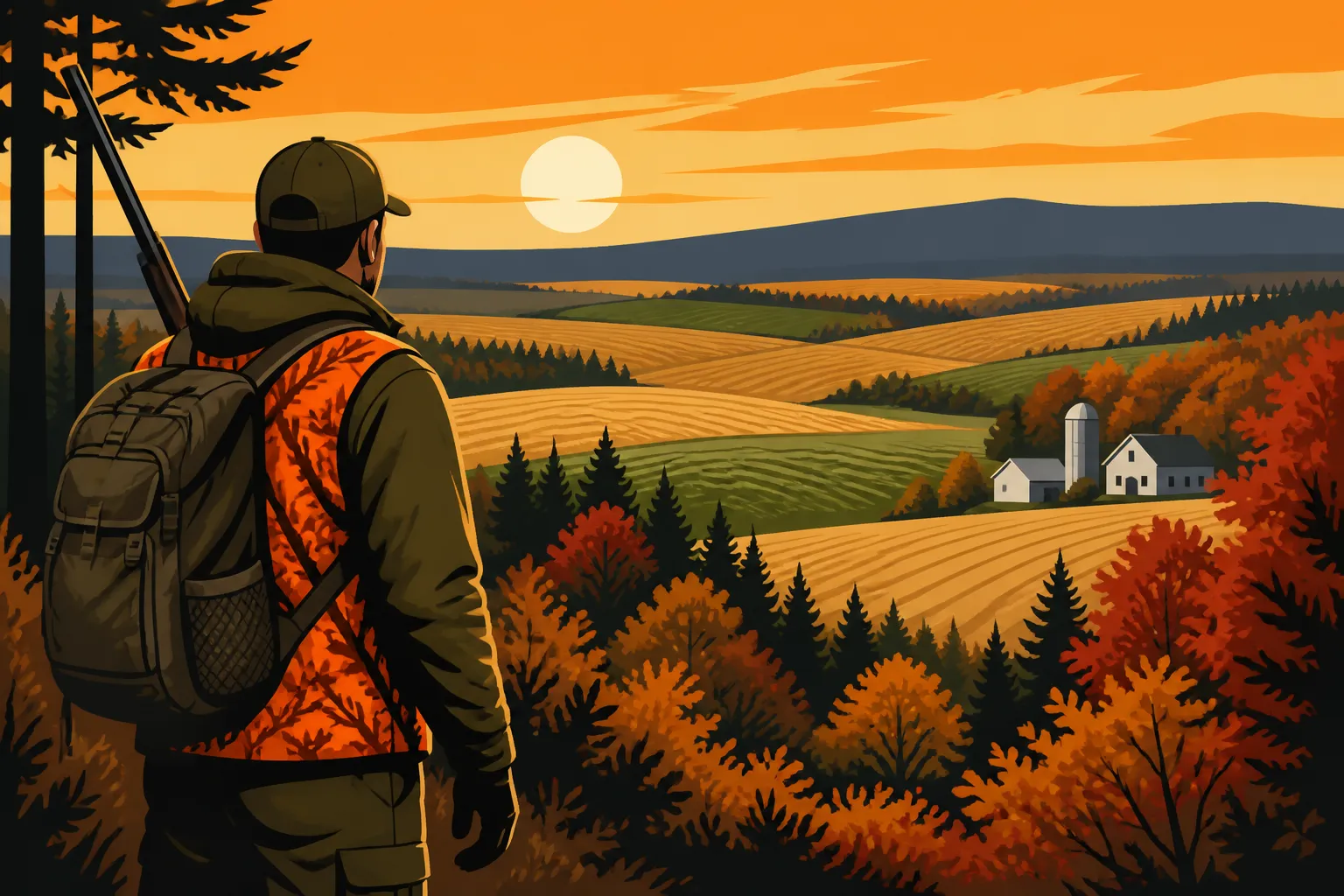
The vast, open landscapes of Aroostook County farmland can be incredibly intimidating for a deer hunter. You're not tucked away in thick timber; you're often exposed, and it feels like every move you make is under a deer's scrutiny. But don't let that wide-open feeling deter you. Still-hunting this unique environment demands a different approach than the deep woods, and with the right strategy, you can consistently tag whitetails that call these fertile fields home. This guide will walk you through the nuances of still-hunting Aroostook's agricultural lands, helping you understand deer behavior, prepare your gear, and execute effective tactics to find success.
Understanding Aroostook Farmland Deer Behavior
Hunting deer in Aroostook County's agricultural heartland isn't like hunting the deep North Woods. The deer here are heavily influenced by the seasonal rhythm of farming, and understanding their patterns is your first step toward success. These animals are masters of using whatever cover is available, often right under our noses, and their movements are primarily dictated by food, security, and pressure.
Seasonal Food Sources and Movement Patterns
Aroostook County is famous for its potatoes, but those aren't the only draw for deer. Throughout the year, deer will shift their focus based on what's available and palatable. Early season might see them hitting lush green fields of alfalfa or clover, or even tender brassicas planted as a cover crop. As the season progresses, and especially after the harvest, their attention turns to waste grain. Think about those vast potato fields—once the harvesters roll through, there are always some spuds left behind, providing a high-energy food source. Similarly, unpicked or spilled corn, oats, or wheat in adjacent fields become magnets for deer.
During the firearms season, especially in November, deer are intensely focused on these carbohydrate-rich waste grains as they prepare for winter. Their movement patterns often become quite predictable: they'll bed in heavy cover during the day, then filter out into the fields in the late afternoon and evening to feed. Morning hunts might see them lingering in the fields just after dawn before retreating to cover. Understanding the crop rotation in an area, and even knowing which fields had what crops, can be invaluable for predicting where deer will congregate. A field that held corn earlier in the season, even if it’s been harvested, might still have enough waste grain to be a hot spot.
Bedding Areas and Escape Routes
While Aroostook County is known for its open fields, deer still need thick cover to feel safe, bed down, and evade predators. These bedding areas are often found in surprising places. Look for dense cedar swamps, especially those bordering agricultural fields, offering thermal cover and concealment. Thick spruce and fir stands, often in low-lying areas or along stream beds, also provide excellent bedding. Even overgrown fencerows, especially those with dense brush and small trees, can serve as bedding sanctuaries or crucial travel corridors between larger blocks of cover.
Deer in farm country also have well-established escape routes. These are typically the path of least resistance from a feeding area back to heavy cover. This might be a subtle dip in the terrain, a thicket of brush along a ditch line, or the edge of a woodlot that offers a quick exit. When still-hunting, identifying these routes before you push into an area can help you anticipate where deer will go once disturbed, or where they might be staging before entering a field. Often, these routes are used consistently, year after year, offering excellent ambush points if you can catch deer moving during daylight hours. Pay close attention to these natural funnels and edges; they are the highways of the deer world in farm country.
Impact of Hunting Pressure and Crop Rotation
Deer in Aroostook County, just like anywhere else, quickly adapt to hunting pressure. Once the firearms season kicks off, especially after the Maine Firearms Season Opening Day, those daytime field excursions become far less frequent. Deer turn nocturnal, feeding under the cover of darkness and retreating to the densest, most remote cover they can find during the day. This is where still-hunting becomes incredibly effective: instead of waiting on a field edge, you're proactively seeking them in their daytime hideouts.
The constant change in crop rotation also plays a huge role. A field that was a deer magnet one year might be a barren potato field the next. This requires constant scouting and adaptability. What’s planted this year? When will it be harvested? Are there any unharvested sections? These questions are vital. Farmers often plant cover crops like winter rye or clover in the fall, which can provide a green, palatable food source even into late season, drawing deer in. Keeping a keen eye on these agricultural shifts and how local hunting pressure is impacting deer movement is paramount to still-hunting success in Aroostook.
Essential Gear and Scouting for Aroostook Still-Hunting
Still-hunting in Aroostook farmland requires a thoughtful approach to your gear and an intensive pre-season scouting regimen. Unlike sitting in a treestand, you'll be constantly on the move, and every piece of equipment needs to serve a purpose, while every bit of information gathered beforehand helps paint a clearer picture of deer movement.
Optics, Clothing, and Footwear for Open Country
When you're still-hunting fields and their edges, long-distance observation is key. High-quality binoculars are non-negotiable. I recommend at least 10×42 power, providing enough magnification to pick apart distant field edges, scrutinize a patch of timber, or identify movement in a potato row. A spotting scope can also be incredibly useful for confirming details without spooking game. You'll be spending a lot of time scanning, so clear glass will save your eyes and reduce fatigue.
Your clothing needs to be quiet and allow for natural, unhindered movement. Layers are essential to adapt to Maine's famously fluctuating fall and early winter temperatures. Opt for fleece, wool, or softshell materials that won't rustle or snag on brush. Camouflage patterns that break up your outline against agricultural backdrops – think natural browns, grays, and even some tans – can be more effective than deep woods patterns. And, of course, your blaze orange requirements must be met; a vest and hat that meet Maine law are critical. For footwear, comfort and waterproofing are paramount. You'll be covering miles, often through damp fields, muddy edges, and potentially snow. A sturdy pair of insulated, waterproof boots with good ankle support will be your best friend. Look for brands known for durability and comfort, like Lacrosse or Irish Setter, to keep your feet happy and dry through long days.
Pre-Season Scouting and Identifying Key Features
Effective still-hunting begins long before opening day. Pre-season scouting is your secret weapon. Start with high-resolution aerial maps and satellite imagery. Tools like Google Earth or dedicated hunting apps like GoHunt allow you to zoom in and identify subtle terrain features that might not be obvious from the road. Look for drainage ditches, fencerows, small woodlots, islands of brush in fields, and any bottlenecks where deer movement would be concentrated. These digital tools are invaluable for Reading Aerial Photos for North Woods Deer and understanding the lay of the land without setting foot on it yet.
Once you have some potential spots identified, it's time for boots on the ground. Walk the edges of fields, pay attention to pinch points where deer are funneled, and look for game trails. Fresh tracks, droppings, and rub lines can tell you a lot about recent deer activity. Identify where deer are entering and exiting fields, where they're crossing roads, and where they might be bedding in adjacent cover. You might even find Scrape Lines Along a Logging Road in nearby timber, indicating a buck's travel route. Don't be afraid to put miles on your boots during the off-season; it's the best way to gain an intimate understanding of the landscape.
Using Technology for Farmland Advantage
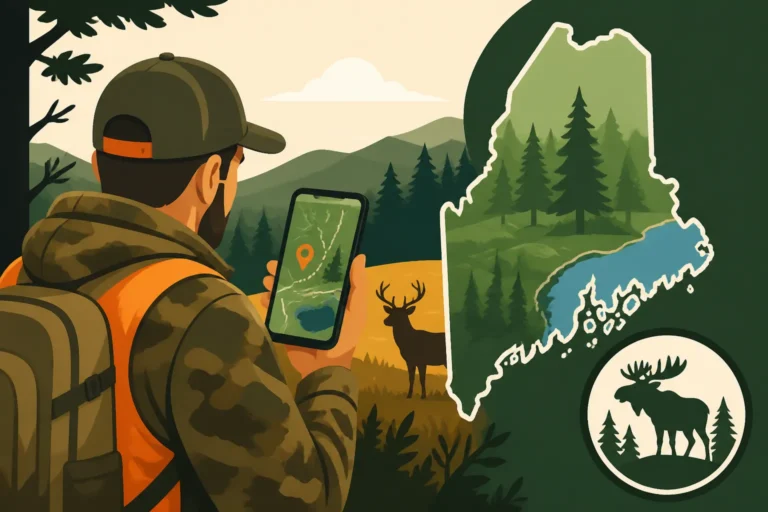
Modern technology has revolutionized how we hunt, and it's especially useful in the expansive and often private-land-dominated landscape of Aroostook. A reliable GPS unit or a smartphone with a robust hunting app is a game-changer. Apps like GoHunt, OnX Hunt, or the Scouting With the Maine Hunting App offer detailed parcel maps, showing property boundaries, landowner names, and satellite imagery overlays. This is critical for staying legal on private land and understanding where you can and cannot hunt.
Beyond property lines, these apps allow you to mark waypoints for fresh sign, bedding areas, or even the direction a deer traveled after being spooked. You can track your own movement, ensuring you're covering ground effectively and not just wandering aimlessly. Weather overlays, wind direction tools, and even sun/moon phase information can help you plan your still-hunt strategy for a given day. These digital mapping tools are an investment, but they provide a significant advantage by giving you eyes on the landscape that you wouldn't have otherwise, allowing for more precise and ethical hunting.
Mastering Still-Hunting Techniques in Farmland
Still-hunting is often misunderstood as simply walking through the woods. In reality, it's a slow, deliberate dance of movement and observation, especially in the unique environment of Aroostook's farmlands. It's about blending in, moving with purpose, and letting your eyes do most of the work.
The Art of Slow Movement and Observation
The core principle of still-hunting is to move slowly enough that you see the deer before it sees you. This usually means taking a few steps, then pausing for several minutes to intently scan your surroundings. Imagine the phrase "stop and go," but with the "stop" lasting significantly longer than the "go." When you stop, don't just glance around; use your binoculars to methodically pick apart every patch of cover, every field edge, every shadow. Look for horizontal lines, subtle movements, a flicker of an ear, or an unnatural shape against the natural landscape.
In Aroostook's farmland, this means using every bit of available cover to your advantage. Walk along the edge of a woodlot, using the trees to break up your silhouette. Creep along a fencerow, using the brush and posts as concealment. Use the subtle contours of the land, like a gentle rise or a ditch line, to stay out of sight. Remember that deer are constantly using their noses, so approaching from downwind is crucial. Your goal is to move like a predator, silently and deliberately, becoming part of the landscape rather than an intruder.
Reading the Wind and Thermals in Open Agricultural Landscapes
Wind and thermals are your allies and your enemies in still-hunting. In open farmland, understanding them is even more critical because there's less physical barrier to contain your scent. Always, always try to hunt into the wind or with a crosswind. This keeps your scent blowing away from where you expect deer to be. Deer rely heavily on their sense of smell, and a slight shift in wind can betray your presence instantly, especially in vast fields.
Thermals, which are rising or falling air currents, play a big role, particularly around sunrise and sunset. In the morning, as the air warms, thermals tend to rise, carrying your scent upwards. In the evening, as the air cools, thermals drop, carrying your scent downwards. This means that if you're still-hunting uphill in the morning, your scent might be carried over deer below you. Conversely, hunting downhill in the evening could push your scent right into a feeding deer. Combining your knowledge of Wind and Thermals in Maine Hill Country with the specific topography of Aroostook's fields and woodlots will allow you to plan your approach routes more effectively, maximizing your chances of going undetected. Carry a small squeeze bottle of powder or a milkweed pod to frequently check the subtle wind currents.
Utilizing Terrain Features for Cover and Concealment
Aroostook County farmland might seem open, but it's full of subtle terrain features that can provide excellent cover if you know how to use them. Fencerows, especially those that have grown up with brush and small trees, are prime examples. They create natural lanes of concealment where you can move quietly parallel to a field edge without being silhouetted. Old ditch lines or drainage channels, even if they're dry, offer depressions to walk in, keeping you low and out of sight.
Consider using the edges of CRP (Conservation Reserve Program) fields—these are often planted with tall grasses and native shrubs, providing amazing cover for both deer and hunters. Working a Fencerow for Late-Season Deer can be incredibly productive, as deer often use these linear features for travel. Similarly, the edges of clear-cuts or brushy regrowth areas adjacent to fields, such as those discussed in Hunting a Clear-Cut Regrowth Edge, offer fantastic opportunities for still-hunting as deer transition between bedding and feeding. Learning to "read" these features and integrate them into your movement will significantly increase your odds of a close encounter.
Strategic Approach to Specific Farmland Habitats
Aroostook County offers a variety of agricultural landscapes, each with its own nuances for still-hunting. Adapting your tactics to these specific habitats will greatly improve your success rate. It's not just about walking; it's about walking smart in the right places.
Still-Hunting Potato and Corn Fields
Potato and corn fields are magnets for deer in Aroostook, but they require a unique approach. When still-hunting a potato field, especially after harvest, you're looking for those hidden leftovers. Deer will often pick through the rows, sometimes lingering in a patch of unharvested ground or where machinery may have missed some potatoes. The rows themselves can offer surprising amounts of cover, allowing you to move slowly downwind, keeping low and peering over the slight rise of the rows. The best time is typically early morning or late evening, as deer are entering or exiting for feeding. Consider a very slow, deliberate pace, almost like a grid search, but always with the wind in mind. Hunting a Potato Field Edge in Aroostook emphasizes the importance of these specific field types.
For corn fields, the strategy shifts depending on whether the corn is standing or harvested. Standing corn provides incredible cover, almost like a jungle, and deer will bed right in it. Still-hunting standing corn requires immense patience and an understanding of wind. Move slowly between rows, pausing to listen and scan. If the corn is harvested, deer will be picking up waste grain. The stubble provides less cover, so you'll often be focusing on the edges, subtle depressions, or any remaining patches of cover within the field itself. Timing is crucial for both; catching deer as they transition from bedding to feeding, or vice-versa, offers the best chances.
Working Woodlots and Edges Adjacent to Agriculture
The real gems in Aroostook farmland are often the smaller woodlots and timber edges that break up the vast fields. These are the deer's sanctuaries, their travel corridors, and their staging areas. Still-hunting these transition zones is incredibly productive. Deer will often bed deep within a woodlot, then travel along its edge before popping out into a field. This is where you can catch them moving during daylight.
Focus on the interior of these woodlots, especially where the cover is thickest. Deer love dense spruce, fir, or cedar stands that offer thermal protection and concealment. Look for natural funnels, like a narrow strip of timber connecting two larger woodlots or a point where a woodlot juts out into a field. These are classic ambush points. You might even find Hunting a Funnel Between Two Woodlots to be your most effective strategy. Remember, the deer aren't always in the field; they're often just next to it, using the woodline as their security blanket. Understanding how to navigate these edges, as covered in Entry Routes Through a Cut Cornfield for instance, is a key skill. Also, patches of Hunting Standing Cover Left After Harvest can be dynamite for finding deer pressured out of more open areas.
Navigating Transition Zones and Bottlenecks
Transition zones—where one habitat type seamlessly blends into another—are ecological hotspots and deer magnets. In Aroostook, this means the interfaces between fields and forests, between different crop types, or even between varying densities of timber within a woodlot. These zones often offer diverse food sources and cover options, making them attractive to deer.
Bottlenecks are areas where deer movement is naturally constricted. Think of a narrow strip of woods between two large fields, a bridge crossing a stream, or a fence line with a single opening. These are high-traffic areas where deer are forced into a smaller space, increasing your chances of an encounter. Still-hunting these areas demands extreme caution and slow movement. Position yourself to have a good view, and methodically glass the area. Often, a small rise or a cluster of evergreens can provide enough cover for you to watch a bottleneck for an extended period, moving only when the coast is clear. Using your GoHunt app to identify these subtle terrain features from above can give you a significant advantage.
Overcoming Challenges and Maximizing Success
Still-hunting Aroostook County farmland presents unique challenges, from navigating private land to dealing with highly visible, pressured deer. But with the right mindset and strategies, these obstacles can be overcome, leading to rewarding hunts.
The Importance of Landowner Permission and Respect
A significant portion of Aroostook County's prime deer habitat is on private farmland. Respecting private property and obtaining explicit permission is not just a legal requirement; it's an ethical imperative and the cornerstone of maintaining Maine's strong hunting tradition. Never assume implied permission on active farmland, even if it's not posted. Farmers are often busy, and their property is their livelihood.
Start by knocking on doors well before the season. Introduce yourself, explain your intentions clearly, and offer to help out around the farm if you can. Be polite, be clean-cut, and be sincere. Many landowners are happy to grant access to respectful hunters. Make sure you understand the specific boundaries of where you're allowed to hunt and stick to them religiously. If you're wondering, Do You Need Written Permission in Maine? then the answer is usually yes when it comes to farmland, for your protection and the landowner's. Carrying a signed permission slip is always a good idea. Building a positive relationship with a landowner can open up opportunities for years to come, making Knocking on Doors in Aroostook Farm Country a vital skill for any serious still-hunter.
Dealing with High Visibility and Pressured Deer
In open farmland, high visibility is a constant challenge. Deer have exceptional eyesight, and they're always on alert, especially after the season opens and Hunting Pressure Near a Maine Town begins to mount. This means your movements need to be incredibly deliberate and slow. Take advantage of any broken light, like dawn or dusk, or inclement weather, such as light rain or snow, which can mask your movement and scent.
When deer are pressured, they become far more nocturnal. This means your best still-hunting opportunities will often be in those transition times—first light and last light—or by targeting their bedding areas deep within the woodlots adjacent to fields. If you spot deer in a field and they're already alert, don't press your luck. Observe their escape route and try to intercept them later, perhaps during the next dawn or dusk, from a different angle. Patience is key; sometimes, waiting for a slight cloud cover or a change in wind can make all the difference. Remember, the deer in these areas are often big, smart animals that have survived multiple hunting seasons. They've learned to avoid obvious threats.
Tracking and Recovery in Varied Terrain
Once you've made a shot, the work isn't over. Tracking and recovery in Aroostook's varied farmland terrain can be challenging. A deer hit in a field might run into dense woods, a cedar swamp, or even across a plowed field where tracks are difficult to follow. Always mark your last known spot where the deer was hit and where you last saw it. Take your time before beginning the track; give the deer at least 30-60 minutes, or longer if you suspect a gut shot, to lie down and stiffen up.
When blood trailing, go slowly. Look for blood on both sides of the trail, on leaves, grass, and even broken branches. In open fields, use the pattern of the deer's tracks in the soil, even if faint. If it's muddy, Tracking a Deer in Fresh Maine Snow or mud can reveal the specific stride of your deer, helping you distinguish it from others. If the trail goes cold, expand your search in a grid pattern around the last known blood. If you're approaching dark, consider stopping and returning in the morning with fresh eyes, marking your last blood with bright flagging tape. Having a buddy to help with the track can also make a huge difference, offering another set of eyes and covering more ground.
Remember that recovering a deer from a dense cedar swamp, as detailed in Recovering a Deer From a Cedar Swamp, will be a different beast entirely than a flat, open field. Be prepared with a good flashlight, game cart, and plenty of mental fortitude.
| Crop Type | Deer Appeal | Still-Hunting Considerations | Prime Season |
|---|---|---|---|
| Potatoes | High energy, waste tubers after harvest | Rows provide visual breaks; target after harvest. Use wind to your advantage in open areas. | Late Fall – Early Winter |
| Corn | Excellent food and bedding (standing); waste grain | Standing corn offers superb concealment but limits visibility; harvested corn attracts deer to waste grain, focus on edges. | Fall |
| Alfalfa/Clover | Lush green forage, high protein | Early season draw. Deer often graze openly; approach from distant cover or low light. | Early Fall |
| Brassicas | High energy, palatable after first frost | Increasingly popular food plots. Deer will heavily hit these post-frost. Similar tactics to alfalfa. | Late Fall |
| Winter Wheat/Rye | Green browse, emerging shoots | Provides food into late season. Deer will nibble on new growth. Still-hunt edges and adjacent cover. | Late Fall – Winter |
Disclaimer
Hunting is an inherently dangerous activity. This article provides general information and recommendations based on common practices and regulations in Maine. Laws and conditions can change rapidly. Always consult the most current regulations published by the Maine Department of Inland Fisheries and Wildlife (MDIFW) before engaging in any hunting activities. Ensure you have the proper licenses, permits, and landowner permissions. Prioritize safety, ethical hunting practices, and respect for wildlife and private property.