Night Hunting Rules for Maine Coyotes
The challenge of managing coyote populations in Maine often feels like an uphill battle, especially when they start impacting local deer herds or even livestock. Many hunters find themselves frustrated by these incredibly adaptable and intelligent predators, searching for every legal advantage to help keep their numbers in check. This comprehensive guide aims to demystify the rules and offer practical advice for hunting coyotes after dark in Maine, a method that can be incredibly effective when done correctly and legally.
The Challenge of Coyote Management in Maine
Let's face it, coyotes are a polarizing topic. Some see them as a vital part of the ecosystem, while others view them as a relentless threat to deer, turkeys, and even domestic animals. In Maine, where the white-tailed deer population often struggles in certain northern zones, coyote predation, especially on fawns and deer in wintering yards, is a very real concern for many hunters and wildlife managers alike. Their presence influences deer behavior and can significantly impact local hunting success, leading many to seek out effective methods for controlling their numbers.
Why Coyotes Present a Unique Hunting Challenge
Coyotes aren't your average game animal. They are incredibly wary, possess keen senses of smell and hearing, and adapt quickly to hunting pressure. They learn patterns, remember danger, and are experts at disappearing into the landscape. This intelligence makes them a formidable quarry, often outsmarting even seasoned hunters. Their nocturnal tendencies further complicate matters; they are most active during twilight and nighttime hours, making traditional daytime hunting less productive during certain periods. Understanding their behavior is key, which is why methods like calling, especially after dark, become so critical for success.
The Rationale Behind Specific Hunting Regulations
Given the unique nature of coyotes and their impact on other wildlife, Maine Inland Fisheries and Wildlife (MDIFW) has specific regulations governing their harvest. Unlike deer or moose, coyotes are often considered a species that benefits from a more liberal hunting framework due to their predatory impact. The regulations, particularly around night hunting, are designed to balance effective population management with public safety and ethical hunting practices. These rules consider factors like public land use, proximity to residences, and the types of equipment that are safe and effective in low-light conditions. It's a careful balance, and it's up to us as hunters to understand and respect those boundaries.
Decoding Maine's Night Hunting Regulations for Coyotes
Navigating hunting regulations can sometimes feel like trying to untangle a ball of fishing line, but when it comes to night hunting coyotes in Maine, the rules are fairly straightforward, designed to offer opportunities while maintaining safety. The key is to be thoroughly informed before you head out after dark.
Legal Hours and Seasons for Coyote Hunting
Maine has a very generous hunting season for coyotes, essentially allowing year-round pursuit, and that extends to night hunting with specific conditions. Historically, night hunting for coyotes has been permitted from December 16th through August 31st. This expansive window means you have ample opportunity outside of the main firearms deer season when general night hunting is typically restricted. This helps prevent conflicts with deer hunters and ensures public safety during the busiest hunting periods.
However, it's crucial to always check the most current MDIFW hunting law booklet or their website for any changes. Laws can be updated, and you don't want to be caught off guard. For instance, while most WMDs follow this, it’s always wise to ensure no specific local ordinances or temporary closures impact your chosen hunting area.
Permitted Methods and Equipment
Night hunting for coyotes in Maine allows for specific tools to help you level the playing field against these elusive animals.
- Firearms: Most standard hunting firearms are permitted for coyotes, including rifles, shotguns, and handguns. However, remember the general prohibitions against hunting with fully automatic weapons.
- Lights: This is where night hunting truly differs. You are permitted to use artificial lights, including spotlights, handheld lamps, or weapon-mounted lights, to locate and shoot coyotes at night. This is a critical distinction from deer hunting, where shining a light on game after dark is generally illegal.
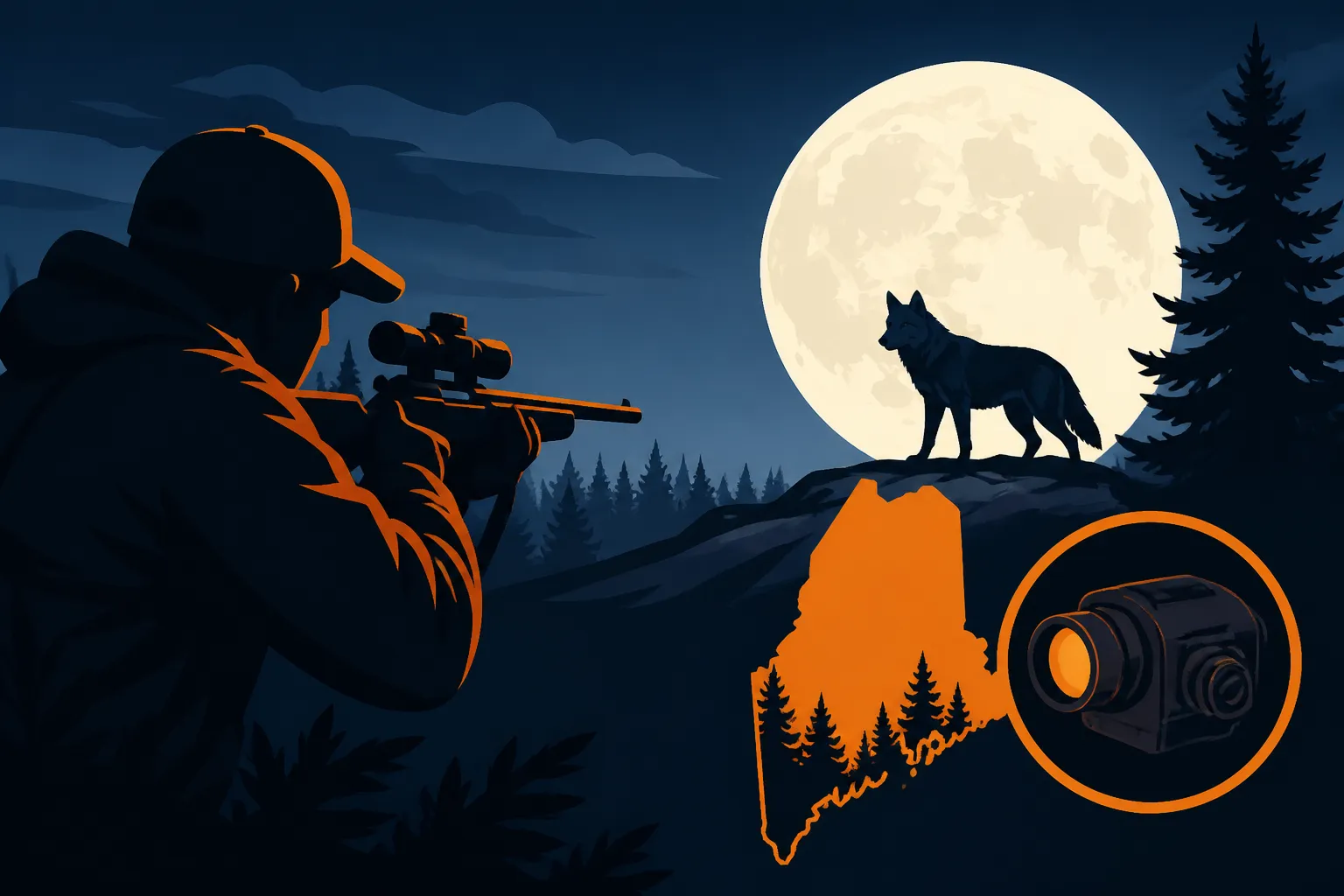
- Night Vision and Thermal Optics: Good news for those investing in advanced gear: Maine allows the use of night vision and thermal imaging devices for coyote hunting at night. These technologies have revolutionized nocturnal hunting, making it far more effective and allowing hunters to identify targets clearly in complete darkness. A quick check on the GoHunt Gear Shop, for instance, will show you the vast array of options available, from basic night vision monoculars to advanced thermal scopes. This kind of equipment can dramatically increase your chances of success, allowing for more precise target identification and shot placement.
- Calls: Electronic calls are legal and highly effective for coyotes, day or night. From distress calls mimicking rabbits or fawns to various howls and yips, these calls are essential for drawing in curious or hungry coyotes.
- Decoys: Motion decoys, often resembling a rabbit in distress, can also be used to draw a coyote's attention away from your setup and further entice them into range, especially in conjunction with an electronic call.
It's important to differentiate between merely spotting an animal with a light and hunting it. The legal provision for night hunting coyotes specifically allows the use of lights in conjunction with hunting. Always ensure your actions fall within this clear legal framework. Remember to always know your target before you shoot, especially when using lights or thermal at night, to avoid mistaken identity.
Safety Considerations and Public Perception
Safety is paramount, especially when hunting at night. Reduced visibility inherently increases risk, so extra precautions are non-negotiable.
- Backstops: Always have a safe backstop. Never shoot at an animal on the horizon or against the skyline at night where you can't be absolutely certain of what's beyond. A good rule of thumb is to only shoot downhill or into a substantial bank.
- Target Identification: With lights, night vision, or thermal, positive target identification is crucial. Make sure it's a coyote, and nothing else. This isn't just a legal requirement; it's an ethical one.
- Landowner Relations: If you are hunting on private land, which is often the case for Coyote Calling Maine Farm Country, absolute clarity with the landowner about your intentions to hunt at night is essential. Discuss where you'll be, your planned methods, and your schedule. The sound of gunshots at night can alarm neighbors, so good communication can prevent calls to law enforcement. As a courtesy, you might even consider informing local law enforcement or the game warden if you'll be hunting near populated areas. Maine's tradition of Getting Landowner Permission in Maine is built on trust, and night hunting requires an even higher level of communication and respect.
Night hunting can sometimes attract negative public perception due to its unique nature and the use of lights. By being overtly safe, ethical, and communicative, we can ensure that these valuable opportunities remain available to responsible hunters.
Practical Strategies for Successful Night Hunting
Night hunting coyotes isn't just about showing up after dark with a flashlight. It requires careful planning, understanding coyote behavior, and adapting your tactics to the low-light environment. Success often comes down to attention to detail and patience.
Scouting and Setup for Night Success
Just like during the day, scouting is fundamental to night hunting success. Coyotes are creatures of habit, often using the same travel corridors, denning areas, and feeding grounds.
- Finding Active Areas: Look for fresh tracks in mud or snow, scat, and vocalizations (howling often increases at dusk and dawn). Reading Maine Mud for Fresh Deer Movement can also reveal coyote activity, as they often follow deer trails. Areas with good deer sign, rabbit populations, or even livestock pastures are prime locations. You can even use resources like the GoHunt website or app to review aerial photos of potential hunting spots, identifying pinch points, field edges, and natural funnels that coyotes might use.
- Choosing Your Setup: Your setup needs to consider wind direction, visibility, and exit routes. Coyotes have an incredible sense of smell, so staying downwind is non-negotiable. A slight elevation can help with visibility, but ensure you have a safe backdrop for shooting. Think about natural cover you can use to break up your silhouette, even at night. Often, setting up along the edge of a field or a logging road that offers a good sightline, but still provides cover, is ideal.
- Entry and Exit Routes: Plan your approach and departure carefully to avoid spooking coyotes before you even set up. Walk quietly, avoid shining lights directly into the woods unless necessary, and keep noise to a minimum.
Calling Tactics After Dark
Calling is the bread and butter of coyote hunting, and it's especially effective at night when coyotes are more active and often bolder.
- Distress Calls: Rabbit distress, fawn distress, and bird distress calls are highly effective. Coyotes are opportunistic predators, and the sound of an easy meal can bring them in quickly. Start with softer calls, gradually increasing volume.
- Howling and Challenge Calls: During certain times of the year, particularly late winter and early spring when coyotes are breeding or establishing territories, howling can be incredibly effective. Lone howls can locate coyotes, and challenge howls can draw in territorial males. Listen to how the local coyotes respond and try to mimic their cadence.
- Duration and Silence: Don't call continuously. Call for 1-2 minutes, then be silent and scan for 5-10 minutes. Coyotes often approach silently and cautiously, so give them time to commit. Patience is key; a coyote might appear 15-20 minutes after you stop calling, convinced the coast is clear. Using a remote-controlled electronic call placed 50-100 yards upwind can draw attention away from your position, making it less likely they'll pinpoint you.
Ethical Considerations and Best Practices
Ethical hunting isn't just about following the law; it's about respecting the animal and the hunt.
- Shot Placement: In low light, especially with lights, ensuring a clean, ethical shot is paramount. Always aim for the vital zone. If you have any doubt about shot placement, pass on the shot.
- Tracking and Recovery: Even with modern optics, tracking a wounded animal at night can be challenging. If you make a shot, give the animal time before tracking. Use a powerful spotlight and be methodical. A good blood trail might be harder to follow, but you must make every effort to recover any animal you shoot.
- Minimizing Disturbance: While night hunting for coyotes is allowed, try to minimize disturbance to other wildlife and local residents. Avoid unnecessary noise, use directional lights responsibly, and be mindful of your surroundings.
Obtaining Necessary Licenses and Understanding Local Ordinances
Before you even think about loading up your gear for a night hunt, it’s absolutely essential to ensure you're squared away with all the necessary legal documentation and aware of any local nuances. Misunderstandings here can lead to serious legal trouble.
Maine's General Hunting License Requirements
First and foremost, to hunt coyotes in Maine, day or night, you need a valid Maine hunting license. This isn't unique to coyote hunting; it's the foundation for all legal hunting activities in the state.
- Resident Licenses: For residents, various options exist, including annual licenses, lifetime licenses, and specific options for youth or seniors. You can find detailed information on Maine Resident License Options and what they cost on the MDIFW website or at a local licensing agent.
- Nonresident Licenses: If you're visiting from out of state, you'll need a nonresident hunting license. These are typically more expensive but grant you the same hunting privileges as residents. Be sure to check Maine Nonresident License Options well in advance of your trip.
- Hunter Education: Regardless of residency, if you were born on or after January 1, 1971, you must show proof of having successfully completed an approved hunter education course before purchasing your first hunting license in Maine.
Remember, carrying proof of your license while hunting is mandatory. Many hunters now keep a digital copy on their phone, but a physical copy is always a good backup.
Special Permits or Certifications for Night Hunting
The good news is that for coyote night hunting, Maine does not typically require a separate, specific "night hunting permit" beyond your general hunting license. The permission to hunt coyotes at night is included within the general coyote hunting regulations, provided you adhere to the specific season dates (December 16 – August 31) and legal methods (use of lights, night vision, thermal, etc.).
However, it’s always prudent to double-check the latest MDIFW regulations. While specific to bear, knowing Maine Bear Hunting Permit Requirements gives you an idea of how the state often handles special season requirements. The simplicity for coyotes is a testament to the state’s management approach for this species.
Local Regulations and Landowner Permission
While state law dictates the broad strokes, local ordinances can sometimes add another layer of complexity.
- Town Ordinances: Some towns may have specific bylaws regarding discharge of firearms within town limits, noise ordinances, or other regulations that could impact night hunting. While less common for coyotes in rural areas, it's worth a quick check with the town office or local law enforcement if you're hunting near a built-up area.
- Landowner Permission: The Ultimate Requirement: This cannot be stressed enough, especially for night hunting. Maine has a strong tradition of implied permission on unposted private land for many activities, but night hunting is a completely different animal. The act of using lights and discharging a firearm in the dark often raises concerns for landowners and neighbors. You absolutely must obtain explicit, clear permission from the landowner before hunting coyotes at night on their property. This conversation should cover the times you'll be hunting, the methods you'll use, and any specific requests the landowner might have. Verbal permission is legally sufficient in Maine for unposted land, but for night hunting, consider written permission if possible, or at least a text message exchange, to avoid any misunderstandings. This helps to maintain Maine's Private Land Access Tradition.
Always be respectful of posted land. Hunting on posted land without written permission is trespassing, and the penalties for Maine Wildlife Violation Penalties can be severe, not to mention the damage it does to the reputation of all hunters. Clear communication and respect for property rights are your best tools for ensuring continued access. Farmers, for instance, are often eager for coyote control due to their impact on livestock, and a good relationship with a landowner can open up incredible opportunities. This is also why understanding potential needs for Maine Deer Damage Permits for Farmers can illustrate the importance of managing predator populations responsibly.
Below is a table summarizing some key rules for night hunting coyotes in Maine:
| Aspect | Legal Provision in Maine (Coyote Night Hunting) | Important Considerations |
|---|---|---|
| Season Dates | December 16th – August 31st | Always check current MDIFW regulations for any updates. |
| Legal Hours | 24 hours a day during the open night season | Focus efforts during peak coyote activity (dusk, pre-dawn, overnight). |
| General License | Valid Maine Hunting License required (Resident or Nonresident) | Hunter Education required for those born after Jan 1, 1971. Carry proof of license. |
| Special Permits | No additional specific "night hunting permit" required for coyotes | General hunting license covers it. |
| Lights | Permitted (spotlights, weapon-mounted, handheld) | Essential for identification and shooting. Use responsibly to avoid alarming non-targets or residents. |
| Night Vision/Thermal | Permitted | Greatly enhances identification and effectiveness. Invest in quality optics for clear identification. |
| Electronic Calls | Permitted | Highly effective for attracting coyotes. Use varied sounds and calling sequences. |
| Decoys | Permitted | Motion decoys can distract coyotes and draw attention away from your position. |
| Landowner Permission | Absolutely required for night hunting on private land | Explicit permission is crucial. Inform landowner of your activity, methods, and schedule. Avoid posted land without written consent. |
| Safety | Mandatory consideration for all hunting activities | Always ensure a safe backstop. Positive target identification is critical before shooting. Inform local authorities as a courtesy when hunting near populated areas. |
| CWD Concern | Maine is CWD-free, but careful handling of all harvested animals is advised. | While not directly related to hunting rules, good practice to stay informed about Maine's CWD-Free Status Explained and maintain biosecurity. |
Disclaimer
Always consult the most current official Maine Department of Inland Fisheries and Wildlife (MDIFW) regulations and laws before engaging in any hunting activity. This guide is for informational purposes only and does not supersede state or local regulations. Hunting laws can change, and it is the individual hunter's responsibility to be fully aware of and comply with all applicable rules and statutes.