Calling Coyotes Over a Winter Feed Site
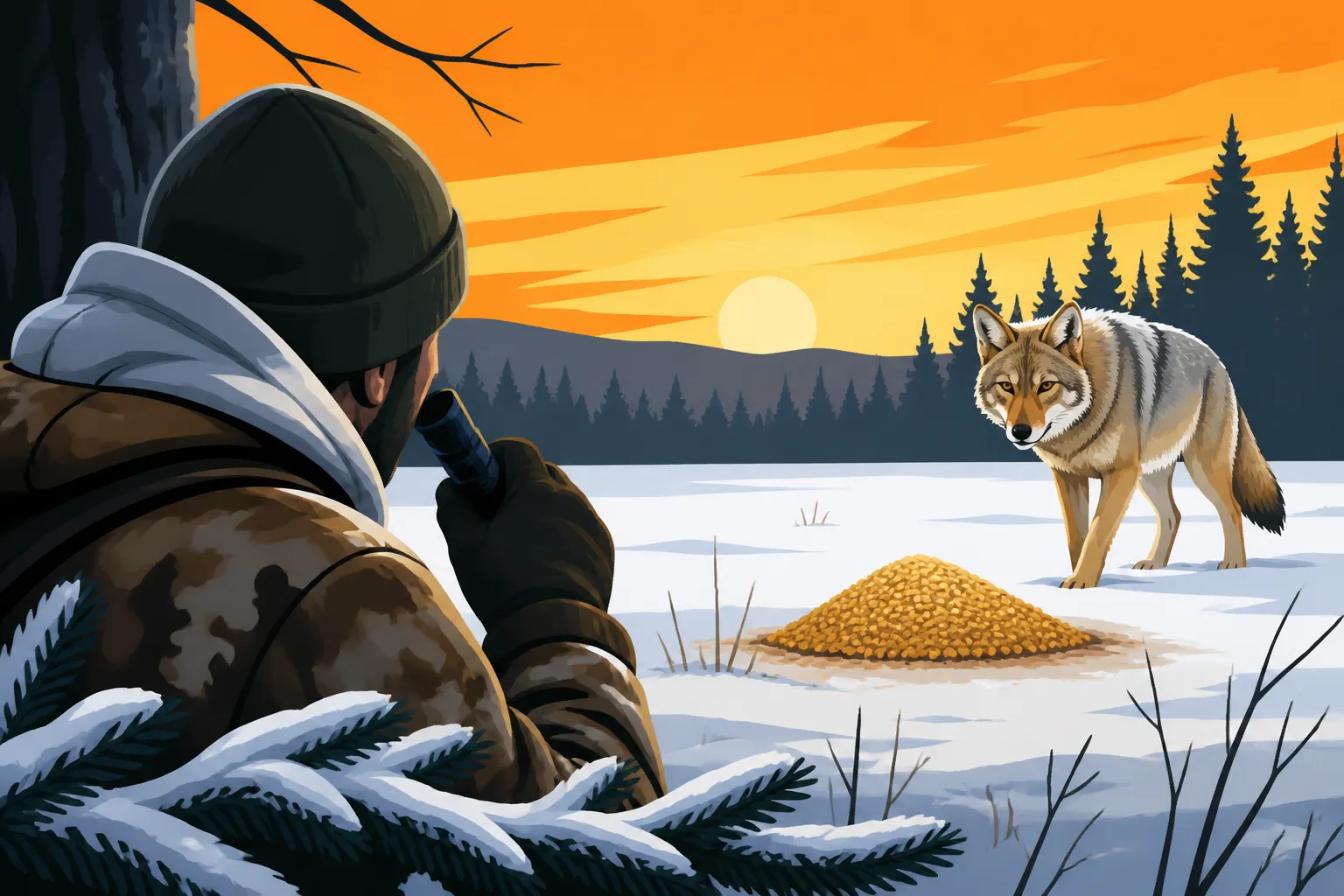
Winter in Maine is a challenging time, not just for us humans bundled in layers, but for the wildlife too. When deep snow covers the landscape and temperatures plummet, every creature is looking for an advantage. This makes a winter feed site—anything from a deer carcass to a gut pile left by a deer hunter—an absolute magnet for coyotes. But these aren't your typical, easily fooled critters. Maine coyotes, especially in the harsh winter, are notoriously cunning, hyper-aware, and seem to possess a sixth sense about human presence. If you've ever spent hours calling, only to feel like you're talking to yourself, you're not alone. This guide is here to walk you through the nuanced art of calling coyotes over a winter feed site, helping you understand their behavior, master your setup, and finally bring those elusive predators into range.
Understanding Coyote Behavior Around Winter Feed Sites
Calling coyotes over a winter feed site isn't just about making noise; it's about understanding why they're there in the first place and how they operate when survival is on the line. These aren't creatures of impulse, especially when the snow is deep and the mercury is low. Their movements and reactions are dictated by primal instincts honed by generations of harsh Maine winters.
Why Coyotes Target Winter Feed Sites
The answer to why coyotes target winter feed sites is pretty straightforward: survival. Maine winters are brutal, and natural prey animals, like snowshoe hare or small rodents, become incredibly scarce or much harder to catch under a blanket of snow. A consistent food source, particularly one that provides a substantial meal, is an absolute lifeline.
Imagine a coyote, gaunt and cold, having burned precious calories just to move through a foot of fresh powder. Then, it catches a whiff of a gut pile from a recently harvested deer, or perhaps stumbles upon a natural deer carcass that didn't make it through a particularly severe cold snap. This isn't just a meal; it's a calorie infusion that can mean the difference between life and death. For a pack, it can sustain them for days, allowing them to conserve energy. They become incredibly focused on these sites, often revisiting them until every last scrap is gone. This intense drive to feed is what makes these locations prime targets for calling, as their hunger can sometimes override their natural caution.
Common Coyote Patterns and Caution Zones
While hunger drives them, it doesn't make them reckless. Maine coyotes are masters of their environment, and they've learned that easy meals sometimes come with dangers. When approaching a known feed site, they rarely just charge in. Instead, they'll employ a series of cautious maneuvers designed to identify any potential threats.
You'll often see them approach from downwind, circling wide to pick up any human scent that might be lingering. They might pause on high ground, like a small knoll or a ridge line overlooking the feed site, to survey the area. This "hang-up" point is a common frustration for callers. They'll use available cover—a stand of spruce, a dense alder thicket, or even a line of boulders—to mask their approach. Their keen eyesight is always scanning, looking for anything out of place. It can feel like they know you're there even when you're sure you're hidden, and frankly, sometimes they do. They're constantly evaluating the risk versus reward, and any perceived threat will send them slinking back into the shadows. Understanding these caution zones is critical for setting up your stand effectively and avoiding detection.
The Impact of Snow and Cold on Coyote Movement
Snow and cold significantly alter coyote behavior and movement patterns, which you can use to your advantage. Deep, soft snow is physically exhausting for a coyote to travel through. They'll instinctively seek out paths of least resistance, such as existing deer trails, logging roads, snowmobile tracks, or even plowed field edges. These become natural travel corridors that can funnel them directly to a feed site.
The cold also means they need to conserve energy. They won't expend unnecessary effort, meaning they might be more inclined to respond to a call that promises an easy meal rather than spending hours tracking. However, extreme cold can also make them less active and vocal, sometimes preferring to hunker down. Their hearing can also be affected by a layer of fresh snow, which can muffle sounds, potentially allowing for a slightly closer approach. Conversely, on hard-packed snow or ice, sounds travel much further and clearer. Being aware of these environmental factors, how coyotes are likely to move, and how their senses might be impacted will dramatically influence your calling strategy and setup.
Strategic Setup and Approach for Calling Over Feed
Effective coyote calling over a winter feed site in Maine starts long before you even let out your first sound. It's all about strategy, stealth, and a deep respect for the coyote's senses. You need to think like a coyote, anticipating their movements and using the environment to your advantage.
Scouting and Site Selection
Finding the right feed site is paramount. This isn't just about spotting a carcass; it's about evaluating the surrounding terrain for optimal calling conditions. Look for fresh tracks around the site – how many coyotes are visiting? Where are they coming from? Are they skirting a specific woodline or crossing an open field? Scat can also give you clues about their diet and frequency of visits.
Ideal sites often have good visibility of the feed itself, allowing you to see a coyote's approach, but also provide ample cover for you. Consider areas near active Reading a North Woods Deer Yard or along Scrape Lines Along a Logging Road where deer activity is naturally high, increasing the likelihood of natural mortality or hunter-left gut piles. Field edges, clear-cuts, or areas where landowners might be disposing of livestock are also prime locations. Tools like the Scouting With the Maine Hunting App can be invaluable for pinpointing these areas, helping you identify property lines, topography, and potential travel corridors from the comfort of your home. Always prioritize areas where you can set up undetected and have a clear view downwind.
Wind, Thermals, and Scent Management
This is where many hunts are won or lost. Coyotes have an incredible sense of smell, far surpassing a domestic dog's. Your human scent is their ultimate warning. You simply cannot afford to have your scent drift into the area you expect coyotes to approach from. This means a strict downwind approach to your calling location.
Always check the wind before heading out and again at your chosen stand site. A small bottle of talcum powder or a commercial wind-checker is your best friend. Be particularly mindful of thermals, especially in hilly terrain, as they can cause your scent to swirl or drop into valleys in unpredictable ways, even on seemingly still days. Understanding Wind and Thermals in Maine Hill Country is not just a suggestion; it's a requirement for success. Dress in clean clothes, use scent-eliminating sprays, and avoid strong-smelling foods or colognes. The goal is to be as invisible to their nose as you are to their eyes. It’s incredibly frustrating to do everything right, only to have a coyote bust you because of a subtle scent eddy you couldn't even detect.
Choosing Your Hide and Shooting Lanes
Once you've picked your location, selecting your specific hide is the next critical step. You need to be completely concealed but still have an unobstructed view of the feed site and the most likely avenues of approach. Natural cover is usually best – a thick stand of pine, a dense cedar swamp edge, or a cluster of rocks can provide excellent concealment. If natural cover is sparse, consider bringing a portable ground blind. Learning to effectively Brushing In a Blind on a Field Edge can make all the difference, creating a natural-looking hide that doesn't scream "human."
Think about your shooting lanes. Coyotes are small, fast targets. You want clear, open lanes to the feed site and along any paths they might use to circle or approach. Ensure your rifle or shotgun has enough clearance for a full swing. If using a ground blind, make sure your shooting window is low enough to prevent detection, as coyotes often approach low to the ground. Don't forget that a coyote will almost always try to get downwind of the sound, so set up to intercept them before they reach that optimal scent-checking position. Even a slight rise or a small clump of brush can be enough to break up your silhouette, making you less discernible against the snowy backdrop.
Calling Strategies and Equipment for Winter Feed Sites
The calls you choose and how you use them are critical components of drawing in those wary winter coyotes. It’s not just about making sound; it’s about speaking their language and telling a convincing story.
The Right Calls for the Right Situation
Coyotes respond to a variety of calls, but in winter, distress calls are often your bread and butter, particularly when calling them into a feed site. A dying rabbit, a fawn in distress, or even a bird distress call can tap into their predatory instinct, suggesting an easy meal. This is particularly effective if the feed site itself isn't a fresh kill but rather a carcass they've been picking at. The distress call can make them think another, easier opportunity has presented itself nearby, or that they have competition.
Howls can also be effective, especially if you're trying to locate coyotes or challenge a territorial male. A lone howl followed by some pup whimpers might convince a territorial female that there's a strange coyote moving into her hunting grounds, or that there are vulnerable pups nearby. However, use howls judiciously; too much howling can sometimes keep them away if they perceive too many coyotes already in the area. Varying your calls and understanding when to switch from a distress sound to a more social call is key. It’s easy to just blast a call, but the true art is in creating a believable scenario.
Electronic Calls vs. Mouth Calls
Both electronic and mouth calls have their place in the winter coyote hunter's arsenal, and often, combining them offers the best flexibility.
Electronic Calls: These are fantastic for their volume, variety of sounds, and hands-free operation. In vast, open country or on windy days common in Maine winters, an e-caller can project sound much further than a mouth call. You can program them with an array of distress calls, howls, and even "coyote speak," allowing you to adapt on the fly. Many come with remote controls, letting you place the speaker away from your position, drawing the coyote's attention away from you. The downside? Batteries can drain quickly in extreme cold, so always carry spares. Also, they can sometimes sound less natural if not deployed correctly. For example, placing a Foxpro speaker near the actual feed site can make the sound appear to be coming from the location of the "struggling prey."
Mouth Calls: Hand calls, like diaphragms or open-reed calls, offer incredible realism and nuance. You have direct control over pitch, volume, and tone, which can be crucial for enticing a hesitant coyote that’s hanging up. They don't rely on batteries, making them reliable in any temperature. They are also incredibly compact and lightweight. The challenge is mastering them and being able to operate them silently while keeping still. For a more personal touch, or for subtle finishers when a coyote is close, mouth calls excel. Many experienced callers will start with an e-caller for long-range attraction and switch to a mouth call for those final, crucial adjustments once a coyote is spotted. Finding local success stories or gear recommendations, even through platforms like GoHunt, can guide your selection.
Decoys and Visual Enhancements
Sometimes, a sound isn't enough. Coyotes are primarily visual hunters, and adding a visual element can often seal the deal, especially on wary winter animals. Decoys can provide that extra stimulus needed to draw a coyote the last few yards or distract them from scrutinizing your hide.
Motion Decoys: These are arguably the most effective. A spinning rabbit decoy, a flapping bird wing, or even a simple flag on a stick that you can move by hand can simulate a struggling animal or a competing predator. Place it near the feed site, or between your position and the feed, slightly off to the side to pull their focus. The movement catches their eye, drawing them in and keeping their attention away from your concealed position. They work exceptionally well in conjunction with an e-caller placed nearby.
Static Decoys: While less dynamic, a static coyote or fox decoy can sometimes work to challenge a territorial coyote, making them come in to investigate or confront the "intruder." A small, furry rabbit decoy placed near the feed site can also add to the illusion of an easy meal. However, be cautious with static decoys; if a coyote gets a good look and realizes it's fake, it can spook them. The best use of decoys is to add realism and distraction, making your calling scenario more believable and compelling for a skeptical coyote.
Executing the Hunt: Timing, Calling Sequence, and Patience
Now that you've got your setup and equipment dialed in, it's time to put it all into action. This phase requires meticulous timing, a thoughtful calling sequence, and perhaps most importantly, an abundance of patience.
Ideal Timing and Duration for a Stand
When it comes to calling coyotes over a winter feed site, timing is everything. Generally, the best times are during the low light periods of the day: early morning and late afternoon. Coyotes are naturally more active at dawn and dusk, coinciding with the movement patterns of their prey, and also because their nocturnal nature makes them feel more secure in dimmer light. Setting up for Coyote Calling at First Light means getting into your position well before the sun crests the horizon, giving the woods time to settle and allowing you to remain undetected. Similarly, hunting the last hour or two before dark can be incredibly productive, as coyotes are starting their evening patrols.
The duration of your stand is also critical. Impatience is a hunter's worst enemy, especially with coyotes. Many hunters make the mistake of calling for 10-15 minutes and then moving on. For winter coyotes, particularly those that are wary or have been called before, it can take much longer for them to commit. Aim for stands that are at least 30-45 minutes, sometimes even an hour. A coyote might hear your calls from a significant distance and take its time circling downwind, cautiously approaching. Cutting a stand short means you might be leaving just as that ghost of the woods is about to present itself.
Crafting an Effective Calling Sequence
A calling sequence isn't just a random assortment of sounds; it's a story you're telling, designed to draw in a curious or hungry coyote. Start soft, especially if you're hunting smaller areas or have an active feed site. A series of soft whimpers, maybe a subtle mouse squeak, can pique their interest without immediately alarming them. Think about a coyote that's been circling the feed site, cautiously evaluating it. A soft sound might make them think a smaller, less threatening animal is at the feed.
After a few minutes, if nothing responds, gradually increase the intensity. Move to a dying rabbit or a fawn distress call. Vary the pitch and duration, making it sound genuinely panicked. Then, crucially, incorporate periods of silence – sometimes 30 seconds, sometimes a full minute or two. These silences are often when a coyote will make its move, trying to pinpoint the source of the sound, believing the "prey" has quieted down. Watching a coyote respond to these silences is absolutely mesmerizing. If you hear a distant howl, respond with a challenge howl or a few pup whimpers to draw them in. For general coyote calling strategies, you can often find great insights in resources like Coyote Calling Maine Farm Country, which details how to adapt your calls to different terrains and situations.
Reading Coyote Body Language and Reacting
This is where your observation skills truly shine. A coyote approaching a call is a masterclass in caution. They will rarely come straight in. Look for a head held high, ears swiveling, trying to pinpoint the sound. They'll often stop, stare, listen intently, and then move again. Watch for them trying to get downwind of your position; this is their primary defensive move. If you see them circling wide, trying to catch your scent, be ready.
If a coyote hangs up, stopping just out of range or in heavy cover, resist the urge to blast the call louder. Instead, try a very subtle, soft sound – a quick pup whimper, a low bark, or even a soft whimper. Sometimes, complete silence for a minute or two can make them impatient enough to move into the open. You're trying to convince them the danger is low and the reward is high. If they commit, be ready. They can cover ground incredibly fast. It’s an intense game of cat and mouse, where they're constantly evaluating, and you need to be quicker.
The Follow-Up: What to Do After the Shot
After you take a shot, don't immediately jump up and run to the spot. While a clean hit will drop a coyote, a wounded animal can disappear into the snow and cover surprisingly quickly. Mark the exact spot where the coyote was standing and where you last saw it. Wait a few minutes, scanning the surrounding area for any other coyotes that might have been trailing behind or were drawn in by the commotion. Sometimes, a shot will bring in another curious or territorial coyote.
Once you approach, look for signs of a hit: blood, fur, disturbed snow. If the coyote isn't immediately visible, begin a careful tracking effort. Fresh snow is your ally here, and the skills you'd use for Tracking a Deer in Fresh Maine Snow are equally applicable to a coyote. Take your time, look for paw prints, drag marks, and blood. Even a small amount of blood can lead you to your quarry. Winter conditions can make recovery tougher, but diligent tracking will often pay off.
| Call Type | Description | Ideal Usage | When to Use |
|---|---|---|---|
| Rabbit Distress | High-pitched, frantic screams and squeals. | Primary attractant for hungry coyotes. | Most common and effective call; use throughout the stand. |
| Fawn Distress | Bleats and bawls mimicking a young deer in trouble. | Excellent in areas with high deer populations, especially after deer season. | Particularly effective in early to mid-winter when deer are a main food source. |
| Pup Whimpers/Barks | Soft, pleading sounds or sharp, inquisitive barks. | To challenge territorial coyotes or appeal to a nurturing instinct. | Can be used as a "finisher" for hung-up coyotes or to locate a pack. |
| Coyote Howl | Long, drawn-out howls, often followed by barks. | To locate coyotes, challenge them, or signal your presence. | Best for early in a stand or to get a response from distant coyotes. |
| Bird Distress | Chirps, squawks, and general sounds of a struggling bird. | For subtle attraction, especially for wary coyotes or in thick cover. | Good starter call, or as a follow-up to more aggressive calls. |
| Mouse Squeak | Very soft, high-pitched squeaks. | Extremely subtle, for very close-range coyotes or to stop them. | Use when a coyote is within 50 yards and needs to take one more step. |
Final Thoughts on Calling Maine Coyotes
Calling coyotes over a winter feed site in Maine is a challenging but immensely rewarding endeavor. It demands patience, keen observation, and a deep understanding of these intelligent predators. Remember, every setup is a puzzle, and every coyote is a new lesson. Embrace the cold, study their movements, and practice your calls. There's nothing quite like the sight of a cunning Maine coyote, drawn in by your carefully crafted sequence, emerging from the snowy woods. Stay safe, stay persistent, and enjoy the thrill of the hunt in our beautiful state.
Disclaimer
Hunting involves inherent risks. Always prioritize safety, understand and follow all Maine hunting laws and regulations, and be familiar with the land you are hunting on. This guide provides general information and recommendations, but individual results may vary. Consult the Maine Department of Inland Fisheries and Wildlife for the most current rules and regulations.