Long-Tailed Ducks Wintering Off Maine
The biting winds of a Maine winter can be incredibly harsh, but for those of us who brave the elements, they also herald the arrival of one of the coast's most distinctive and challenging waterfowl: the long-tailed duck. If you've ever watched these hardy birds dive and disappear into the frigid Atlantic, you know they're a special breed. This guide is dedicated to helping you understand the unique world of long-tailed ducks wintering off Maine, their habits, and how to respectfully pursue them in some of the most beautiful yet demanding conditions imaginable.
Understanding Long-Tailed Ducks: Maine's Winter Wonders
Long-tailed ducks, often affectionately called "oldsquaws" by many seasoned hunters, are truly a marvel of adaptation. They spend their breeding season far north in the Arctic tundra, but when the ice starts to form, they undertake an incredible migration to spend the colder months in more temperate coastal waters. Maine's rugged coastline, with its abundant marine life and relatively ice-free stretches, becomes a critical wintering ground for these remarkable birds. They are perhaps one of the most charismatic sea ducks you'll encounter, known for their striking plumage and incessant vocalizations.
Unique Characteristics and Behavior
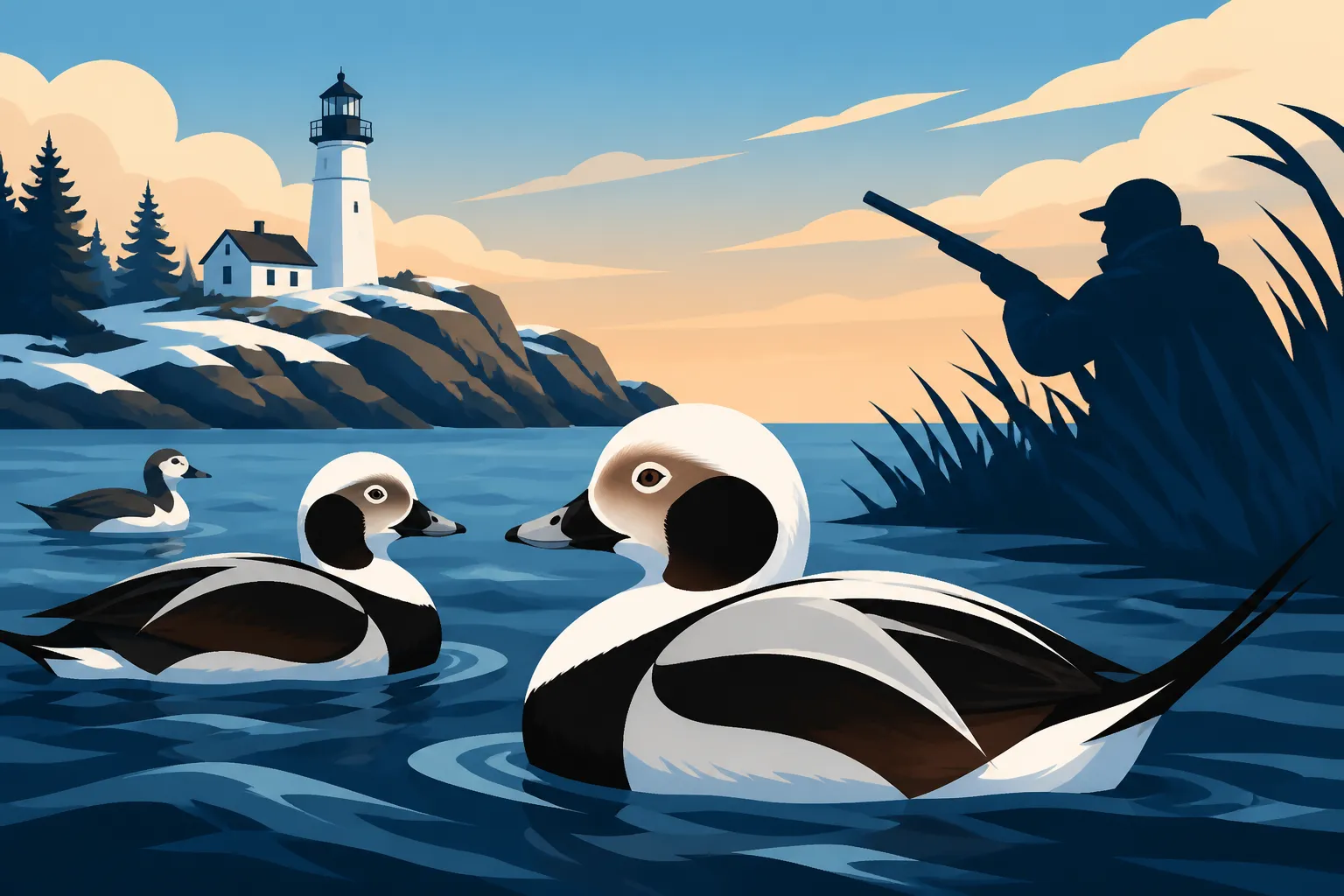
When you first spot a long-tailed duck, you'll immediately notice a few things that set them apart. Males, especially, boast a dramatically long, slender tail feather that trails behind them, giving them their namesake. Their plumage is a beautiful mosaic of black, white, and gray, which shifts subtly with the seasons, making them truly stunning birds to observe up close. But it's not just their looks; their behavior is equally captivating. These aren't your typical pond ducks dabbling on the surface. Long-tails are expert divers, capable of plunging to incredible depths—sometimes over 200 feet—in search of food. They use their powerful wings for propulsion underwater, almost "flying" through the frigid depths.
Their vocalizations are also unique. They have a distinctive, melodious call that sounds like "ow-ow-owly" or "coal-coal-coal," which carries easily across the open water. This constant chatter is one of the hallmarks of a healthy raft of long-tails, and listening to it while bundled up against the ocean spray is an unforgettable experience. They tend to gather in large rafts, sometimes numbering in the hundreds or even thousands, especially in areas with abundant food sources. Observing these large congregations from a distance, with their synchronized dives and resurfacings, gives you a profound appreciation for their social nature and incredible resilience in extreme environments. Understanding these behaviors is crucial, whether you're just watching or planning to hunt them, as it informs everything from scouting to decoy placement.
Diet and Foraging Habits
The long-tailed duck's diet is almost exclusively marine, consisting primarily of mollusks, crustaceans, and small fish. They have a particular fondness for blue mussels, clams, and various small invertebrates found on the seafloor. This specialized diet is directly linked to their diving prowess; they are built to plumb the depths to access these food sources that are out of reach for many other waterfowl species. They are often seen feeding in areas with strong tidal currents over rocky bottoms or mussel beds, where food is concentrated and easily accessible once they dive.
Their foraging is quite efficient. When a long-tail dives, it can remain submerged for an extended period, often over a minute, before resurfacing. They swallow their prey whole underwater, an adaptation that saves energy and reduces exposure to predators on the surface. This deep-diving behavior means they prefer open, clear coastal waters where they can see their prey and maneuver effectively. You won't typically find large numbers of long-tails in shallow, murky estuaries like you might other duck species. Instead, look for them further offshore, often near ledges, shoals, or islands where the water is deeper and the currents sweep in their preferred fare. Recognizing these preferred feeding areas is key to understanding where these birds will concentrate throughout the winter months.
Maine's Wintering Grounds for Long-Tails
Maine's extensive and diverse coastline, with its countless islands, rocky ledges, and deep, clear waters, offers prime habitat for long-tailed ducks seeking refuge from the Arctic winter. They are truly ocean-loving birds, and you'll find them in environments that other ducks wouldn't dare to call home. The sheer volume of these birds that choose Maine as their winter home speaks to the richness of our marine ecosystems.
Coastal Zones and Key Areas
The entirety of the Maine coast can hold long-tailed ducks, but certain areas consistently host larger concentrations. From Kittery up to Calais, wherever you find rocky shores, strong currents, and relatively shallow but open water a bit offshore, you'll likely find long-tails. Think about bays, coves, and the waters around islands that offer some protection from the wildest storms but still allow for deep dives. Places like Casco Bay, Muscongus Bay, and the archipelago of islands off the mid-coast are renowned for holding significant numbers. Further Downeast, the waters around Mount Desert Island and beyond, with their rugged granite shores and strong tidal rips, are also excellent long-tail country.
These birds tend to congregate in traditional areas year after year, often returning to the same productive feeding grounds. Identifying these consistent spots through scouting or local knowledge is invaluable. You might see them mixed in with other sea ducks like eiders and scoters, but often, long-tails will form their own distinct rafts a bit further offshore or in different pockets of a bay. Hunters often focus on areas where these birds can be intercepted as they move between feeding and resting areas, or where prevailing winds funnel them past specific points or ledges. For those interested in Hunting Scoters From a Sea Duck Boat, many of the same principles of identifying open water and current apply to long-tails, though their specific preferences might differ slightly.
Why Maine Attracts So Many
Maine's unique combination of geographical features and marine resources makes it a crucial winter haven for long-tailed ducks. Firstly, the relatively northern latitude provides a climate that's cold enough to deter many human activities that might disturb them, yet the Gulf of Maine's deep waters remain largely ice-free, unlike more sheltered freshwater systems further north. This means continuous access to their preferred food sources throughout the harshest months. The constant influx of cold, nutrient-rich water from the Labrador Current supports a thriving invertebrate population—the long-tails' primary diet.
Secondly, the abundance of islands and intricate coastline provides countless sheltered pockets where these birds can rest and escape the most severe ocean swells. They can weather a nor'easter behind a granite island, then pop back out to feed once the worst of the storm passes. This combination of rich feeding grounds and secure resting areas creates ideal conditions. It's why Maine has long been recognized as a prime location within the Atlantic Flyway for various sea duck species, including healthy populations of long-tailed ducks. Their survival hinges on these specific characteristics of our coast, making it a truly special place to witness them.
Hunting Long-Tailed Ducks in Maine: Strategies and Safety
Hunting long-tailed ducks in Maine is not for the faint of heart. It requires specialized equipment, a deep understanding of marine conditions, and a strong commitment to safety. This isn't a walk in the park; it's an adventure on the rugged North Atlantic. But the rewards—a unique bird and an unforgettable experience—are well worth the effort for those prepared.
Essential Gear and Boat Setup
First and foremost, a sturdy boat designed for open water is non-negotiable. Forget your shallow-water skiff; you need a vessel capable of handling unpredictable swells, strong currents, and icy conditions. Many hunters opt for well-built center console boats, aluminum hulled boats, or even dedicated sea duck hunting rigs with a high freeboard. Safety equipment, including personal flotation devices (PFDs) for everyone on board, an emergency kill switch, flares, a marine radio, and GPS, is absolutely paramount. Hypothermia is a constant threat, so layered, waterproof, and windproof clothing is essential. Think neoprene waders or dry suits, heavy wool, and a reliable outer shell.
Decoys are also critical. Long-tailed ducks are often hunted with large decoy spreads, mimicking their rafting behavior. Most hunters use specialized long-tail decoys, which are usually oversized and weighted to ride the waves naturally. A spread of 50-100 decoys is not uncommon, creating a visible "raft" that passing birds can spot from a distance. Sometimes, hunters will mix in a few common eider or scoter decoys, but the long-tail rig should dominate. You'll also need heavy decoy lines and anchors to keep your spread in place against strong currents and wave action. When it comes to effective decoying, placing your rig strategically to utilize the wind and current, often in a loose, natural-looking blob or line, is much more effective than a tight, rigid pattern. Many of the same principles for Decoying Eiders Off the Maine Coast apply, albeit with some adjustments for long-tail specific behaviors.
Effective Decoying and Calling Strategies
Unlike some dabbling ducks that might finish over decoys in tight formation, long-tailed ducks often "swing" wide, checking out the spread before committing. They might circle several times, so patience is key. Your spread should be positioned to intercept birds flying along their natural flight paths, often parallel to shore or moving between feeding areas. Observing how the birds are flying on a given day—their approach angles, where they land relative to the main raft—can help you adjust your spread. Often, creating an open landing zone within or just downwind of your main decoy cluster is effective.
Calling can be highly effective with long-tails. Their characteristic "coal-coal-coal-ow-ow-owly" call can be mimicked with specialized long-tail calls, or even by voice if you've practiced. Use soft, consistent calling, especially when birds are distant, to pique their interest. As they approach, you can increase the intensity slightly, but avoid over-calling. The goal is to sound like a contented flock on the water. Beyond decoying and calling, concealment is crucial. Whether you're hunting from a boat blind, a layout boat, or a blind set up on a rocky point, blending into the harsh coastal environment is paramount. Many successful hunters utilize a Layout Boat Hunting the Maine Coast strategy, allowing them to position themselves directly in the birds' flight paths while remaining low-profile.
Safety on Open Water
Hunting Maine's open coastal waters in winter comes with inherent risks, and safety must always be your absolute top priority. The weather can change in an instant, turning a calm morning into a dangerous ordeal with heavy seas, freezing spray, and strong winds. Always check the marine forecast before heading out, and be prepared to cancel or cut your trip short if conditions are marginal or deteriorating. Never go out alone, and make sure someone on shore knows your float plan – where you're going, when you expect to return, and who is with you.
Hypothermia is a serious concern. Dress in layers, wear waterproof outerwear, and have emergency blankets and dry spare clothes in a waterproof bag. The water temperature in Maine in winter is dangerously cold; immersion can lead to incapacitation in minutes. Your boat should be well-maintained, with a reliable engine (and ideally a kicker motor for backup). Carry extra fuel, tools, and spare parts. Navigational aids like GPS and charts are essential, especially when fog or snow squalls reduce visibility. Knowing the Maine Sea Duck Coastal Zone Line and other navigational markers is crucial for safety and legal compliance. Always err on the side of caution; a duck isn't worth risking your life.
Conservation and Management: Protecting Maine's Long-Tails
As hunters, we have a profound responsibility to ensure the sustainability of the game species we pursue. Long-tailed ducks are no exception. Their populations, while generally stable, are monitored closely, and management strategies are put in place to ensure healthy numbers for future generations. Our participation in these efforts is critical.
Regulatory Framework and Bag Limits
Like all migratory waterfowl, long-tailed ducks fall under both federal and state regulations. The U.S. Fish and Wildlife Service, in conjunction with state agencies like the Maine Department of Inland Fisheries and Wildlife (MDIFW), establishes season dates and bag limits based on population data, breeding success, and harvest rates. Hunters in Maine must possess a valid Maine hunting license, a federal duck stamp, and be HIP (Harvest Information Program) certified. You can learn more about the Maine Federal Duck Stamp Requirement and Maine HIP Certification for Bird Hunters through the MDIFW website or license vendors.
The daily bag limit for long-tailed ducks, along with other sea duck species like eiders and scoters, is specific and often differs from that of inland ducks. It's crucial to know the current Maine Long-Tailed Duck Daily Limit and the aggregate sea duck limit to hunt legally and responsibly. These regulations are designed to allow for recreational harvest while protecting the overall population health. Violations not only carry legal penalties but can also undermine conservation efforts. Staying informed about the latest rules, including the Maine Sea Duck Bag Limit for all species, is an essential part of ethical hunting.
Sustainable Hunting Practices
Beyond simply following the law, sustainable hunting involves a broader ethical approach. This includes minimizing crippling losses by practicing good shooting skills and only taking shots at birds within effective range. Using appropriate shot sizes and choke combinations for sea ducks, which are notoriously tough birds, helps ensure clean kills. Retrieving every bird you shoot is also paramount; leaving birds unrecovered is wasteful and disrespectful. A good retriever dog, if conditions allow, can be an invaluable asset in the often challenging retrieve environments of the coast.
Participating in data collection efforts, such as reporting banded birds, also contributes to better management. Remember, sea ducks are a shared resource, and our actions as hunters directly impact their future. By being mindful of our impact, adhering to regulations, and advocating for robust conservation efforts, we ensure that the thrill of pursuing long-tailed ducks off the Maine coast remains a tradition for generations to come. GoHunt can be a useful tool for tracking and recording your harvest data, contributing to better personal records and potentially aiding in future planning.
Preparing for a Maine Long-Tail Hunt: The Full Experience
A long-tailed duck hunt in Maine is more than just shooting birds; it's an immersive experience in one of nature's most extreme and beautiful environments. Proper preparation goes beyond gear and tactics; it involves understanding the physical and mental demands, as well as the unique challenges of the Maine winter coast.
Physical and Mental Preparation
Hunting in freezing temperatures on choppy seas is physically demanding. You'll be battling cold, wind, and waves, often for hours on end. Good physical fitness is a definite asset. Being able to comfortably handle your boat, deploy and retrieve heavy decoy spreads, and remain steady while shooting from a moving platform all require strength and stamina. Dress for conditions colder than you expect, as the combination of wind and moisture can quickly cut through insufficient clothing. Layers are your best friend, allowing you to adjust to fluctuating temperatures and activity levels.
Mentally, you need to be resilient and patient. Sea duck hunting often involves long periods of waiting, punctuated by intense bursts of action. You'll face frustrating conditions like fog, heavy seas, or birds that simply won't decoy. Staying positive, focused, and adaptable is key. A good mindset also means prioritizing safety above all else, even if it means calling off a hunt or turning back early. Remember that part of the joy is simply being out on the water, witnessing the raw beauty of the Maine coast in winter, even if the ducks aren't cooperating. This mental toughness is something that veterans of Sea Duck Hunting the Maine Coast have in spades.
Navigating Weather and Sea Conditions
Weather is the ultimate boss on a long-tail hunt. You need to become a student of marine forecasts, understanding not just air temperature but also wind speed and direction, wave height and period, and the potential for freezing spray or fog. A brisk offshore breeze might be perfect for pushing birds along a flight line and decoying, but a strong onshore gale can make conditions dangerously rough. Knowing the prevailing winds for a particular area and how they affect the local currents and wave action will help you choose safe hunting locations and optimal setup spots.
Tides also play a significant role. Strong tidal currents can concentrate food sources and funnel birds through certain areas, but they can also make anchoring decoys and maneuvering your boat more challenging. Understanding the ebb and flow, and how it impacts access to certain ledges or islands, is crucial. Using apps like GoHunt can help you scout potential spots, visualize water depths, and plan your approach based on tide charts and aerial imagery. Always have multiple contingency plans for changing weather and sea conditions. If you're venturing into unfamiliar territory, consider contacting a local Registered Maine Guide or a reputable outfitter who specializes in Booking a Maine Sea Duck Charter for their invaluable insights. They can guide you through the intricacies of a safe and successful hunt, sharing local knowledge about conditions and the Maine Sea Duck Zone Boundaries.
Comparing Sea Duck Species & Hunting Considerations
Maine offers a diverse array of sea duck hunting opportunities, each with its own quirks and challenges. Long-tailed ducks, eiders, and scoters are the most commonly pursued species, and while they often share the same general habitat, their specific preferences and behaviors can vary. Here's a quick comparison to help you fine-tune your approach:
| Feature | Long-Tailed Duck (Oldsquaw) | Common Eider | Scoter (Black, Surf, White-winged) |
|---|---|---|---|
| Primary Diet | Mussels, clams, invertebrates, small fish | Mussels, crabs, other crustaceans | Mussels, clams, other shellfish |
| Diving Depth | Excellent, often to 200+ feet | Excellent, typically shallower than long-tails | Excellent, often to considerable depths |
| Vocalizations | Distinctive, melodious "ow-ow-owly" | Hoarse "coo-ooo," "ooh-ooh-ooh" | Black: silent; Surf: soft whistle; White-winged: grunt |
| Flocking Style | Large, often boisterous rafts, loose | Tighter flocks, often in long lines on water | Variable, from small groups to large rafts |
| Decoy Spread | Large spreads (50-100+) with open pockets | Large, dense spreads (50-100+) | Mix of species, can use smaller spreads |
| Preferred Habitat | Open coastal waters, strong currents, rocky bottoms | Exposed ledges, shoals, islands, mussel beds | Open ocean, bays, near rocky shores and jetties |
| Conservation Status | Generally stable, closely monitored | Stable, populations increasing in some areas | Some concerns for certain species, monitored |
Understanding these differences can help you tailor your scouting, decoy setups, and calling techniques for each species. While you might encounter all three on a single hunt, focusing your efforts based on the predominant species in a given area can significantly improve your success. For example, if you're targeting long-tails, you might set your decoys slightly further offshore in deeper water than you would for eiders, who might be closer to a mussel-covered ledge. This nuanced approach comes with experience, but it’s a rewarding part of becoming a skilled sea duck hunter.
Disclaimer
This article is for general informational purposes only and does not constitute professional advice. Laws, prices and regulations vary by location and change over time. Consult a qualified professional for guidance on your specific situation.